Exclusive: 30 Missing Terrorists Exfiltrated to Pakistan for Arms Training, Says DGP
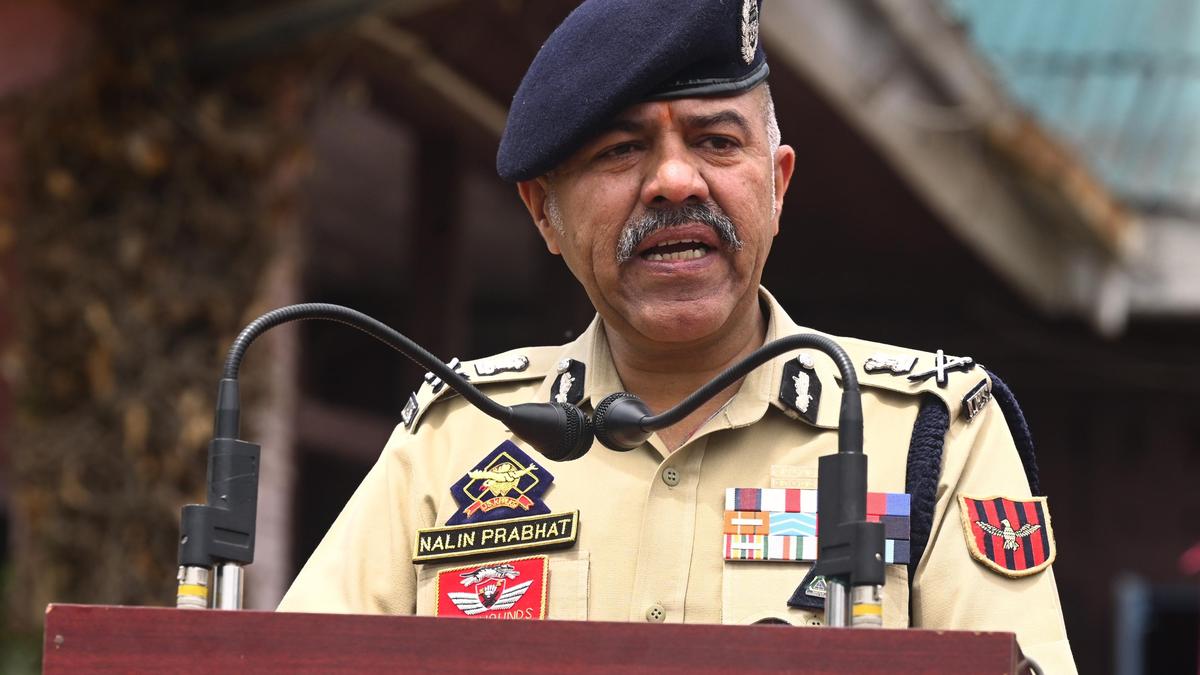
Jammu and Kashmir DGP reveals that 30 terrorists from Reasi and Chassana, missing since 1991-2003, have exfiltrated to Pakistan for arms training, raising security concerns.
Executive Takeaways
- 30 terrorists from Reasi and Chassana, missing since 1991-2003, have reportedly crossed to Pakistan for arms training, per DGP.
- Security alert: The development signals a renewed infiltration threat and potential disruption of peace in the region.
- Intelligence gap: The long delay in tracking missing individuals highlights challenges in monitoring cross-border movements.
- Strategic response: Enhanced surveillance and counter-terror measures are expected in the coming months.
- Watch for: Official confirmation, Pakistan's response, and potential impact on regional stability.
Section 1: The Core Event & Breaking Timeline
In a startling revelation that underscores the persistent security challenges in Jammu and Kashmir, the Director General of Police (DGP) of the Union Territory disclosed that 30 terrorists from the Mahore and Chassana areas of Reasi district, who had been missing since 1991 to 2003, have exfiltrated to Pakistan to undergo arms training. The information, sourced from reliable intelligence inputs received by the Mahore Police Station, points to a coordinated effort to disturb peace in India. This disclosure comes amid heightened tensions and a series of counter-terror operations in the region.
The timeline of the disappearances spans over a decade, from 1991 to 2003, a period marked by peak militancy in Jammu and Kashmir. According to the DGP, these individuals were not merely missing but had crossed over to Pakistan, where they are believed to be receiving training in advanced weaponry and tactics. The police chief's statement, while brief, carries significant implications for national security, as it suggests a long-standing infiltration pipeline that has only now come to light.
The initial market reaction to this news has been muted, as it primarily affects the security and defense sectors rather than financial markets. However, defense stocks may see increased investor interest as the government likely ramps up security spending. The broader economic impact remains uncertain, but any escalation in cross-border tensions could disrupt trade and investment flows in the region.
This revelation also raises questions about the effectiveness of intelligence gathering and border management. The fact that 30 individuals could go missing and later be confirmed to have joined militant training camps in Pakistan highlights gaps in surveillance and tracking mechanisms. The DGP's statement is a stark reminder that the threat of terrorism remains alive and evolving, necessitating continuous vigilance and adaptive strategies.
Section 2: Deep Technical & Financial Architecture
From a technical standpoint, the exfiltration of these individuals likely involved a sophisticated network of facilitators, safe houses, and cross-border routes. The period from 1991 to 2003 saw the use of traditional infiltration routes through dense forests and mountainous terrain, often aided by local guides and sympathizers. The training in Pakistan, presumably in camps operated by groups like Lashkar-e-Taiba and Jaish-e-Mohammed, would have focused on guerrilla warfare, explosives, and small arms.
The financial architecture supporting such activities typically relies on hawala transactions, counterfeit currency, and funding from diaspora networks. While the exact financial trails for these 30 individuals are unknown, the broader ecosystem of terror financing in the region has been a focus of global counter-terrorism efforts. India has repeatedly raised concerns about Pakistan's role in harboring and training militants, allegations that Pakistan denies.
The unit economics of terrorism are grim: the cost of training a militant is relatively low compared to the massive security expenditures required to counter them. Estimates suggest that training a single militant can cost as little as a few thousand dollars, while the economic impact of a single terror attack can run into millions. This asymmetry underscores the need for robust intelligence and preventive measures.
The technology stack for counter-terrorism has evolved significantly, with India deploying drones, satellite imagery, and advanced surveillance systems along the border. However, human intelligence remains crucial, as evidenced by the tip-off from reliable sources to the Mahore Police Station. Integrating technology with human networks is essential for early warning and response.
On the balance sheet impact, increased security measures often lead to higher defense budgets. For the fiscal year 2023-24, India's defense budget stood at approximately $72 billion, with a significant portion allocated to counter-terrorism and internal security. Any escalation in infiltration attempts could prompt additional allocations, benefiting defense contractors and security firms.
Section 3: Industry & Global Market Ripple Effects
The revelation is likely to have ripple effects across the defense and security industry. Companies specializing in surveillance equipment, drones, and cybersecurity may see increased demand as the government seeks to bolster border security. Investors in defense stocks, such as Hindustan Aeronautics Limited and Bharat Electronics, may react positively to expectations of higher spending.
Globally, the news reinforces concerns about Pakistan's commitment to combating terrorism, potentially affecting its relations with international financial institutions and donors. The Financial Action Task Force (FATF) has previously placed Pakistan on its grey list for deficiencies in counter-terror financing; such incidents could complicate its efforts to exit the list.
Supply chains for defense equipment could also be impacted if tensions escalate, leading to disruptions in procurement from international suppliers. However, India's push for indigenous manufacturing under the 'Make in India' initiative may mitigate some of these risks.
In the broader ecosystem, the incident may accelerate collaboration between India and friendly nations on intelligence sharing and counter-terror operations. The Quad grouping, which includes India, the US, Japan, and Australia, has a focus on maritime security but could expand to include counter-terrorism cooperation.
Section 4: Critical Perspectives, Analyst Debates & Risk Factors
Analysts are divided on the implications of this disclosure. Some view it as a timely warning that validates the need for continued vigilance and robust counter-terror infrastructure. Others question the timing, suggesting it may be used to justify increased security measures or to deflect attention from other issues. The DGP's statement, while based on intelligence, lacks detailed evidence, leading to calls for transparency.
Security experts emphasize the vulnerability of border areas and the need for community policing. The long gap between disappearance and confirmation of exfiltration points to systemic weaknesses in tracking missing persons, especially in conflict zones. There are also concerns about radicalization and recruitment networks that may still be active.
Regulatory friction could arise if the government tightens laws related to terrorism financing and border control, potentially affecting civil liberties. Balancing security with human rights is a delicate task, and any heavy-handed approach could alienate local populations.
Risk factors include the possibility of retaliatory attacks or increased infiltration attempts. The 30 individuals, now trained, could be used to orchestrate attacks in India, posing a direct threat. Additionally, the revelation may strain India-Pakistan relations, reducing the prospects for dialogue.
Section 5: Strategic Forecast & Road Ahead
In the next 12-24 months, expect intensified counter-terror operations in Jammu and Kashmir, with a focus on tracking the 30 individuals and dismantling support networks. The government may invest in advanced surveillance technologies and increase troop deployments along the Line of Control.
Upcoming milestones include potential high-level security reviews and possible changes to border management policies. The National Investigation Agency (NIA) may take over the case, leading to a deeper probe. International pressure on Pakistan to act against terror camps is likely to increase.
What to watch: Official confirmation of the individuals' identities and locations, Pakistan's response to the allegations, and any changes in the security landscape of the region. The effectiveness of India's counter-terror strategy will be tested in the coming months.
Investors should monitor defense sector stocks and companies involved in homeland security for potential upside. However, geopolitical risks remain high, and any escalation could negatively impact market sentiment. Staying informed and diversified is key.




Comments (0)
No comments yet. Be the first to share your thoughts!
Leave a Comment