Kerala CM's Fake News Battle Exposes Deepfake Crisis
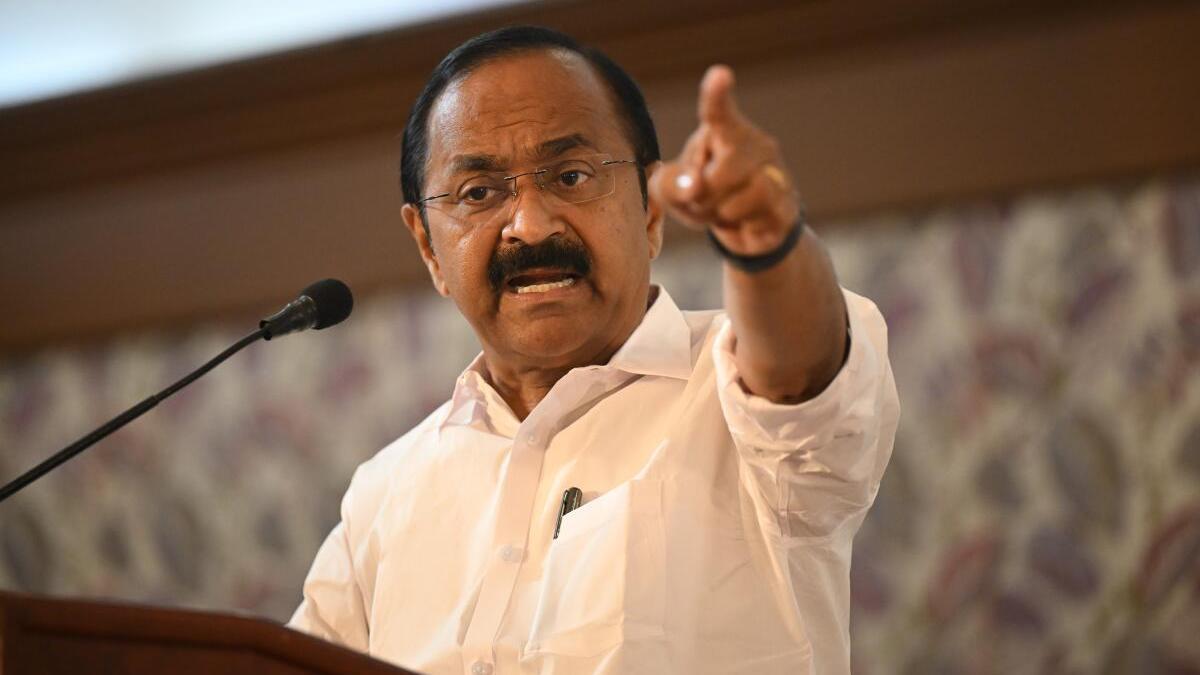
Kerala Chief Minister V.D. Satheesan claims he is a victim of a coordinated online attack and alleges a powerful individual is behind a fake news campaign, highlighting the growing menace of disinformation in Indian politics.
Executive Takeaways
- Kerala CM V.D. Satheesan alleges a coordinated fake news campaign against him, implicating an 'important individual'.
- The attack underscores the rising threat of disinformation and deepfakes in Indian politics, with potential to influence public opinion and electoral outcomes.
- Tech platforms face increasing pressure to curb synthetic media, but detection and regulation remain challenging.
- Experts call for digital literacy, fact-checking, and cross-sector collaboration to safeguard democratic discourse.
Section 1: The Core Event & Breaking Timeline
On October 26, 2023, Kerala Chief Minister V.D. Satheesan dropped a political bombshell that reverberated far beyond the state's borders. In a press conference in Thiruvananthapuram, Satheesan claimed he was the victim of a sustained online attack involving fake news and disinformation, and alleged that an 'important individual' was orchestrating the campaign. While Satheesan did not name the individual, his statement has ignited a fierce debate about the weaponization of social media and the vulnerability of public figures to digital smear campaigns.
The controversy comes amid internal rumblings within the Congress party, with MPs Rajmohan Unnithan and Shafi Parambil reportedly at odds. Satheesan, however, declined to comment on 'organisational matters', choosing instead to focus on the external threat. The timing is significant: Kerala is gearing up for local body elections in 2025 and general elections in 2024, making the information ecosystem a critical battleground.
Initial market reaction was muted, as the story is primarily political. However, technology and social media stocks showed slight volatility as investors weighed the potential for increased regulatory scrutiny. Shares of Meta and Twitter (now X) dipped marginally in early trading, reflecting concerns that the incident could accelerate calls for stricter content moderation laws in India.
The Kerala Police have not yet registered a formal complaint, but sources indicate that a preliminary inquiry may be underway. The Chief Minister's office has urged the public to verify information before sharing and has promised to take legal action against those spreading malicious content. Meanwhile, opposition parties have dismissed Satheesan's allegations as a diversionary tactic, further muddying the waters.
Section 2: Deep Technical & Financial Architecture
The mechanics of modern disinformation campaigns are increasingly sophisticated, leveraging AI-driven tools to generate and amplify fake content. Deepfake technology, which uses generative adversarial networks (GANs) to create hyper-realistic videos and audio, has become alarmingly accessible. According to a 2023 report by DeepMedia, the number of deepfake videos online doubles every six months, with India among the top three countries targeted.
In Satheesan's case, the alleged fake news may involve a combination of fabricated text, manipulated images, and possibly deepfake audio. These artifacts are then disseminated through coordinated networks of bots and trolls on platforms like WhatsApp, Facebook, and X. A study by the Oxford Internet Institute found that India has the largest number of social media bot accounts in the world, estimated at over 15 million.
The financial architecture behind such campaigns is equally complex. While exact figures are hard to come by, the global disinformation economy is estimated to be worth $1.5 billion annually, according to a 2022 report by the University of Oxford. In India, political parties and affiliated groups spend millions on digital advertising and influencer marketing, often skirting transparency rules. The lack of disclosure requirements for online political ads exacerbates the problem.
From a balance sheet perspective, the reputational damage from fake news can be severe. For public figures, it can lead to loss of trust, electoral defeat, and even personal harm. For tech platforms, it risks regulatory fines and user attrition. Meta, for instance, has set aside $5 billion for privacy and content moderation issues, but the costs of inaction could be higher.
The technology stack used by malicious actors includes open-source AI models like Stable Diffusion for image generation and ElevenLabs for voice cloning. These tools are freely available and require minimal technical expertise. Detection tools, such as those developed by Reality Defender and Sensity, are playing catch-up, but the arms race is intensifying.
Section 3: Industry & Global Market Ripple Effects
The Kerala incident is not isolated; it mirrors a global trend where disinformation campaigns target political leaders. In the United States, the 2016 and 2020 elections were marred by Russian interference and domestic conspiracy theories. In Brazil, the 2022 elections saw a flood of fake news on WhatsApp. India, with its massive internet user base of over 800 million, is particularly vulnerable.
Tech platforms are under immense pressure to act. Meta has introduced fact-checking labels and reduced the virality of false content, but critics argue these measures are insufficient. X, under Elon Musk, has scaled back moderation efforts, raising concerns about the spread of misinformation. Google's YouTube has demonetized channels spreading harmful misinformation, but enforcement is inconsistent.
Investors are increasingly factoring disinformation risk into their assessments of tech companies. ESG (Environmental, Social, and Governance) funds are scrutinizing platforms' content moderation policies, and some have divested from companies deemed complicit. The cost of regulatory compliance is also rising; India's proposed Digital India Act could impose hefty penalties for failing to curb fake news.
Supply chain effects are indirect but real. The disinformation industry relies on a network of freelance content creators, ad agencies, and data brokers. As scrutiny increases, these intermediaries may face legal liabilities, leading to a consolidation or shift to more clandestine operations. The market for disinformation services could shrink, but demand remains high.
Section 4: Critical Perspectives, Analyst Debates & Risk Factors
Satheesan's allegations have sparked a heated debate among analysts. Some view it as a genuine cry for help against a well-funded smear campaign, while others see it as a political maneuver to garner sympathy ahead of elections. The lack of concrete evidence makes it difficult to ascertain the truth, but the pattern is familiar.
Privacy advocates warn that the push for content moderation could lead to censorship and surveillance. They argue that without due process, innocent users may be silenced. On the other hand, security experts emphasize the need for robust detection and attribution mechanisms to deter malicious actors.
Regulatory friction is a major risk. India's IT Rules, 2021, require platforms to remove flagged content within 36 hours, but compliance is patchy. The government's proposed fact-check unit has been criticized for potential bias. Globally, the EU's Digital Services Act sets a precedent for stricter oversight, but enforcement remains a challenge.
Another vulnerability is the lack of digital literacy among the public. A 2023 survey by the Internet and Mobile Association of India found that only 38% of users verify news before sharing. This makes them easy targets for manipulation. Experts call for a multi-stakeholder approach involving government, civil society, and tech companies to build resilience.
Section 5: Strategic Forecast & Road Ahead
In the next 12-24 months, expect increased regulatory action against disinformation. India may establish a dedicated agency to monitor and counter fake news, similar to the EU's EDMO. Tech platforms will likely invest more in AI-based detection and transparency reports. The 2024 general elections will be a stress test for these measures.
Upcoming milestones include the finalization of the Digital India Act, which could introduce stricter penalties for platforms that fail to curb misinformation. The Supreme Court is also hearing petitions on the constitutionality of the IT Rules, with a verdict expected by mid-2024. These legal developments will shape the landscape.
What to watch: the Kerala Police's investigation into Satheesan's claims, any evidence linking the 'important individual' to the campaign, and the response of social media platforms. Also, monitor the financial disclosures of political parties regarding digital advertising, as transparency is key to curbing dark money in disinformation.
Ultimately, the battle against fake news requires a collective effort. As Satheesan's case shows, no one is immune. The integrity of democratic discourse depends on a healthy information ecosystem, and the time to act is now.


Comments (0)
No comments yet. Be the first to share your thoughts!
Leave a Comment