NIELIT Ignites Amaravati Quantum Valley Talent Pipeline
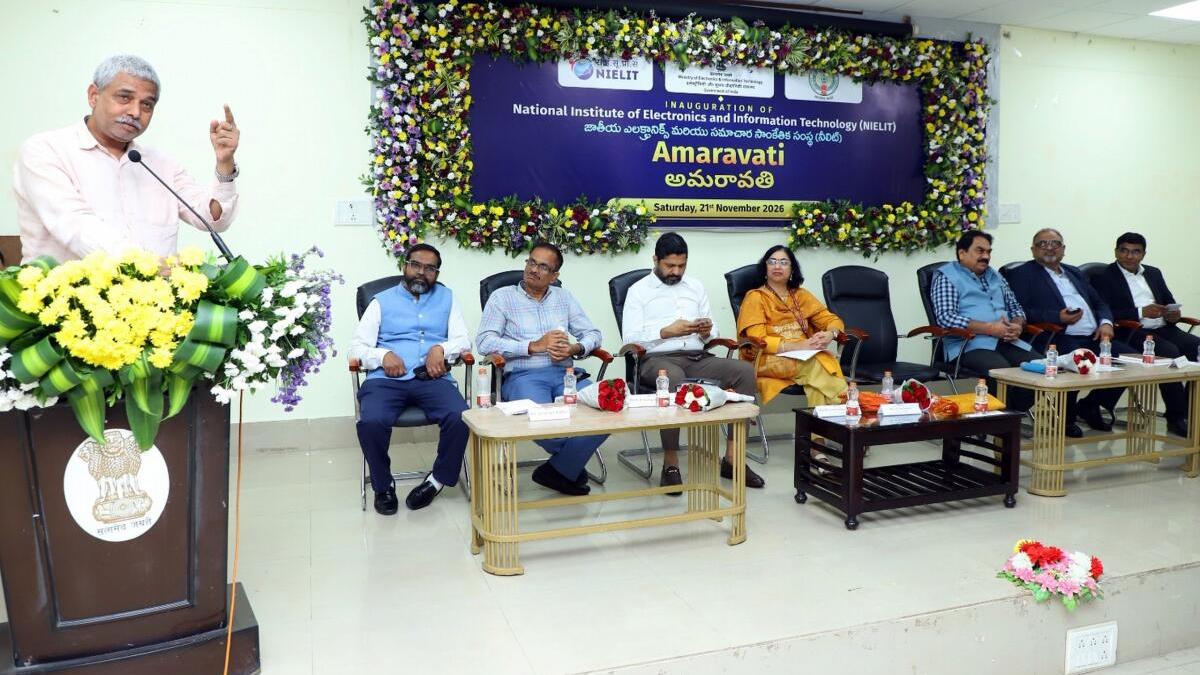
NIELIT will develop a talent pipeline for Amaravati Quantum Valley, spanning technicians, equipment operators, and researchers, says DG Madan Mohan Tripathi. The move aims to bolster India's quantum ecosystem.
Executive Takeaways
- NIELIT will build a comprehensive talent pipeline for Amaravati Quantum Valley, covering technicians, equipment operators, and researchers.
- The initiative aims to address the critical skills gap in India's emerging quantum ecosystem.
- Director General Madan Mohan Tripathi emphasizes a multi-tiered approach to workforce development.
- The move is expected to attract investment and position India as a global quantum hub.
- Challenges remain in curriculum development, industry collaboration, and retaining top talent.
Section 1: The Core Event & Breaking Timeline
In a significant boost to India's quantum technology ambitions, the National Institute of Electronics and Information Technology (NIELIT) has announced a strategic initiative to develop a dedicated talent pipeline for the upcoming Amaravati Quantum Valley. The announcement, made by NIELIT Director General Madan Mohan Tripathi, outlines a comprehensive plan to cultivate a workforce spanning technicians, equipment operators, and researchers. This move comes at a critical juncture as India seeks to establish itself as a global leader in quantum computing and related technologies.
The Amaravati Quantum Valley, envisioned as a hub for quantum research and innovation, is part of the Andhra Pradesh government's broader efforts to attract high-tech industries. NIELIT's involvement signals a concerted push to bridge the skills gap that has historically plagued emerging technology sectors in India. The timeline for the initiative is aggressive: initial training programs are expected to launch within the next six months, with the first cohort of technicians and operators graduating by late 2025. Researchers will be integrated into advanced programs in collaboration with academic institutions and industry partners.
Market reaction to the announcement has been cautiously optimistic. Industry experts view the move as a necessary step to sustain momentum in India's quantum ecosystem, which has seen increased government funding and private investment. However, some analysts caution that the success of the initiative will depend on the quality of curriculum and the availability of qualified instructors. The news has also sparked interest among global quantum technology firms looking to tap into India's growing talent pool.
The initiative aligns with the National Quantum Mission, launched in 2023 with a budget of ₹6,003 crore (approximately $730 million) over eight years. The mission aims to develop quantum computers, communication, and sensing technologies. NIELIT's role as a talent developer is seen as complementary to the mission's research and development goals. The involvement of a government-backed institute like NIELIT lends credibility and ensures a structured approach to workforce development.
Section 2: Deep Technical & Financial Architecture
At the heart of NIELIT's plan is a multi-tiered training architecture designed to address the diverse skill requirements of the quantum industry. The program will be structured into three distinct tracks: technician-level courses focusing on hardware maintenance and basic operations; operator-level training for advanced equipment handling and process control; and researcher-level programs aimed at developing expertise in quantum algorithms, error correction, and hardware design. Each track will have specific entry requirements and duration, ranging from six-month certificate courses to two-year advanced diplomas.
The financial model for the initiative involves a combination of government funding, industry sponsorship, and student fees. NIELIT has allocated an initial budget of ₹50 crore for infrastructure development, including state-of-the-art laboratories equipped with quantum computing hardware simulators and cryogenic systems. Industry partners are expected to contribute equipment and internships, while student fees will be kept affordable to ensure accessibility. The unit economics suggest a cost per student of approximately ₹2 lakh for technician courses and ₹5 lakh for researcher programs, with subsidies available for economically disadvantaged candidates.
The technology stack for the training programs will leverage NIELIT's existing expertise in electronics and IT, augmented by partnerships with leading quantum hardware providers. Students will have access to cloud-based quantum computing platforms such as IBM Quantum and Amazon Braket, allowing them to experiment with real quantum processors. The curriculum will cover quantum gates, circuits, and algorithms, as well as practical aspects like cryogenics, vacuum systems, and cleanroom protocols. This hands-on approach is designed to produce job-ready graduates who can immediately contribute to industry projects.
From a balance sheet perspective, NIELIT's investment is expected to yield long-term returns through enhanced reputation, increased enrollment, and potential revenue from industry collaborations. The institute plans to monetize its expertise by offering specialized training to corporate clients and government agencies. Additionally, the initiative is likely to attract grants and donations from philanthropic organizations focused on STEM education. However, the upfront costs are substantial, and NIELIT will need to carefully manage its resources to avoid financial strain.
Comparative analysis with global quantum education programs reveals that NIELIT's approach is unique in its emphasis on technician and operator roles, which are often overlooked in favor of researcher training. For instance, the US National Quantum Initiative focuses primarily on graduate-level research, while the EU's Quantum Flagship includes some vocational training but lacks a dedicated pipeline for equipment operators. NIELIT's comprehensive model could serve as a template for other developing nations seeking to build quantum ecosystems.
Section 3: Industry & Global Market Ripple Effects
The announcement has sent ripples through India's technology industry, with major players like Tata Consultancy Services, Infosys, and Wipro expressing interest in collaborating with NIELIT. These companies see a ready supply of skilled technicians and operators as essential for deploying quantum-safe cryptography and exploring quantum computing applications. Startups in the quantum space, such as QNu Labs and BosonQ Psi, have also welcomed the move, noting that the lack of trained personnel has been a bottleneck for scaling their operations.
Globally, the initiative positions India as a potential source of quantum talent for multinational corporations. Companies like IBM, Google, and Microsoft have been expanding their quantum research efforts and are likely to tap into NIELIT's talent pool. The availability of skilled technicians at competitive costs could also attract quantum hardware manufacturers to set up assembly and testing facilities in India, similar to the semiconductor fabrication plants being established under the India Semiconductor Mission.
The supply chain implications are significant. Quantum computing relies on specialized components such as cryostats, superconducting materials, and precision optics. A skilled workforce capable of operating and maintaining these systems is crucial for building a domestic supply chain. NIELIT's training programs will include modules on supply chain management and quality control, enabling graduates to support local manufacturing. This could reduce India's dependence on imports and foster a self-reliant quantum ecosystem.
Investors are taking note. Venture capital firms focused on deep tech have shown increased interest in Indian quantum startups following the announcement. The availability of talent is a key factor in investment decisions, and NIELIT's initiative addresses a critical concern. Additionally, the government's commitment to quantum technology, evidenced by the National Quantum Mission and now NIELIT's program, signals a stable policy environment that encourages long-term investment. Analysts predict a surge in funding for quantum startups over the next two years.
Section 4: Critical Perspectives, Analyst Debates & Risk Factors
Despite the optimism, skeptics question whether NIELIT can deliver on its ambitious promises. Critics point out that the institute has limited experience in quantum technology, and building a world-class training program from scratch is a formidable challenge. The availability of qualified instructors is a major concern, as quantum experts are in high demand globally and may be reluctant to relocate to Amaravati. Some analysts suggest that NIELIT should partner with established international institutions to ensure quality.
Another risk factor is the pace of technological change. Quantum computing is evolving rapidly, and curriculum developed today may become obsolete within a few years. NIELIT will need to establish mechanisms for continuous updating of course content and faculty training. The institute plans to address this by forming an industry advisory board and conducting regular reviews, but the effectiveness of such measures remains to be seen.
Regulatory friction could also pose challenges. The quantum technology sector is subject to export controls and national security considerations, particularly regarding hardware and software. NIELIT's access to advanced quantum computers from foreign vendors may be restricted, limiting the hands-on experience students can gain. The institute is exploring partnerships with domestic quantum hardware startups to mitigate this risk, but the local ecosystem is still nascent.
From a financial perspective, the sustainability of the program is uncertain. While initial funding is secured, long-term operational costs, including equipment maintenance and faculty salaries, could strain NIELIT's budget. The reliance on student fees and industry sponsorship may not be sufficient if enrollment targets are not met. Some analysts argue that the government should provide a recurring grant to ensure the program's longevity.
Section 5: Strategic Forecast & Road Ahead
Over the next 12 months, NIELIT aims to finalize the curriculum, recruit faculty, and establish partnerships with industry and academia. The first training centers are expected to open in Amaravati and select NIELIT centers across India by mid-2025. Initial enrollment targets are set at 500 students across all tracks, with a goal of graduating 1,000 skilled professionals annually by 2027. The institute also plans to launch a dedicated quantum lab equipped with cloud access to quantum processors.
In the 12-24 month horizon, NIELIT will focus on scaling the program and achieving accreditation from relevant bodies. The institute intends to seek recognition from the National Board of Accreditation (NBA) and align its courses with the National Skills Qualifications Framework (NSQF). This will enhance the credibility of its certificates and improve employment outcomes for graduates. Additionally, NIELIT plans to establish a placement cell to connect graduates with industry partners.
Key milestones to watch include the signing of memoranda of understanding with major quantum technology companies, the launch of a joint research program with academic institutions, and the first batch of graduates entering the workforce. The success of these milestones will be closely monitored by policymakers and investors as indicators of India's progress in building a quantum-ready workforce.
Looking further ahead, NIELIT's initiative could catalyze the development of a vibrant quantum ecosystem in Amaravati, attracting startups, research labs, and manufacturing facilities. If successful, it could serve as a model for other emerging technology domains such as artificial intelligence and robotics. However, the road ahead is fraught with challenges, and sustained commitment from all stakeholders will be essential to realize the vision of Amaravati Quantum Valley as a global quantum hub.




Comments (0)
No comments yet. Be the first to share your thoughts!
Leave a Comment