Delhi Police Deny Permission for Anti-SIR March, Organizers Cite Intimation
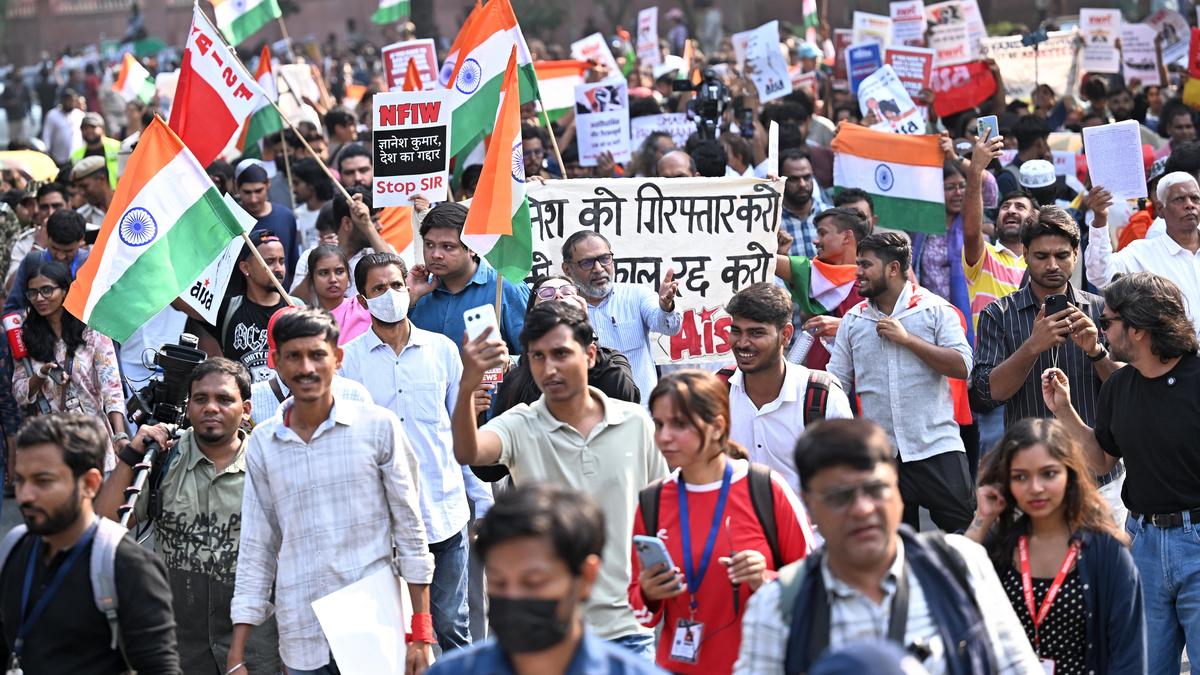
Delhi Police say no permission was sought for the November 26 anti-SIR march, while organizers claim they intimated authorities. The dispute highlights tensions over protest rights and the SIR digital identity system.
Executive Takeaways
- Permission Dispute: Delhi Police claim no formal permission was sought for the November 26 anti-SIR march, while organizers say they only intimated authorities, highlighting a legal gray area.
- Coalition Power: People Against SIR, a collective of about 200 organizations, is mobilizing against the SIR digital identity system, signaling growing grassroots resistance.
- Technology Under Fire: The SIR system, designed to streamline identity verification, faces criticism over privacy, data security, and potential exclusion.
- Protest Rights at Stake: The standoff raises questions about the right to protest and the balance between public order and civil liberties in the digital age.
- Market Implications: Uncertainty around SIR could affect investor confidence in India's digital infrastructure and surveillance technology sectors.
The Core Event & Breaking Timeline
On November 26, a coalition of approximately 200 organizations under the banner "People Against SIR" planned to march from Valmiki Sadan to Jantar Mantar in New Delhi to protest the government's proposed Single Identity Registry (SIR). However, the Delhi Police stated that no permission was sought for the march, setting the stage for a legal and political confrontation. The organizers maintain they had intimated the police about the proposed Constitution Day march, but the police insist that intimation does not equate to permission.
The dispute centers on the interpretation of protest regulations in the capital. Under the Delhi Police Act, any assembly of five or more persons requires prior permission. The organizers argue that they followed the process by informing the police, while the police claim that without explicit approval, the march would be illegal. This standoff has drawn attention from civil society groups and legal experts who see it as a test case for protest rights in India.
The timing is significant: November 26 is Constitution Day, a day that celebrates the adoption of the Indian Constitution, which guarantees the right to freedom of speech and expression. The choice of date by the protesters is symbolic, emphasizing their claim that the SIR system violates constitutional rights to privacy and equality. The police, on the other hand, are framing the issue as a matter of law and order, citing potential disruptions in a high-security zone.
Initial market reaction has been muted, as the event is seen as a localized political issue. However, technology and fintech stocks with exposure to digital identity solutions showed slight volatility. Investors are monitoring the situation for signs of broader unrest that could impact the rollout of digital public infrastructure projects. The standoff also comes amid heightened global scrutiny of surveillance technologies and data protection frameworks.
Deep Technical & Financial Architecture
The Single Identity Registry (SIR) is envisioned as a centralized database that consolidates various identity documents—such as Aadhaar, PAN, and voter ID—into a single, verifiable digital identity. The system aims to streamline service delivery, reduce fraud, and enhance national security. However, its architecture raises significant privacy concerns. The SIR would link multiple databases, creating a comprehensive profile of individuals that could be accessed by various government agencies.
From a financial perspective, the SIR is expected to cost the exchequer upwards of ₹10,000 crore over five years, according to government estimates. The project involves contracts for software development, data centers, and cybersecurity. Major IT firms and system integrators are likely to bid for these contracts, making it a lucrative opportunity for the technology sector. However, the controversy could delay procurement and implementation, affecting revenue projections for these companies.
The technology stack for SIR is rumored to include blockchain for immutable audit trails and AI for fraud detection. While these technologies promise efficiency, they also introduce complexities. Blockchain, for instance, could make data deletion difficult, conflicting with privacy laws that require data minimization and the right to be forgotten. AI algorithms, if not carefully designed, could perpetuate biases, leading to wrongful exclusion of marginalized groups.
Unit economics of the SIR system are still unclear. The government argues that the system will save costs by eliminating duplicate identity verification processes across departments. However, critics point out that the initial investment and ongoing maintenance could outweigh savings, especially if the system faces legal challenges and requires frequent upgrades. Moreover, the centralization of identity data creates a single point of failure, making it a prime target for cyberattacks.
Comparisons are being drawn with similar systems globally, such as India's own Aadhaar and the European Union's eIDAS. While Aadhaar has been successful in financial inclusion, it has also faced privacy litigation. The SIR, by integrating more data, amplifies both the benefits and the risks. The government's challenge is to design a system that is secure, transparent, and accountable, while also being cost-effective.
Industry & Global Market Ripple Effects
The controversy surrounding SIR is sending ripples through India's technology and fintech sectors. Companies that rely on identity verification for customer onboarding, such as banks, telecom operators, and fintech startups, are watching closely. If SIR implementation is delayed, they may need to continue using multiple verification methods, increasing costs. On the other hand, if SIR proceeds, they could benefit from a unified API, reducing friction and fraud.
Globally, the SIR debate is being viewed as a bellwether for digital identity projects. Countries in Africa and Southeast Asia that are considering similar systems are looking at India's experience. A successful rollout could boost exports of Indian identity tech, while a failed one could deter adoption elsewhere. International human rights organizations have also weighed in, warning that centralized identity systems can be misused for surveillance and exclusion.
Supply chain impacts are indirect but notable. The hardware required for SIR—servers, biometric devices, and network infrastructure—will be sourced from global suppliers. Any delay in procurement affects these supply chains. Additionally, cybersecurity firms are poised to benefit from increased spending on security audits and threat monitoring. Investors in these sectors are adjusting their portfolios based on perceived regulatory risks.
In the startup ecosystem, the SIR has sparked innovation. Several startups are developing privacy-preserving identity solutions, such as zero-knowledge proofs and decentralized identifiers, as alternatives to centralized registries. These startups argue that their technologies can achieve the same goals without compromising privacy. Venture capital interest in this space has been growing, with funding rounds for privacy-tech startups increasing by 30% year-on-year.
Critical Perspectives, Analyst Debates & Risk Factors
Legal experts are divided on the legality of the march and the SIR itself. Some argue that the right to protest is fundamental and that intimation should suffice for peaceful assemblies. Others contend that the police have a duty to regulate crowds to prevent chaos. The Supreme Court has previously upheld the right to protest but also allowed reasonable restrictions. This case could set a precedent for how digital-age protests are handled.
Privacy advocates warn that SIR could become a tool for mass surveillance, similar to China's social credit system. They point to the lack of a robust data protection law in India, despite the proposed Personal Data Protection Bill. Without strong safeguards, they argue, SIR could be used to track citizens' activities and suppress dissent. The government counters that SIR will be governed by strict rules and that privacy is protected under the Aadhaar Act.
Economists are debating the cost-benefit analysis of SIR. Proponents argue that the system will reduce leakage in welfare schemes and improve tax compliance, generating economic gains. Detractors highlight the high upfront costs and the risk of cost overruns, as seen with other large government IT projects. They also point out that the informal economy, which employs over 80% of India's workforce, may struggle to adapt to a digital-first identity system.
Risk factors include potential civil unrest, legal challenges, and cybersecurity breaches. The standoff on November 26 could escalate if the march proceeds and police intervene. Such an event could damage India's image as a stable investment destination. Additionally, if SIR is implemented poorly, it could lead to exclusion of vulnerable populations, triggering social unrest. Investors are advised to monitor regulatory developments and engage with stakeholders.
Strategic Forecast & Road Ahead
In the next 12 months, the government is expected to table the SIR bill in Parliament, which will outline the legal framework and safeguards. The bill will likely face fierce debate, with opposition parties and civil society groups demanding amendments. The government may need to make concessions, such as independent oversight and limited data retention, to secure passage. The timeline for implementation could slip to 2025.
Meanwhile, the protest movement is likely to grow. People Against SIR plans to expand its coalition to include trade unions and student groups. They are also exploring legal avenues, including filing a public interest litigation in the Supreme Court. The movement's success will depend on its ability to maintain momentum and avoid violence, which could alienate public sympathy.
Technology companies should prepare for a period of uncertainty. Those bidding for SIR contracts should build in flexibility for delays and changes in requirements. Startups with privacy-preserving alternatives should position themselves as partners rather than competitors, offering to integrate their solutions with SIR. Investors should diversify portfolios to hedge against regulatory risks.
What to watch: The Delhi High Court's ruling on the march permission, the introduction of the SIR bill, and any cybersecurity incidents related to identity databases. Also, monitor global reactions, especially from countries considering similar systems. The outcome of this debate will shape India's digital future and its standing in the global tech community.




Comments (0)
No comments yet. Be the first to share your thoughts!
Leave a Comment