Gaza Meningitis Surge: Collapsing Sanitation Fuels Child Health Crisis
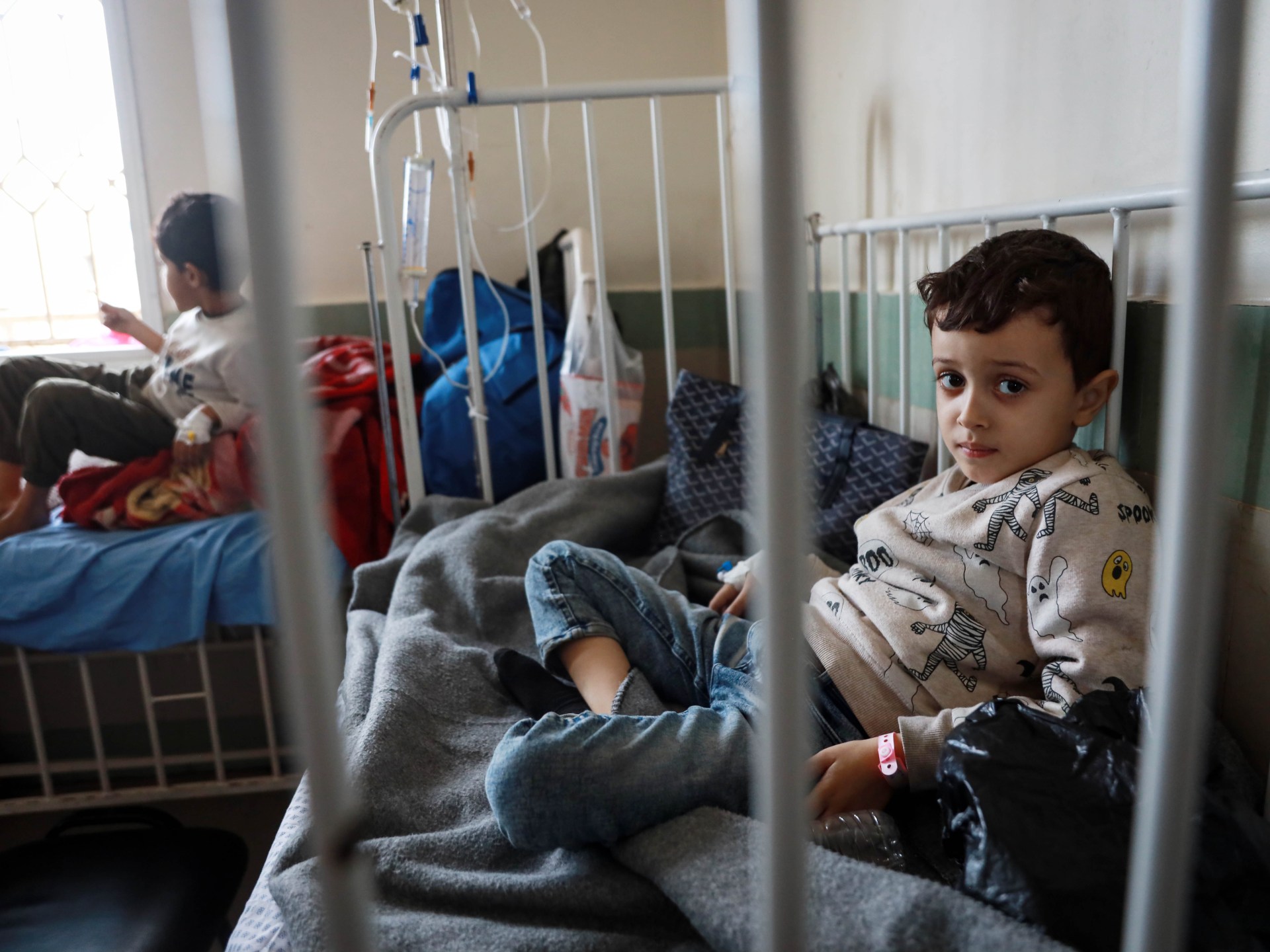
Meningitis cases are surging in Gaza as overcrowding and damaged sanitation systems put children at acute risk, exposing the public-health consequences of collapsed infrastructure.
Executive Takeaways
- Outbreak signal: Meningitis cases are rising sharply across Gaza, with overcrowding and damaged sanitation cited as primary transmission drivers.
- Children at highest risk: Pediatric populations in dense displacement sites face elevated exposure to bacterial and viral meningitis pathogens.
- Infrastructure is the vector: Sewage contamination, water scarcity and clinic closures are amplifying a disease that is largely preventable through hygiene and vaccination.
- Surveillance gap: Fragmented reporting and disrupted lab capacity mean official case counts likely understate true incidence.
- What to watch: Vaccination coverage rates, water-quality testing, laboratory confirmation capacity and seasonal respiratory-disease overlap in the next 12–24 months.
Section 1: The Core Event & Breaking Timeline
Meningitis is raising alarm across Gaza, where a convergence of overcrowding and damaged sanitation infrastructure is placing children at acute risk, according to reporting from Al Jazeera. The dispatch describes a public-health emergency in which the disease is spreading through conditions that are fundamentally environmental: too many people in too little space, with water and waste systems that no longer function reliably. Meningitis—an inflammation of the membranes surrounding the brain and spinal cord—can progress from fever and headache to permanent neurological damage or death within hours if untreated, making early detection and rapid clinical response decisive.
The timeline of concern is compressed. Displacement has concentrated families into shelters, tent encampments and repurposed buildings where respiratory and contact transmission routes are effectively optimized for pathogens. Damage to sewage networks and wastewater treatment has introduced fecal contamination into living environments, while water scarcity forces households to ration and reuse water in ways that elevate exposure risk. Each of these factors independently raises meningitis risk; together, they compound it.
Clinically, the presentation matters. Bacterial meningitis—including meningococcal and pneumococcal strains—carries case-fatality rates that can reach double digits even with treatment, and substantially higher without it. Viral meningitis is more common and typically less severe but still burdens a health system operating far below capacity. In Gaza, where clinics have been damaged, supplies are constrained and referral pathways are disrupted, the distinction between bacterial and viral cases is often made late or not at all—precisely the scenario in which outcomes deteriorate fastest.
The initial reaction from the global health community has centered on surveillance and prevention rather than treatment alone. Public-health specialists consistently emphasize that meningitis is a vaccine-preventable disease and that hygiene, clean water and adequate spacing are the first line of defense. The Al Jazeera report frames the surge not as an isolated pathogen event but as a systems failure: when sanitation collapses, diseases that are normally controlled through routine public-health infrastructure re-emerge. Markets and supply chains for vaccines, antibiotics and water-treatment consumables are the practical levers, and those levers are currently under strain.
Section 2: Deep Technical & Financial Architecture
The mechanics of meningitis transmission explain why infrastructure damage is so consequential. Bacterial meningitis spreads through respiratory droplets and close contact—conditions that overcrowded shelters amplify directly. Viral meningitis, meanwhile, is frequently linked to enteroviruses transmitted via the fecal-oral route, which means sewage contamination and compromised handwashing infrastructure are not background conditions but active transmission channels. When both routes are simultaneously elevated, as in Gaza's displacement sites, the effective reproduction potential of multiple pathogens rises at once.
From a health-economics standpoint, the cost architecture of an outbreak is heavily front-loaded. Vaccination is comparatively inexpensive per dose; treatment of severe bacterial meningitis—involving hospitalization, intravenous antibiotics, and often intensive care—is orders of magnitude costlier. Add the long-tail costs of neurological sequelae, including hearing loss and cognitive impairment in children, and the economic case for prevention becomes overwhelming. The problem is that prevention requires functioning cold chains, reliable electricity, clean water and trained staff—precisely the assets that infrastructure collapse destroys first.
The technology and logistics stack matters here. Vaccine deployment depends on temperature-controlled storage; water safety depends on chlorination and testing capacity; outbreak detection depends on laboratory confirmation and case-based surveillance. Each layer has a failure mode. Without reliable power, cold-chain integrity is compromised. Without laboratory reagents and trained technicians, case counts become syndromic estimates rather than confirmed diagnoses. Without water-quality testing, contamination events go undetected until clinical cases appear—by which point transmission has already occurred.
Unit economics at the household level are equally stark. Families in crowded settings face a daily calculus: water for drinking versus water for hygiene, and time spent seeking care versus time spent securing basic needs. When clean water is scarce, handwashing declines; when clinics are distant or overcrowded, care-seeking is delayed. These behavioral responses are rational under constraint but epidemiologically costly, converting what would be manageable individual cases into cluster events.
Financing the response requires layered funding: emergency health-cluster allocations for vaccines and antibiotics, WASH (water, sanitation and hygiene) funding for infrastructure repair and water trucking, and surveillance funding for laboratory restoration. Historically, WASH and surveillance are the least generously funded components relative to their impact—a persistent structural bias in humanitarian financing that outbreak data repeatedly exposes. The meningitis surge is, in financial terms, a downstream liability created by underinvestment in upstream sanitation.
Section 3: Industry & Global Market Ripple Effects
The immediate market effects are concentrated in public-health procurement. Demand for meningococcal and pneumococcal vaccines, broad-spectrum antibiotics and rapid diagnostic tests rises during outbreaks, and humanitarian procurement agencies must reallocate stockpiles. Global vaccine manufacturers operate on multi-year production cycles, meaning surge demand is met through buffer stocks and reallocation rather than rapid capacity expansion. Any concurrent outbreak elsewhere in the region tightens that buffer further.
The WASH supply chain is the second pressure point. Water-treatment chemicals, portable chlorination units, hygiene kits and wastewater pumping equipment are standard humanitarian commodities, but their deployment depends on access and logistics. When border crossings and transport corridors are constrained, lead times stretch from days to weeks—a delay that directly translates into additional transmission cycles. Suppliers of compact, low-power water-treatment systems have seen sustained humanitarian demand as a result.
Diagnostics represent a third, often underappreciated market. Rapid antigen tests and portable molecular platforms allow case confirmation outside centralized laboratories, and their deployment in low-resource settings has expanded substantially over the past decade. In Gaza, the constraint is less the availability of technology than the ability to deliver, power and staff it. This gap between technological capability and operational reality is a recurring theme in humanitarian health technology, and it shapes procurement priorities toward ruggedized, low-infrastructure solutions.
Broader ecosystem effects include pressure on regional health systems that may receive referred patients, and on donor budgets that must absorb emergency allocations. Historically, outbreak response funding competes with—rather than supplements—routine health financing, meaning that a meningitis surge can indirectly degrade immunization and maternal-care programs elsewhere. Investors and analysts tracking global health and humanitarian logistics should watch procurement tenders, vaccine stockpile releases and WASH contract awards as leading indicators of escalation.
Section 4: Critical Perspectives, Analyst Debates & Risk Factors
The central analytical debate concerns attribution and scale. One perspective holds that the reported surge reflects genuine epidemiological escalation driven by environmental collapse. A contrasting view emphasizes surveillance artifacts: when reporting systems are disrupted, apparent surges can reflect changed detection patterns rather than true incidence changes. Most public-health analysts land in between—accepting that both dynamics are operating simultaneously, and that the practical response is the same regardless of the precise split.
A second debate concerns prioritization. Some specialists argue that vaccination campaigns should be the immediate focus, given that meningitis is vaccine-preventable and campaigns can be executed rapidly where access permits. Others contend that without restoring water and sanitation, vaccination addresses only part of the transmission picture—particularly for enterovirus-driven viral meningitis, against which vaccines offer no protection. The consensus position is that both tracks are necessary and neither is sufficient alone.
Risk factors are substantial and interlocking. Seasonal overlap with respiratory illness can overwhelm already strained clinical capacity. Antimicrobial resistance complicates empiric treatment when laboratory confirmation is unavailable. Cold-chain failures can render vaccine doses ineffective without any visible signal. And data quality remains a persistent vulnerability: without reliable case definitions and laboratory confirmation, both under- and over-estimation are possible, complicating resource allocation.
Regulatory and access friction adds another layer. Humanitarian health procurement operates under stringent quality standards, and expedited pathways exist but still require documentation and verification. Meanwhile, the operational environment constrains the movement of supplies and personnel, creating a mismatch between what the system knows how to do and what it can actually execute. Analysts consistently flag this execution gap—not scientific or technological limitation—as the binding constraint in Gaza's outbreak response.
Section 5: Strategic Forecast & Road Ahead
Over the next 12 months, the trajectory of the meningitis surge will hinge on three measurable variables: vaccination coverage in displacement sites, water-quality indicators, and laboratory confirmation capacity. If immunization campaigns reach high coverage in high-density settings and water chlorination is restored to basic standards, case incidence should decline. If either falters, cluster events are likely to persist and potentially expand into adjacent areas.
Key milestones to monitor include the publication of updated case counts with laboratory confirmation, the launch and coverage reporting of any targeted vaccination campaign, and the restoration of wastewater treatment and water-testing infrastructure. Each of these is observable through health-cluster reporting and humanitarian situation updates. Analysts should treat improvements in any single indicator cautiously; the epidemiological signal is strongest when all three move together.
In the 12–24 month horizon, the strategic question is whether emergency response transitions into durable infrastructure restoration. Meningitis outbreaks are, historically, symptoms of sanitation failure—and sanitation failure is a capital-investment problem, not merely an emergency-relief problem. The longer-term forecast therefore depends on whether WASH reconstruction is funded and executed, or whether the system remains in perpetual emergency mode, cycling through preventable outbreaks.
What to watch, concretely: vaccine stockpile releases and procurement tenders; water-quality testing results where published; pediatric hospital admission trends; and any evidence of antimicrobial resistance in confirmed bacterial cases. For investors and analysts in global health, humanitarian logistics and water infrastructure, the Gaza meningitis surge is a case study in how infrastructure failure converts into health-system liability—and in why upstream sanitation investment is the cheapest form of outbreak prevention available.




Comments (0)
No comments yet. Be the first to share your thoughts!
Leave a Comment