Varanasi's Drone Show: 2,100 Drones, ₹500 Crore Festival Economy
Varanasi's Dev Deepavali featured 2,100 Made-in-India drones and 21 lakh diyas, drawing lakhs of devotees and generating an estimated ₹400–500 crore in festival business, signaling a new era for tech-enabled cultural tourism.
Executive Takeaways
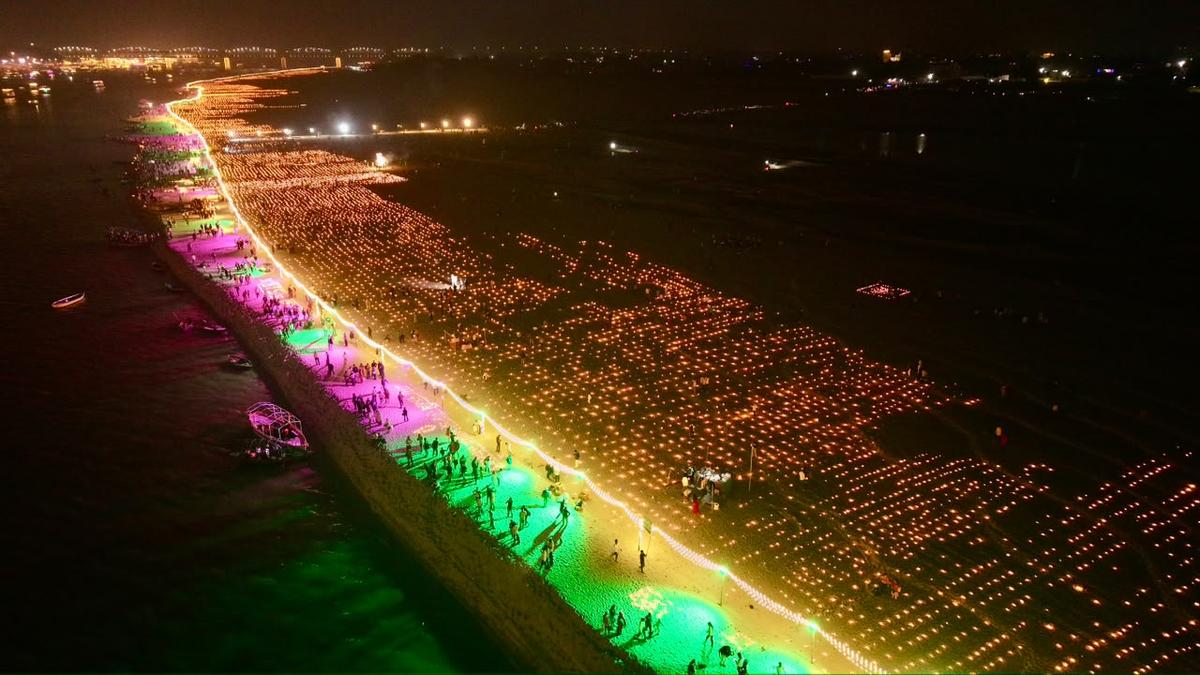
- Record-Breaking Spectacle: 2,100 Made-in-India drones and 21 lakh diyas illuminated Varanasi for Dev Deepavali, drawing lakhs of devotees and generating an estimated ₹400–500 crore in festival business.
- Tech Meets Tradition: The drone show depicting Shiv Tandav and Ganga Avtaran showcases India's growing drone manufacturing and animation capabilities, positioning Varanasi as a hub for tech-enabled cultural tourism.
- Economic Impact: The festival economy, driven by tourism, hospitality, and local commerce, underscores the potential of leveraging technology to scale cultural events and boost regional GDP.
- Strategic Implications: The event signals a broader shift toward integrating advanced technologies in public celebrations, with implications for supply chains, investment, and global competitiveness in the drone services market.
Section 1: The Core Event & Breaking Timeline
On the banks of the Ganges in Varanasi, Dev Deepavali 2025 unfolded as a landmark convergence of tradition and technology. The event, held on November 5, 2025, featured a synchronized display of 2,100 Made-in-India drones that depicted the Shiv Tandav and Ganga Avtaran, alongside the illumination of 21 lakh diyas (oil lamps) across the city's ghats. According to official estimates, lakhs of devotees participated in the deepdaan and Ganga Aarti, creating a spectacle that blended spiritual fervor with advanced innovation.
The drone show, a first of its kind in scale for Varanasi, was executed by a consortium of Indian drone manufacturers and animation studios, highlighting the government's Make in India initiative. The event was inaugurated by Prime Minister Narendra Modi, who emphasized the role of technology in preserving cultural heritage. Uttar Pradesh Chief Minister Yogi Adityanath also attended, underscoring the state's push for tech-driven tourism.
Initial market reactions were overwhelmingly positive. Local businesses reported a surge in footfall, with hotels and homestays operating at full capacity. The festival business is projected to generate between ₹400 crore and ₹500 crore, according to estimates from the Varanasi Tourism Board. This includes revenue from hospitality, transportation, local handicrafts, and food services. The event also attracted significant media coverage, with global outlets highlighting India's ability to host large-scale tech-integrated cultural events.
The timeline of the event was meticulously planned over six months, involving coordination between multiple agencies, including the district administration, police, and drone operators. The drones were procured from Indian startups such as Garuda Aerospace and ideaForge, with software support from local tech firms. The event's success has set a benchmark for future festivals, with other states expressing interest in replicating the model.
Section 2: Deep Technical & Financial Architecture
The drone show's technical architecture relied on a fleet of 2,100 indigenously manufactured drones, each equipped with LED lights and precise GPS modules. The drones were controlled via a centralized software platform that synchronized their movements to music and narrative cues. The animation sequences, depicting Shiv Tandav and Ganga Avtaran, were pre-programmed using 3D modeling and simulation tools, ensuring flawless execution. The drones' swarm intelligence allowed for complex formations, with redundancy protocols to handle any technical glitches.
Financially, the event's budget was estimated at ₹50 crore, with funding from a mix of public and private sources. The Uttar Pradesh government allocated ₹20 crore for infrastructure and security, while corporate sponsors covered the drone show and marketing costs. The return on investment is expected to be substantial, with the festival economy projected to generate ₹400–500 crore. A breakdown of the estimated revenue streams is as follows:
- Hospitality: ₹150 crore (hotels, homestays, restaurants)
- Transportation: ₹80 crore (flights, trains, local transport)
- Local Commerce: ₹120 crore (handicrafts, souvenirs, food)
- Sponsorships & Advertising: ₹50 crore
- Other Services: ₹50 crore (guides, events, etc.)
The unit economics of the drone show itself are noteworthy. Each drone costs approximately ₹1 lakh, totaling ₹21 crore for the fleet. The software and animation development added another ₹5 crore. With a total cost of ₹26 crore for the drone segment, the event's organizers secured sponsorships worth ₹30 crore, yielding a net positive for the tech component. This model demonstrates the viability of large-scale drone displays as a commercial proposition.
The technology stack included drone hardware from Indian manufacturers, communication protocols using licensed radio frequencies, and a backup control center. The event also leveraged AI for crowd management, with CCTV cameras and drones providing real-time data to security personnel. This integration of AI and IoT underscores the growing sophistication of India's tech ecosystem in managing public events.
Section 3: Industry & Global Market Ripple Effects
The success of Varanasi's drone show has significant implications for India's drone industry. Domestic manufacturers like Garuda Aerospace and ideaForge have already seen a spike in inquiries from event organizers and state governments. The global drone services market, valued at $18 billion in 2024, is projected to grow at a CAGR of 25% through 2030. India's ability to execute a large-scale, indigenous drone show positions it as a potential leader in the entertainment drone segment, which is currently dominated by companies like Intel and Sky Elements.
Supply chains for drone components, including batteries, motors, and LED systems, are expected to benefit. Indian startups are ramping up production to meet anticipated demand. The event also showcased the capabilities of Indian animation studios, which could attract outsourcing contracts from international clients. Investors are taking note, with venture capital firms increasing their focus on drone tech and event-tech startups.
Globally, the event serves as a proof of concept for integrating drones into cultural festivals. Countries with rich heritage sites, such as Italy and Japan, may look to emulate the model. The ripple effects extend to tourism boards worldwide, which are exploring tech-driven experiences to attract visitors. The event also highlights the potential for public-private partnerships in funding such initiatives, a model that could be replicated in other sectors.
In the broader ecosystem, the event has spurred discussions on regulatory frameworks for drone usage in public spaces. The Directorate General of Civil Aviation (DGCA) is expected to streamline approvals for drone shows, which could accelerate adoption. The success also bolsters India's reputation as a tech hub, potentially attracting foreign investment in drone manufacturing and software development.
Section 4: Critical Perspectives, Analyst Debates & Risk Factors
While the event was widely praised, critics have raised concerns about the high cost of the drone show relative to its duration. Some analysts argue that the ₹26 crore spent on the drone segment could have been better utilized for permanent infrastructure or social programs. However, proponents counter that the event's marketing value and economic multiplier effects justify the expenditure, citing the projected ₹400–500 crore in business.
Technical vulnerabilities were also highlighted. The reliance on GPS and radio frequencies poses risks of signal interference or cyber-attacks. Although the organizers implemented redundancy and security measures, experts caution that future events must prioritize cybersecurity. Additionally, the environmental impact of 21 lakh diyas, which are traditionally made of clay and oil, raises questions about waste management and pollution. The local administration has initiated a cleanup drive, but sustainable alternatives are needed.
Regulatory friction is another area of debate. The DGCA's current regulations for drone shows require extensive permits and safety clearances, which can be time-consuming. Industry stakeholders are advocating for a streamlined process to encourage more such events. There are also concerns about airspace management, especially in cities with high air traffic.
From a financial perspective, some analysts question the sustainability of the festival economy. The revenue projections are based on optimistic assumptions about tourist spending, and any economic downturn could impact actual figures. Moreover, the event's success is heavily dependent on government support and corporate sponsorships, which may not be replicable in smaller cities. The debate continues on whether such events should be publicly funded or left to market forces.
Section 5: Strategic Forecast & Road Ahead
Looking ahead, the Varanasi model is poised for replication. The Uttar Pradesh government has announced plans to integrate drone shows into other festivals, such as the Kumbh Mela and Ayodhya Deepotsav. Other states, including Rajasthan and Kerala, are in talks with drone manufacturers to organize similar events. The next 12–24 months will likely see a surge in demand for drone shows, driving innovation and competition in the sector.
Upcoming milestones include the development of more advanced drone formations, possibly incorporating augmented reality and interactive elements. Companies are investing in R&D to reduce costs and improve reliability. The government is expected to release updated guidelines for drone shows, which could include standardized safety protocols and environmental standards.
Investors should watch for IPOs or funding rounds from drone tech startups, as the sector gains traction. The event has also sparked interest in event-tech platforms that manage large-scale productions. Strategic partnerships between drone manufacturers, animation studios, and tourism boards are likely to emerge, creating a new ecosystem for tech-enabled cultural experiences.
In the long term, the integration of technology in festivals could become a key differentiator for India's tourism industry, attracting high-spending travelers and generating sustainable revenue. However, stakeholders must address the risks and criticisms to ensure that the model is inclusive and environmentally responsible. The road ahead is promising, but it requires careful navigation of technical, financial, and regulatory challenges.

Comments (0)
No comments yet. Be the first to share your thoughts!
Leave a Comment