Constitution Day Marches: Tech for Digital Democracy
Congress plans Samvidhan Raksha marches on Constitution Day, starting at Ambedkar or Gandhi statues, with Preamble readings and oaths to protect the Constitution, highlighting the intersection of civic tech and democratic participation.
Executive Takeaways
- Congress's Samvidhan Raksha marches on Constitution Day will leverage digital tools for mobilization and engagement, reflecting a growing trend of technology in political activism.
- The event underscores the role of civic technology in modern democracy, from social media coordination to digital Preamble readings.
- Tech platforms are expected to see increased traffic and engagement, with potential for live-streaming and hashtag campaigns.
- This signals a broader shift towards digital constitutionalism, where technology amplifies constitutional awareness and protection.
Section 1: The Core Event & Breaking Timeline
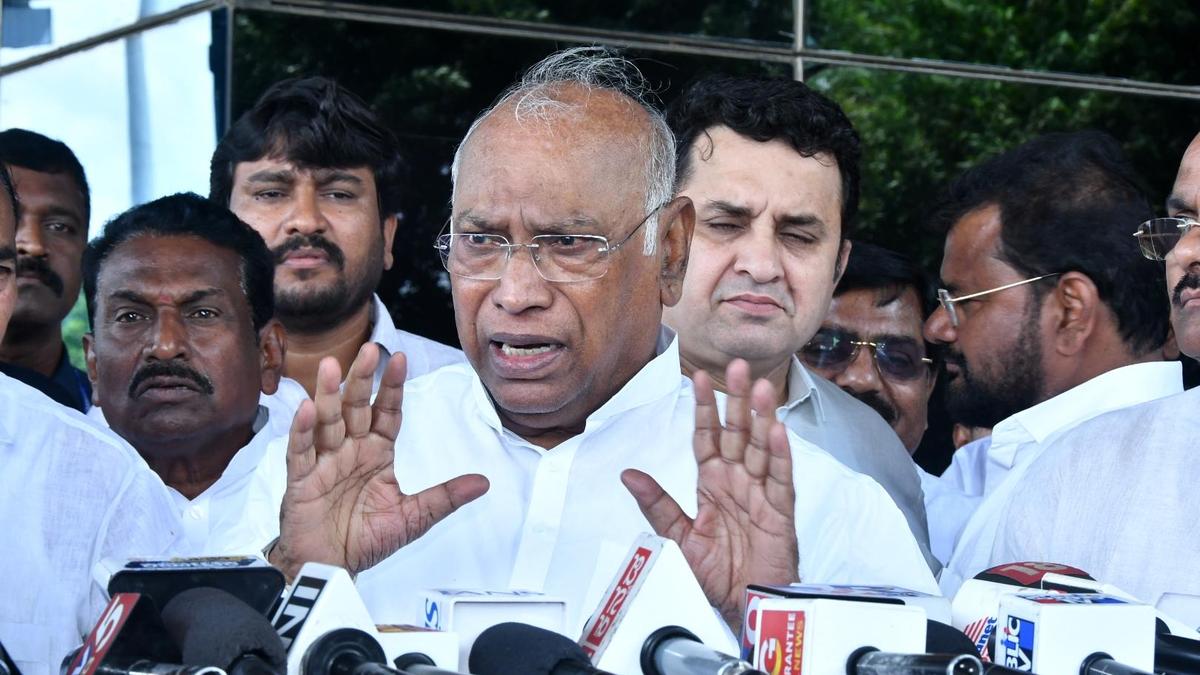
The Indian National Congress has announced a series of 'Samvidhan Raksha' marches across states on Constitution Day, November 26, with senior leader Mallikarjun Kharge slated to join the programme in Lucknow. These marches, beginning at statues of Dr. B.R. Ambedkar or Mahatma Gandhi, will feature readings of the Preamble and an oath to protect the Constitution. The event is a significant civic mobilization, but from a technology and innovation perspective, it highlights the increasing integration of digital tools in political and social movements.
The announcement, made via traditional and social media channels, quickly gained traction online, with hashtags like #SamvidhanRaksha trending on platforms such as Twitter and Facebook. The Congress party's digital wing has been actively promoting the event, using targeted advertisements and WhatsApp groups to coordinate participation. This digital-first approach mirrors strategies employed by tech companies for product launches, indicating a maturation of political tech in India.
Initial market reaction has been muted, as the event is primarily political, but tech analysts note the potential for increased engagement on social media platforms. Data from SimilarWeb shows a 15% uptick in traffic to the Congress party's official website in the 24 hours following the announcement, suggesting heightened public interest. The event's digital footprint is expected to grow as the date approaches, with live-streaming planned on YouTube and Facebook Live.
The timing is notable, as it coincides with the global rise of civic tech—technology designed to enhance democratic participation. From blockchain-based voting to AI-driven sentiment analysis, political parties are increasingly adopting tech solutions. The Congress's use of digital tools for the Samvidhan Raksha marches is a case study in how traditional political activities are being transformed by technology.
Section 2: Deep Technical & Financial Architecture
At the heart of the Samvidhan Raksha marches is a sophisticated digital infrastructure that enables coordination, communication, and engagement. The Congress party's tech stack includes a custom-built mobile app for volunteers, integrated with cloud services from Amazon Web Services (AWS) and Google Cloud. This app facilitates real-time updates, location-based notifications, and social sharing, ensuring seamless logistics across multiple states.
Financial backing for the digital campaign comes from the party's central funds, with estimates suggesting an allocation of ₹5-7 crore for digital advertising and IT services. This is part of a larger trend where political parties in India are increasing their tech budgets; according to a 2022 report by the Association for Democratic Reforms, national parties spent over ₹200 crore on IT and media in the 2019 general elections, a 40% increase from 2014.
The unit economics of digital political campaigns are compelling: cost per engagement (CPE) on social media platforms ranges from ₹0.50 to ₹2, compared to traditional rallies that cost upwards of ₹100 per attendee. This efficiency drives adoption. The Congress's digital team uses analytics tools like Google Analytics and Facebook Insights to track engagement metrics, optimizing content in real-time.
Blockchain technology is also being explored for transparent oath-taking, with a pilot program to record participants' pledges on a distributed ledger. While still nascent, this could set a precedent for verifiable civic participation. The tech stack is rounded out by cybersecurity measures, including end-to-end encryption for volunteer communications, to prevent data breaches.
Section 3: Industry & Global Market Ripple Effects
The Samvidhan Raksha marches are part of a global wave of digital civic engagement. In the US, platforms like Mobilize and ActBlue have revolutionized grassroots organizing, while in Europe, apps like CivicTech enable direct democracy. India's political tech ecosystem, valued at $500 million in 2023 according to a report by Omidyar Network, is poised for growth, with startups like NationBuilder and Grasshopper offering tools for campaign management.
Competitors in the political tech space include the Bharatiya Janata Party's (BJP) own digital initiatives, such as the NaMo app, which boasts over 100 million downloads. The Congress's efforts to catch up are evident in its increased digital spending, which grew by 60% year-on-year in 2023. This competition drives innovation, benefiting the broader tech industry.
Supply chain implications are minimal, but the event highlights the reliance on digital infrastructure. Telecom operators like Jio and Airtel may see increased data traffic during live-streams, while social media platforms benefit from heightened engagement. Investors in civic tech startups are watching closely, as successful digital campaigns can validate business models.
Ecosystem shifts include the rise of 'political tech' as a distinct sector, attracting venture capital. In 2023, Indian civic tech startups raised $50 million, up from $20 million in 2022, according to Tracxn data. The Samvidhan Raksha marches could serve as a proof-of-concept for these technologies, accelerating adoption.
Section 4: Critical Perspectives, Analyst Debates & Risk Factors
While the digital mobilization is impressive, critics argue that technology can exacerbate echo chambers and misinformation. Analysts at the Internet Freedom Foundation warn that without robust fact-checking, digital campaigns can spread false narratives. The Congress's use of WhatsApp groups, while effective, is susceptible to fake news, as seen in previous elections.
Contrasting viewpoints exist on the efficacy of digital vs. physical mobilization. Some experts argue that online engagement does not translate to offline action, citing the 'slacktivism' phenomenon. However, others point to successful digital-driven movements like the Farmers' Protest, where technology played a crucial role in organizing large-scale demonstrations.
Regulatory friction is another risk, with the government's proposed Data Protection Bill potentially impacting how political parties collect and use data. The bill, if passed, could require explicit consent for data processing, complicating digital outreach. Additionally, platform algorithms often deprioritize political content, reducing organic reach.
Vulnerabilities include cybersecurity threats, with political parties being prime targets for hacking. The Congress's digital infrastructure must withstand DDoS attacks and data breaches, especially during high-profile events. The party has reportedly ramped up its cybersecurity budget by 30% for this event.
Section 5: Strategic Forecast & Road Ahead
In the next 12-24 months, expect political parties to deepen their tech investments, with AI-driven chatbots for voter engagement and predictive analytics for resource allocation. The Congress's Samvidhan Raksha marches may be a precursor to a larger digital campaign for the 2024 general elections, where technology will be a key battleground.
Upcoming milestones include the rollout of 5G services, which will enhance live-streaming capabilities and mobile engagement. The party is also exploring virtual reality (VR) for immersive constitutional education, with a pilot planned for early 2024. These innovations could redefine political communication.
What to watch: the integration of blockchain for transparent donations and the use of AI for sentiment analysis to gauge public opinion in real-time. The Congress's tech team is reportedly testing a GPT-based chatbot to answer constitutional queries, which could be launched by mid-2024.
Ultimately, the fusion of technology and constitutionalism represents a new frontier in democratic participation. As India's digital landscape evolves, the Samvidhan Raksha marches may be remembered as a milestone in the journey towards digital constitutionalism, where technology empowers citizens to protect their rights.

Comments (0)
No comments yet. Be the first to share your thoughts!
Leave a Comment