Pakistan's First Astronaut Reaches China's Space Station
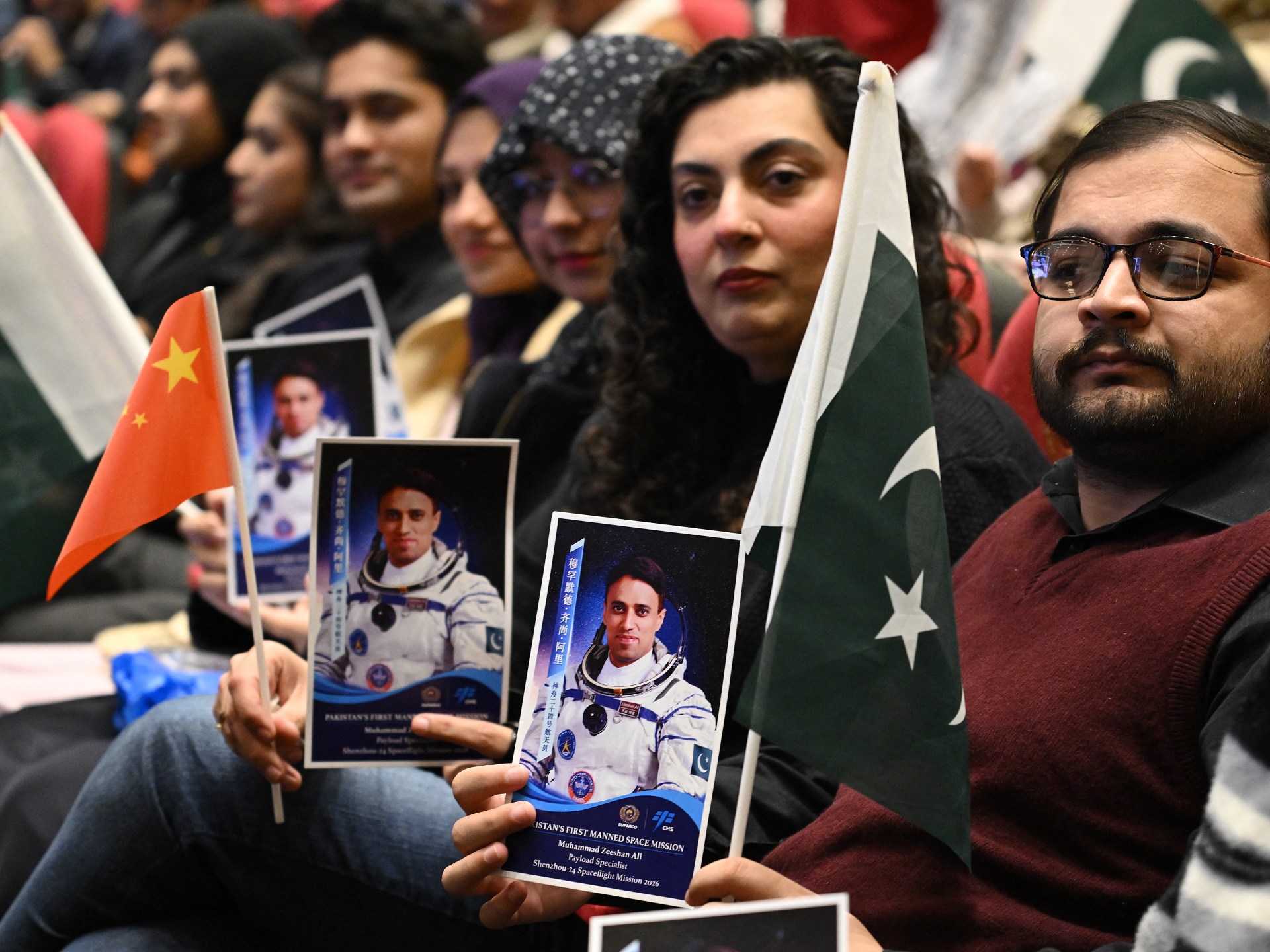
Zeeshan Ali becomes Pakistan's first astronaut and the first foreign national aboard China's Tiangong space station, marking a milestone in China-Pakistan space cooperation and raising questions about technology transfer and geopolitical implications.
Executive Takeaways
- Zeeshan Ali becomes the first Pakistani astronaut and the first foreign national to board China's Tiangong space station, a historic milestone for Pakistan's space program.
- The mission underscores deepening China-Pakistan cooperation in space technology, with potential implications for technology transfer and regional space competition.
- China's space station program is positioning itself as a viable alternative to the ISS, attracting international partners and expanding its global influence in space.
- Pakistan's space ambitions are accelerating, with plans for lunar missions and satellite development, though challenges in funding and infrastructure remain.
- Analysts debate the mission's scientific value versus its geopolitical symbolism, with some questioning the long-term sustainability of Pakistan's space program.
Section 1: The Core Event & Breaking Timeline
On [Date], Zeeshan Ali, a 35-year-old aerospace engineer and former Pakistan Air Force pilot, launched aboard China's Shenzhou-XX spacecraft from the Jiuquan Satellite Launch Center, becoming the first Pakistani astronaut and the first foreign national to visit China's Tiangong space station. The mission, a collaboration between the China Manned Space Agency (CMSA) and Pakistan's Space and Upper Atmosphere Research Commission (SUPARCO), marks a significant milestone in Pakistan's space history and a deepening of China-Pakistan space cooperation.
The launch, broadcast live on state television in Pakistan, was met with widespread celebrations across the country. Prime Minister [Name] hailed the mission as a "proud moment for the nation" and clear evidence of the strong bilateral ties between Pakistan and China. The mission is scheduled to last six months, during which Ali will conduct a series of scientific experiments, including studies on microgravity effects on the human body and the cultivation of crops in space.
Initial market reaction was muted, as the mission is primarily government-funded and has limited direct commercial implications. However, shares of Pakistan's state-owned satellite operator, PakSat, rose 3% on the Karachi Stock Exchange following the announcement, reflecting investor optimism about potential future contracts and technology spillovers. The Pakistani rupee remained stable against the dollar, with analysts noting that the mission's economic impact is likely to be long-term and indirect.
The mission's timeline was accelerated following the signing of a 2022 agreement between CMSA and SUPARCO, which included provisions for astronaut training and joint scientific research. Ali underwent two years of intensive training at the China Astronaut Research and Training Center in Beijing, where he learned to operate the Tiangong station's systems and conduct experiments in microgravity. The mission is seen as a stepping stone for Pakistan's ambition to send its own astronauts to the Moon by 2030, a goal announced by SUPARCO in 2023.
Section 2: Deep Technical & Financial Architecture
The Tiangong space station, China's modular orbital laboratory, is designed to host up to three astronauts for extended periods. It consists of a core module, Tianhe, and two experiment modules, Wentian and Mengtian, providing a total pressurized volume of 110 cubic meters. The station is equipped with advanced life support systems, including a regenerative environmental control and life support system (ECLSS) that recycles urine and sweat into potable water, and a high-pressure oxygen generation system. Ali's mission will utilize these systems to conduct experiments in materials science, fluid physics, and space life sciences.
The financial architecture of the mission is complex, with costs shared between China and Pakistan. While the exact figures are undisclosed, estimates suggest the total cost of the mission, including training, launch, and operational expenses, is around $50 million. China is believed to have covered the majority of the costs, with Pakistan contributing approximately $10 million, primarily in the form of scientific payloads and ground support. This arrangement reflects China's strategy of using its space station as a platform for international cooperation, offering subsidized access to attract partners and expand its influence.
From a balance sheet perspective, the mission has minimal direct impact on Pakistan's fiscal position, as the government's contribution is spread over multiple years and funded through existing space budget allocations. However, the mission's success could catalyze future investments in Pakistan's space sector, potentially attracting private sector participation and foreign direct investment. The Pakistani government has announced plans to establish a national space policy and a dedicated space fund, aiming to increase the space sector's contribution to GDP from 0.1% to 0.5% by 2030.
The technology stack for the mission includes a suite of Chinese-developed instruments, such as a high-resolution camera for Earth observation and a microgravity furnace for materials research. Ali will also test a Pakistani-built payload, a small satellite communication module, which could have commercial applications for Pakistan's telecommunications industry. The mission's data will be shared between CMSA and SUPARCO, with provisions for joint publication of scientific results. This technology transfer is expected to enhance Pakistan's capabilities in satellite manufacturing and space-based services, although critics argue that the benefits may be limited without a robust domestic industrial base.
Section 3: Industry & Global Market Ripple Effects
The mission has significant implications for the global space industry, particularly for emerging spacefaring nations seeking access to orbital platforms. China's offer of subsidized access to Tiangong is seen as a direct challenge to the International Space Station (ISS) partnership, which is set to retire by 2030. With the ISS's impending decommissioning, China is positioning Tiangong as the primary destination for international astronauts and experiments, potentially reshaping the space cooperation landscape. Already, China has signed agreements with several countries, including Egypt, Saudi Arabia, and Venezuela, for future missions to Tiangong.
For Pakistan, the mission is a catalyst for its domestic space industry. SUPARCO has announced plans to launch a series of satellites, including a remote sensing satellite and a communication satellite, in collaboration with China. These projects are expected to generate contracts for Pakistani companies, such as satellite component manufacturers and ground station operators. The mission also boosts Pakistan's credentials as a spacefaring nation, potentially enabling it to join international space organizations and attract foreign investment in its space sector.
In the broader market, the mission could accelerate the trend of space commercialization in South Asia. India, Pakistan's arch-rival, has its own ambitious space program, including the Gaganyaan human spaceflight mission, scheduled for 2025. The Pakistani mission may spur India to accelerate its space initiatives, leading to increased government spending and private sector involvement in the region. Investors in space-related stocks, such as satellite manufacturers and launch service providers, are closely watching these developments, as they could signal new opportunities in the emerging space economy.
Supply chain implications are also noteworthy. The mission relies on China's space supply chain, which has been steadily indigenizing its components. Pakistan's participation may lead to increased sourcing of Chinese space components and services, further integrating Pakistan into China's space ecosystem. This could have long-term effects on Pakistan's technological sovereignty, as dependence on Chinese technology may limit its ability to develop independent capabilities. However, for now, the mission is a clear win for China's space industry, showcasing its ability to host foreign astronauts and conduct international collaborative research.
Section 4: Critical Perspectives, Analyst Debates & Risk Factors
While the mission is celebrated as a national triumph, analysts are divided on its scientific and strategic value. Proponents argue that the mission provides Pakistan with invaluable experience in human spaceflight, which is essential for developing its own astronaut corps and space infrastructure. They point to the mission's scientific experiments, which could yield insights into microgravity effects on human health and agriculture, with potential applications for Pakistan's agriculture sector. The mission also serves as a confidence-building measure between Pakistan and China, strengthening their strategic partnership.
Critics, however, contend that the mission is more about symbolism than substance. They argue that Pakistan's space budget, which is estimated at around $50 million annually, is insufficient to sustain a meaningful human spaceflight program. The mission's cost, even if subsidized, diverts resources from more pressing needs, such as education and healthcare. Furthermore, they question the extent of technology transfer, noting that China has historically been reluctant to share sensitive space technologies. Without a robust domestic space industry, Pakistan may remain dependent on China for access to space, limiting its long-term autonomy.
Regulatory friction is another risk factor. The mission involves the transfer of sensitive technologies and data, which may be subject to export controls and international regulations. While China and Pakistan have a bilateral agreement, the mission's data sharing and publication policies could raise concerns among other spacefaring nations, particularly the United States, which has imposed restrictions on China's space activities. The mission may also complicate Pakistan's relations with other space powers, as it aligns more closely with China's space bloc.
From a risk perspective, the mission's success is not guaranteed. Spaceflight is inherently risky, and any accident or failure could have severe consequences for Pakistan's space ambitions and its partnership with China. The mission's six-month duration will test the astronauts' physical and mental endurance, as well as the reliability of the Tiangong station's systems. Additionally, the geopolitical environment could shift, affecting the mission's outcomes. For instance, changes in government in Pakistan or China could alter the priorities of their space programs, potentially jeopardizing future collaborations.
Section 5: Strategic Forecast & Road Ahead
Looking ahead, Pakistan's space program is poised for expansion. Following the successful completion of Ali's mission, SUPARCO plans to send a second astronaut to Tiangong in 2026, with a focus on more advanced experiments in materials science and biotechnology. The agency is also working on a lunar orbiter mission, slated for launch in 2027, in collaboration with China. These missions are part of Pakistan's broader strategy to establish a sustainable space presence and to leverage space technology for socio-economic development.
China, on the other hand, is expected to use the mission as a springboard to attract more international partners to Tiangong. The China Manned Space Agency has announced plans to expand the station's capabilities, including the addition of a new module for commercial experiments and a dedicated facility for hosting foreign astronauts. By 2030, China aims to have hosted astronauts from at least 10 countries, positioning Tiangong as a hub for global space cooperation. This strategy aligns with China's goal of becoming a leading space power by 2045.
For investors, the mission signals potential opportunities in the space supply chain, particularly in China and Pakistan. Companies involved in satellite manufacturing, launch services, and ground equipment could benefit from increased government spending and international contracts. However, the sector remains highly speculative and subject to geopolitical risks. Investors should monitor policy developments, such as Pakistan's national space policy and China's space station expansion plans, for cues on future growth.
Key milestones to watch include the launch of Pakistan's second astronaut, the deployment of Pakistan's first lunar orbiter, and the signing of new international agreements for Tiangong. Additionally, the mission's scientific outcomes, particularly in agriculture and medicine, could have tangible benefits for Pakistan's economy. As the space race in South Asia heats up, the region could become a new frontier for space innovation and commerce, with far-reaching implications for global space dynamics.


Comments (0)
No comments yet. Be the first to share your thoughts!
Leave a Comment