Hyderabad's 2050 Skywalk Revolution: 120 Locations Identified
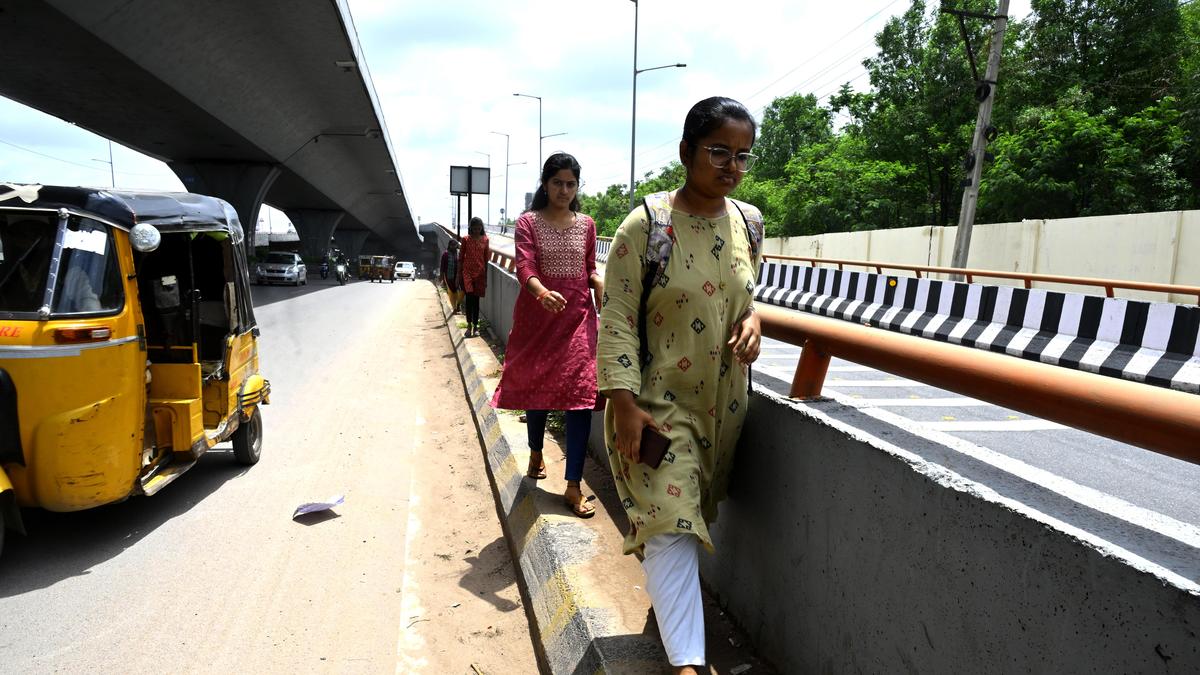
HUMTA unveils plan to give Hyderabad pedestrians priority by 2050, identifying 120 locations for skywalks and foot overbridges, including a 1-km skywalk linking Secunderabad Railway Station, Metro, and three bus stations.
Executive Takeaways
- HUMTA has identified 120 locations across Hyderabad for pedestrian infrastructure, including skywalks and foot overbridges (FoBs), with a completion target of 2050.
- The flagship project is a 1-km skywalk connecting Secunderabad Railway Station, the Metro station, and three bus stations, aiming to create a seamless multimodal transit hub.
- The plan emphasizes pedestrian safety and last-mile connectivity, but faces challenges in funding, execution, and integration with existing urban systems.
- If successful, the initiative could serve as a model for other Indian cities grappling with pedestrian infrastructure deficits.
The Core Event & Breaking Timeline
In a significant move to reclaim urban spaces for pedestrians, the Hyderabad Urban Metropolitan Transport Authority (HUMTA) has announced an ambitious plan to prioritize pedestrians and other road users by 2050. The authority has identified 120 locations across the city for interventions such as skywalks, foot overbridges (FoBs), and other infrastructure. The announcement, made on [date], outlines a long-term vision to transform Hyderabad's mobility landscape, which has long been dominated by motor vehicles.
The centerpiece of the plan is a 1-kilometer skywalk that will connect Secunderabad Railway Station, the Secunderabad Metro Station, and three bus stations in the vicinity. This skywalk is designed to provide a seamless, safe, and accessible pathway for pedestrians, eliminating the need to navigate busy roads and reducing congestion at one of the city's busiest transit hubs. The project is part of a broader effort to enhance last-mile connectivity and promote the use of public transport.
HUMTA officials have stated that the 120 locations were identified based on pedestrian footfall, accident data, and connectivity gaps. The interventions will be phased over the next few decades, with the skywalk at Secunderabad expected to be among the first to be implemented. The plan also includes improvements to footpaths, pedestrian crossings, and signage, aiming to create a comprehensive pedestrian network.
The announcement has been met with cautious optimism from urban planners and citizens alike. While the vision is laudable, questions remain about funding, timeline, and execution. The target year of 2050 is distant, and past infrastructure projects in Hyderabad have often faced delays and cost overruns. Nevertheless, the plan signals a shift in policy towards sustainable and inclusive urban mobility.
Deep Technical & Financial Architecture
The proposed skywalk at Secunderabad is a complex engineering project that will require careful planning and design. Spanning 1 kilometer, it will need to navigate over busy roads, railway tracks, and other obstacles. The structure will likely be elevated, with staircases, escalators, and elevators to ensure accessibility for all, including the elderly and differently-abled. The design will also need to incorporate safety features such as railings, lighting, and surveillance systems.
From a financial perspective, the project is expected to be capital-intensive. While HUMTA has not disclosed the estimated cost, similar skywalk projects in other Indian cities have cost upwards of ₹100 crore per kilometer. The funding is likely to come from a mix of state government grants, central government schemes, and possibly public-private partnerships (PPPs). The involvement of private players could bring in efficiency but may also lead to concerns about user fees or advertising rights.
The technology stack for the skywalk will include structural health monitoring systems, smart lighting, and possibly integrated ticketing for public transport. The skywalk could also feature retail spaces or kiosks, generating revenue to offset maintenance costs. However, the primary challenge will be integrating the skywalk with existing transport modes—rail, metro, and bus—to ensure a seamless experience for commuters.
Unit economics of such projects are often challenging. The benefits are largely indirect, in the form of reduced accidents, improved air quality, and time savings. Quantifying these benefits is difficult, but studies have shown that pedestrian infrastructure can yield high returns by boosting local commerce and property values. For the Secunderabad skywalk, the proximity to a major railway station and commercial areas could enhance its economic viability.
Industry & Global Market Ripple Effects
The HUMTA plan is part of a growing global trend towards pedestrian-friendly cities. Cities like Copenhagen, Barcelona, and New York have successfully implemented pedestrianization projects, reaping benefits in terms of public health, safety, and economic vitality. Hyderabad's initiative could inspire other Indian cities, such as Mumbai, Delhi, and Bengaluru, which are also grappling with pedestrian infrastructure deficits.
For the construction and infrastructure sector, the plan presents significant opportunities. Companies specializing in pre-engineered structures, elevators, and smart city technologies could see increased demand. The project may also attract global firms with expertise in urban mobility and skywalk design, leading to knowledge transfer and innovation.
Investors in real estate and retail could benefit from improved connectivity and increased footfall around the skywalk. The Secunderabad area, already a commercial hub, could see property values appreciate. However, there is also a risk of gentrification, which could displace low-income residents and small businesses.
On the global stage, the project could enhance Hyderabad's reputation as a modern, sustainable city, attracting foreign investment and talent. The city is already a major IT hub, and improved pedestrian infrastructure could make it more livable and attractive to multinational companies. However, the long timeline to 2050 may test the patience of investors and citizens alike.
Critical Perspectives, Analyst Debates & Risk Factors
While the plan has been welcomed by many, critics have raised concerns about its feasibility and prioritization. Some argue that the focus on skywalks and FoBs is a piecemeal approach that does not address the root cause of pedestrian woes: the lack of safe, at-grade footpaths and the dominance of motor vehicles. They advocate for comprehensive street redesign, including wider footpaths, traffic calming measures, and dedicated pedestrian zones.
Others question the choice of 2050 as the target year, suggesting that it is too far off and may lead to complacency. They point out that the project could be fast-tracked with adequate funding and political will. The lack of a clear implementation roadmap and budget allocation has also raised eyebrows.
From a regulatory standpoint, the project will need to navigate multiple clearances, including from the railways, metro, and municipal authorities. Coordination among these agencies is often a challenge in India, leading to delays. Land acquisition, if required, could also be a contentious issue.
Safety is another concern. Skywalks, if not properly maintained, can become unsafe and unattractive, as seen in some cities where they are used for anti-social activities. The design must incorporate elements that ensure safety and encourage use, such as good lighting, visibility, and active frontages.
Strategic Forecast & Road Ahead
In the next 12 to 24 months, we can expect HUMTA to release detailed project reports (DPRs) for the Secunderabad skywalk and other priority locations. The authority may also conduct feasibility studies and public consultations to gather feedback. Funding sources will need to be secured, and tenders may be floated for construction.
Key milestones to watch include the approval of the project by the state government, the signing of MoUs with stakeholders such as the Railways and Metro, and the commencement of construction. The progress of the skywalk will be a litmus test for HUMTA's ability to execute large-scale projects.
If the Secunderabad skywalk is successful, it could catalyze similar projects across the city and beyond. However, if it faces delays or cost overruns, it could undermine confidence in the broader plan. The project's success will depend on strong project management, transparent procurement, and community engagement.
Ultimately, the HUMTA plan represents a bold vision for Hyderabad's future. By prioritizing pedestrians, the city can become more sustainable, equitable, and livable. But vision alone is not enough; it requires sustained commitment, investment, and innovation to turn this vision into reality. The road to 2050 is long, but the journey begins now.


Comments (0)
No comments yet. Be the first to share your thoughts!
Leave a Comment