Madurai Collector: No Authorization for Temple Lamp Team
Madurai's District Collector says the Devasthanam never authorized the lamp-lighting team at Thirupparankundram, even as trustees cite historical continuity and Agamic evidence for the traditional site.
Executive Takeaways
- Authorization gap: The Madurai District Collector states the Devasthanam did not authorize the lamp-lighting team at the centre of the Thirupparankundram dispute.
- Trustee counterclaim: The Board of Trustees recorded a unanimous resolution to light the lamp at the traditional place, citing historical continuity, Agamic evidence and the opinions of the Sthanikars.
- Governance flashpoint: The disagreement exposes the fault line between administrative authority and hereditary/ritual authority inside one of Tamil Nadu's most visited temple complexes.
- Operational risk: Unresolved ritual jurisdiction creates crowd-management, security and revenue-continuity risks for temple administration and the surrounding local economy.
- What to watch: Written orders, trustee meeting minutes, Sthanikar statements and any state-level intervention over the next 12 to 24 months.
Section 1: The Core Event & Breaking Timeline
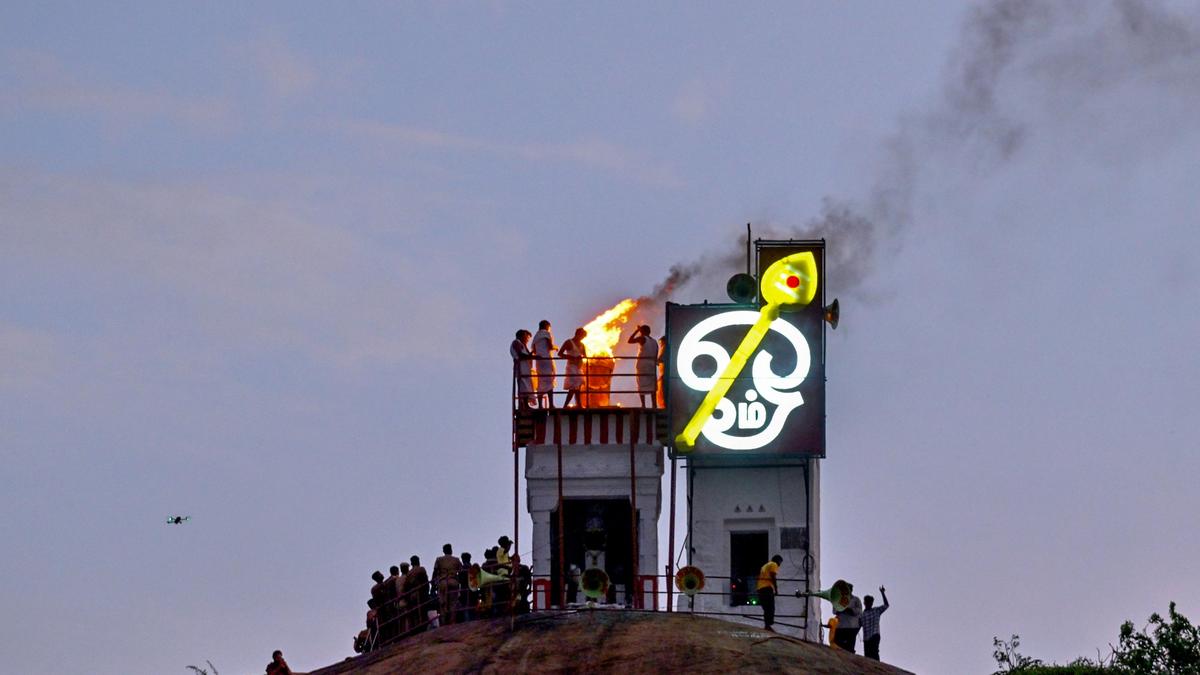
The dispute centres on a single act of ritual significance: the lighting of a lamp at a traditional location within the Thirupparankundram temple complex near Madurai. According to reporting by The Hindu, the Madurai District Collector has stated that the Devasthanam did not authorize the lamp-lighting team whose actions sit at the heart of the controversy. That statement is the administrative anchor of the story, because it draws a clear line between what temple trustees believe they have sanctioned and what the temple's executive administration says was formally approved.
The timeline, as it stands in the public record, runs in two directions. On one side is the Board of Trustees, which recorded a unanimous resolution to light the lamp at the traditional place. On the other is the district administration, which says no authorization was issued to the team that carried out or proposed the lamp-lighting. The gap between a unanimous board resolution and an administrative denial of authorization is the precise point of friction, and it is the detail that turns a local ritual question into a governance question with wider implications.
The Board's resolution is not framed in narrow procedural terms. It rests on three stated pillars: historical continuity, Agamic evidence and the opinions of the Sthanikars, the traditional ritual specialists attached to the temple. Each pillar carries weight in temple administration. Historical continuity speaks to long-standing practice; Agamic evidence speaks to scriptural and ritual authority; and the Sthanikars' opinions speak to the living custodianship of ritual knowledge. Together they form the trustees' case that the lamp-lighting belongs at the traditional place.
The immediate reaction has been procedural rather than financial. There is no market to move on a temple ritual dispute, but there is an operational constituency that watches closely: devotees, local traders, temple staff, ritual specialists and district officials responsible for public order around a high-footfall site. The Collector's statement effectively freezes the question in an administrative posture, signalling that any resolution will run through written authorization and formal process rather than through precedent alone. For now, the record contains a unanimous trustee resolution and an administrative statement that no authorization was given, and the space between them is where the next phase of the dispute will be fought.
Section 2: Deep Technical & Financial Architecture
Temple administration in Tamil Nadu operates through a layered architecture in which trusteeship, executive administration and district oversight intersect. The Devasthanam is the institutional entity that manages the temple's affairs, while the Board of Trustees provides a governing layer that records resolutions on matters of practice and policy. The District Collector sits at the administrative apex of district-level oversight, with responsibility that extends to public order, crowd safety and coordination during festivals and high-attendance events. The Thirupparankundram dispute is, at its core, a question about which layer holds authority over a specific ritual act.
The Board's resolution is a formal instrument. A unanimous recorded decision carries institutional weight because it represents the collective judgment of the governing body. Its stated basis, historical continuity, Agamic evidence and Sthanikar opinion, maps onto three distinct sources of legitimacy: precedent, scripture and custodial expertise. In governance terms, this is a triangulated justification, and it is designed to be difficult to dismiss as arbitrary. The Collector's statement, by contrast, addresses a different question: whether the team that acted had formal authorization from the Devasthanam as an administrative entity.
The financial architecture around a major temple is substantial even when it is not publicly itemised. Temple complexes generate revenue through donations, hundi collections, archana and ritual fees, prasadam sales, parking, and the commercial ecosystem of shops and stalls that cluster around pilgrim routes. Ritual disputes can disrupt footfall patterns, shift devotee flows and create uncertainty for the small businesses that depend on predictable attendance. The unit economics of a temple economy are driven by volume and regularity, and any interruption to routine affects the surrounding commercial chain.
Operationally, the dispute also touches on safety and logistics. Lamp-lighting at a traditional place involves specific locations, specific teams and specific timing, all of which interact with crowd movement. District administration oversight exists precisely because large gatherings require coordination on fire safety, access routes, medical response and security deployment. When authorization is contested, the administrative machinery loses a clear basis for planning, and that uncertainty is itself a risk factor.
The technology and data layer is increasingly relevant to modern temple management. Many large temples now use CCTV networks, crowd-counting systems, digital donation platforms and online booking for darshan and seva. These systems depend on stable operating protocols and clear lines of authority. A contested ritual jurisdiction can complicate the deployment of security resources and the integration of crowd-management data, because the question of who authorises an activity determines who is accountable for its safety envelope. The governance gap, in other words, has a direct operational and technological consequence.
Section 3: Industry & Global Market Ripple Effects
The immediate ecosystem around Thirupparankundram includes hereditary ritual specialists, temple staff, local traders, transport operators and hospitality businesses that serve pilgrims. The Sthanikars occupy a distinctive position in this ecosystem because their opinions are cited in the trustees' resolution as a source of authority. Any resolution that sidelines or overrides their view carries consequences for the relationship between traditional custodians and institutional administration, a relationship that is central to the functioning of temple economies across the region.
For the broader temple-administration sector in Tamil Nadu, the case is a precedent watch. Other temple trusts and devasthanams will observe how the tension between board resolutions and administrative authorization is resolved. If a unanimous trustee resolution can be set aside on the ground that the executive wing did not authorise the specific team, the balance of power between trusteeship and administration shifts. If, conversely, the resolution is treated as sufficient authority, the precedent strengthens the governing role of boards. Either outcome will be studied by administrators across the state.
Investors and institutional observers in the religious-tourism and cultural-heritage space track governance stability as a proxy for operational reliability. Temple towns are economic nodes, and predictable administration supports predictable visitor flows. Disputes that remain unresolved for extended periods can dampen the confidence of commercial stakeholders, from hotel operators to transport providers, who plan capacity around festival calendars and expected attendance. The ripple effect is gradual rather than sudden, but it is real.
Globally, the case echoes a wider pattern in which heritage institutions confront the tension between traditional authority and modern administrative frameworks. Museums, cathedrals, waqf boards and temple trusts worldwide face similar questions about who controls ritual and access. The Thirupparankundram dispute is a local instance of a global governance theme: how institutions preserve continuity while maintaining accountable, documented decision-making. The resolution model adopted here will be watched as a case study in balancing custodial tradition with administrative rigor.
Section 4: Critical Perspectives, Analyst Debates & Risk Factors
The central debate is about the locus of authority. One perspective holds that the Board of Trustees is the governing body and that its unanimous resolution, grounded in historical continuity, Agamic evidence and Sthanikar opinion, constitutes the authoritative decision. On this view, the administrative statement that no authorization was given reflects a procedural lapse or a communication gap rather than a substantive rejection of the ritual practice.
A contrasting perspective emphasises the administrative chain of command. District oversight exists to ensure public safety and orderly conduct at high-footfall sites, and authorization is the mechanism through which accountability is established. From this angle, even a well-grounded trustee resolution must be translated into formal administrative approval before a team acts. The Collector's statement is read as an assertion that this translation did not occur, leaving the activity without the administrative cover that safety and coordination require.
Risk factors cluster around escalation and ambiguity. Prolonged ambiguity can invite competing claims, mobilise devotee sentiment and complicate crowd management during peak festival periods. The absence of a clear written resolution creates space for rumour and for adversarial framing by interested parties. There is also reputational risk for the institutions involved, since public disagreement between trustees and district administration can erode confidence in temple governance.
Regulatory and procedural friction is another vulnerability. Temple administration is governed by statutory frameworks and departmental circulars that define the powers of trustees, executive officers and district officials. The dispute may ultimately turn on the interpretation of these instruments rather than on the merits of the ritual claim. Analysts will look for the documentary record: the exact wording of the trustee resolution, the scope of the Devasthanam's authorization procedures, and the formal basis of the Collector's statement. Each of these will determine whether the matter is resolved administratively or escalates to a higher authority.
Section 5: Strategic Forecast & Road Ahead
Over the next 12 months, the most likely path is procedural clarification. The trustees and the district administration will be under pressure to reconcile the unanimous resolution with the authorization requirement. Expect written communication, formal minutes and possibly a joint review of the temple's ritual protocols. The key milestone will be a documented decision that either ratifies the traditional practice with proper authorization or establishes a revised procedure for future lamp-lighting.
In the 12-to-24-month window, the case could produce a durable governance template. If the parties agree on a protocol that recognises the Board's resolution while embedding administrative sign-off, the outcome would strengthen both trusteeship and district oversight. Such a template would be portable to other temples facing similar questions, and it would reduce the risk of recurring disputes over ritual jurisdiction.
What to watch includes the Sthanikars' public position, since their opinions are cited as a pillar of the trustees' case; the Devasthanam's written authorization procedures; and any state-level guidance on the relationship between trustee resolutions and executive approval. Devotee sentiment and local commercial interests will also be indicators, because sustained disruption to temple routines affects the surrounding economy.
The strategic lesson is that ritual continuity and administrative accountability are not inherently opposed, but they require explicit interfaces. The Thirupparankundram dispute is a test of whether those interfaces exist and function. A clear, documented resolution would preserve historical practice while restoring operational certainty. An unresolved standoff would leave both the tradition and the administration exposed, and that is the outcome all stakeholders have reason to avoid.


Comments (0)
No comments yet. Be the first to share your thoughts!
Leave a Comment