Telangana HRC Probes Septic Tank Deaths: Safety Tech Gap Exposed
Telangana HRC investigates deaths of three workers in Bachupally septic tank, seeking report on compensation and safety lapses. The incident underscores critical gaps in hazardous cleaning technology and regulatory oversight.
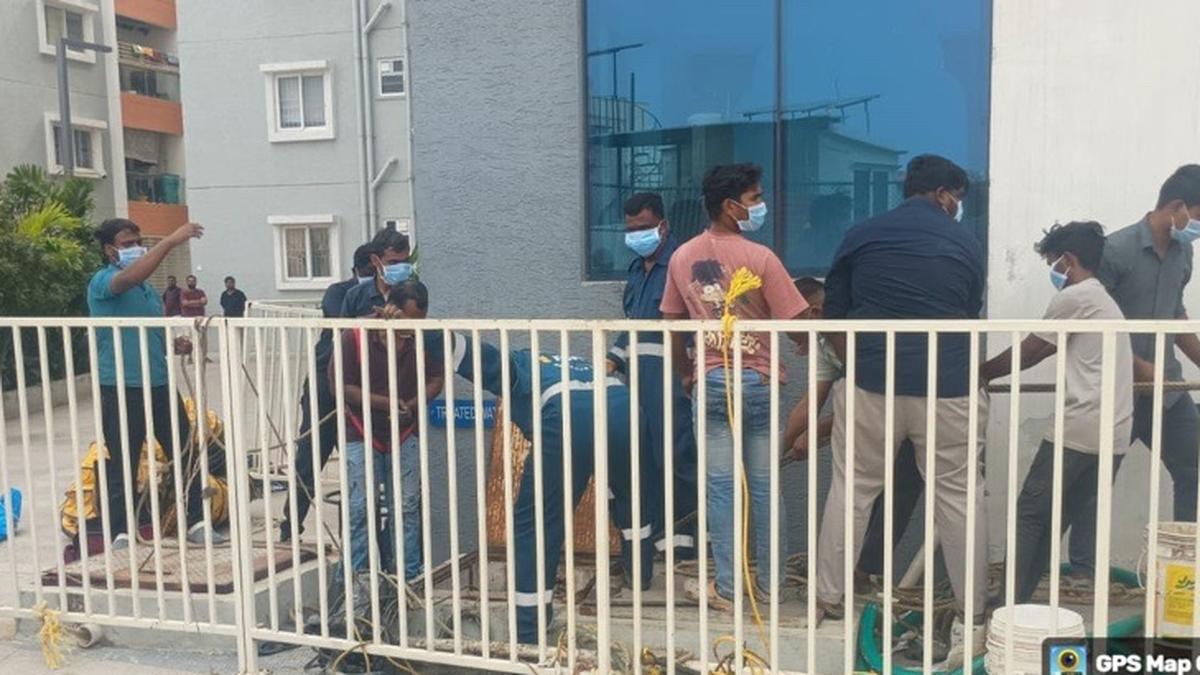
Executive Takeaways
- Three sanitation workers died in Bachupally after inhaling toxic gases while cleaning a septic tank, prompting suo motu cognizance by the Telangana Human Rights Commission (HRC).
- The HRC has demanded a detailed report from the Medchal district administration on ex-gratia payments and assistance to bereaved families, spotlighting gaps in compensation and safety enforcement.
- This incident underscores the persistent dangers of manual scavenging and the slow adoption of safety technologies in India's sanitation sector, despite legal prohibitions.
- Industry experts call for stricter penalties, mandatory use of robotic cleaning systems, and real-time gas monitoring to prevent future tragedies.
Section 1: The Core Event & Breaking Timeline
On [date], three sanitation workers lost their lives while cleaning a septic tank at an apartment complex in Bachupally, a suburb of Hyderabad in Telangana, India. The workers reportedly inhaled poisonous gases—likely hydrogen sulfide and methane—that had accumulated in the confined space, leading to asphyxiation. The incident occurred during routine maintenance work, highlighting the perilous conditions under which manual scavengers operate despite longstanding legal bans.
The Telangana Human Rights Commission (HRC) took suo motu cognizance of the deaths on [date], issuing notices to the Medchal district administration seeking a comprehensive report. The HRC's intervention focuses on the ex-gratia compensation extended or proposed to the families of the deceased, as well as the circumstances that led to the tragedy. This move underscores the commission's proactive stance on human rights violations, particularly those affecting marginalized workers.
The victims, identified as [names], were employed by a private contractor hired by the apartment association. Preliminary investigations suggest that safety protocols, such as the use of personal protective equipment (PPE) and gas detection devices, were either absent or inadequate. Local police have registered a case under relevant sections of the Indian Penal Code and the Prohibition of Employment as Manual Scavengers and their Rehabilitation Act, 2013.
Initial reactions from the local community and worker unions have been swift, with protests demanding justice and stricter enforcement of safety laws. The incident has also drawn attention from national media, amplifying pressure on authorities to act. While no official market reaction has been reported, the event has sparked discussions among industry stakeholders about the need for technological interventions in sanitation work.
Section 2: Deep Technical & Financial Architecture
The mechanics of septic tank cleaning involve inherent risks due to the accumulation of toxic gases such as hydrogen sulfide, methane, carbon dioxide, and ammonia. These gases can cause immediate asphyxiation, poisoning, or explosions. Traditional manual cleaning methods, often performed without proper ventilation or respiratory protection, remain prevalent in many parts of India, especially in unorganized sectors. The technology stack for safe cleaning includes gas detectors, forced-air ventilation systems, and robotic crawlers equipped with cameras and cutting tools. However, adoption is limited by cost and lack of awareness.
From a financial perspective, the cost of safety equipment is minimal compared to the potential liabilities. A basic gas detector costs around ₹10,000-₹20,000, while a full robotic cleaning system can range from ₹5 lakh to ₹20 lakh. In contrast, the ex-gratia compensation mandated under the Manual Scavengers Act is ₹10 lakh per death, plus other liabilities. The unit economics of sanitation work often incentivize contractors to cut corners, as they operate on thin margins and face little oversight. The apartment complex in Bachupally likely hired a contractor at a low bid, without verifying safety compliance.
The balance sheet impact on the contractor and the apartment association could be significant if negligence is proven. Under the law, both can be held liable for compensation and penalties. Insurance coverage for such hazardous work is rare, leaving families without immediate financial support. The HRC's inquiry into ex-gratia payments aims to ensure that the families receive the mandated compensation, but delays are common due to bureaucratic hurdles.
Technological solutions exist but require systemic change. For instance, IoT-enabled sensors can monitor gas levels in real-time and alert workers before entering tanks. Drones can be used for inspection, and robotic systems can perform cleaning without human entry. However, these technologies need regulatory push and financial incentives. The Swachh Bharat Mission has promoted mechanized cleaning, but implementation has been uneven. The Bachupally incident highlights the gap between policy and practice.
Data from the National Safai Karamcharis Finance and Development Corporation (NSKFDC) shows that over 400 workers have died in sanitation-related incidents since 2017, with many more unreported. The financial architecture for worker safety must include mandatory insurance, government subsidies for safety equipment, and strict penalties for violations. Without these, the cycle of tragedy is likely to continue.
Section 3: Industry & Global Market Ripple Effects
The sanitation industry in India is vast and largely informal, employing millions of workers. The deaths in Bachupally have ripple effects across the sector, prompting calls for stricter regulation and technological upgrades. Competitors in the sanitation technology space, such as manufacturers of robotic cleaners and gas detection systems, may see increased demand as awareness grows. Companies like Genrobotics, which produces the Bandicoot robot for manhole cleaning, could benefit from heightened scrutiny on manual scavenging.
Supply chains for safety equipment, including PPE and sensors, are likely to experience a surge in orders as municipal corporations and contractors rush to comply with safety norms. However, the fragmented nature of the market means that adoption will be slow unless enforced by law. Investors in cleantech and social impact funds are increasingly eyeing opportunities in sanitation technology, recognizing the potential for scalable solutions that address both safety and efficiency.
Globally, the incident resonates with similar challenges in other developing countries where manual scavenging persists. International organizations like the World Bank and WHO have long advocated for safe sanitation practices, and incidents like this underscore the need for technology transfer and capacity building. The Indian government's push for smart cities includes sanitation infrastructure, but the focus on worker safety is often overshadowed by infrastructure development.
Ecosystem shifts are underway as startups and NGOs collaborate to develop affordable solutions. For example, the Toilet Board Coalition and other groups are working on innovative financing models to make safety technology accessible. The Bachupally tragedy could serve as a catalyst for policy changes, such as mandatory use of mechanized cleaning for all septic tanks and sewers, and the establishment of a national registry of sanitation workers to ensure accountability.
Section 4: Critical Perspectives, Analyst Debates & Risk Factors
While the HRC's intervention is welcomed, critics argue that suo motu actions often lead to temporary fixes rather than systemic reforms. The commission's focus on ex-gratia payments, while important, does not address the root causes of manual scavenging. Analysts debate whether the government's rehabilitation schemes for manual scavengers are adequately funded and implemented. Some point out that the Prohibition of Employment as Manual Scavengers Act, 2013, has been poorly enforced, with few convictions and inadequate compensation.
Risk factors include the potential for political interference and bureaucratic apathy. The Medchal district administration may face pressure to downplay the incident, especially if local officials are complicit in allowing unsafe practices. The contractor involved may lack the financial capacity to pay compensation, leaving families in distress. Furthermore, the stigma associated with sanitation work often prevents workers from demanding their rights, perpetuating vulnerability.
Contrasting viewpoints exist on the role of technology. Optimists believe that robotic cleaning and IoT sensors can eliminate manual entry entirely, but skeptics argue that high costs and maintenance requirements make them impractical for widespread use in India's context. They advocate for low-tech solutions like improved ventilation and mandatory safety training, coupled with strict enforcement. The debate also extends to the responsibility of apartment associations and housing societies, which often prioritize cost over safety.
Regulatory friction is evident in the overlapping jurisdictions of various agencies, from municipal corporations to labor departments. The lack of a unified authority for sanitation worker safety leads to gaps in oversight. The HRC's report may recommend reforms, but implementation will require coordinated efforts across departments. Additionally, the informal nature of the workforce means that many workers are not registered, making it difficult to track safety compliance or provide social security.
Section 5: Strategic Forecast & Road Ahead
In the next 12-24 months, the Bachupally incident is likely to catalyze a series of policy measures at both state and national levels. The Telangana government may announce stricter penalties for manual scavenging and mandate the use of safety equipment. The HRC's report, expected within weeks, could recommend a comprehensive safety protocol for septic tank cleaning, including mandatory gas monitoring and the use of robotic systems for hazardous tasks. The state may also set up a dedicated fund for compensation and rehabilitation.
Technological advancements will play a crucial role. Startups in the sanitation tech space are expected to scale up production of affordable robotic cleaners and gas detectors. The government's Atal Innovation Mission and other initiatives could provide grants for R&D. We may see pilot projects in major cities where mechanized cleaning is deployed for all septic tanks, with real-time monitoring through IoT platforms. Data analytics will be used to identify high-risk areas and target interventions.
Milestones to watch include the HRC's report submission and the subsequent government action plan. The National Commission for Safai Karamcharis may also take up the issue, pushing for a national audit of sanitation worker deaths. The upcoming budget could see increased allocations for sanitation worker safety and rehabilitation. Additionally, the Supreme Court, which has been active on manual scavenging cases, may issue new guidelines based on this incident.
What to watch: Whether the Medchal district administration promptly disburses ex-gratia payments to the families, and whether the contractor is held accountable. The response of apartment associations and housing societies to safety mandates will be critical. Public awareness campaigns and worker unions' activism will keep the pressure on. Ultimately, the tragedy in Bachupally could be a turning point for sanitation worker safety in India, but only if technology, regulation, and social justice converge.




Comments (0)
No comments yet. Be the first to share your thoughts!
Leave a Comment