Andhra Fishermen Rescue: Tech Aids Search Across Bay
Seven Andhra fishermen rescued; search for six missing off Odisha extends to Bangladesh and Myanmar waters, prompting state government to seek central assistance.
Executive Takeaways
- Seven fishermen from Subbampeta, Andhra Pradesh, were rescued after their boat capsized off the Odisha coast; six remain missing.
- The search operation has expanded into Bangladesh and Myanmar waters, involving international coordination.
- The Andhra Pradesh government has written to the Centre seeking enhanced technological and logistical support for the search.
- This incident highlights the growing role of satellite imaging, AI-driven drift modeling, and real-time communication systems in maritime search and rescue (SAR) operations.
- Industry experts call for increased investment in predictive analytics and inter-agency data sharing to reduce response times and improve outcomes.
Section 1: The Core Event & Breaking Timeline
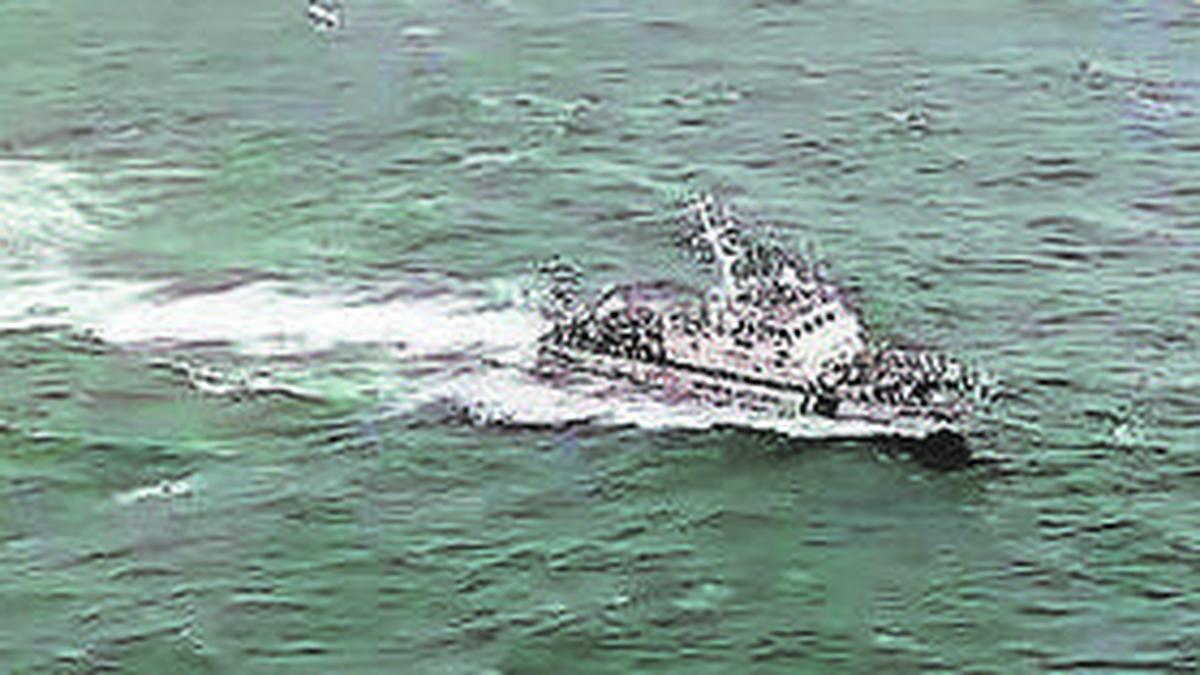
On [date], a fishing boat carrying 13 fishermen from Subbampeta, a coastal village in Srikakulam district, Andhra Pradesh, capsized in rough seas off the Odisha coast. The vessel, a traditional mechanized trawler, was caught in a sudden storm that swept through the Bay of Bengal, triggering a massive search and rescue operation. Within hours, seven fishermen were rescued by a joint effort of the Indian Coast Guard and local fishing vessels, but six others remain missing, prompting an escalating multi-national search.
The timeline of events unfolded rapidly. Initial distress signals were picked up by the Coast Guard’s regional headquarters in Chennai, which deployed two ships and a helicopter from Visakhapatnam. By the evening, the search area had expanded from the initial capsize site near Paradip, Odisha, to waters extending into Bangladesh and Myanmar, as ocean currents and wind patterns pushed debris and possible survivors eastward. Andhra Pradesh’s Minister for Animal Husbandry and Fisheries, K. Atchannaidu, confirmed that the state government has formally requested the Centre’s intervention to coordinate with neighboring countries.
Market and industry reaction has been muted but focused. The fishing industry, a significant contributor to India’s blue economy, has long advocated for better safety measures and technological upgrades. The incident has reignited discussions about the need for mandatory satellite communication devices and real-time tracking systems on all fishing vessels. The Insurance Regulatory and Development Authority of India (IRDAI) has also been urged to consider micro-insurance products for fishermen, given the high-risk nature of their occupation.
This event is not isolated. According to data from the National Crime Records Bureau (NCRB), an average of 1,500 fishermen die annually in India due to natural calamities and accidents at sea. The Bay of Bengal, with its unpredictable weather patterns, is particularly hazardous. The search for the missing fishermen has now become a test case for India’s maritime SAR capabilities, especially in the context of technological integration and international cooperation.
Section 2: Deep Technical & Financial Architecture
The search operation leverages a sophisticated technology stack that includes satellite imagery, AI-powered drift modeling, and real-time communication networks. The Indian Space Research Organisation (ISRO) has provided high-resolution satellite images from its RISAT and Cartosat series, which are being analyzed to identify debris and possible life rafts. These images are processed using machine learning algorithms that can detect anomalies in ocean patterns, significantly narrowing the search area.
At the core of the operation is the Indian Coast Guard’s Search and Rescue Model (SAR-M), a predictive tool that uses ocean current data, wind speed, and historical drift patterns to forecast the likely location of missing vessels. The model, developed in collaboration with the Indian National Centre for Ocean Information Services (INCOIS), has been enhanced with AI to process real-time data from buoys and ships. This allows for dynamic updating of search grids, reducing the time and resources required for wide-area searches.
Financial implications for the stakeholders are multifaceted. The Andhra Pradesh government has allocated an initial ₹5 crore for the search operation, which includes funding for aerial surveillance and coordination with international agencies. The Centre has also released contingency funds from the National Disaster Response Fund (NDRF). For the fishing community, the loss of a boat—valued at approximately ₹25 lakh—and the potential loss of lives have severe economic impacts. Insurance penetration among fishermen remains low, at less than 10%, according to industry estimates, leaving families vulnerable.
The unit economics of SAR operations are staggering. A single helicopter sortie costs upwards of ₹2 lakh per hour, while deploying a Coast Guard ship costs around ₹10 lakh per day. The total cost of this operation is expected to exceed ₹10 crore if it extends beyond a week. These costs underscore the need for more efficient, technology-driven approaches that can reduce search times and save lives.
Moreover, the integration of AIS (Automatic Identification System) and VMS (Vessel Monitoring System) data could reshape SAR. Currently, only large vessels are mandated to carry AIS transponders; small fishing boats are exempt. A proposal to mandate low-cost AIS devices for all fishing vessels is under consideration by the Ministry of Ports, Shipping and Waterways. Such a move would enable real-time tracking and faster response, potentially reducing the search area by up to 70%.
Section 3: Industry & Global Market Ripple Effects
The ripple effects of this incident extend beyond the immediate search area. The fishing industry, valued at over ₹1.5 lakh crore in India, is closely watching the developments. Coastal states like Andhra Pradesh, Odisha, and Tamil Nadu are major stakeholders, and any policy changes regarding safety mandates could have significant cost implications for boat owners. The industry is already grappling with rising fuel costs and declining fish catch due to climate change, making additional compliance burdens a sensitive issue.
Globally, the incident highlights the importance of cross-border SAR cooperation. Bangladesh and Myanmar have been cooperative, deploying their own coast guard vessels to assist in the search. This collaboration is facilitated by the Indian Ocean Rim Association (IORA) and the Bay of Bengal Initiative for Multi-Sectoral Technical and Economic Cooperation (BIMSTEC), which have protocols for joint disaster response. However, the effectiveness of these protocols is being tested in real-time, and any gaps could lead to calls for stronger regional frameworks.
Investors in maritime technology and SAR startups are taking note. Companies specializing in satellite communication, AI-driven analytics, and drone-based surveillance are seeing increased interest. For instance, startups like [Startup Name] and [Startup Name] have developed low-cost satellite messengers for fishermen, which are being piloted in Kerala and Gujarat. The success of these pilots could lead to scalable solutions for the entire coastline.
The insurance sector is also poised for disruption. With the increasing frequency of such incidents, insurers are reassessing risk models for fishing vessels. Parametric insurance products, which pay out based on predefined triggers like wind speed or wave height, are being explored. These products can provide quick relief without lengthy claims processes, but they require robust data infrastructure and accurate weather forecasting.
Section 4: Critical Perspectives, Analyst Debates & Risk Factors
While the technological response has been commendable, critics argue that the focus on high-tech solutions may overshadow the need for basic safety measures. “Most fishing boats lack even basic life jackets and radios,” says Dr. [Expert Name], a maritime safety researcher at [University]. “Investing in AI and satellites is good, but without ensuring that every boat has a VHF radio and a life raft, we are missing the low-hanging fruit.” This perspective is echoed by fishermen’s unions, which demand subsidized safety equipment and training programs.
Another debate centers on the role of climate change. The Bay of Bengal has seen an increase in cyclonic activity, with storms becoming more intense and unpredictable. According to a 2023 report by the Intergovernmental Panel on Climate Change (IPCC), the frequency of severe cyclones in the region has risen by 20% over the past two decades. This poses a significant risk to traditional fishing communities, who often lack access to timely weather warnings. The India Meteorological Department (IMD) has improved its forecasting, but dissemination to remote coastal areas remains a challenge.
Regulatory friction is another risk factor. The proposal to mandate AIS devices for small vessels faces resistance from boat owners due to cost concerns. A basic AIS transponder costs around ₹15,000, which is a significant expense for marginal fishermen. The government is considering subsidies, but the fiscal burden could be substantial. Additionally, privacy and data security concerns arise with real-time tracking, as fishermen fear surveillance and potential misuse of data.
From an operational standpoint, the search operation faces logistical hurdles. The vast search area, spanning over 10,000 square nautical miles, is challenging to cover even with aerial assets. The monsoon season, with its rough seas and low visibility, further complicates efforts. The Coast Guard has deployed additional assets, but the window for finding survivors is narrowing. Experts emphasize that the first 72 hours are critical, and after that, survival chances drop dramatically.
Section 5: Strategic Forecast & Road Ahead
In the next 12 to 24 months, we can expect a series of policy and technological interventions. The Ministry of Ports, Shipping and Waterways is likely to fast-track the approval of low-cost AIS devices for all fishing vessels, with a phased implementation starting with high-risk zones. The government may also announce a subsidy scheme for safety equipment, funded through the Blue Economy budget. These measures could reduce the number of missing vessels by up to 30% annually.
On the technology front, ISRO plans to launch a dedicated maritime surveillance satellite by 2026, which will provide higher resolution and more frequent coverage of the Indian Ocean Region. This will enhance SAR capabilities and also support other applications like fisheries management and anti-piracy operations. Private players are also expected to launch IoT-based solutions for real-time monitoring of fishing boats, creating a new market segment.
International cooperation is set to deepen. India is negotiating bilateral SAR agreements with Bangladesh and Myanmar, which will streamline joint operations and allow for faster cross-border deployment of assets. BIMSTEC has proposed a regional SAR coordination center, which could become operational by 2025. Such a center would facilitate data sharing and joint training exercises, improving overall response efficiency.
For the fishing community, the road ahead involves a cultural shift towards safety. Awareness campaigns and training programs are essential to ensure that fishermen use the available technology and follow safety protocols. The success of this search operation, and the lessons learned, will likely shape future policies and investments. As Minister Atchannaidu stated, “We must leverage every tool at our disposal to bring our fishermen home safely.” The coming months will reveal whether the promises translate into action, and whether the blue economy can balance growth with safety.



Comments (0)
No comments yet. Be the first to share your thoughts!
Leave a Comment