Kerala School Meals Squeezed as Egg, Milk and LPG Costs Surge
Headteachers at Kerala's aided primary schools are pressing for higher noon meal allocations as egg, milk, vegetable and LPG costs climb, squeezing per-child budgets and kitchen economics.
Executive Takeaways
- Headteachers at Kerala's aided primary schools are formally seeking a higher per-child fund allocation for the noon meal scheme as input costs rise across eggs, milk, vegetables, groceries and LPG refills.
- The squeeze is a unit-economics problem: fixed or slow-revision reimbursement rates colliding with volatile food and fuel prices, forcing kitchen managers to absorb the gap or dilute portions.
- Procurement, storage and cooking-fuel logistics — not headline food prices alone — determine whether a school kitchen stays solvent through a term.
- Watch for revised allocation norms, indexed reimbursement formulas and local sourcing contracts as the likely policy and operational responses over the next 12–24 months.
Section 1: The Core Event & Breaking Timeline
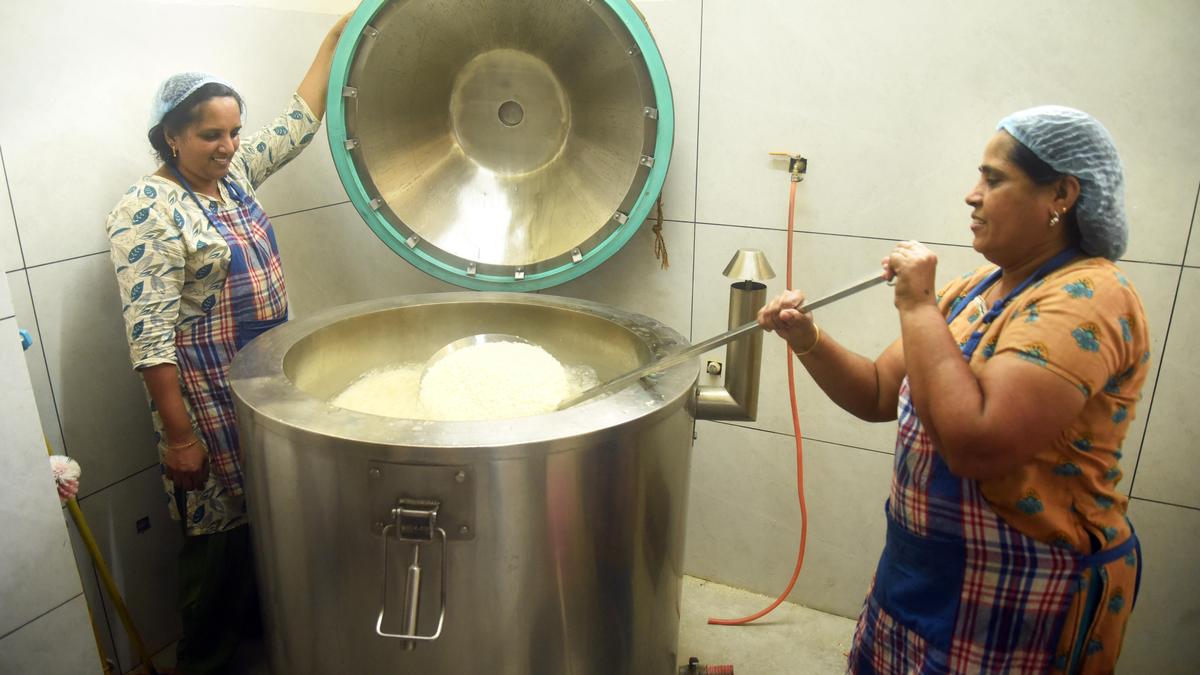
The immediate trigger is a straightforward cost report from the front line of school catering. Headteachers at aided primary schools across Keralam have publicly flagged that the money available per child for the noon meal scheme no longer stretches to cover the plate they are expected to serve. The dispatch is blunt about the drivers: prices of eggs, milk, groceries, vegetables and LPG cylinder refills have gone up considerably in recent times. For a scheme built on a fixed daily menu and a fixed reimbursement, that combination is corrosive.
The timing matters. School meal budgets are typically set in advance and revised on a periodic cycle, while food and fuel prices move continuously. When eggs, a core protein in the Kerala menu, and milk, a staple in porridge and beverage components, both climb, the cost per plate rises faster than any annual revision can track. LPG is the quiet multiplier: every kitchen that cooks at scale depends on cylinder refills, and fuel inflation hits the cost base regardless of what is on the menu that day.
The actors here are operational rather than political. Aided primary schools — institutions that receive state support but are managed outside the direct government school system — sit in a particularly awkward position. They must meet the same nutritional and service expectations as fully state-run schools, but their financial buffer is thinner and their procurement leverage is often weaker. Headteachers, effectively acting as kitchen chief financial officers, are the ones signing off on purchases and absorbing shortfalls.
The initial market reaction is best read as a signal about institutional stress rather than a trading event. There is no listed company whose earnings swing on this dispatch, but there is a clear read-through for anyone tracking food inflation transmission into public-service delivery. When frontline administrators say the allocation is insufficient, it usually means one of three things is already happening: portion sizes are being trimmed, menu frequency for costly items is being reduced, or schools are cross-subsidising meals from other budget lines. All three are early-warning indicators of scheme degradation.
Section 2: Deep Technical & Financial Architecture
To understand why a modest rise in grocery prices becomes a crisis, it helps to model the noon meal as a manufacturing operation with a rigid bill of materials. Each plate has a defined composition: a cereal base, a protein component, vegetables, and a fat or dairy element, cooked with fuel. The cost per plate is the sum of ingredient costs plus cooking fuel plus labour and logistics, divided across the number of children served. When any input rises, the cost per plate rises — but the reimbursement per child does not move in lockstep.
The balance-sheet impact lands on the school, not the supplier. Aided schools typically operate on tight working-capital cycles: funds are drawn down, purchases are made, and reconciliation happens later. In an inflationary window, the gap between the allocated amount and actual spend becomes a persistent deficit. Schools either carry that deficit forward, delay payments to local vendors, or reduce quality. Each choice has a cost: delayed payments erode vendor relationships and raise future prices, while quality reduction undermines the nutritional objective the scheme exists to deliver.
The technology and data stack is where the fix is most achievable. Modern meal schemes increasingly rely on digitised enrolment, attendance-linked entitlement tracking, and procurement records. If a school system can measure actual cost per plate weekly rather than annually, it can index reimbursement to a food-and-fuel basket instead of a static rate. The absence of such indexing is the structural vulnerability. A simple dashboard tracking egg, milk, vegetable and LPG prices against the per-child allocation would give administrators an early-warning trigger long before a headteacher has to raise a public alarm.
Unit economics make the problem concrete. Consider a school serving several hundred children daily. A small per-plate increase in ingredient and fuel cost, multiplied across hundreds of plates and roughly twenty serving days a month, produces a monthly shortfall that quickly exceeds a school's discretionary budget. The arithmetic is unforgiving because there is no volume discount on inflation: every additional child served at a loss deepens the deficit.
Procurement structure is the other lever. Schools that buy through aggregated cooperatives or local sourcing contracts can partially hedge price volatility; schools buying in small lots at retail prices absorb the full shock. The dispatch's list — eggs, milk, groceries, vegetables, LPG — is essentially a list of items where small-lot retail buying is most exposed. Aggregation, forward contracts and cold-chain partnerships are the operational answers, but they require capital and coordination that individual aided schools rarely command alone.
Section 3: Industry & Global Market Ripple Effects
The first ripple runs through local supply chains. Egg and dairy producers, vegetable wholesalers and LPG distributors serving institutional buyers see demand that is price-sensitive and administratively constrained. When school budgets tighten, order volumes for premium items fall first, shifting demand toward cheaper substitutes. That substitution effect can be abrupt and regional, creating surplus in some categories and shortages in others.
The second ripple touches the food-service and institutional catering ecosystem. Vendors who supply school kitchens operate on thin margins and long payment cycles. If schools delay payments because allocations are insufficient, vendors either exit the institutional segment or price in the risk. Both outcomes raise costs over time, creating a feedback loop where today's shortfall becomes tomorrow's higher contract price.
The third ripple is comparative. School meal schemes worldwide face the same structural challenge: fixed entitlements versus floating food prices. Jurisdictions that have moved to indexed reimbursement or basket-linked formulas have smoothed the shock; those that have not experience periodic crises. Kerala's situation is a local instance of a global design problem in publicly funded nutrition programmes, and the solutions being tested elsewhere — dynamic pricing formulas, centralised procurement platforms, and real-time cost dashboards — are directly transferable.
The fourth ripple is investor and policy attention on food inflation transmission. Analysts tracking consumer staples and agricultural commodities watch institutional buyers as a demand signal. When school schemes report budget stress, it corroborates broader inflation trends in protein and dairy. For companies in cold chain, food logistics and institutional catering technology, the stress also represents an opportunity: tools that help institutional buyers forecast, aggregate and hedge input costs have a clear market.
Section 4: Critical Perspectives, Analyst Debates & Risk Factors
The central debate is whether the problem is one of inadequate allocation or inefficient spending. One camp argues that per-child funding has simply not kept pace with food and fuel inflation, and that the fix is a straightforward upward revision indexed to a cost basket. The opposing camp argues that schools often lack procurement sophistication, and that better aggregation and menu engineering could close much of the gap without additional money.
Both views contain truth, and the risk is that each is used to avoid the other's remedy. Indexation without procurement reform rewards inefficiency; procurement reform without indexation leaves schools exposed to genuine price shocks. The most defensible position is a hybrid: a transparent cost-per-plate baseline, indexed reimbursement tied to a published food-and-fuel basket, and incentives for aggregated purchasing.
The vulnerabilities are operational and reputational. If shortfalls persist, the visible symptoms — smaller portions, fewer protein days, delayed vendor payments — erode trust in the scheme and can trigger cascading complaints. There is also a data vulnerability: without reliable cost tracking, the true extent of the shortfall is invisible until it becomes a crisis, which is precisely what the headteachers' appeal signals.
Regulatory and administrative friction is another risk factor. Any revision to allocation norms must move through budget processes that are slow by design. Schools cannot wait for an annual cycle when prices move monthly. The gap between administrative tempo and market tempo is the core risk, and it argues for interim mechanisms — emergency top-ups, revolving funds, or vendor credit guarantees — that bridge the timing mismatch.
Section 5: Strategic Forecast & Road Ahead
Over the next 12 months, the most likely development is a formal review of per-child allocation with an upward revision, possibly accompanied by a one-time top-up to cover accumulated shortfalls. The quality of that revision will depend on whether it is a flat increase or an indexed formula. A flat increase buys time; an indexed formula buys resilience.
In the 12–24 month window, expect movement toward digitised cost tracking and aggregated procurement. Schools that adopt shared purchasing cooperatives or centralised kitchen models will be better insulated from retail price volatility. Technology providers offering procurement dashboards, demand forecasting and vendor payment platforms have a clear opening in the institutional nutrition segment.
Key milestones to watch include the publication of revised allocation norms, any announcement of basket-linked reimbursement, and the emergence of pilot programmes for aggregated school procurement. Each would be a signal that the system is moving from crisis response to structural reform.
The broader lesson is that school meal schemes are supply chains, and supply chains need inflation hedging. Kerala's headteachers have surfaced a problem that is technical and financial before it is anything else: the cost of a plate is rising, and the funding formula has not caught up. The institutions that solve this first — with indexed funding, transparent cost data and smarter procurement — will set the template for publicly funded nutrition everywhere.




Comments (0)
No comments yet. Be the first to share your thoughts!
Leave a Comment