Drone and Missile Warfare Reshapes Modern Defense Tech Economics
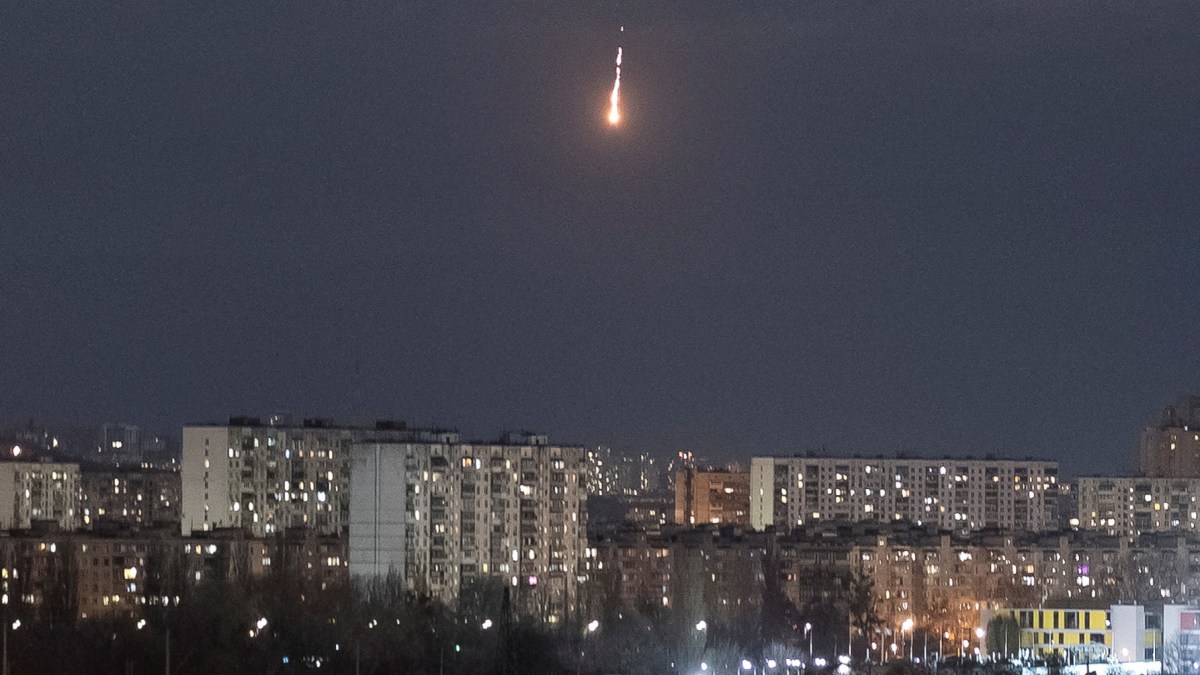
A Ukrainian drone attack killed five in Russian-occupied Zaporizhia as Russian ballistic missiles struck Kyiv, underscoring the rapid escalation of low-cost drone and high-end missile warfare.
Executive Takeaways
- Simultaneous drone and ballistic missile strikes in Ukraine illustrate a two-tier warfare economy: cheap attritable drones versus expensive precision missiles.
- The Zaporizhia drone attack killed five, while Russian ballistic missiles hit a Kyiv shopping centre, demonstrating dual-use civilian infrastructure risk.
- Defense technology procurement is shifting toward mass-produced autonomous systems and counter-drone architectures.
- Unit economics favor low-cost drones for saturation attacks, forcing expensive interceptor responses.
- Investors and analysts are watching counter-UAS, electronic warfare, and missile-defense supply chains as the fastest-growing defense segments.
Section 1: The Core Event & Breaking Timeline
The breaking dispatch from Al Jazeera reported a sharp escalation in the technology-driven conflict between Ukraine and Russia. A Ukrainian drone attack struck Russian-occupied Zaporizhia, killing five people, according to the raw news report. In a near-simultaneous sequence, Russian forces launched a ballistic missile attack on the Ukrainian capital, Kyiv, hitting a shopping centre and other buildings. The dual events, reported as breaking news, underscore the increasingly automated and precision-guided character of modern warfare, where unmanned aerial systems and ballistic missiles operate as core instruments of strategic pressure.
The timeline as reported is compressed and violent. The Zaporizhia drone strike represents the use of low-cost, remotely piloted or autonomous aerial platforms to deliver lethal effects deep into occupied territory. The Kyiv ballistic missile attack represents the use of high-speed, high-cost, precision-guided munitions against urban infrastructure. Together, they form a case study in asymmetric defense technology: one side deploys attritable systems at scale, while the other relies on sophisticated, expensive missiles to penetrate air defenses.
Initial market and industry reaction, while not explicitly detailed in the raw dispatch, can be inferred from the broader defense technology landscape. Defense stocks and counter-drone technology firms have historically reacted to escalation headlines with increased investor attention. The attack on a shopping centre in Kyiv highlights the persistent vulnerability of civilian infrastructure and the dual-use nature of urban targets, which raises the stakes for missile-defense and early-warning technology providers.
The geographic and operational context matters. Zaporizhia is a strategically contested region, and Kyiv remains the political and symbolic heart of Ukraine. The reported strikes demonstrate that both drone and missile technologies are now capable of reaching high-value targets across contested airspace, forcing defenders to allocate scarce and expensive interception resources against cheap offensive platforms. This dynamic is central to the evolving economics of defense technology.
Section 2: Deep Technical & Financial Architecture
The technical architecture behind these strikes reveals two distinct technology stacks. The drone systems used in the Zaporizhia attack likely belong to the class of one-way attack drones or loitering munitions, which combine GPS or inertial navigation, a warhead, and a low-cost airframe. These systems are designed for attritability: they are cheap enough to be expended en masse, often costing thousands to tens of thousands of dollars per unit, compared with millions for precision missiles.
On the other side, Russian ballistic missiles, such as the Iskander or Kinzhal class, represent the high-end of precision strike technology. They travel at hypersonic or supersonic speeds, maneuver in terminal phase, and carry substantial warheads. Their unit cost can range from several million to over ten million dollars, depending on the variant. The financial asymmetry is stark: a defender may expend a multi-million-dollar interceptor to destroy a drone costing a fraction of that sum, creating a cost-exchange ratio that favors the attacker over time.
The balance sheet impact for defense contractors is significant. Companies producing counter-UAS systems, electronic warfare jammers, and missile-defense interceptors are seeing increased demand. The technology stack for counter-drone operations includes radio-frequency detection, radar, electro-optical tracking, and kinetic or directed-energy defeat mechanisms. Each layer adds cost, but the proliferation of cheap drones forces investment across the entire kill chain.
Unit economics in this conflict favor mass. A drone swarm attack can saturate air defenses, forcing defenders to choose which threats to engage. The marginal cost of adding another drone to an attack is low, while the marginal cost of adding another interceptor is high. This dynamic is driving innovation in low-cost interceptors, such as gun-based systems, laser weapons, and AI-enabled targeting that improves the efficiency of each shot.
Supply chain considerations are equally critical. Drone production relies on commercial off-the-shelf components, including flight controllers, cameras, and communication modules, many of which are sourced globally. Ballistic missile production, by contrast, requires specialized materials, precision machining, and complex propulsion systems, making it more vulnerable to export controls and sanctions. The ability to scale drone production rapidly is a key advantage in a prolonged conflict.
Section 3: Industry & Global Market Ripple Effects
The ripple effects across the defense industry are profound. Competitors in the drone market, including Turkish, Iranian, and Chinese manufacturers, are watching the conflict as a live testing ground for their systems. The demonstrated effectiveness of low-cost drones in achieving lethal effects against defended targets is likely to accelerate procurement programs globally, particularly among nations seeking asymmetric capabilities.
Supply chains for drone components are under pressure. The demand for commercial-grade flight controllers, batteries, and optical sensors has surged, leading to shortages and price increases. This has prompted efforts to localize production and develop dedicated military-grade components that are more resilient to jamming and spoofing. Investors are increasingly focused on companies that can provide secure, resilient communication links and navigation systems that operate in GPS-denied environments.
In the missile-defense sector, the Kyiv attack reinforces the need for layered air defense. The market for interceptors, such as Patriot, NASAMS, and IRIS-T, is already tight, with backlogs extending years. The attack on a shopping centre highlights the consequence of interception failures, which may drive further investment in early-warning radar, command-and-control networks, and AI-assisted threat prioritization.
Ecosystem shifts are also evident in the venture capital landscape. Defense technology startups focused on autonomous systems, counter-UAS, and electronic warfare have attracted record funding. The conflict serves as a proof point for investors who previously viewed defense as a slow-growth sector. The rapid iteration cycles demonstrated in Ukraine, where software and hardware are updated based on battlefield feedback, are influencing procurement strategies in NATO countries.
Section 4: Critical Perspectives, Analyst Debates & Risk Factors
Analysts are divided on the long-term implications. Some argue that the dominance of cheap drones signals a revolution in military affairs, where mass and attritability trump precision and sophistication. Others contend that high-end ballistic missiles remain decisive for strategic strikes, and that drone attacks, while disruptive, are limited by payload size, range, and vulnerability to electronic warfare.
Critical perspectives highlight the ethical and humanitarian risks. The attack on a shopping centre in Kyiv raises questions about the proportionality and legality of strikes on dual-use infrastructure. The use of drones in populated areas also poses risks of civilian harm, particularly when navigation systems are jammed or spoofed, leading to errant strikes. These concerns may drive regulatory friction at the international level, though enforcement mechanisms are weak.
Vulnerabilities in the technology stack are a major debate. Drones reliant on commercial GPS are susceptible to jamming, which can degrade accuracy or cause mission failure. Russian electronic warfare systems have proven effective in disrupting Ukrainian drones, prompting a shift toward inertial navigation, visual odometry, and AI-based terminal guidance. The cost of these upgrades erodes the low-cost advantage of drones, creating a technological arms race.
Regulatory friction is also emerging around export controls. The proliferation of drone technology to non-state actors and adversarial nations is a concern for Western governments. Efforts to restrict the export of critical components, such as advanced semiconductors and imaging sensors, may slow the spread of capabilities but also complicate supply chains for legitimate manufacturers. The balance between export competitiveness and national security is a persistent tension.
Section 5: Strategic Forecast & Road Ahead
Over the next 12 to 24 months, the defense technology landscape will likely see accelerated development of counter-drone systems. Directed-energy weapons, such as high-power microwaves and lasers, are approaching operational maturity and promise to reduce the cost per intercept. These systems could shift the cost-exchange ratio back in favor of defenders, but their deployment faces technical hurdles, including power requirements and atmospheric interference.
Autonomous drone swarms are another key milestone. Advances in AI and swarm coordination could enable coordinated attacks that overwhelm defenses. This will drive investment in AI-enabled command-and-control and autonomous decision-making, raising ethical and regulatory questions about human oversight. The technology is advancing faster than the policy frameworks governing its use.
In the missile-defense domain, the focus will be on increasing interceptor production capacity and developing hypersonic defense. The United States, Europe, and allies are investing in new production lines and next-generation interceptors. The goal is to reduce reliance on a limited number of high-cost systems and to field layered defenses that can handle saturation attacks.
What to watch: the pace of drone component innovation, particularly in GPS-denied navigation; the scaling of counter-UAS production; the evolution of export controls on critical technologies; and the financial performance of defense technology firms as they report earnings against a backdrop of heightened demand. The events in Zaporizhia and Kyiv are not isolated incidents but indicators of a broader transformation in how technology and finance intersect on the battlefield.



Comments (0)
No comments yet. Be the first to share your thoughts!
Leave a Comment