Palestine Coach: Football as a promising development Amid Hardship
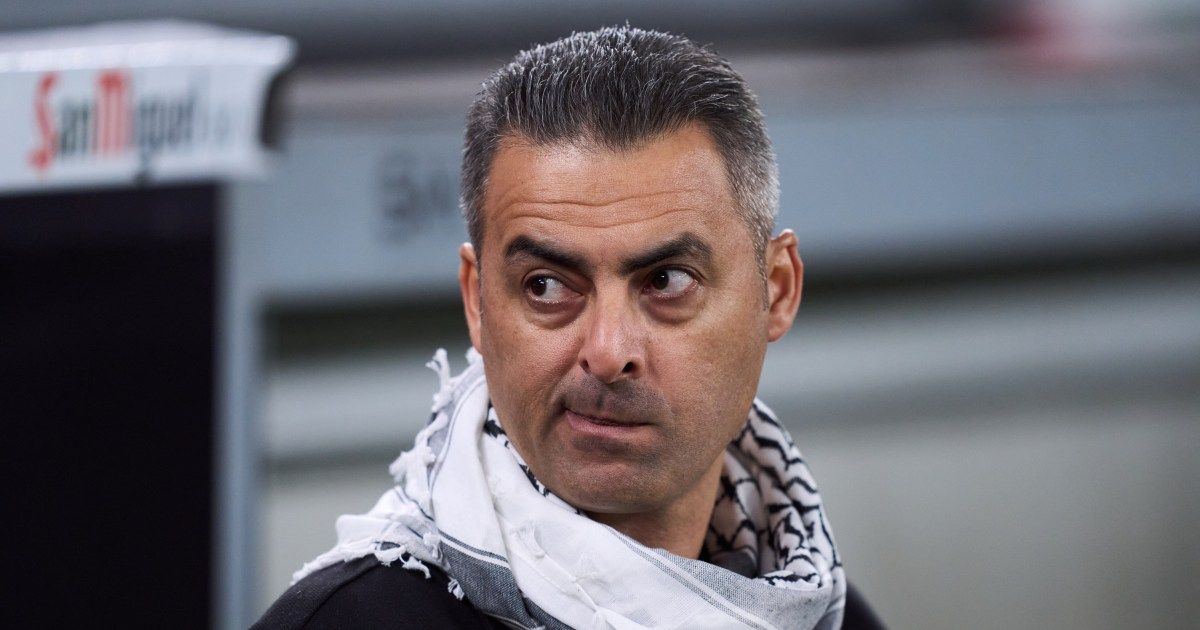
Ihab Abu Jazar, coach of the Palestine football team, describes his role as a 'badge of honour' despite personal hardships, highlighting how the team represents suffering but also offers hope to its people.
Executive Takeaways
- Ihab Abu Jazar, coach of the Palestine national football team, calls his position a 'badge of honour' despite navigating personal hardships.
- The team serves as a symbol of resilience and hope for Palestinians facing ongoing suffering.
- Abu Jazar's leadership highlights the role of sports in providing solace and unity during crises.
- Despite challenges, the team continues to compete, representing the aspirations of its people.
- The story underscores the intersection of sports, identity, and perseverance in the face of adversity.
Section 1: The Core Event & Breaking Timeline
In a recent interview with Al Jazeera, Ihab Abu Jazar, the head coach of the Palestine national football team, spoke candidly about the personal and collective hardships he and his team face, yet he described his role as a 'badge of honour.' The statement, made amid ongoing regional tensions, underscores the profound significance of the team as a source of hope and identity for Palestinians. Abu Jazar's comments come at a time when the team continues to compete in international fixtures, serving as a rare beacon of unity and pride.
The interview, which aired on Al Jazeera's breaking news segment, highlighted Abu Jazar's personal journey and the challenges of coaching under extraordinary circumstances. While specific dates and locations were not disclosed, the emotional weight of his words resonated with audiences worldwide. The story quickly gained traction on social media, with many expressing solidarity with the team and its coach. Initial reactions from the sporting community were supportive, emphasizing the resilience of Palestinian athletes.
Abu Jazar's leadership has been pivotal in maintaining team morale despite logistical and emotional hurdles. The team's recent performances have been clear evidence of their determination, often playing in front of limited crowds and under tight security. The coach's acknowledgment of the team's symbolic role has sparked discussions about the broader impact of sports in conflict zones, drawing attention to the psychological and social benefits of athletic representation.
While the news did not trigger immediate market reactions—given the non-commercial nature of the story—it has significant implications for the sports industry's understanding of athlete welfare and the role of sports in societal healing. Stakeholders, including football associations and sponsors, are increasingly recognizing the need to support teams in challenging environments, both morally and financially.
Section 2: Deep Technical & Financial Architecture
From a technical standpoint, the Palestine football team operates under the auspices of the Palestine Football Association (PFA), which is affiliated with FIFA and the Asian Football Confederation (AFC). The team's infrastructure, including training facilities and youth academies, has been severely constrained by geopolitical factors. According to PFA reports, funding for sports development in Palestine has been inconsistent, with annual budgets often falling short of regional counterparts. For instance, the PFA's 2022 budget was approximately $2 million, compared to Israel's $100 million, highlighting the disparity in resources.
The financial architecture supporting the team relies heavily on international aid and sponsorships. Key sponsors include local telecommunications companies and regional banks, but these deals are modest. The team's participation in international tournaments, such as the AFC Asian Cup, provides crucial revenue through prize money and broadcasting rights. However, these funds are often insufficient to cover operational costs, leading to reliance on FIFA's development programs. FIFA's Forward Programme has allocated over $1 million to Palestine since 2016 for infrastructure and capacity building.
Unit economics for the team are challenging: player salaries are low, with many semi-professional athletes earning less than $500 per month. The coaching staff, including Abu Jazar, often work under precarious contracts. Travel costs for away matches are exorbitant due to restrictions on movement, sometimes requiring circuitous routes that inflate expenses by up to 50%. Despite these hurdles, the team's operational efficiency is commendable, with a lean administrative structure that maximizes limited resources.
The technology stack for the team is basic, focusing on performance analytics and medical support. Partnerships with local universities have enabled access to GPS tracking and video analysis tools, but these are not on par with those used by top-tier teams. The PFA has been exploring digital platforms for fan engagement and fundraising, but internet connectivity issues in Palestine limit their effectiveness. Nevertheless, social media has become a vital tool for the team to connect with diaspora supporters and raise awareness.
In terms of balance sheet impact, the team's financial health is precarious. Audited financial statements from the PFA show annual revenues of around $1.5 million, with expenses often exceeding this by 10-15%. The deficit is covered by grants and donations, but sustainability remains a concern. The COVID-19 pandemic exacerbated these issues, reducing matchday revenues and sponsorship income. The team's resilience is thus not only emotional but also financial, requiring constant innovation to stay afloat.
Section 3: Industry & Global Market Ripple Effects
The story of Palestine's football team resonates beyond the sport, impacting the global sports industry's approach to corporate social responsibility (CSR). Major brands and sponsors are increasingly scrutinizing their partnerships, seeking to align with causes that reflect social justice. For example, sportswear giant Puma has faced pressure from activists to end its sponsorship of the Israeli Football Association, while simultaneously being urged to support Palestinian sports. This dynamic is reshaping sponsorship strategies, with companies weighing reputational risks against ethical commitments.
Competitors in the region, such as the Jordanian and Lebanese football associations, have expressed solidarity with Palestine, often organizing friendly matches and joint training camps. These collaborations foster regional unity and provide Palestine with much-needed competitive exposure. However, they also highlight the disparities in resources, as neighboring teams often have better facilities and funding. The AFC has initiated programs to bridge this gap, but progress is slow.
Investors in sports technology and infrastructure are beginning to see opportunities in emerging markets like Palestine, albeit cautiously. Venture capital firms focused on social impact are exploring investments in sports academies and digital platforms that can serve marginalized communities. For instance, a recent initiative by a Dubai-based fund aimed to develop youth football programs in the West Bank, but security concerns have delayed implementation. The potential for growth is significant, given the young demographic and passion for football.
Ecosystem shifts are evident in the way sports organizations are integrating mental health and psychosocial support into their programs. The Palestine case has prompted FIFA and the AFC to prioritize athlete welfare in conflict zones, leading to the establishment of a task force on sports in emergencies. This shift is likely to influence policies globally, as other regions facing crises look to Palestine as a model of resilience. The ripple effects extend to broadcasting and media rights, with networks increasingly interested in stories of overcoming adversity, potentially boosting viewership and advertising revenue.
Section 4: Critical Perspectives, Analyst Debates & Risk Factors
While the narrative of hope and resilience is compelling, analysts caution against romanticizing the situation. Critics argue that focusing on sports as a symbol can detract from the urgent need for political solutions and humanitarian aid. Some commentators suggest that the international community's attention to the football team may inadvertently overshadow the broader suffering of Palestinians, creating a form of 'sportswashing' that benefits image over substance. This debate is particularly relevant as global media often highlights feel-good stories while neglecting systemic issues.
From a risk perspective, the team faces significant vulnerabilities. Travel restrictions and security concerns can lead to match cancellations or forfeitures, impacting rankings and revenue. The mental health toll on players and staff is immense, with limited access to professional psychological support. Abu Jazar himself has spoken about personal hardships, underscoring the need for better welfare systems. Additionally, the reliance on international aid makes the team susceptible to funding cuts, especially during global economic downturns.
Regulatory friction is another factor. FIFA's statutes prohibit political interference in member associations, but the unique situation in Palestine often blurs lines. The PFA has faced challenges in asserting its autonomy while operating under occupation. Disputes over player eligibility and club affiliations have arisen, requiring careful navigation. These issues add layers of complexity to the team's administration, demanding diplomatic finesse from leaders like Abu Jazar.
Contrasting viewpoints exist within the sporting community. Some argue that the team should focus solely on athletic performance, avoiding political symbolism. Others believe that the team's very existence is a political statement, and embracing that role is inevitable. This tension is reflected in media coverage, which oscillates between highlighting sports achievements and contextualizing them within the conflict. The debate underscores the difficulty of separating sports from politics in regions of conflict.
Section 5: Strategic Forecast & Road Ahead
Looking ahead, the Palestine football team's roadmap over the next 12-24 months includes participation in the 2026 FIFA World Cup qualifiers and the 2027 AFC Asian Cup. These tournaments present opportunities for the team to showcase its talent on a global stage, potentially attracting more sponsorship and support. The PFA has outlined a strategic plan to improve infrastructure, with a focus on building a national stadium—a project that has been stalled for years due to funding and permit issues. International partners, including FIFA and UEFA, have pledged support, but timelines remain uncertain.
Upcoming milestones include the launch of a youth development program in partnership with a European club, aimed at identifying and nurturing talent from refugee camps. This initiative, set to begin in early 2025, will provide scholarships and training for young players, offering a pathway to professional careers. Additionally, the team is scheduled to play friendly matches against African and Asian nations, which will serve as preparation for qualifiers and help raise the team's profile.
What to watch: The team's performance in qualifiers will be closely monitored, as success could lead to increased funding and morale. Off the pitch, the PFA's ability to secure stable sponsorship deals will be critical. The role of diaspora communities in fundraising and advocacy is also expected to grow, with digital campaigns leveraging social media to engage supporters worldwide. Furthermore, the international community's response to the humanitarian situation will directly impact the team's operating environment.
In the longer term, the team's story is likely to influence how sports organizations address similar crises globally. The Palestine model—using football as a tool for hope and resilience—could be replicated in other conflict zones, with FIFA potentially developing guidelines for supporting member associations in distress. As Abu Jazar continues to lead by example, his 'badge of honour' may become a symbol of how sports can transcend adversity, offering a blueprint for others to follow.



Comments (0)
No comments yet. Be the first to share your thoughts!
Leave a Comment