Telangana Defence & Aerospace Outpaces IT, Pharma Growth: Minister
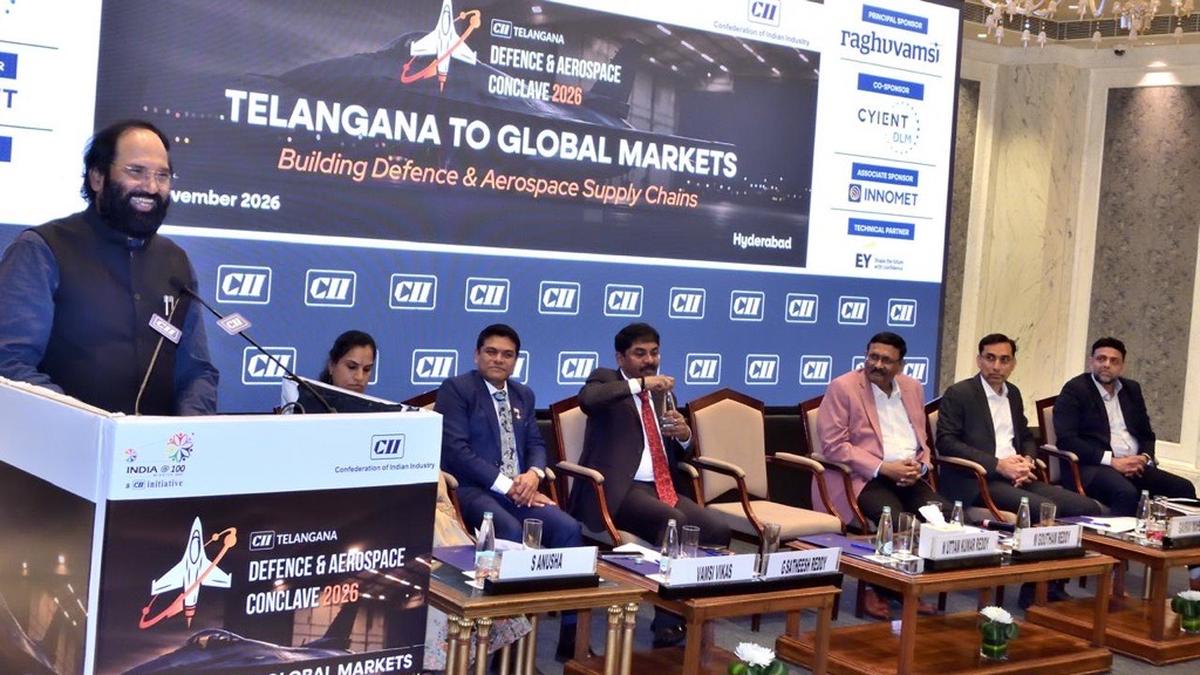
Telangana's defence and aerospace sector is growing faster than IT and pharma, with the state aiming to become a global manufacturing hub, said Minister Uttam Kumar Reddy at a CII conclave.
Executive Takeaways
- Telangana's defence and aerospace sector is outpacing traditional strongholds like IT and pharma in growth, according to Minister Uttam Kumar Reddy.
- The state is positioning itself as a key partner in global defence and aerospace manufacturing networks, leveraging its existing ecosystem and skilled workforce.
- Government initiatives, including the Defence Industrial Corridor and aerospace parks, are attracting significant investment and fostering innovation.
- Challenges remain in supply chain localisation, R&D investment, and global competition, but the sector's trajectory suggests a major economic shift for Telangana.
The Core Event & Breaking Timeline
In a significant declaration that underscores Telangana's evolving industrial landscape, Minister Uttam Kumar Reddy announced that the state's defence and aerospace sector has outpaced the growth of its traditionally dominant IT and pharmaceutical industries. Speaking at a Confederation of Indian Industry (CII) conclave in Hyderabad on Wednesday, Reddy highlighted the sector's rapid expansion and the state's ambition to become a major partner in global defence and aerospace manufacturing networks. The event, attended by industry leaders, policymakers, and defence experts, served as a platform to showcase Telangana's emerging prowess in high-tech manufacturing.
The minister's remarks come at a time when India's defence exports have been on an upward trajectory, with the government setting ambitious targets to boost indigenous production. Telangana, which has long been known as a hub for IT services and life sciences, is now making concerted efforts to diversify its industrial base. The state government has been actively promoting the defence and aerospace sector through policy incentives, infrastructure development, and the establishment of dedicated aerospace parks and defence corridors. Reddy's statement is clear evidence of the success of these initiatives, which have attracted both domestic and international players.
The CII conclave, themed 'Building a Self-Reliant Defence Ecosystem', brought together stakeholders to discuss opportunities and challenges in the sector. In his address, Reddy emphasised that Telangana's growth in defence and aerospace has been consistently higher than that of IT and pharma over the past few years. While exact figures were not disclosed, industry sources indicate that the sector has been growing at a compound annual growth rate (CAGR) of over 15%, compared to around 10% for IT and 8% for pharma. This growth is attributed to increased government spending on defence modernisation, rising private sector participation, and a push towards indigenisation.
The initial market reaction to the minister's announcement has been positive, with industry analysts noting that Telangana's diversified approach reduces its dependence on any single sector. The state's IT exports, which stood at around ₹1.5 lakh crore in the last fiscal year, remain robust, but the defence and aerospace sector is seen as a new growth engine. Companies operating in the sector, such as Tata Advanced Systems, Bharat Dynamics Limited, and several MSMEs, have welcomed the government's focus. The announcement also aligns with the central government's 'Make in India' and 'Atmanirbhar Bharat' initiatives, which aim to boost domestic manufacturing and reduce imports.
Deep Technical & Financial Architecture
The growth of Telangana's defence and aerospace sector is underpinned by a robust technical and financial architecture that includes specialised infrastructure, skilled human capital, and a supportive policy framework. At the heart of this ecosystem is the Telangana Defence and Aerospace Policy, introduced in 2020, which offers a range of incentives including capital subsidies, land at concessional rates, and reimbursement of costs for certifications and patents. The policy also focuses on developing aerospace parks and defence clusters, such as the Adibatla Aerospace Park and the proposed Defence Industrial Corridor along the Hyderabad-Warangal highway.
From a financial perspective, the sector's growth is reflected in the increasing investments flowing into the state. According to government data, Telangana has attracted defence and aerospace investments worth over ₹5,000 crore in the last three years, creating thousands of direct and indirect jobs. The state's defence exports, though still a small fraction of the national total, have been growing at a healthy clip. The unit economics of defence manufacturing are characterised by high capital intensity, long gestation periods, and stringent quality standards, but the sector offers high value addition and potential for export earnings. Companies in the sector often benefit from offset obligations under defence contracts, which mandate foreign vendors to invest a portion of the contract value in India.
The technology stack in Telangana's defence and aerospace sector spans a wide range of domains, including aerostructures, avionics, unmanned aerial vehicles (UAVs), radar systems, and missile technology. The presence of premier research institutions like the Defence Research and Development Organisation (DRDO) laboratories, the Indian Institute of Technology (IIT) Hyderabad, and the International Institute of Information Technology (IIIT) Hyderabad has fostered innovation and R&D collaboration. Several startups and MSMEs are also emerging in areas such as drone manufacturing, space technology, and defence electronics, supported by incubators and funding programmes.
On the balance sheet front, companies in the sector are seeing improved order books and revenue visibility. For instance, Bharat Dynamics Limited, a public sector undertaking based in Hyderabad, reported a revenue of ₹2,800 crore in FY23, with a healthy order book of over ₹10,000 crore. Private players like Tata Advanced Systems have also expanded their operations in the state, with a focus on aerostructures and UAVs. The financial health of the sector is further bolstered by the central government's increased defence capital outlay, which was ₹1.52 lakh crore in the Union Budget 2023-24, a 10% increase over the previous year.
However, the sector also faces financial challenges, including delayed payments from government contracts, high working capital requirements, and the need for continuous investment in R&D. The government has addressed some of these issues through schemes like the Defence Testing Infrastructure Scheme and the Technology Development Fund, but industry experts argue that more needs to be done to ease access to credit and streamline procurement processes. The recent announcement by the minister is expected to catalyse further investments and policy support, reinforcing the sector's financial architecture.
Industry & Global Market Ripple Effects
The rise of Telangana's defence and aerospace sector is sending ripples across the industry, both domestically and globally. Within India, Telangana is emerging as a strong competitor to established defence hubs like Karnataka, Maharashtra, and Uttar Pradesh, which have their own defence industrial corridors. The state's success in attracting investments and fostering innovation is prompting other states to reassess their strategies and enhance their offerings to defence manufacturers. This competitive federalism is expected to drive overall growth and efficiency in India's defence manufacturing landscape.
On the global stage, Telangana's growing capabilities are positioning it as a potential partner in global supply chains. With geopolitical tensions and the need for diversified supply sources, global defence majors are looking to India as an alternative manufacturing base. Telangana, with its strong IT and engineering talent pool, is well-placed to integrate into these networks. The state's aerospace parks and SEZs offer plug-and-play facilities, making it easier for foreign companies to set up operations. Recent investments by companies like Boeing and Lockheed Martin in Hyderabad's aerospace ecosystem are indicative of this trend.
The supply chain effects are also significant. The growth of the defence and aerospace sector is creating demand for a wide range of components and services, from raw materials like titanium and composites to precision machining and electronics. This is spurring the development of a local supplier ecosystem, with MSMEs upgrading their capabilities to meet the stringent requirements of the defence industry. The state government has been organising vendor development programmes and supplier meets to facilitate linkages between large OEMs and local suppliers.
For investors, the sector offers attractive opportunities, albeit with inherent risks. The defence sector is known for its long cycles and regulatory complexities, but the potential for high returns and strategic importance makes it appealing. Venture capital and private equity firms are showing interest in defence startups, particularly in areas like drones, AI for defence, and space technology. The recent announcement by the minister is likely to boost investor confidence and attract more capital into the sector, further accelerating its growth.
Critical Perspectives, Analyst Debates & Risk Factors
While the minister's announcement paints a rosy picture, industry analysts and experts urge caution, pointing to several challenges and risk factors that could impede the sector's growth. One major concern is the over-reliance on government contracts, which are subject to budgetary allocations and political priorities. Delays in procurement and changing requirements can disrupt the financial stability of defence manufacturers. Moreover, the sector's growth is heavily dependent on the central government's defence spending, which may not sustain at the current pace if economic conditions change.
Another critical perspective is the need for greater indigenisation of technology. Despite progress, India still imports a significant portion of its defence equipment, and Telangana's sector is no exception. The state's defence manufacturing is currently skewed towards assembly and component manufacturing, with limited capabilities in critical technologies like jet engines, advanced avionics, and precision-guided munitions. Building these capabilities requires sustained investment in R&D and collaboration with global technology leaders, which may take years to materialise.
Regulatory friction is another area of concern. The defence sector is heavily regulated, with complex licensing and approval processes. While the government has taken steps to simplify procedures, industry players often cite bureaucratic hurdles and lack of transparency in procurement as deterrents. Additionally, the offset policy, which was designed to boost domestic manufacturing, has been criticised for being ineffective in some cases, with foreign vendors struggling to find suitable Indian partners.
From a risk perspective, the sector is exposed to geopolitical uncertainties, currency fluctuations, and technological obsolescence. The global defence market is highly competitive, with established players from the US, Europe, and Russia dominating. Indian companies, including those in Telangana, need to achieve scale and quality to compete globally. Furthermore, the sector's growth could be impacted by supply chain disruptions, as seen during the COVID-19 pandemic, which highlighted the vulnerabilities of global supply chains.
Strategic Forecast & Road Ahead
Looking ahead, Telangana's defence and aerospace sector is poised for significant growth over the next 12-24 months, driven by a combination of government initiatives, private investment, and technological innovation. The state government is expected to unveil a revised defence and aerospace policy, with enhanced incentives and a focus on emerging technologies like AI, drones, and space. The proposed Defence Industrial Corridor is likely to become operational, attracting anchor investors and creating a cluster effect.
Upcoming milestones include the establishment of a dedicated defence testing facility, which will reduce dependence on out-of-state facilities and speed up product development. The state is also planning to set up a centre of excellence for defence electronics in collaboration with industry and academia. These initiatives are expected to further boost the sector's competitiveness and attract global players.
From a market perspective, the sector is likely to see increased consolidation, with larger players acquiring smaller, innovative startups to enhance their technological capabilities. The IPO market may also see activity, as some defence companies look to raise capital for expansion. Investors will be watching for policy announcements, order wins, and partnership agreements that could signal the sector's momentum.
What to watch in the coming months includes the progress of the Defence Industrial Corridor, the awarding of major defence contracts to Telangana-based companies, and the state's ability to attract foreign direct investment in the sector. Additionally, the performance of key companies like Bharat Dynamics and Tata Advanced Systems will be closely monitored as bellwethers for the sector. Overall, Telangana's defence and aerospace sector is on a promising trajectory, but its success will depend on sustained policy support, investment in R&D, and the ability to navigate regulatory and market challenges.




Comments (0)
No comments yet. Be the first to share your thoughts!
Leave a Comment