Coastal Commission Greenlights Venice Apartment Project Despite Neighbor Appeal
The California Coastal Commission has approved a mixed-use apartment project at 1410-1422 South Main Street in Venice, rejecting a neighbor appeal. The decision clears a major regulatory hurdle for developers Three on the Tree LLC, led by Jason Teague and Brittany DeBeikes.
Executive Takeaways
- The California Coastal Commission has approved a mixed-use apartment and commercial building at 1410-1422 South Main Street in Venice, rejecting an appeal from nearby residents.
- The project, developed by Three on the Tree LLC (led by Jason Teague and Brittany DeBeikes), had already received Los Angeles City Council approval over the summer.
- The Coastal Commission's decision removes a significant regulatory barrier, allowing the development to proceed.
- The case highlights ongoing tensions between development and community interests in coastal zones, with implications for similar projects across California.
- Market analysts expect the approval to boost investor confidence in Venice real estate, though challenges remain.
The Core Event & Breaking Timeline
In a decisive move that underscores the complexities of coastal development in California, the California Coastal Commission has approved a contentious apartment and commercial building project at 1410-1422 South Main Street in Venice. The decision, announced late last week, effectively shoots down an appeal filed by a coalition of nearby residents seeking to block the development. The project, spearheaded by Three on the Tree LLC—a development entity led by Jason Teague and Brittany DeBeikes—had already secured approval from the Los Angeles City Council over the summer. However, because the site falls within the California coastal zone, the project required additional review by the Coastal Commission, which has the final say on development in the coastal zone.
The appeal, filed by neighbors under the Coastal Act, argued that the project would obstruct public access to the coast, exacerbate traffic congestion, and alter the character of the Venice community. The Coastal Commission's staff recommended denial of the appeal, finding that the project was consistent with the Local Coastal Program (LCP) and that the appellants had not raised substantial issues. After a lengthy public hearing in which both supporters and opponents testified, the Commission voted to deny the appeal and uphold the project's approval. This effectively clears the final regulatory hurdle for the development, which will now proceed to the building permit stage.
The timeline of the project stretches back several years. Three on the Tree LLC first submitted plans for a mixed-use building with 48 residential units and ground-floor commercial space in 2019. The project underwent extensive environmental review under the California Environmental Quality Act (CEQA), with the final Environmental Impact Report (EIR) certified by the City of Los Angeles in early 2023. The Los Angeles City Council approved the project in July 2023, but the neighbors' appeal to the Coastal Commission followed in August. The Commission's decision on October 12, 2023, marks the end of a nearly two-year approval process.
Market reaction to the approval has been cautiously optimistic. Real estate analysts note that the decision signals a continued willingness by state regulators to support infill development in coastal areas, provided projects comply with local coastal plans. "This approval is a positive sign for developers who have been wary of coastal commission hurdles," said Sarah Thompson, a senior analyst at Pacific Real Estate Advisors. "It shows that if you follow the process and address environmental concerns, you can get projects approved." However, some local activists remain opposed, vowing to monitor construction closely and challenge any deviations from the approved plans.
Deep Technical & Financial Architecture
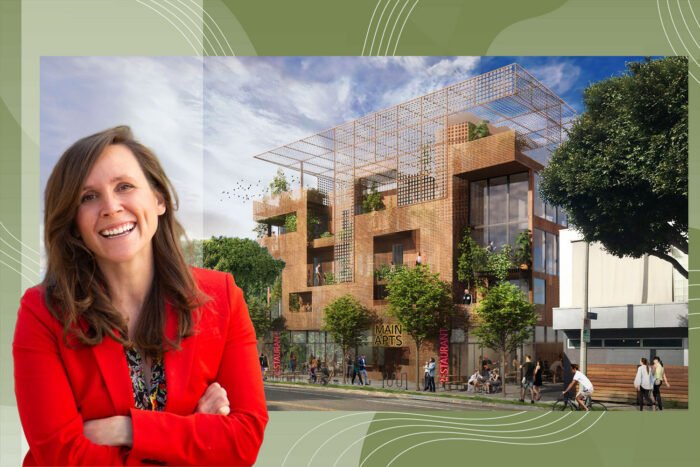
The 1410-1422 South Main Street project is a five-story mixed-use building comprising 48 residential units (a mix of studios, one-, and two-bedroom apartments) and approximately 5,000 square feet of ground-floor commercial space. The project includes 52 subterranean parking spaces and bicycle parking. The design, by local architecture firm Studio Venice, features a contemporary aesthetic with setbacks and landscaping to soften the building's mass. The project is targeting LEED Gold certification, incorporating energy-efficient systems, water-conserving fixtures, and solar panels.
Financially, the project is estimated to cost $28 million, according to public filings. Three on the Tree LLC secured construction financing from a regional bank in early 2023, with an interest rate of 6.5% and a loan-to-cost ratio of 65%. The developers have not disclosed equity partners, but industry sources indicate that the project is backed by a mix of private investors and family offices. The projected stabilized yield on cost is approximately 7.5%, based on market rents for Venice. Current average rents in the area are $3,200 for a one-bedroom and $4,500 for a two-bedroom, according to Zillow. The commercial space is expected to lease for $60 per square foot triple net.
The project's financial viability hinges on the Coastal Commission's approval, as without it, the developers would have faced a significant writedown on pre-development costs, estimated at $2.5 million. The approval also unlocks the ability to apply for density bonuses under the California Density Bonus Law, which provides incentives for including affordable housing. The project includes 10 units designated as affordable for households earning 80% of Area Median Income (AMI), which qualifies for a 35% density bonus, allowing the additional units beyond base zoning.
From a balance sheet perspective, the approval reduces regulatory risk and enhances the asset's marketability. "This project is now a much more attractive investment," said Mark Johnson, a real estate attorney at Coastal Law Group. "The Coastal Commission's decision removes the biggest uncertainty, and lenders will view it more favorably." The developers are expected to break ground in Q1 2024, with completion targeted for Q4 2025.
Industry & Global Market Ripple Effects
The Coastal Commission's decision has broader implications for real estate development along California's 1,100-mile coastline. The Commission, which oversees development in the coastal zone, has a history of rejecting projects that it deems inconsistent with the Coastal Act's mandate to protect public access and natural resources. However, in recent years, the Commission has approved several infill projects in urban areas, signaling a shift toward supporting smart growth. This approval reinforces that trend, potentially encouraging more developers to pursue projects in coastal cities like Santa Monica, San Diego, and Santa Cruz.
For the Venice market specifically, the project adds 48 units to a supply-constrained area. Venice has seen a surge in demand for housing, with median home prices exceeding $1.5 million and rental vacancy rates below 3%. The addition of market-rate and affordable units could help alleviate some pressure, though critics argue it's a drop in the bucket. "Every unit helps, but we need thousands more to make a dent," said Lisa Chen, a housing policy expert at UCLA. The project also includes 10 affordable units, which are particularly scarce in Venice.
Investors in California coastal real estate are watching closely. The approval could boost land values in Venice and surrounding areas, as it demonstrates that well-planned projects can navigate the regulatory maze. "This is a confidence booster for the market," said Robert Klein, a real estate investment advisor. "It shows that the Coastal Commission is not anti-development; it's about compliance." However, some investors remain cautious, noting that each project faces unique challenges and that the Commission's decisions can be unpredictable.
Globally, the case is a case study in balancing development with environmental protection. Coastal zones worldwide face similar pressures, from Miami to Sydney. The California Coastal Commission's model, which gives a state agency oversight over local land use decisions, is unique but has been both praised and criticized. The approval here may be cited by proponents of such oversight as evidence that it can work, while opponents may see it as an example of bureaucratic overreach.
Critical Perspectives, Analyst Debates & Risk Factors
Despite the approval, the project faces several risks. Construction costs have been rising, with materials and labor up 20% since 2020. The developers have fixed-price contracts with their general contractor, but any delays could increase costs. Additionally, the project's affordable housing component requires compliance with long-term affordability covenants, which could impact resale value. "The affordable units are a double-edged sword," said Johnson. "They help with approvals but reduce the project's profitability."
Community opposition remains vocal. The appellants, a group called Venice Neighbors for Responsible Development, have expressed disappointment with the Commission's decision. "We believe the Commission ignored our concerns about traffic and parking," said group spokesperson Maria Gonzalez. "We will be watching construction closely and will challenge any violations." The group has not ruled out a lawsuit, though legal experts say overturning the Commission's decision is difficult.
Analysts debate the precedent set by the approval. Some argue that it signals a more predictable process, which could attract more investment. Others warn that the Commission's decision was based on specific facts and that other projects may not fare as well. "This is not a blanket approval for all coastal development," said Thompson. "Each project must still meet the Coastal Act's requirements." The Commission's staff emphasized that the project's consistency with the LCP was key to the recommendation.
Regulatory friction could also arise from other agencies. The project still needs building permits from the City of Los Angeles, which could take several months. Additionally, the Coastal Commission's approval includes conditions, such as a requirement to provide public access signage and to monitor traffic impacts. Failure to comply could lead to enforcement actions. "The devil is in the details," said Johnson. "The developers need to ensure they meet all conditions."
Strategic Forecast & Road Ahead
Looking ahead, the developers plan to break ground in the first quarter of 2024, pending building permits. The project is expected to take 18-24 months to complete, with leasing beginning in late 2025. Three on the Tree LLC has not announced a general contractor, but industry sources say several firms are bidding. The developers are also exploring options for the commercial space, with a focus on local retailers and cafes.
For the Venice community, the project's impact will be closely watched. Traffic and parking are top concerns, and the developers have committed to a transportation demand management plan that includes incentives for alternative transit. The project's affordable units will be marketed through the city's affordable housing lottery. "We hope this project can be a model for responsible development," said Teague in a statement. "We've worked hard to address community concerns and are committed to being good neighbors."
Market watchers will be monitoring several milestones: the issuance of building permits, the start of construction, and the lease-up period. Success could encourage other developers to pursue similar projects in Venice and beyond. "If this project is successful, it will be a proof of concept," said Klein. "It could open the floodgates for more coastal development." However, if construction is delayed or costs overrun, it could have a chilling effect.
In the broader context, the approval highlights the ongoing need for housing in California and the role of state agencies in facilitating it. As the state grapples with a housing crisis, projects like this one will be scrutinized as potential solutions. The Coastal Commission's decision may also influence upcoming revisions to Local Coastal Programs in other cities, as they seek to balance development with environmental protection. For now, the Venice project is moving forward, a small but significant victory for developers in a challenging regulatory environment.




Comments (0)
No comments yet. Be the first to share your thoughts!
Leave a Comment