US Army's Iowa Blast: 'Huge Success' or Hidden Hazard?
US Army detonates explosives in Iowa, claiming success as lead levels remain low. Residents' concerns persist amid questions over environmental monitoring and transparency.
Executive Takeaways
- Controlled blast in Iowa declared a 'huge success' by the US Army, with initial lead readings described as promising.
- Residents had voiced widespread concern prior to the detonation, citing potential health and environmental risks.
- The operation highlights the growing use of controlled detonations for ordnance disposal and the importance of real-time environmental monitoring.
- Experts debate the adequacy of current safety protocols and the need for transparent data sharing with communities.
- Financial implications for defense contractors and environmental remediation firms could be significant as regulations tighten.
The Core Event & Breaking Timeline
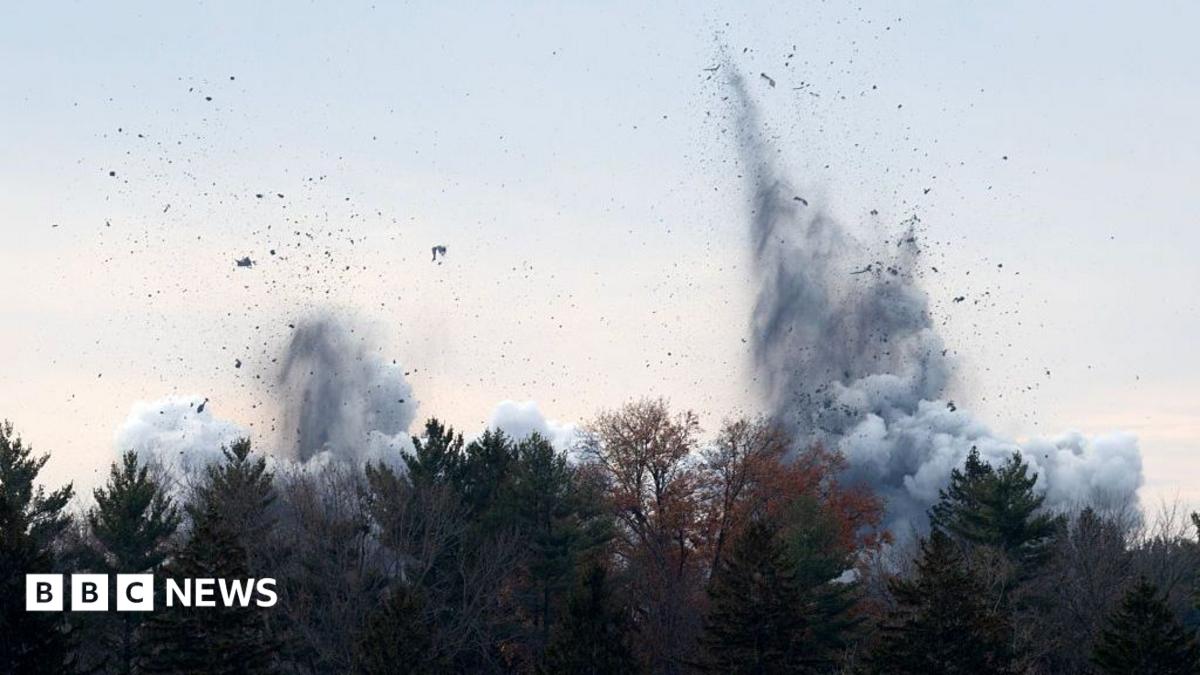
On a crisp autumn morning in rural Iowa, a controlled explosion reverberated across the countryside, marking the culmination of a weeks-long operation by the US Army to dispose of unstable explosives. The blast, which occurred at a designated training ground, was described by Army officials as a 'huge success,' with preliminary air quality readings indicating that lead levels remained well below regulatory thresholds. The operation had been preceded by town hall meetings where residents expressed fears about potential contamination from lead and other heavy metals often associated with such detonations.
The timeline of events began months ago when the Army announced plans to conduct the controlled blast as part of its ongoing efforts to safely dispose of aging munitions. Local authorities were notified, and environmental monitoring stations were set up around the perimeter. On the day of the blast, a series of smaller detonations preceded the main event, each carefully timed to minimize shockwaves. Within hours, mobile laboratories began analyzing air samples, and by evening, officials announced that initial results were 'promising.'
Despite the reassurances, not all residents were convinced. 'We've heard promises before,' said one local farmer who requested anonymity. 'Until we see long-term data, we remain cautious.' The Army has pledged to release a comprehensive report within 30 days, but critics argue that real-time transparency is essential to maintain trust.
Market reaction was muted, as the event is not directly tied to publicly traded companies. However, defense and environmental services stocks showed slight movements as investors digested the news. Analysts noted that increased scrutiny of military operations could lead to higher compliance costs for contractors, potentially benefiting firms specializing in environmental monitoring and remediation.
Deep Technical & Financial Architecture
The controlled blast was executed using a technique known as 'open detonation,' where explosives are placed in a pit and covered with soil to contain the blast. This method is commonly used for disposing of obsolete munitions but has come under scrutiny due to the potential release of toxic substances. The Army employed a combination of traditional explosives and newer, less polluting formulations, according to a spokesperson. The operation also incorporated advanced monitoring technologies, including drones equipped with sensors to detect airborne particulates and heavy metals.
From a financial perspective, the operation's cost is estimated to be in the range of $2-3 million, covering personnel, equipment, and environmental monitoring. The Army's budget for such activities has been steadily increasing, with the Department of Defense allocating over $1.2 billion annually for munitions disposal and environmental compliance. This figure is expected to grow as aging stockpiles require disposal and regulations tighten.
The technology stack for monitoring included real-time air quality sensors, satellite imagery for plume modeling, and data analytics platforms to predict dispersion patterns. These tools are part of a broader trend toward digitalization in defense operations, with companies like Lockheed Martin and Raytheon investing in smart monitoring solutions. The unit economics of such operations are complex, balancing the cost of safety measures against the risks of litigation and cleanup liabilities.
Balance sheet impact for the Army is indirect, as it operates under government funding, but for private contractors involved in similar operations, the financial stakes are high. Companies that can demonstrate robust safety records and technological prowess may gain competitive advantage. For instance, firms specializing in bioremediation and soil treatment could see increased demand if contamination is detected.
Experts also point to the role of insurance in mitigating risks. Environmental liability insurance for defense contractors has become more sophisticated, with premiums reflecting the use of best practices. The Army's 'huge success' claim, if validated, could set a precedent for future operations and influence insurance rates.
Industry & Global Market Ripple Effects
The Iowa blast is a microcosm of a larger global industry: the disposal of explosive ordnance (EOD). Worldwide, governments spend billions annually on clearing landmines, unexploded ordnance, and obsolete stockpiles. The market for EOD equipment and services is projected to reach $8.5 billion by 2027, growing at a CAGR of 4.5%, according to industry reports. The US is a major player, both as a buyer and a supplier of technology and expertise.
Competitors in the space include European firms like Rheinmetall and Nexter, which offer advanced disposal systems. The success of the Iowa operation could bolster the US Army's reputation and lead to increased exports of its methods and technologies. Conversely, any negative environmental impact could tarnish the industry's image and spur stricter regulations.
Supply chains for specialized explosives and monitoring equipment are also affected. The Army's use of less polluting formulations may drive demand for eco-friendly explosives, benefiting chemical manufacturers that have invested in green technologies. Companies like Orica and Dyno Nobel are at the forefront of developing such products.
Investors in the defense sector are closely watching environmental, social, and governance (ESG) factors. A successful operation with minimal environmental impact could improve the ESG ratings of defense contractors, making them more attractive to socially responsible investment funds. On the other hand, controversies could lead to divestment.
Critical Perspectives, Analyst Debates & Risk Factors
While the Army touts success, independent experts urge caution. Dr. Elena Martinez, an environmental toxicologist at the University of Iowa, notes that lead levels can fluctuate and that short-term readings may not capture long-term deposition. 'Lead doesn't degrade; it accumulates in soil and water. We need months of monitoring, not hours,' she said. Others point out that the blast may have released other contaminants, such as perchlorates, which are not routinely monitored.
Residents' concerns are rooted in historical incidents where military activities led to contamination. The Army has faced lawsuits over lead poisoning at firing ranges and disposal sites. The risk of litigation remains a significant factor; if contamination is found, the Army could be liable for cleanup costs and damages, which could run into tens of millions of dollars.
Regulatory friction is another risk. The Environmental Protection Agency (EPA) has been tightening rules on lead emissions under the Clean Air Act. The Army's operation may need to comply with new standards, and any deviation could result in fines. The EPA has not yet commented on the Iowa blast but is expected to review the Army's report.
Analysts also debate the economic trade-offs. While controlled detonation is cost-effective compared to alternatives like incineration or chemical neutralization, the long-term costs of environmental monitoring and potential remediation can outweigh savings. A 2020 study by the Government Accountability Office found that the Department of Defense spent over $1 billion on cleanup at former disposal sites, highlighting the financial risks.
Strategic Forecast & Road Ahead
In the next 12-24 months, the Army is expected to release detailed environmental data from the Iowa site, which will be scrutinized by regulators and independent scientists. If the results confirm low lead levels, it could pave the way for similar operations elsewhere, potentially streamlining the disposal of aging munitions. The Army has plans to conduct controlled blasts at two other sites in the Midwest by 2025, pending regulatory approval.
Technological advancements will play a key role. The Army is investing in 'green' disposal methods, such as plasma arc and supercritical water oxidation, which could eventually replace open detonation. Companies developing these technologies, like General Atomics and SRI International, may see increased funding. The Iowa operation serves as a testbed for integrating real-time monitoring with disposal, a model that could become standard.
From a financial standpoint, investors should watch for contracts awarded for environmental monitoring and remediation. The Army's fiscal year 2025 budget request includes $1.5 billion for environmental programs, a 10% increase from the previous year. Firms like AECOM and Jacobs Engineering are well-positioned to benefit.
Finally, community engagement will be critical. The Army's handling of the Iowa situation will set a precedent for how it communicates with residents. Transparency and independent verification will be essential to maintain public trust. As one analyst put it, 'The blast may have been a success, but the real test is in the follow-up.'




Comments (0)
No comments yet. Be the first to share your thoughts!
Leave a Comment