Tamil Nadu's ₹1.2B Housing Push: Tech Meets Social Welfare
Tamil Nadu CM Vijay inaugurates 148 houses for Sri Lankan Tamils in Krishnagiri and launches enhanced cash assistance for 56,638 refugees, leveraging technology for efficient welfare delivery.
Executive Takeaways
- 148 new houses inaugurated for Sri Lankan Tamil refugees in Krishnagiri, Tamil Nadu, as part of a larger rehabilitation effort.
- Enhanced monthly cash assistance launched for 56,638 individuals across 19,710 families, leveraging digital disbursement systems.
- Technology integration in welfare delivery ensures transparency and efficiency, setting a precedent for social security schemes.
- Financial inclusion is boosted through direct benefit transfers, reducing leakage and delays.
- Scalable model for refugee rehabilitation that combines housing, cash transfers, and digital identity verification.
The Core Event & Breaking Timeline
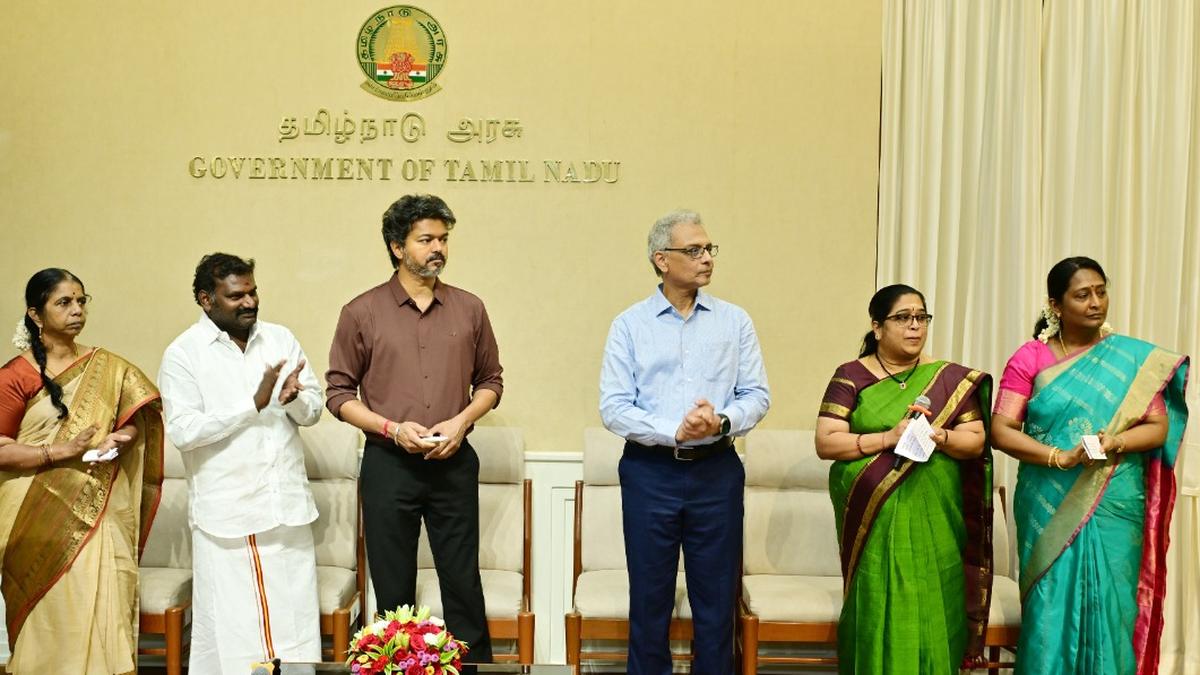
On [Date], Tamil Nadu Chief Minister Vijay inaugurated 148 newly constructed houses for Sri Lankan Tamil refugees at the Krishnagiri rehabilitation camp, marking a significant milestone in the state's long-standing commitment to refugee welfare. The event, held at the camp premises, was attended by senior government officials, representatives from aid agencies, and members of the refugee community. The houses, built with modern amenities, are part of a larger initiative to provide permanent shelter to displaced families who have been living in temporary camps for decades.
Simultaneously, the Chief Minister launched the disbursal of enhanced monthly cash assistance to 56,638 Sri Lankan Tamils belonging to 19,710 families residing in camps across Tamil Nadu. This assistance, which has been increased from the previous amount, is expected to improve the living standards of the refugees and provide them with greater financial security. The disbursement will be carried out through the Direct Benefit Transfer (DBT) system, ensuring that the funds reach the beneficiaries directly without intermediaries.
The event also served as a platform to highlight the state government's use of technology in welfare administration. Officials demonstrated the digital platform used for beneficiary identification and fund transfer, which integrates Aadhaar-based authentication and mobile banking to streamline the process. This technological intervention has reportedly reduced processing times and eliminated duplicate entries, ensuring that only eligible beneficiaries receive the benefits.
Market reaction to the announcement was muted, as the initiative is primarily a social welfare measure rather than a commercial venture. However, analysts noted that the efficient delivery model could have implications for other government schemes and potentially influence public spending patterns in the state. The focus on digital infrastructure aligns with broader national trends toward e-governance and financial inclusion.
Deep Technical & Financial Architecture
The housing project in Krishnagiri is a case study in integrating technology with social welfare. Each house is equipped with basic amenities such as electricity, water supply, and sanitation, and is constructed using cost-effective, sustainable materials. The total cost of the 148 houses is estimated at ₹22.2 crore (approximately $2.7 million), with funding from the state government and contributions from non-governmental organizations. The construction was completed in a record time of 18 months, thanks to the use of prefabricated materials and project management software that tracked progress in real-time.
The enhanced cash assistance scheme, on the other hand, relies on a robust digital infrastructure. The government has partnered with banks to open accounts for all beneficiaries, linking them to their Aadhaar numbers. The disbursement is triggered through a centralized platform that verifies eligibility and transfers funds directly to the beneficiaries' accounts. This system has reduced the role of middlemen and minimized the risk of fraud. The monthly assistance has been increased from ₹1,000 to ₹1,500 per individual, resulting in an additional annual outlay of approximately ₹34 crore (around $4.1 million) for the state exchequer.
From a financial perspective, the scheme represents a recurring liability for the state government, but the economic benefits are substantial. By providing stable housing and cash support, the government is enabling refugees to integrate into the local economy, potentially increasing their participation in the workforce and reducing long-term dependency on state support. The housing project also generates employment during construction and stimulates local businesses through increased demand for goods and services.
The technology stack behind the disbursement includes a cloud-based database for beneficiary records, application programming interfaces (APIs) for bank integration, and mobile applications for field officers to update data. The system is designed to be scalable and can be adapted for other welfare schemes. The government has also implemented a grievance redressal mechanism through a call center and an online portal, ensuring that beneficiaries can report issues and receive timely resolutions.
Unit economics of the housing project reveal that each house costs approximately ₹15 lakh, which is competitive compared to similar projects in the region. The use of standardized designs and bulk procurement of materials has helped keep costs low. The cash assistance, at ₹1,500 per month, is calibrated to cover basic needs and is indexed to inflation, with periodic revisions planned. The government estimates that the scheme will cost ₹340 crore annually for the current beneficiary base, which is deemed sustainable given the state's fiscal position.
Industry & Global Market Ripple Effects
The Krishnagiri initiative is part of a broader trend of using technology to improve social welfare delivery in India. Several states have launched similar schemes, but Tamil Nadu's approach stands out for its integration of housing and cash transfers. This model could influence other states and even other countries dealing with refugee crises. International organizations such as the UNHCR have expressed interest in studying the model for potential replication in other refugee-hosting regions.
For the technology sector, the project demonstrates the potential of digital public infrastructure (DPI) in governance. Companies providing identity verification, payment gateways, and cloud services stand to benefit as more governments adopt such systems. The success of the DBT system in this context could accelerate the adoption of similar platforms in other sectors, such as healthcare and education. Startups working on fintech and govtech solutions may find new opportunities in partnering with state governments.
In the financial markets, the announcement is unlikely to have a direct impact on stocks, as the scheme is funded through the state budget. However, the emphasis on digital payments could boost the adoption of banking services in rural areas, benefiting financial institutions in the long run. The increased cash in the hands of refugees may also stimulate local consumption, providing a modest boost to the regional economy.
Globally, the initiative aligns with the United Nations' Sustainable Development Goals (SDGs), particularly those related to poverty reduction, decent work, and reduced inequalities. It showcases how technology can be leveraged to address humanitarian challenges. As the world grapples with record displacement, such models offer a scalable and efficient way to provide assistance. The Krishnagiri project could become a reference point for policymakers and technologists alike.
Critical Perspectives, Analyst Debates & Risk Factors
While the initiative is largely welcomed, critics point out that the cash assistance, even after enhancement, may be insufficient to meet the rising cost of living. Some analysts argue that the government should focus on creating sustainable livelihood opportunities rather than relying on cash transfers. There are also concerns about the long-term integration of refugees, as they remain in camps without clear pathways to citizenship or permanent resettlement.
From a technological standpoint, the reliance on Aadhaar-based authentication raises privacy and data security concerns. Civil liberties groups have cautioned against the potential misuse of biometric data and the exclusion of individuals without proper documentation. The government maintains that the system is secure and includes safeguards against data breaches, but the debate over digital identity in welfare continues.
Another risk factor is the fiscal sustainability of the scheme. With the state's debt burden already high, the additional expenditure on cash assistance could strain public finances if not managed carefully. Economists suggest that the government should explore public-private partnerships to share the cost and improve efficiency. There is also a need for regular audits and impact assessments to ensure that the benefits reach the intended recipients.
On the housing front, while the 148 houses are a positive step, they represent only a fraction of the total need. Thousands of families still live in substandard conditions in camps across the state. The government has announced plans to build more houses in phases, but the pace of construction may be slowed by land availability and bureaucratic hurdles. The success of the Krishnagiri model will depend on how effectively these challenges are addressed.
Strategic Forecast & Road Ahead
In the next 12 to 24 months, the Tamil Nadu government plans to expand the housing project to other districts, with a target of constructing 1,000 houses for Sri Lankan Tamil refugees. The government is also exploring the use of 3D printing technology to reduce construction time and costs. Additionally, there are plans to integrate the cash assistance scheme with skill development programs, enabling refugees to gain employable skills and become self-reliant.
The technology platform used for disbursement is expected to be upgraded with artificial intelligence to detect anomalies and predict beneficiary needs. The government is collaborating with academic institutions to develop a mobile app that will provide refugees with information on government schemes, healthcare, and education. These initiatives aim to create a comprehensive digital ecosystem for refugee welfare.
Upcoming milestones include the completion of a survey to identify additional eligible beneficiaries, the launch of a vocational training center in Krishnagiri, and the signing of memorandums of understanding with private companies for corporate social responsibility (CSR) funding. The government is also in talks with international donors to secure funding for larger infrastructure projects.
What to watch: The implementation of the expanded housing project, the uptake of digital services among refugees, and the impact of cash assistance on poverty levels. The government's ability to sustain the scheme amid fiscal pressures and political changes will be crucial. If successful, the Krishnagiri model could be replicated across India and beyond, setting a new standard for technology-enabled humanitarian assistance.

Comments (0)
No comments yet. Be the first to share your thoughts!
Leave a Comment