India's Judicial Backlog: The Tech Fix for 50 Million Cases
India's courts face over 50 million pending cases, with adjournments costing billions. Legal tech and AI promise to streamline justice, but adoption hurdles remain.
Executive Takeaways
- India's judiciary has over 50 million pending cases, with adjournments a major cause of delay.
- Legal tech startups and AI tools are emerging to automate scheduling, case management, and legal research.
- Government initiatives like eCourts Phase III aim to digitize courts and reduce backlog.
- Adoption challenges include infrastructure gaps, resistance from legal professionals, and data privacy concerns.
- Investment in legal tech is growing, but scaling solutions nationwide requires policy support and training.
Section 1: The Core Event & Breaking Timeline
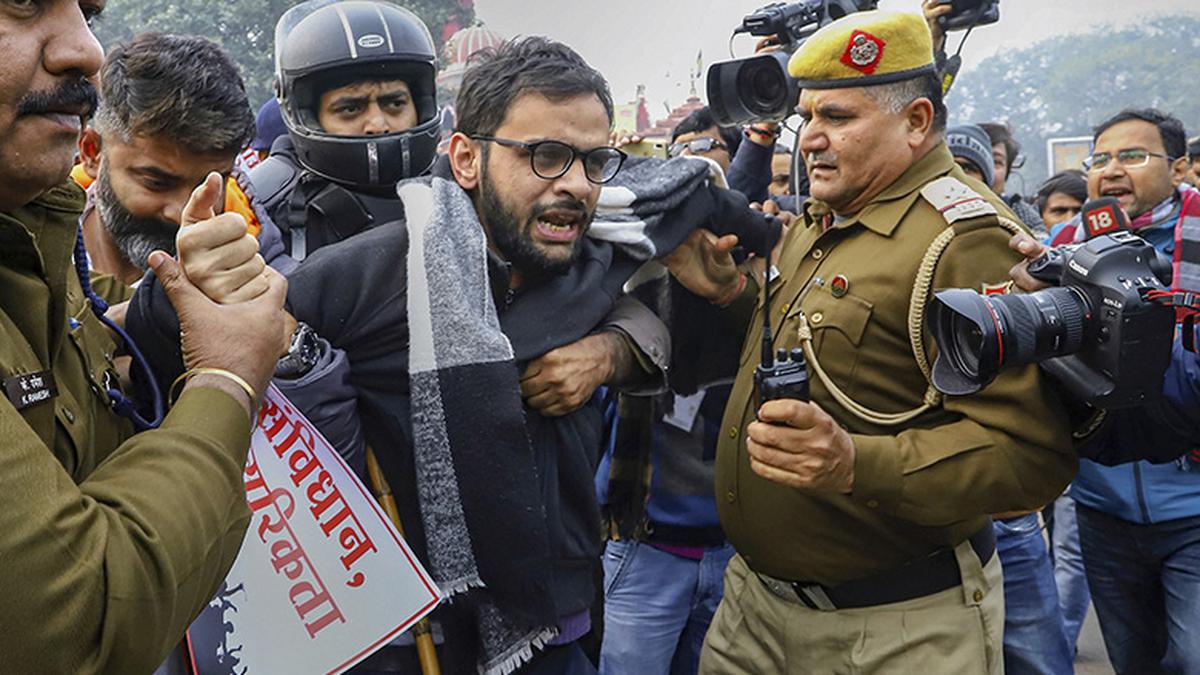
In a striking reminder of the Indian judiciary's chronic delays, Umar Khalid, jailed since September 2020 in a UAPA case, withdrew his bail plea from the Supreme Court on [date], citing a "change in circumstances" after a series of adjournments. The move, reported by The Hindu, underscores a justice system where adjournments are routine, often stretching cases for years. Khalid's legal saga is not isolated; it reflects a broader crisis: over 50 million cases are pending across Indian courts, with the Supreme Court alone handling over 80,000 matters. Each adjournment adds to the backlog, eroding public trust and costing the economy an estimated 0.5% of GDP annually due to delayed dispute resolution.
The timeline of Khalid's bail plea illustrates the problem. Filed in 2022, the plea saw multiple hearings postponed due to procedural issues, lawyer unavailability, and court congestion. Such delays are endemic: the National Judicial Data Grid shows that over 30% of pending cases are over five years old. The Supreme Court's own data reveals that in 2023, nearly 40% of scheduled hearings were adjourned, often for reasons as mundane as missing documents or judge unavailability. This pattern is not just a legal issue but a systemic inefficiency that technology could address.
Market reaction to such news is typically muted, as judicial delays are a long-standing norm. However, investors in legal tech are taking note. The global legal tech market is projected to reach $35 billion by 2027, growing at 9% CAGR. In India, startups like CaseMine, LawRato, and Presolv360 are attracting funding, offering AI-powered legal research, online dispute resolution, and case management tools. The withdrawal of Khalid's plea may not move markets, but it highlights the urgent need for solutions that can streamline judicial processes and reduce adjournments.
The core event also raises questions about the use of technology in courts. The Supreme Court's eCommittee has been pushing for digital transformation, but progress is slow. The COVID-19 pandemic accelerated virtual hearings, but infrastructure gaps and digital literacy among lawyers and judges remain barriers. Khalid's case, with its multiple adjournments, could have benefited from automated scheduling and document management systems that are now available but underutilized. As India's legal system grapples with backlog, the role of technology becomes increasingly critical.
Section 2: Deep Technical & Financial Architecture
The technical architecture for reducing judicial delays involves several layers: case management systems (CMS), AI-driven legal research, predictive analytics for case outcomes, and online dispute resolution (ODR) platforms. The eCourts Phase III project, approved in 2023 with an outlay of ₹7,210 crore ($870 million), aims to digitize court records, provide video conferencing, and implement AI for administrative tasks. The system uses a centralized database with APIs for integration with police, prisons, and forensic labs. However, the current infrastructure is fragmented, with many courts still relying on manual processes.
Financial impact of judicial delays is significant. A study by the National Council of Applied Economic Research (NCAER) estimates that delays in contract enforcement cost India 0.5% of GDP annually. For businesses, pending litigation ties up capital and discourages investment. Legal tech solutions can reduce costs by automating routine tasks: AI-powered document review can cut time by 70%, while ODR platforms can resolve disputes in weeks instead of years. For example, Presolv360 claims to resolve cases in 45 days on average, compared to 3-5 years in traditional courts.
Unit economics of legal tech startups vary. B2B models targeting law firms and corporations have higher margins but smaller addressable market. B2C platforms for individuals face low willingness to pay but high volume. Government contracts, such as eCourts, offer scale but come with procurement challenges. The key to profitability is often a hybrid model: offering free basic services to build user base, then monetizing premium features. CaseMine, for instance, uses a freemium model for its legal research tool, with paid subscriptions for advanced analytics.
Technology stack for these solutions typically includes cloud-based infrastructure (AWS, Azure), natural language processing (NLP) for legal document analysis, and machine learning for predictive analytics. Data privacy and security are critical, given the sensitive nature of legal cases. Blockchain is being explored for evidence management and smart contracts, but adoption is nascent. The challenge is not technology but integration with existing court systems and acceptance by legal professionals.
Investment in legal tech in India is growing but still small compared to global peers. In 2023, Indian legal tech startups raised about $50 million, a fraction of the $1.5 billion invested globally. However, with government push for digital India and the eCourts project, opportunities are expanding. Venture capital firms like Sequoia India and Accel have made bets, but exits are rare. The market is expected to mature as courts adopt technology and legal professionals become more tech-savvy.
Section 3: Industry & Global Market Ripple Effects
The ripple effects of India's judicial backlog extend beyond its borders. Multinational corporations operating in India face prolonged legal disputes, affecting their investment decisions. A World Bank report ranks India 163rd in contract enforcement, deterring foreign direct investment. As India positions itself as a global manufacturing hub, efficient dispute resolution becomes crucial. Legal tech solutions developed in India could be exported to other developing countries facing similar challenges, creating a new export sector.
Competitors in the legal tech space include global players like Relativity (e-discovery), Clio (practice management), and LexisNexis (legal research). Indian startups differentiate by focusing on local languages and court systems. However, global firms are eyeing the Indian market, partnering with local entities. For instance, Thomson Reuters has a presence in India, offering legal research tools tailored to Indian law. The competitive landscape is heating up, with consolidation expected as larger players acquire innovative startups.
Supply chain for legal tech involves cloud providers, data centers, and software developers. India's IT services giants like TCS, Infosys, and Wipro are also entering the legal tech space, leveraging their expertise in automation and AI. They offer end-to-end solutions for courts and law firms, from digitization to analytics. This convergence of IT and legal sectors could accelerate adoption, but also create competition for startups.
Investors are watching closely. The legal tech sector is seen as counter-cyclical, as economic downturns increase disputes. However, returns are long-term, and regulatory hurdles are high. Impact investors are particularly interested, given the social benefits of reducing judicial delays. The Indian government's push for ease of doing business and digital courts has spurred interest. In 2024, the launch of the Legal Tech Innovation Fund by the Ministry of Law and Justice aims to support startups with grants and mentorship, signaling official recognition of the sector's potential.
Section 4: Critical Perspectives, Analyst Debates & Risk Factors
Critics argue that technology alone cannot fix India's judicial backlog without addressing structural issues: inadequate judge strength (India has 20 judges per million people, compared to 50 in developed countries), archaic procedures, and political interference. They point out that eCourts Phase I and II had mixed results, with many courts still lacking basic infrastructure. The risk is that technology becomes a band-aid, not a cure. Analysts debate whether AI can be trusted for legal decisions, given biases in training data and lack of transparency.
Another risk is data privacy. Legal cases involve sensitive personal information, and digitization increases the risk of breaches. The Personal Data Protection Act, 2023, imposes strict penalties for data leaks, but enforcement is untested. Courts must balance transparency with privacy, especially in cases involving national security or juvenile justice. The use of AI in predictive policing or sentencing has been criticized for perpetuating biases, raising ethical concerns.
Regulatory friction is another hurdle. The legal profession is governed by the Bar Council of India, which has been slow to embrace technology. Rules on advertising and fee structures restrict online platforms. ODR platforms face questions about the enforceability of their decisions. The government's proposed Mediation Bill, 2021, aims to promote alternative dispute resolution, but implementation is pending. Without regulatory clarity, legal tech startups operate in a grey area, limiting their growth.
From a financial perspective, the unit economics of legal tech are challenging. Customer acquisition costs are high, especially for B2C platforms, as legal services are often considered a last resort. Churn rates are high for subscription models. Government contracts, while large, are subject to payment delays and bureaucratic hurdles. Investors are cautious, and funding is concentrated in a few proven startups. The sector needs more success stories to attract mainstream VC interest.
Section 5: Strategic Forecast & Road Ahead
Over the next 12-24 months, expect accelerated adoption of AI in Indian courts. The eCourts Phase III project will roll out AI-based tools for scheduling, translation, and legal research. The Supreme Court's AI committee is piloting a chatbot for case status queries. By 2025, several high courts are expected to have fully digital case management systems, reducing adjournments due to administrative reasons. Legal tech startups will partner with courts to provide these solutions, creating a new market segment.
Key milestones to watch include the rollout of the National Judicial Data Grid 2.0, which will provide real-time data on case pendency and adjournments. The government's target to reduce pendency by 25% by 2026 will drive funding and policy support. The Legal Services Authorities Act may be amended to recognize ODR, giving legal validity to online settlements. Additionally, the introduction of AI ethics guidelines for the judiciary will set standards for responsible AI use.
Investment in legal tech is expected to grow, with more VC funds dedicating resources to the sector. We may see consolidation as larger IT firms acquire startups to expand their offerings. The market for legal process outsourcing (LPO) will also evolve, with AI handling routine tasks and lawyers focusing on complex work. India's advantage in IT services positions it as a global hub for legal tech innovation, potentially exporting solutions to other common law countries.
However, the road ahead is not without challenges. Infrastructure gaps in rural courts, resistance from legal professionals, and data privacy concerns will persist. The success of legal tech will depend on collaboration between government, judiciary, and private sector. As Umar Khalid's case shows, delays have real human costs. Technology can be a powerful tool, but it must be deployed thoughtfully and inclusively. The next two years will be critical in determining whether India's legal system can embrace innovation to deliver timely justice.




Comments (0)
No comments yet. Be the first to share your thoughts!
Leave a Comment