Telangana Ration Basket Expansion: Tech-Driven Food Security Overhaul
Telangana CM Revanth Reddy is driving an expansion of the state's ration basket to include essential commodities, leveraging technology for efficient PDS. The move aims to enhance food security for FSC holders, with potential ripple effects on agri-supply chains and fintech integration.
Executive Takeaways
- Telangana Chief Minister Revanth Reddy is pushing to expand the state's ration basket beyond rice to include essential commodities like pulses, oil, and sugar, aiming to improve nutritional outcomes for Food Security Card (FSC) holders.
- The move could significantly impact the state's Public Distribution System (PDS), requiring upgrades in supply chain technology, inventory management, and fintech integration for subsidy disbursement.
- Industry analysts see potential opportunities for agri-tech startups and logistics firms, but caution about fiscal burdens and operational complexities.
- If successful, the model could be replicated in other states, influencing national food security policies and the broader agri-supply chain ecosystem.
Section 1: The Core Event & Breaking Timeline
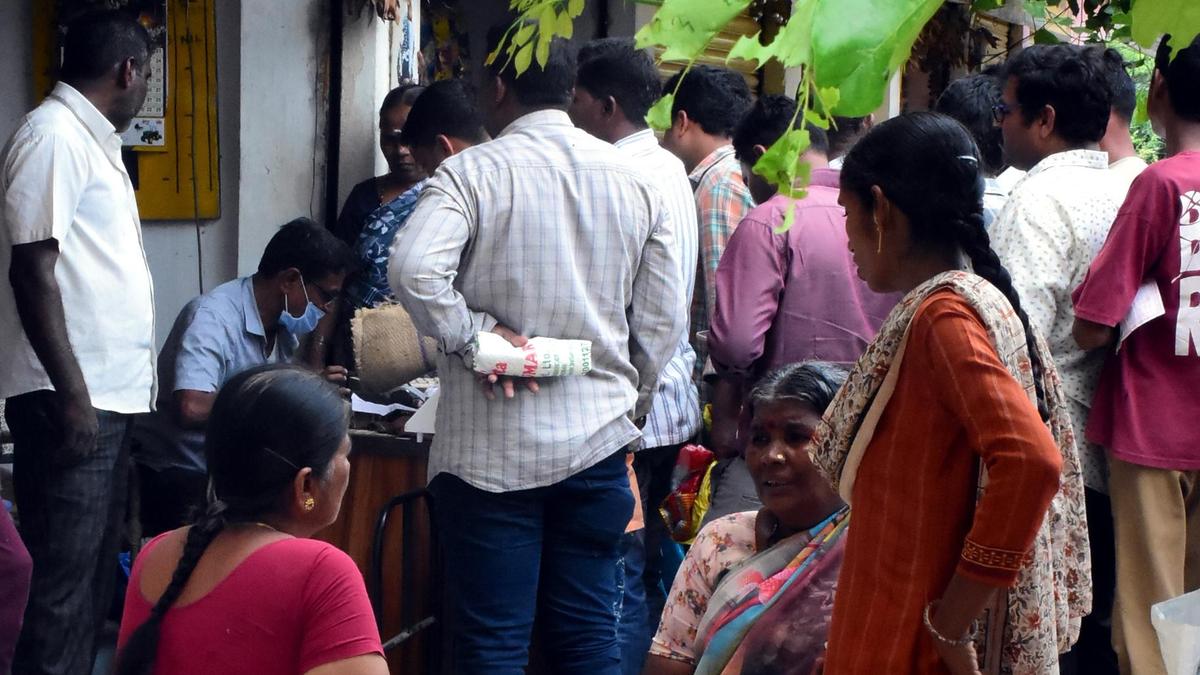
On October 26, 2023, Telangana Chief Minister Revanth Reddy chaired a high-level review meeting with the Civil Supplies Department, signaling a renewed push to expand the state's ration basket. The discussion, which had been tabled earlier but gained momentum under the new administration, focuses on providing essential commodities such as pulses, edible oil, and sugar to Food Security Card (FSC) holders, in addition to the existing rice entitlement. The move is part of a broader strategy to enhance nutritional security and address hidden hunger among the state's vulnerable populations.
The meeting, attended by senior officials including the Civil Supplies Commissioner and finance department representatives, examined the feasibility of procuring and distributing additional commodities through the existing PDS network. While no formal announcement was made, sources indicate that a pilot program could be launched in select districts within the next quarter. The Chief Minister emphasized the need for technological interventions to ensure transparency and efficiency, directing officials to explore digital solutions for inventory tracking and beneficiary authentication.
Market reaction to the development has been cautiously optimistic. Agri-commodity analysts note that expanded procurement could support local farmers, particularly pulse growers, but warn of potential inflationary pressures if supply chains are not scaled adequately. The state's food processing industry has welcomed the move, anticipating increased demand for packaged essentials. However, fiscal experts caution that the expansion could strain the state exchequer, with initial estimates suggesting an additional annual burden of ₹1,200-1,500 crore.
The timing of the announcement is significant, coming ahead of the upcoming assembly session where the government is expected to present a supplementary budget. The Chief Minister's keen interest underscores a shift towards a more comprehensive food security model, aligning with the United Nations' Sustainable Development Goal 2 (Zero Hunger). The move also follows a series of welfare initiatives by the new government, including free bus rides for women and enhanced health insurance coverage, signaling a focus on social sector spending.
Section 2: Deep Technical & Financial Architecture
The expansion of the ration basket hinges on a robust technical and financial architecture. At its core, the PDS in Telangana operates through a network of Fair Price Shops (FPS) equipped with electronic Point of Sale (ePoS) devices. These devices, currently used for biometric authentication and rice distribution, will need software upgrades to handle multiple commodities. The state's Civil Supplies Department is evaluating a cloud-based inventory management system that integrates with the existing ePoS network, enabling real-time stock tracking and automated replenishment orders.
Financially, the model requires a careful balancing of subsidies. Currently, the state provides rice at ₹3 per kg for FSC holders, with the central government bearing a significant portion of the subsidy. For additional commodities, the state may need to negotiate with the Centre for enhanced allocations under the National Food Security Act (NFSA) or fund the subsidy from its own resources. The finance department is exploring options such as direct benefit transfers (DBT) for certain commodities to reduce leakage, though officials acknowledge that DBT for food items is complex due to varying consumption patterns.
Unit economics of the expanded basket reveal potential economies of scale. Bulk procurement of pulses and oil through centralized tenders could lower per-unit costs by 10-15%, according to preliminary estimates. However, last-mile distribution costs are expected to rise by 20-25% due to additional handling and storage requirements. The state is considering public-private partnerships (PPP) for warehousing and logistics, with private players potentially investing in modern storage facilities in exchange for long-term contracts.
Technology stack considerations include the integration of IoT sensors for real-time monitoring of storage conditions, blockchain for supply chain traceability, and AI-driven demand forecasting to prevent stockouts. The state's IT department has proposed a pilot using a distributed ledger to track commodity movement from procurement to distribution, ensuring transparency and reducing pilferage. Additionally, mobile-based beneficiary apps could allow FSC holders to check entitlements and provide feedback, enhancing accountability.
Balance sheet impact on the state's finances is a critical concern. With a debt-to-GSDP ratio of around 25%, Telangana has some fiscal space, but the expansion could push up revenue expenditure. The government is exploring multilateral funding from agencies like the World Bank, which has supported similar food security projects in other states. Officials are also studying the fiscal models of states like Tamil Nadu, which offers a more comprehensive ration basket, to assess long-term sustainability.
Section 3: Industry & Global Market Ripple Effects
The expansion of Telangana's ration basket is poised to create ripples across the agri-supply chain. Local pulse and oilseed farmers stand to benefit from assured procurement, potentially leading to increased acreage and investment in quality seeds. Agri-tech startups focusing on supply chain optimization, such as those providing farm-to-fork traceability solutions, could see new opportunities. Companies like Cropin and AgriBazaar, which offer digital platforms for procurement and logistics, may find a growing market in government contracts.
On the global front, India's increased imports of pulses and edible oil to meet expanded PDS commitments could influence international commodity prices. Already the world's largest importer of pulses, India's demand surge could tighten global supplies, particularly from Canada and Australia. However, if the state promotes domestic production through contract farming, it could reduce import dependence over time. Multinational agribusinesses like Cargill and ADM are monitoring the development, as it could reshape procurement strategies.
Investor sentiment in the food processing and logistics sectors is likely to be positive. The expansion signals a growing market for packaged essentials, with companies like ITC and Adani Wilmar potentially eyeing partnerships with the state for co-branded commodities. Logistics firms such as Delhivery and Rivigo could benefit from increased transportation needs. However, investors are also wary of regulatory risks and payment delays, which have historically plagued government contracts.
Ecosystem shifts include a potential boost for fintech companies offering payment solutions for DBT and subsidy disbursement. Startups like Razorpay and Paytm, which have experience in government-to-citizen (G2C) payments, could pitch for integration with the PDS. Additionally, the move may accelerate the adoption of digital literacy among FSC holders, as they interact with ePoS devices and mobile apps, creating a ripple effect on financial inclusion.
Section 4: Critical Perspectives, Analyst Debates & Risk Factors
While the expansion is broadly welcomed, critics question its fiscal prudence. Economists argue that without a corresponding increase in revenue or central support, the state may have to cut capital expenditure, impacting infrastructure projects. The opposition has labeled the move as a populist measure ahead of elections, though the government denies any political motive. Analysts at rating agencies like CRISIL have cautioned that sustained high subsidy spending could pressure the state's credit profile.
Operational risks are significant. The PDS network, already burdened with rice distribution, may struggle with additional commodities. Storage capacity is a bottleneck, with many godowns lacking proper facilities for pulses and oil, leading to quality deterioration. The state's track record in plugging leakage is mixed; while ePoS has reduced ghost beneficiaries, diversion to open markets persists. Expanding the basket without strengthening monitoring could exacerbate leakages.
Regulatory friction is another concern. The NFSA currently defines the entitlement of foodgrains, and expanding to other commodities may require amendments or state-level legislation. The Centre's stance on funding such expansions is unclear, and any delay in central allocations could derail the plan. Additionally, food safety regulations for packaged commodities must be adhered to, requiring certification and quality checks.
Contrasting viewpoints exist on the nutritional impact. While some experts argue that providing pulses and oil directly improves dietary diversity, others suggest that cash transfers or food vouchers would be more efficient and allow beneficiaries to choose. The debate hinges on whether the state should focus on input-based subsidies or outcome-based interventions. The government is reportedly considering a hybrid model, but details are awaited.
Section 5: Strategic Forecast & Road Ahead
Over the next 12-24 months, the Telangana government is expected to roll out a phased implementation. The first phase, likely in the next six months, will see a pilot in four districts covering 10 lakh FSC holders, testing the technology stack and supply chain. Based on the pilot's success, a statewide rollout could follow by 2025. The government aims to complete the integration of ePoS devices with the new inventory system by mid-2024.
Key milestones to watch include the announcement of a detailed scheme document, the identification of procurement agencies, and the signing of MoUs with technology partners. The state budget for 2024-25, to be presented in February, will reveal the fiscal allocation for the expansion. Additionally, the government may seek approval from the Centre for additional NFSA allocations, which could be a litmus test for federal cooperation.
Potential challenges include resistance from FPS dealers, who may demand higher commissions for handling more commodities. The state will need to negotiate effectively to avoid disruptions. Supply chain disruptions, such as a poor monsoon affecting pulse production, could also pose risks. The government is advised to build buffer stocks and diversify procurement sources.
If successful, Telangana's model could become a blueprint for other states, influencing national policy discussions on expanding the food security basket. The upcoming G20 summit, where India is showcasing digital public infrastructure, could provide a platform to highlight the state's tech-driven PDS innovations. Investors and technology providers should monitor this space for opportunities in agri-tech, fintech, and logistics.


Comments (0)
No comments yet. Be the first to share your thoughts!
Leave a Comment