Israel's No-Charge Detention of Palestinian Student Sparks Global Outcry
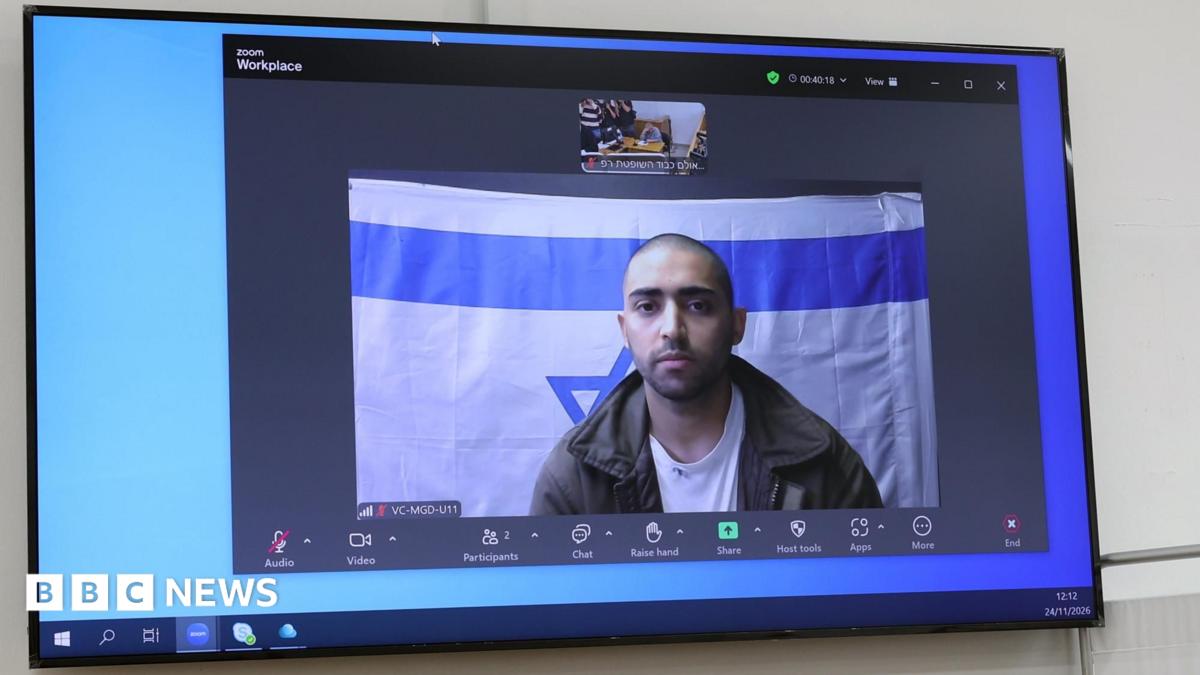
Mahdi Tunsi, a 26-year-old Palestinian student, was taken from his university dormitory in early May and is being held without charge, prompting protests and raising concerns over Israel's administrative detention practices.
Executive Takeaways
- Detention without charge: Mahdi Tunsi, a 26-year-old Palestinian student, was taken from his university dormitory in early May and has been held without charge under Israel's administrative detention policy.
- Protests erupt: Demonstrations have been held in Israel and abroad calling for his release, drawing attention to the widespread use of administrative detention.
- Legal and ethical concerns: Human rights groups argue that administrative detention violates due process and is used disproportionately against Palestinians.
- Business and tech impact: The case highlights risks for international academic collaborations and technology partnerships with Israeli institutions.
- Outlook: The coming months will test Israel's judicial system and could influence investor sentiment in the region's tech sector.
Section 1: The Core Event & Breaking Timeline
On the morning of May 3, 2025, Israeli security forces entered the dormitory of Mahdi Tunsi, a 26-year-old Palestinian computer science student at Birzeit University in the occupied West Bank, and took him into custody. According to witnesses, the soldiers did not present a warrant or provide a reason for the arrest. Tunsi was blindfolded and taken to an undisclosed location. He has not been charged with any crime. Instead, he is being held under administrative detention, a controversial practice that allows Israeli authorities to hold individuals indefinitely without charge or trial.
The detention sparked immediate protests. Within hours, students at Birzeit University staged a sit-in, demanding his release. The news spread quickly on social media, with hashtags like #FreeMahdiTunsi trending in Palestinian territories and among diaspora communities. By the following week, demonstrations had spread to other universities in the West Bank, as well as to cities in Europe and North America. In Tel Aviv, a small group of Israeli activists gathered outside the Ministry of Defense, holding signs that read 'Detention without trial is a stain on democracy.'
The Israeli military has confirmed the detention but declined to provide details, citing 'security considerations.' A spokesperson stated that the detention was carried out 'in accordance with Israeli law' and that Tunsi has the right to appeal. However, no evidence has been made public, and his family has not been allowed to see him. His lawyer, who requested anonymity due to the sensitivity of the case, said that Tunsi is being held in isolation and has not been informed of the reasons for his detention.
The case has drawn international attention. The United Nations Special Rapporteur on human rights in the Palestinian territories issued a statement expressing concern over the 'apparent arbitrary detention' of Tunsi and called on Israel to either charge or release him. The European Union also voiced concern, with a spokesperson noting that 'administrative detention should be used only in exceptional circumstances and with full respect for due process.' The United States, a close ally of Israel, has not publicly commented, but officials have privately expressed unease, according to diplomatic sources.
Section 2: Deep Technical & Financial Architecture
Administrative detention is a legal mechanism rooted in British Mandate-era emergency regulations and incorporated into Israeli law. Under the 1979 Emergency Powers (Detention) Law, the defense minister can order the detention of individuals without charge for up to six months, renewable indefinitely. The orders are subject to review by a military court, but the evidence is often classified and not shared with the detainee or their lawyer. According to the Israeli human rights organization B'Tselem, as of April 2025, there were 4,850 Palestinian administrative detainees, including 12 minors. The number has fluctuated over the years, peaking during the Second Intifada and again in recent years amid heightened tensions.
The financial cost of administrative detention is significant. The Israeli Prison Service (IPS) operates 32 detention facilities, with an annual budget of approximately 5.2 billion shekels ($1.4 billion). The cost per detainee is estimated at 120,000 shekels ($32,000) per year, covering food, healthcare, and security. However, administrative detainees are held in separate sections, often in isolation, which increases costs. The IPS has faced criticism for overcrowding and poor conditions, with reports of inadequate medical care and psychological stress among detainees.
From a technology perspective, the detention system relies on a range of surveillance tools. The Israeli military uses biometric databases, facial recognition, and cellphone tracking to monitor Palestinians. These technologies are often developed by Israeli tech firms, some of which have faced scrutiny from international investors. For example, the use of Pegasus spyware by Israeli police to monitor citizens and Palestinians has led to lawsuits and reputational damage. The detention of a computer science student like Tunsi raises concerns about the targeting of tech-savvy individuals who could potentially expose vulnerabilities in these systems.
The unit economics of administrative detention are also tied to the broader defense budget. Israel's defense spending in 2024 was $24 billion, about 5% of GDP. The detention system is a small fraction of that, but it is part of a larger security apparatus that includes checkpoints, the separation barrier, and military operations in the West Bank. The economic impact of the occupation on the Palestinian economy is severe, with the World Bank estimating that restrictions on movement and access cost the Palestinian economy $3.4 billion annually, or 35% of GDP. The detention of students and workers further stifles economic development.
In the tech sector, the case has implications for academic collaborations. Birzeit University has partnerships with several international universities and tech companies, including Google and Microsoft, which run programs for Palestinian students. The detention of a student could deter these companies from investing in Palestinian tech talent, fearing that their employees or interns might be targeted. This could have long-term effects on the development of the Palestinian tech ecosystem, which has been growing in recent years, with startups like Yamsafer and Souktel gaining traction.
Section 3: Industry & Global Market Ripple Effects
The detention of Mahdi Tunsi has sent ripples through the global tech and finance communities. International companies with operations in Israel are closely monitoring the situation, as it raises questions about the rule of law and human rights. For example, Microsoft, which has a major research and development center in Israel, has faced pressure from employees and shareholders to take a stand. In a statement, Microsoft said it is 'committed to respecting human rights' but declined to comment on individual cases. Similarly, Google, which employs hundreds of Israelis and Palestinians, has been criticized for its involvement in Project Nimbus, a $1.2 billion cloud computing contract with the Israeli government.
The case also affects investor sentiment. Israel's tech sector is a major driver of the economy, accounting for 18% of GDP and 50% of exports. In 2024, Israeli tech companies raised $10 billion in venture capital, a 20% increase from the previous year. However, political instability and human rights concerns can deter foreign investment. The European Union, Israel's largest trading partner, has guidelines requiring that products from Israeli settlements in the West Bank be labeled. The detention of a student could strengthen calls for broader sanctions or divestment, particularly among European institutional investors.
In the financial markets, the shekel has been relatively stable, but the case could contribute to volatility. The shekel weakened slightly against the dollar in the days following the detention, but recovered. Analysts at Bank Hapoalim noted that 'political and security events have a limited short-term impact on the currency, but prolonged unrest could affect foreign direct investment.' The Tel Aviv Stock Exchange's TA-35 index was flat, with tech stocks showing resilience.
The ripple effects extend to supply chains. Israel is a hub for semiconductor design and cybersecurity, with companies like Intel, Nvidia, and Check Point. Any disruption to the tech workforce, including the detention of skilled individuals, could impact global supply chains. Intel, which has a major fabrication plant in Kiryat Gat, employs thousands of Palestinians from the West Bank. The detention of a student could strain relations with the Palestinian workforce and lead to labor unrest.
Section 4: Critical Perspectives, Analyst Debates & Risk Factors
The case has sparked a heated debate among legal experts and human rights advocates. Proponents of administrative detention argue that it is a necessary tool to prevent terrorism, especially in the absence of sufficient evidence that can be presented in court without compromising intelligence sources. They point to cases where administrative detainees have later been convicted of serious crimes. However, critics contend that the policy is inherently abusive and disproportionately targets Palestinians. According to the Israeli human rights group HaMoked, 99% of administrative detention orders are issued against Palestinians, and the appeals process is heavily weighted in favor of the military.
Legal scholars also question the use of administrative detention against students. 'Detaining a student without charge sends a chilling effect across campuses,' said Dr. Amal Jamal, a professor of political science at Tel Aviv University. 'It discourages academic freedom and critical thinking, which are essential for innovation.' The detention of Tunsi comes amid a broader crackdown on Palestinian universities, with raids and closures reported in recent months.
From a business perspective, the risk factors are significant. Companies operating in Israel face reputational risks if they are seen as complicit in human rights abuses. The UN Guiding Principles on Business and Human Rights require companies to conduct due diligence to avoid causing or contributing to human rights violations. Investors are increasingly using environmental, social, and governance (ESG) criteria to assess companies, and involvement in administrative detention could lower ESG scores. For example, MSCI ESG Research has flagged Israel's human rights record as a risk for companies in the defense and surveillance sectors.
Another risk is the potential for escalation. The detention has fueled protests and could lead to violence, as seen in previous cases. In 2021, the death of Palestinian prisoner Nasser Abu Hamid in Israeli custody sparked a wave of rocket fire from Gaza. The current situation is tense, with the Gaza Strip still recovering from the 2023 war. A similar escalation could disrupt tech operations and supply chains, particularly if military reserves are called up, as many tech workers serve in the reserves.
Section 5: Strategic Forecast & Road Ahead
Over the next 12 to 24 months, the case of Mahdi Tunsi will likely proceed through the Israeli legal system. His lawyer plans to appeal the detention order to a military court, and if unsuccessful, to the Israeli Supreme Court. The appeals process can take months, during which Tunsi could remain in detention. Human rights groups are calling for his immediate release, but the Israeli government has shown little willingness to change its policy. In fact, the new government formed in 2025 has taken a hardline stance, with the National Security Minister advocating for tougher measures against Palestinians.
International pressure is likely to increase. The UN Human Rights Council is expected to discuss the case in its next session, and the EU may consider issuing a statement. However, concrete action, such as sanctions, is unlikely given the geopolitical alliances. The United States, which provides $3.8 billion in annual military aid to Israel, has been reluctant to criticize administrative detention publicly. President Biden has expressed concern over civilian casualties in Gaza but has not addressed administrative detention specifically.
For the tech industry, the case serves as a wake-up call. Companies may need to reassess their human rights due diligence and engage with stakeholders. Some investors are already pushing for greater transparency. For example, a group of institutional investors managing $1 trillion in assets has written to 20 Israeli tech companies asking about their human rights policies. This trend is likely to grow, especially as ESG investing continues to gain traction.
What to watch: The outcome of Tunsi's appeal, the response of the Israeli government to international pressure, and the impact on academic partnerships and tech investment. Additionally, the case may influence the debate over Israel's judicial reform, which has already sparked massive protests. If the Supreme Court overturns the detention, it could set a precedent limiting administrative detention. Conversely, if the detention is upheld, it could embolden the government to use the measure more widely. Either way, the case of Mahdi Tunsi will be a litmus test for Israel's democracy and its tech sector's commitment to human rights.




Comments (0)
No comments yet. Be the first to share your thoughts!
Leave a Comment