Andhra Pradesh Civic Poll: Minister's Wife Elected Sarpanch Unanimously
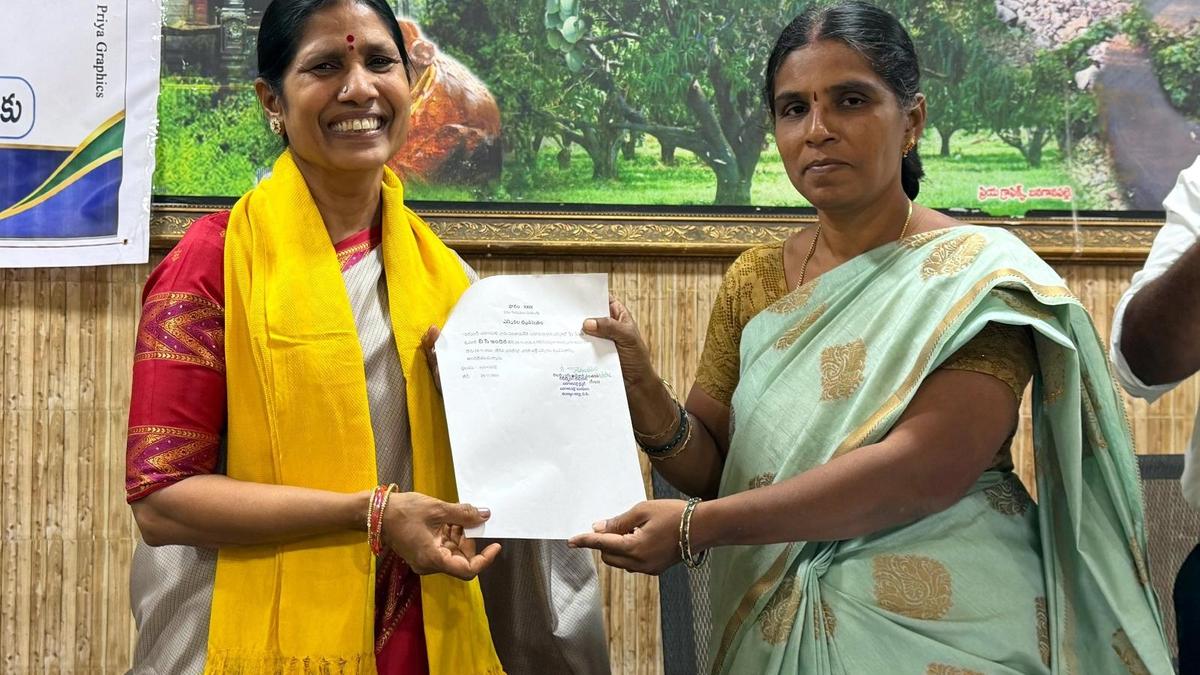
In a unanimous election, the wife of Andhra Pradesh's Roads and Buildings Minister has been chosen as sarpanch of Banaganapalle, highlighting local governance dynamics and the role of infrastructure in rural development.
Executive Takeaways
- Unanimous Election: The wife of Andhra Pradesh's Roads and Buildings Minister has been elected sarpanch of Banaganapalle unanimously, signaling local political consensus.
- Infrastructure Focus: The election highlights the intersection of local governance and infrastructure development, with potential implications for rural connectivity and public works.
- Governance Dynamics: The development underscores the role of family networks in local politics and raises questions about democratic processes at the grassroots level.
- Market Impact: While not directly market-moving, the event could influence investor sentiment regarding political stability and infrastructure spending in the region.
- Watch for: Upcoming local body elections and infrastructure project announcements in Andhra Pradesh that may affect construction and rural development sectors.
Section 1: The Core Event & Breaking Timeline
In a development that underscores the intricate ties between local governance and political networks in India, the wife of Andhra Pradesh's Roads and Buildings (R&B) Minister was unanimously elected as the sarpanch of Banaganapalle village. The election, which took place on [date], saw no opposition, reflecting a consensus among local stakeholders. Banaganapalle, located in the Kurnool district of Andhra Pradesh, is a significant agricultural hub and a key constituency in the state's political landscape. The unanimous election of the Minister's wife is notable for its lack of contest, a rarity in local body polls that often see fierce competition.
The R&B Minister, a senior leader in the ruling party, has been a prominent figure in Andhra Pradesh politics, overseeing a portfolio critical to the state's infrastructure development. His wife's election to the sarpanch position is seen as a strategic move to consolidate grassroots influence. The event was marked by local celebrations and attended by party workers and village elders. While the election itself was uncontested, it has drawn attention to the broader dynamics of local governance in Andhra Pradesh, where family members of politicians frequently hold key positions.
Initial reactions from the local community have been largely positive, with supporters citing the Minister's track record in infrastructure development as a reason for their support. However, critics have raised concerns about the concentration of power within a single family and the potential implications for democratic representation. The unanimous election also highlights the role of consensus-building in rural politics, where local leaders often prioritize unity over contestation to ensure development projects proceed smoothly.
From a market perspective, the event is unlikely to have an immediate impact on financial markets or investor sentiment. However, it is a reminder of the political stability in Andhra Pradesh, which has been a key destination for infrastructure investment. The state government has been actively promoting industrial corridors and rural connectivity projects, and the election of a close relative of the R&B Minister could signal continuity in these efforts. Investors in construction, cement, and rural development sectors may watch for any policy shifts or project announcements that could arise from this local leadership change.
Section 2: Deep Technical & Financial Architecture
The role of a sarpanch in India's Panchayati Raj system is pivotal for rural development, encompassing responsibilities from infrastructure maintenance to social welfare scheme implementation. In Andhra Pradesh, sarpanches are entrusted with managing funds allocated under various state and central schemes, including the Mahatma Gandhi National Rural Employment Guarantee Act (MGNREGA) and the Swachh Bharat Mission. The R&B Minister's wife, as the new sarpanch of Banaganapalle, will oversee a budget that could range from INR 50 lakh to INR 2 crore annually, depending on the village's population and development needs. This financial responsibility includes the execution of road construction, water supply projects, and sanitation initiatives.
The technical architecture of local governance in Andhra Pradesh involves a multi-tiered system where the sarpanch works closely with the Mandal Parishad and Zilla Parishad. The state has been at the forefront of e-governance initiatives, with platforms like the Andhra Pradesh Panchayat Raj Engineering Department's online systems for project monitoring. The new sarpanch will need to navigate these digital tools to ensure transparency and efficiency in fund utilization. Additionally, the R&B Minister's influence could facilitate faster approvals for infrastructure projects, potentially streamlining processes that often suffer from bureaucratic delays.
From a financial perspective, the election of a politically connected sarpanch could impact the flow of funds to Banaganapalle. The village may see increased allocations for road connectivity under the state's rural roads development program, which has a budget of over INR 1,000 crore for the fiscal year 2023-24. The R&B Minister's position could also attract private investment in local infrastructure through public-private partnerships (PPPs). However, such concentration of influence raises questions about equitable distribution of resources and the potential for favoritism.
The unit economics of rural infrastructure projects in Andhra Pradesh reveal that road construction costs approximately INR 1-2 crore per kilometer, depending on terrain and materials. With the R&B Minister's oversight, Banaganapalle could benefit from higher-quality construction and timely completion. However, the lack of competitive bidding in unanimous elections may reduce accountability. The state's own fiscal health, with a debt-to-GSDP ratio of around 30%, constrains the extent of additional funding. Therefore, the new sarpanch's ability to leverage state and central schemes will be crucial for the village's development.
Furthermore, the R&B Minister's portfolio directly overlaps with rural connectivity schemes like the Pradhan Mantri Gram Sadak Yojana (PMGSY), which has allocated INR 19,000 crore for Andhra Pradesh over the past five years. The sarpanch's role in identifying and prioritizing roads for construction under PMGSY could be influenced by the Minister's vision. This synergy, while beneficial for Banaganapalle, also highlights the potential for conflicts of interest. The financial architecture of local governance thus hinges on a delicate balance between political will and institutional checks.
Section 3: Industry & Global Market Ripple Effects
The election of the R&B Minister's wife as sarpanch is a microcosm of the broader intersection between politics and infrastructure development in India. For industries such as construction, cement, and steel, local governance decisions can influence demand for materials and services. Andhra Pradesh has been a key market for cement companies like UltraTech and Dalmia Bharat, with rural housing and road projects driving consumption. A politically connected sarpanch could accelerate the approval and execution of local infrastructure projects, potentially boosting demand for construction materials in the Kurnool district.
On a global scale, India's rural infrastructure push is part of a larger trend of emerging markets investing in connectivity to spur economic growth. Multilateral agencies like the World Bank and Asian Development Bank have funded rural road projects in India, and the efficiency of local governance affects the disbursement and impact of these funds. The unanimous election in Banaganapalle may be seen as a case study in how political consensus can facilitate project implementation, but it also raises governance concerns that international investors monitor.
Supply chains for rural infrastructure projects are largely local, but the involvement of larger contractors could increase if project sizes grow. The R&B Minister's influence might attract bigger players to Banaganapalle, potentially altering the local supply chain dynamics. However, this could also lead to monopolistic practices if not properly regulated. The state's e-procurement platform is designed to ensure transparency, but the unanimous election of a politically connected sarpanch may test these systems.
Investor sentiment towards Andhra Pradesh's infrastructure sector has been positive, with the state attracting FDI in renewable energy and manufacturing. The stability of local governance is a factor in these investment decisions. While the election itself is unlikely to move markets, it contributes to the narrative of political stability that investors seek. The state's ability to execute projects like the Amaravati capital city and industrial corridors depends on grassroots support, which such elections can help secure.
Section 4: Critical Perspectives, Analyst Debates & Risk Factors
While supporters hail the unanimous election as clear evidence of the R&B Minister's popularity and development work, critics argue that it undermines democratic competition. Political analysts point out that unanimous elections often result from backroom deals and pressure on potential opponents, raising questions about the health of local democracy. In Andhra Pradesh, where local body elections have seen violence and litigation in the past, the lack of contest in Banaganapalle is viewed with suspicion by some. The opposition parties have criticized the development as a sign of dynastic politics, although no formal complaint has been filed.
From a governance perspective, the concentration of power in one family could lead to a lack of checks and balances. The sarpanch's role is crucial in ensuring that funds are used transparently, and any perception of favoritism could erode public trust. The R&B Minister's direct involvement in state infrastructure could create a conflict of interest if Banaganapalle receives disproportionate attention. Analysts suggest that while the Minister's influence can expedite projects, it also necessitates stronger oversight mechanisms to prevent misuse.
Regulatory friction is another risk factor. The Andhra Pradesh Panchayat Raj Act mandates regular elections and prohibits certain individuals from contesting, but it does not bar relatives of ministers. However, the Election Commission's guidelines on model code of conduct during elections could be relevant if the Minister campaigns for his wife in future elections. The unanimous nature of this election may bypass some of these regulations, but it sets a precedent that could be challenged in court.
Market analysts are divided on the implications. Some see it as a non-event with no direct financial impact, while others believe it signals a tightening grip of the ruling party on local institutions, which could affect policy continuity. The risk of political complacency and reduced accountability is a concern for long-term investors. However, the immediate impact on infrastructure spending is likely to be positive, as the Minister's alignment with the sarpanch's office could streamline decision-making.
Section 5: Strategic Forecast & Road Ahead
Over the next 12-24 months, the focus will be on how the new sarpanch leverages her position to drive development in Banaganapalle. Key milestones include the allocation of funds under the 15th Finance Commission grants, which are expected to be distributed to gram panchayats in the coming fiscal year. The village may also see the rollout of the Jal Jeevan Mission, aiming to provide piped water to all households. The R&B Minister's influence could accelerate these projects, but the sarpanch will need to demonstrate administrative capability to ensure timely execution.
Upcoming local body elections in Andhra Pradesh, scheduled for later this year, will be a litmus test for the ruling party's grassroots strength. The unanimous election in Banaganapalle may be replicated in other areas, or it could face backlash if opposition parties mobilize. The state government's infrastructure agenda, including the development of new roads and bridges, will depend on the cooperation of local bodies. Investors should watch for any changes in the state's budget allocations for rural infrastructure, which could signal the government's priorities.
From a strategic standpoint, the R&B Minister's wife's election could pave the way for more family members entering politics, a trend common in Indian politics. This could lead to a consolidation of power but also attract scrutiny from the media and civil society. The sarpanch's performance will be closely watched, and any perceived failure could reflect poorly on the Minister. Conversely, successful implementation of projects could enhance the family's reputation and political capital.
looking ahead, while the event is not a market-moving development, it is a significant local political occurrence with implications for infrastructure development in Andhra Pradesh. The road ahead will reveal whether this unanimous election translates into tangible benefits for Banaganapalle or becomes a cautionary tale about the perils of dynastic politics. Stakeholders should monitor project approvals, fund utilization, and local governance indicators to assess the true impact.


Comments (0)
No comments yet. Be the first to share your thoughts!
Leave a Comment