India's Coalition Collapse Exposes Hidden Risk in $4T Market
India's Supreme Court weighs a landmark coalition dispute as the Shiv Sena split tests constitutional rules on party defection, raising fresh questions for investors about political risk in the world's fastest-growing major economy.
Executive Takeaways
- India's Supreme Court is hearing a constitutional challenge to the Maharashtra Assembly Speaker's recognition of the Eknath Shinde faction as the legitimate Shiv Sena, a dispute with direct implications for coalition stability and investor confidence.
- The case tests the anti-defection law's boundaries and could set precedent for how elected governments can be toppled through shifting allegiances.
- For markets, the dispute underscores governance risk in India's coalition-era politics, a factor increasingly weighed by foreign institutional investors.
- Technology, infrastructure, and capital-markets participants are watching for signals on policy continuity in Maharashtra, one of India's largest state economies.
- Legal analysts expect a ruling that could reshape party-defection jurisprudence and, by extension, the durability of coalition governments nationwide.
Section 1: The Core Event & Breaking Timeline
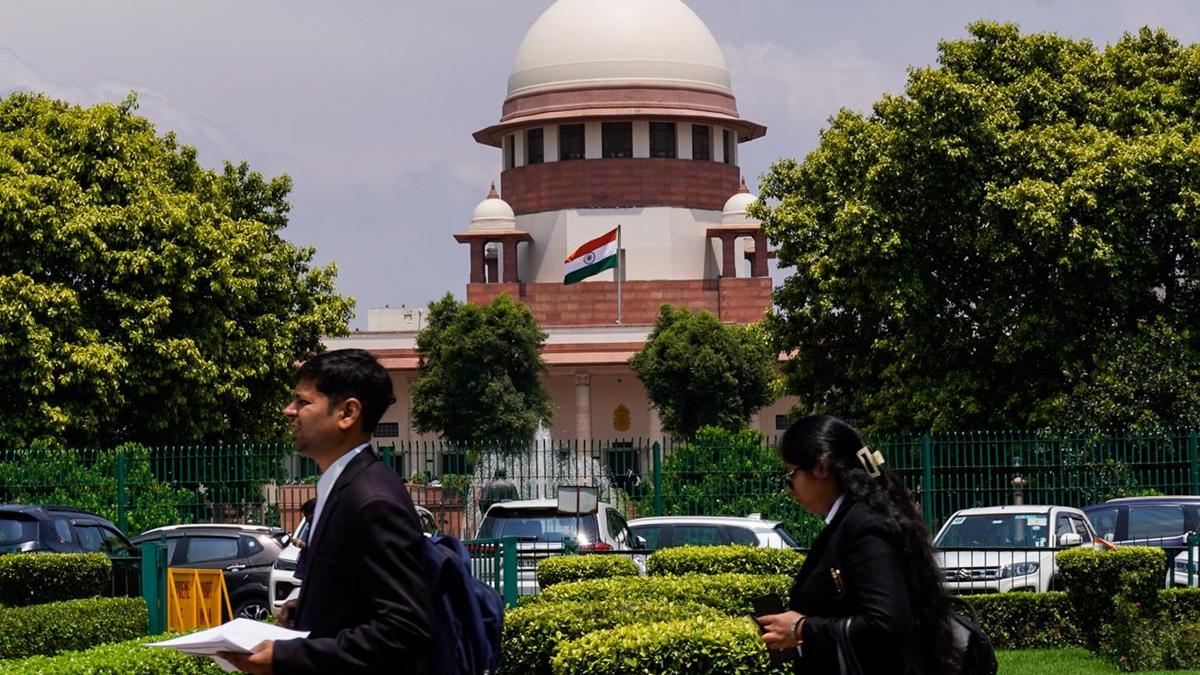
The Supreme Court of India is hearing a constitutional challenge brought by the Uddhav Thackeray faction of the Shiv Sena, which argues that the Maharashtra Assembly Speaker committed a constitutional error by treating the Eknath Shinde group's legislative majority as proof that it represented the original party. The dispute, which reached the apex court after a prolonged political crisis in Maharashtra, centers on whether numerical strength in the legislature can override the organizational identity of a political party.
The timeline traces back to the 2022 split within the Shiv Sena, when a faction led by Eknath Shinde broke away and formed a government with the Bharatiya Janata Party. The Speaker subsequently recognized the Shinde group as the legitimate Shiv Sena, a decision that the Thackeray faction contends was legally flawed. The Supreme Court's involvement elevates the matter from a state-level political dispute to a national constitutional question.
For markets, the immediate reaction has been muted but watchful. Indian equities have shown resilience through similar political episodes, yet analysts note that prolonged uncertainty in Maharashtra—home to Mumbai, India's financial capital—can affect sentiment in sectors ranging from real estate to technology services. The case is being tracked by foreign institutional investors who weigh governance and policy continuity as part of their India allocation models.
The hearing comes amid a broader pattern of coalition politics in India, where regional parties hold significant leverage. Legal experts suggest the court's eventual ruling could clarify the anti-defection framework and set boundaries on how legislative majorities are used to determine party legitimacy, a question with implications beyond Maharashtra.
Section 2: Deep Technical & Financial Architecture
At the heart of the dispute is the interpretation of India's anti-defection law, which was designed to prevent elected representatives from switching parties for personal gain. The Thackeray faction argues that the Speaker's reliance on legislative majority conflates two distinct concepts: the numerical strength of a faction and the organizational continuity of a party. This distinction matters because it determines which group controls the party's name, symbol, and institutional assets.
From a financial architecture perspective, political stability in Maharashtra influences capital allocation decisions across several sectors. The state contributes a significant share of India's industrial output, and its infrastructure pipeline—including transport, energy, and digital public infrastructure—depends on policy continuity. A prolonged legal battle can delay approvals and create uncertainty for investors evaluating state-level projects.
The technology and innovation ecosystem is particularly sensitive to governance signals. Mumbai and Pune host a growing cluster of fintech, software, and startup activity, and policy stability affects venture capital deployment and regulatory predictability. Analysts note that while national-level reforms drive much of the investment thesis, state-level governance remains a critical variable for execution risk.
Unit economics for investors in Indian equities reflect a risk premium tied to political events. Historical data suggests that markets tend to price in short-term volatility around coalition disputes but recover once clarity emerges. The current case is being assessed less as a systemic threat and more as a governance signal that could influence sentiment toward state-linked entities and infrastructure projects.
Legal and financial experts also point to the broader question of institutional credibility. A ruling that reinforces the anti-defection framework could strengthen confidence in India's governance architecture, while an ambiguous outcome might invite further disputes. The court's reasoning will be scrutinized for how it balances legislative majority with party organizational identity.
Section 3: Industry & Global Market Ripple Effects
The dispute's ripple effects extend to how global investors perceive India's political risk. In recent years, India has attracted record foreign direct investment and portfolio flows, driven by growth prospects and reform momentum. Coalition disputes at the state level are not new, but the Supreme Court's involvement adds a layer of legal uncertainty that investors monitor closely.
Competing emerging markets may benefit if investors perceive heightened political risk in India. However, analysts caution that the impact is likely to be limited unless the dispute escalates into a broader national crisis. India's macroeconomic fundamentals, including growth, inflation, and fiscal policy, remain the dominant drivers of capital flows.
Supply chains tied to Maharashtra's industrial corridors could experience minor disruptions if policy decisions are delayed. The state is a hub for automotive, pharmaceutical, and information technology manufacturing, and prolonged uncertainty can affect investment decisions by multinational corporations evaluating expansion plans.
Within India's startup and technology ecosystem, the dispute serves as a reminder of the importance of regulatory and political predictability. Founders and venture capitalists often factor governance stability into their expansion strategies, and state-level developments can influence decisions about where to locate operations or headquarters.
Section 4: Critical Perspectives, Analyst Debates & Risk Factors
Legal scholars are divided on the constitutional questions raised by the case. Some argue that legislative majority is a legitimate basis for recognizing a faction, particularly when elected representatives have chosen to align with a new leadership. Others contend that party identity is rooted in organizational structures and cannot be overridden by numerical strength alone.
Market analysts offer contrasting views on the investment implications. Some see the dispute as a contained political event with limited economic impact, while others warn that repeated coalition instability could erode India's governance premium over time. The debate reflects a broader tension between short-term political dynamics and long-term institutional development.
Risk factors include the possibility of prolonged litigation, which could delay policy decisions in Maharashtra and affect investor sentiment. There is also the risk that the court's ruling, whatever its outcome, could be interpreted differently across states, creating inconsistent precedents for party-defection cases.
Regulatory friction is another consideration. The anti-defection law has been criticized for its ambiguity, and the current case may prompt calls for legislative clarification. Any such reform would be closely watched by political and market participants alike.
Section 5: Strategic Forecast & Road Ahead
Over the next 12 to 24 months, the Supreme Court's ruling will be a key milestone for India's political and legal landscape. A clear decision could reduce uncertainty and reinforce the anti-defection framework, while a split verdict or ambiguous reasoning could prolong disputes and invite further litigation.
For investors, the roadmap includes monitoring state-level policy continuity in Maharashtra, particularly in infrastructure, technology, and industrial sectors. Upcoming budget cycles and regulatory decisions will provide signals about the direction of governance and reform.
Market participants should also watch for how political parties adapt to the ruling. If the court strengthens organizational identity over legislative majority, parties may adjust their strategies for managing internal dissent, potentially reducing the frequency of defection-driven crises.
Ultimately, the case underscores the importance of institutional stability for India's economic trajectory. While the immediate market impact may be limited, the long-term signal about governance and rule of law will be a factor in how global investors assess the durability of India's growth story.




Comments (0)
No comments yet. Be the first to share your thoughts!
Leave a Comment