KSEB, NTPC, NGEL Ink Green Energy Pact: What It Means for India's Power Sector
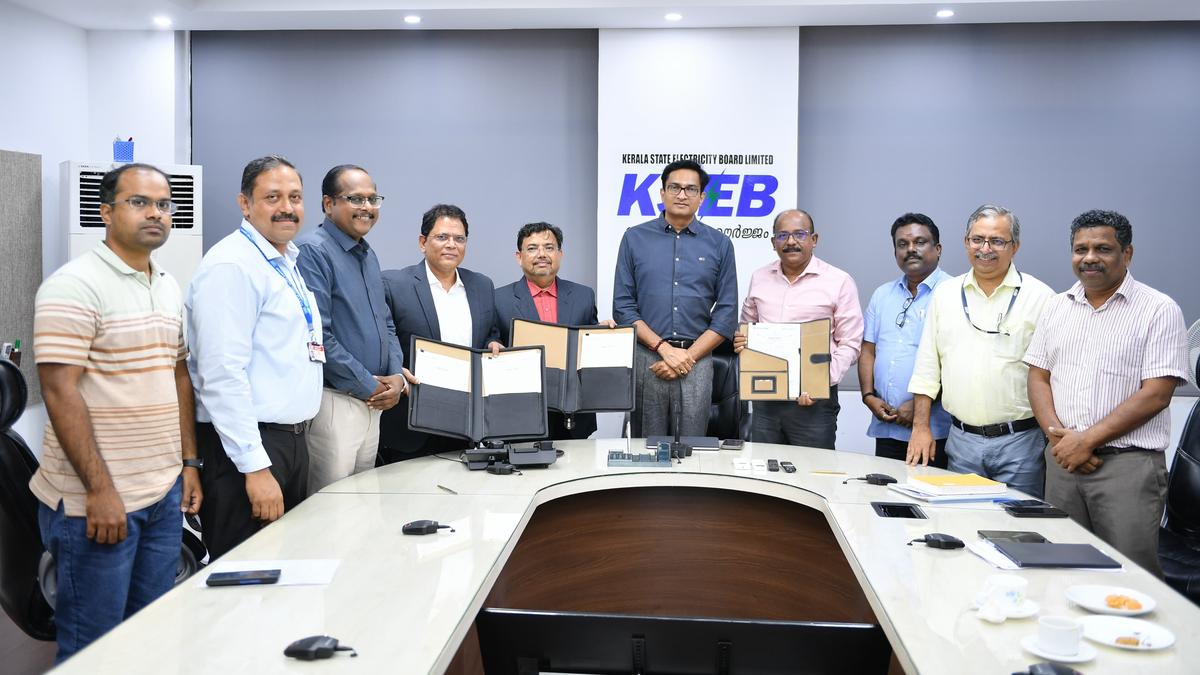
KSEB signs pact with NTPC Ltd and NGEL to develop green energy projects, marking a significant step in India's renewable energy expansion and Kerala's transition to sustainable power.
Executive Takeaways
- KSEB has signed a pact with NTPC Ltd and its subsidiary NGEL to collaborate on green energy projects, enhancing Kerala's renewable capacity.
- The agreement focuses on solar, wind, and hybrid projects, aligning with India's target of 500 GW non-fossil capacity by 2030.
- NTPC's expertise and financial strength will help KSEB reduce reliance on costly power purchases and improve energy security.
- The deal is part of a broader trend of state utilities partnering with central PSUs to accelerate renewable deployment.
- Analysts view the move as credit-positive for KSEB, though execution risks and regulatory hurdles remain.
The Core Event & Breaking Timeline
In a significant development for India's renewable energy landscape, the Kerala State Electricity Board (KSEB) has signed a memorandum of understanding (MoU) with NTPC Ltd and its wholly-owned subsidiary NTPC Green Energy Ltd (NGEL) to collaborate on the development of green energy projects. The agreement, announced on [date], aims to leverage NTPC's expertise in power generation and NGEL's focus on renewables to boost Kerala's renewable energy capacity. The pact was signed in the presence of senior officials from all three entities, marking a strategic partnership between a state utility and a central public sector undertaking (PSU).
The MoU outlines a framework for cooperation in identifying and developing solar, wind, and hybrid renewable energy projects, potentially including energy storage solutions. While specific project details and investment amounts were not disclosed, sources indicate that the initial focus will be on utility-scale solar installations and floating solar projects, given Kerala's land constraints and abundant water bodies. The partnership is expected to span multiple years, with a phased approach to project development.
Market reaction to the announcement was muted, as is typical for MoUs that lack immediate financial commitments. However, industry observers noted that the deal underscores the growing trend of state electricity boards (SEBs) partnering with central PSUs to meet renewable purchase obligations (RPOs) and reduce power purchase costs. KSEB, which has historically relied on long-term power purchase agreements (PPAs) with central generators and costly short-term purchases, sees this collaboration as a way to secure affordable green power.
The timing of the agreement is notable, coming close on the heels of the Indian government's push for states to accelerate renewable energy adoption. With India targeting 500 GW of non-fossil fuel capacity by 2030, state utilities are under pressure to ramp up renewables. Kerala, which has limited conventional energy resources, has been actively exploring green energy options, including solar and wind, to meet its growing electricity demand, which is projected to rise at a compound annual growth rate (CAGR) of around 5-6% over the next decade.
Deep Technical & Financial Architecture
The KSEB-NTPC-NGEL partnership is structured to leverage the strengths of each entity. NTPC Ltd, India's largest power producer, brings decades of experience in large-scale power project execution, operation, and maintenance. NGEL, as a dedicated renewable energy arm, specializes in solar, wind, and hybrid projects, with a growing portfolio and access to low-cost capital. KSEB, on the other hand, provides land, transmission infrastructure, and a guaranteed offtake for the generated power, reducing project risks.
Financially, the collaboration is expected to be structured through joint ventures (JVs) or project-specific special purpose vehicles (SPVs), with equity participation from both sides. NTPC and NGEL are likely to bring in a significant portion of the equity, leveraging their strong balance sheets and investment-grade credit ratings, while KSEB may contribute land and other resources. Debt financing will likely come from domestic and international lenders, including green bonds, given the favorable financing environment for renewable projects in India.
The unit economics of the projects will hinge on several factors, including capital costs, capacity utilization factors (CUF), tariffs, and financing costs. For solar projects in Kerala, the CUF is typically lower (around 18-20%) compared to other states due to cloud cover and monsoon patterns, but floating solar projects can achieve higher yields due to the cooling effect of water. The levelized cost of electricity (LCOE) for solar in India has fallen to around ₹2.5-3.0 per kWh, making it competitive with conventional power. The partnership aims to achieve tariffs that are below KSEB's average power purchase cost, which is currently around ₹4.5-5.0 per kWh, thereby generating savings for the utility.
From a balance sheet perspective, the deal is expected to be credit-positive for KSEB in the long term, as it reduces exposure to volatile short-term power markets and helps meet RPO targets. However, the initial phase may require capital expenditure, which could be funded through a mix of internal accruals and debt. NTPC and NGEL, with their strong financial profiles, can absorb the capital requirements without significant strain. The partnership also aligns with NTPC's goal of achieving 60 GW of renewable capacity by 2032, and NGEL's target of 60 GW by 2032, making it a strategic fit.
Technologically, the projects may incorporate advanced solutions such as bifacial solar modules, trackers, and energy storage systems to maximize generation and grid stability. Floating solar, in particular, is gaining traction in Kerala due to limited land availability and the presence of numerous water bodies, including reservoirs and backwaters. The partnership may also explore hybrid projects combining solar and wind, along with battery energy storage systems (BESS), to provide firm, dispatchable power. These technologies are evolving rapidly, and the collaboration could serve as a testbed for innovative solutions in the state.
Industry & Global Market Ripple Effects
The KSEB-NTPC-NGEL agreement is part of a broader trend of state utilities partnering with central PSUs and private developers to accelerate renewable energy deployment. Similar collaborations have been seen in other states, such as Rajasthan, Gujarat, and Tamil Nadu, where state utilities have tied up with NTPC, SECI, and private players to develop solar parks and wind farms. This model allows states to benefit from the scale, expertise, and financial strength of central PSUs while retaining control over distribution and retail supply.
For NTPC and NGEL, the partnership expands their footprint in Kerala, a state with limited renewable capacity but high power demand. NTPC has been aggressively growing its renewable portfolio, with a target of 60 GW by 2032, and partnerships with state utilities help secure land and offtake agreements. NGEL, which is set to be listed on the stock exchanges, is looking to scale up its capacity and this deal adds to its pipeline. The agreement also enhances NTPC's ESG credentials and aligns with the government's decarbonization goals.
Globally, the deal reflects the increasing role of state-owned enterprises in driving the energy transition, particularly in emerging markets. In India, central PSUs like NTPC, SECI, and NHPC are playing a pivotal role in achieving the renewable target, often in collaboration with state agencies. This model could be replicated in other countries with similar market structures, where state utilities dominate distribution and retail supply. The partnership also signals to international investors and lenders that India's renewable sector remains attractive, with strong government support and improving economics.
The ripple effects on supply chains are also noteworthy. The development of new renewable projects will create demand for solar modules, inverters, wind turbines, and balance-of-system components. Domestic manufacturing is being encouraged through production-linked incentive (PLI) schemes, and partnerships like this can provide visibility to manufacturers. Additionally, the focus on floating solar and hybrid projects may spur innovation and investment in these niche segments. Overall, the deal contributes to the ecosystem shift towards a more sustainable and resilient power system in India.
Critical Perspectives, Analyst Debates & Risk Factors
While the agreement is broadly positive, analysts have raised several critical points. Some question the viability of solar projects in Kerala given the state's high land costs, monsoon patterns, and lower solar irradiance compared to states like Rajasthan and Gujarat. Floating solar is seen as a promising alternative, but it comes with higher capital costs and technical challenges, such as anchoring and maintenance. The success of the partnership will depend on selecting the right projects and ensuring cost competitiveness.
Another concern is the financial health of KSEB, which has been burdened by high power purchase costs and losses. The utility's ability to fund its share of equity and absorb any cost overruns is uncertain. However, the involvement of NTPC and NGEL, with their strong balance sheets, mitigates this risk to some extent. The partnership structure needs to be carefully designed to allocate risks and rewards equitably. Regulatory approvals, including from the Kerala State Electricity Regulatory Commission (KSERC), will be crucial, and any delays could impact project timelines.
From a market perspective, some experts argue that state utilities should focus on competitive bidding rather than negotiated MoUs to ensure transparency and cost efficiency. However, MoUs with central PSUs can expedite project development and provide certainty, especially in states with limited renewable resources. The key is to ensure that the tariffs discovered are competitive and that the projects are executed efficiently. The lack of specific details in the MoU also leaves room for ambiguity, and stakeholders will be watching for concrete project announcements.
Environmental and social risks also need to be managed. Large-scale solar projects require land, which can lead to land-use conflicts and impact local communities. Floating solar projects on reservoirs can affect aquatic ecosystems and water quality. The partnership should incorporate robust environmental and social impact assessments and engage with local stakeholders. Additionally, the intermittency of renewable energy necessitates grid upgrades and storage solutions, which require additional investments. The partnership may need to address these aspects to ensure smooth integration.
Strategic Forecast & Road Ahead
In the next 12-24 months, the KSEB-NTPC-NGEL partnership is expected to move from MoU to concrete project development. The first step will be to identify specific sites for solar and floating solar projects, conduct feasibility studies, and secure necessary approvals. Given Kerala's land constraints, floating solar on reservoirs like Idukki and Banasura Sagar may be prioritized. The partners may also explore rooftop solar and distributed generation, although the MoU seems focused on utility-scale projects.
Financially, the projects will require significant capital, and the partners may seek to raise debt through green bonds or loans from multilateral agencies. NTPC's access to low-cost funds and NGEL's upcoming IPO will provide financial flexibility. The partnership may also explore joint ventures with private developers to bring in additional expertise and capital. The timeline for project commissioning will depend on the pace of approvals and construction, but the first projects could be operational within 2-3 years.
From a strategic standpoint, the deal strengthens KSEB's position to meet its renewable purchase obligations (RPOs) and reduce power purchase costs. Kerala's RPO target is set to increase, and the state currently lags in renewable capacity. The partnership can help bridge this gap and also support the state's goal of becoming carbon-neutral. For NTPC and NGEL, the deal adds to their growing renewable portfolio and reinforces their commitment to India's energy transition.
What to watch: The finalization of project details, the tariff structure, and the financing plan will be key indicators of the partnership's success. Regulatory approvals from KSERC and the Kerala government will be critical. Additionally, the performance of floating solar projects in Kerala's environment will be closely monitored. If successful, this model could be replicated for other states and utilities, further accelerating India's renewable energy journey. Investors should watch for announcements regarding the specific projects, as they could impact NTPC and NGEL's stock prices and KSEB's credit profile.


Comments (0)
No comments yet. Be the first to share your thoughts!
Leave a Comment