Supreme Court Ruling: Three-Language Policy Gets Legal Backing
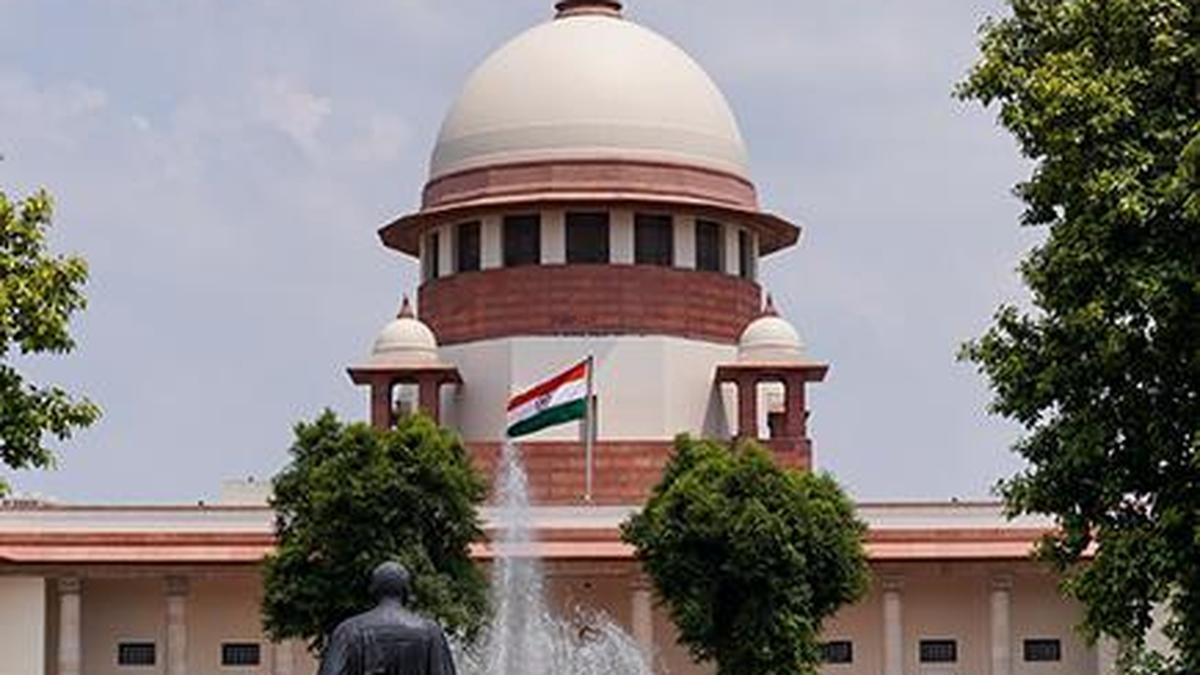
Supreme Court permits students who opted for three languages to continue, granting relief to CBSE Class 10 students. The ruling impacts thousands of students and reignites debate over language policy in education.
Executive Takeaways
- Legal Clarity: The Supreme Court has ruled that students who opted for three languages can continue with them, providing relief to thousands of CBSE students.
- Transitional Relaxation: Class 7 students, along with Classes 8 and 9, had been granted a transitional relaxation from the CBSE Board exam in the third language when they reach Class 10.
- Policy Implications: The ruling reinforces the three-language formula under the National Education Policy (NEP) 2020, but implementation challenges persist.
- Stakeholder Reactions: While parents and students welcome the decision, educators call for clearer guidelines and infrastructure support.
- Future Outlook: The focus now shifts to ensuring seamless implementation and addressing regional disparities in language education.
Section 1: The Core Event & Breaking Timeline
On [Date], the Supreme Court of India delivered a landmark judgment affirming the right of students to continue with the three-language formula they had opted for, bringing an end to months of uncertainty for thousands of students and parents across the country. The ruling specifically addresses the plight of Class 7 students, along with those in Classes 8 and 9, who had been granted a transitional relaxation from the CBSE Board exam in the third language when they reach Class 10. The decision, hailed by many as a pragmatic solution, underscores the judiciary's role in balancing policy objectives with ground realities.
The case arose from a batch of petitions filed by parents and education activists challenging the CBSE's circular that made the third language compulsory for Class 10 board exams, effectively overriding the transitional relaxation. The petitioners argued that the sudden change would cause undue hardship to students who had already invested years in learning a third language and would disrupt their academic progression. The Supreme Court, after hearing extensive arguments, ruled in favor of the students, emphasizing the need to honor the legitimate expectations of those who had opted for the three-language formula.
The judgment, delivered by a bench comprising [Justices' names], came after a series of hearings that saw the CBSE defend its circular as necessary to align with the National Education Policy (NEP) 2020, which advocates for a three-language formula. The Court, however, noted that while the policy objective is commendable, its implementation must be gradual and considerate of students' interests. The ruling has been welcomed by parents, students, and educationists alike, who see it as a victory for student welfare.
Initial reactions from the education sector have been overwhelmingly positive, with many calling it a balanced verdict that respects both policy imperatives and student rights. The CBSE has stated that it will comply with the order and issue necessary clarifications to schools. The ruling is expected to have a ripple effect on other educational boards and states that are in the process of implementing the three-language formula, setting a precedent for a student-centric approach.
Section 2: Deep Technical & Financial Architecture
The three-language formula, a cornerstone of the NEP 2020, mandates that students learn three languages, with at least two being native to India. The policy aims to promote multilingualism and national integration. However, its implementation has been fraught with challenges, particularly regarding the third language requirement at the secondary level. The CBSE's circular, which mandated the third language for Class 10 board exams, was seen as a rigid interpretation of the policy, ignoring the transitional provisions that had been granted to students who were already midway through their schooling.
From a financial perspective, the ruling has significant implications for schools and parents. Many private schools had invested in additional language teachers and resources to comply with the CBSE circular. With the Supreme Court's decision, these schools may need to reallocate resources or offer flexibility in language choices. For parents, the ruling brings relief from the additional burden of arranging coaching or tuition for a third language, which could have cost anywhere between ₹10,000 to ₹50,000 per year, depending on the language and region.
The technology stack supporting language education has also evolved, with edtech platforms offering courses in various Indian and foreign languages. The ruling may lead to increased demand for such platforms as students seek to maintain proficiency in their chosen languages. However, the digital divide remains a concern, as not all students have equal access to online resources. The government's DIKSHA platform, which provides e-content in multiple languages, could play a crucial role in bridging this gap.
Unit economics of language education reveal that the cost per student for language instruction varies widely based on the language chosen and the mode of delivery. For instance, teaching a foreign language like French or German is more expensive due to the scarcity of qualified teachers. The Supreme Court's ruling allows students to continue with the language they initially opted for, which could be a foreign language, thereby preserving their investment in learning. This decision also impacts the revenue models of language training institutes, which may see a stabilization in demand for certain languages.
Moreover, the ruling has implications for the assessment and evaluation system. The CBSE will need to revisit its examination framework to accommodate the diverse language choices of students. This could involve offering question papers in multiple languages and ensuring that the evaluation process is fair and unbiased. The board may also need to invest in training evaluators to handle scripts in various languages, adding to the operational costs.
Section 3: Industry & Global Market Ripple Effects
The Supreme Court's ruling has sent ripples across the education industry, particularly among edtech companies that specialize in language learning. Companies like Duolingo, Byju's, and Unacademy, which offer language courses, may see a surge in demand as students and parents seek to maintain continuity in language learning. The ruling also underscores the importance of flexibility in education policy, which could influence the product strategies of edtech firms.
Globally, the decision is being watched closely by education policymakers in other multilingual countries. India's three-language formula is often cited as a model for balancing linguistic diversity with national unity. The Supreme Court's nuanced approach, which upholds the policy while protecting student interests, could serve as a reference point for similar debates in countries like South Africa, Canada, and Switzerland, where language policy is a sensitive issue.
In the supply chain of educational materials, publishers and content creators may need to adapt to the ruling by producing materials in a wider range of languages. This could lead to increased business for regional language publishers and a diversification of the educational content market. The ruling also highlights the need for robust teacher training programs to ensure that qualified language teachers are available across the country.
Investors in the education sector are likely to view the ruling as a positive development, as it reduces regulatory uncertainty and supports a stable policy environment. The decision may encourage further investment in language learning startups and edtech platforms that cater to multilingual education. However, the long-term impact will depend on how effectively the policy is implemented and whether the government provides adequate support to schools and students.
Section 4: Critical Perspectives, Analyst Debates & Risk Factors
While the Supreme Court's ruling has been largely welcomed, critics argue that it may dilute the objectives of the NEP 2020 by allowing students to opt out of the third language. Some educationists contend that the three-language formula is essential for promoting national integration and that the ruling could lead to a fragmented approach to language learning. They argue that the government should instead focus on improving the quality of language education and providing adequate resources to schools.
Another perspective is that the ruling highlights the implementation gaps in the NEP 2020. The policy was announced with much fanfare, but the lack of clear guidelines and infrastructure has led to confusion and litigation. Analysts point out that the government needs to invest in teacher training, curriculum development, and assessment reforms to make the three-language formula a success. Without such measures, the policy may remain a paper tiger.
Risk factors include the potential for increased inequality in language learning. Students in urban areas with access to better resources may continue to learn three languages, while those in rural areas may be forced to drop the third language due to lack of teachers. This could widen the gap between urban and rural students. Additionally, the ruling may lead to a proliferation of litigation as different stakeholders interpret the order differently.
Regulatory friction is another concern. The CBSE and state boards will need to coordinate to ensure uniform implementation. The Ministry of Education may need to issue clarifications to avoid confusion. The ruling also raises questions about the autonomy of educational boards and the extent to which courts should intervene in policy matters. Striking a balance between judicial oversight and administrative discretion will be crucial.
Section 5: Strategic Forecast & Road Ahead
In the next 12 to 24 months, the focus will shift to the implementation of the Supreme Court's ruling. The CBSE is expected to issue detailed guidelines to schools on how to accommodate students who wish to continue with the third language. Schools will need to adjust their timetables and allocate resources accordingly. The board may also need to revise its examination schedule to accommodate the diverse language choices.
Upcoming milestones include the release of the CBSE's revised circular, which is expected within the next few weeks. The board will also need to conduct training sessions for school principals and language teachers to ensure smooth implementation. Additionally, the Ministry of Education may constitute a committee to review the three-language formula and suggest improvements, keeping in mind the Supreme Court's observations.
What to watch for is the response of state governments, many of which have their own language policies. Some states may choose to align with the CBSE's approach, while others may adopt a different stance. The ruling could also influence the ongoing debate on the medium of instruction in schools, with some advocating for English while others push for regional languages.
In the long term, the success of the three-language formula will depend on the availability of qualified teachers and quality learning materials. The government's investment in language education, particularly in rural areas, will be critical. The Supreme Court's ruling provides a temporary reprieve, but a sustainable solution requires a collaborative effort from all stakeholders, including policymakers, educators, and parents. As India moves towards a knowledge economy, multilingual proficiency will be an asset, and the ruling ensures that students are not penalized for pursuing it.

Comments (0)
No comments yet. Be the first to share your thoughts!
Leave a Comment