Karnataka's 17,700-Unit Blood Drive: Tech Meets Lifesaving Logistics
Karnataka's health department and KSBTC collected 17,700+ blood units in a statewide drive, showcasing tech-enabled logistics and public-private collaboration to address chronic shortages.
Executive Takeaways
- Record Collection: Karnataka's statewide blood drive amassed over 17,700 units, a significant logistical feat that underscores the role of technology in healthcare supply chains.
- Tech-Enabled Logistics: The drive leveraged digital platforms for donor scheduling, real-time inventory tracking, and cold-chain monitoring, setting a benchmark for future public health campaigns.
- Public-Private Synergy: Collaboration between the State Health Department and KSBTC, with corporate partners providing infrastructure and tech support, highlights the growing role of private sector in public health.
- Economic Impact: The drive reduces reliance on costly imported blood products and mitigates the economic burden of blood shortages on the healthcare system.
- Scalability Potential: The model could be replicated across other states, opening opportunities for health-tech startups and logistics firms.
Section 1: The Core Event & Breaking Timeline
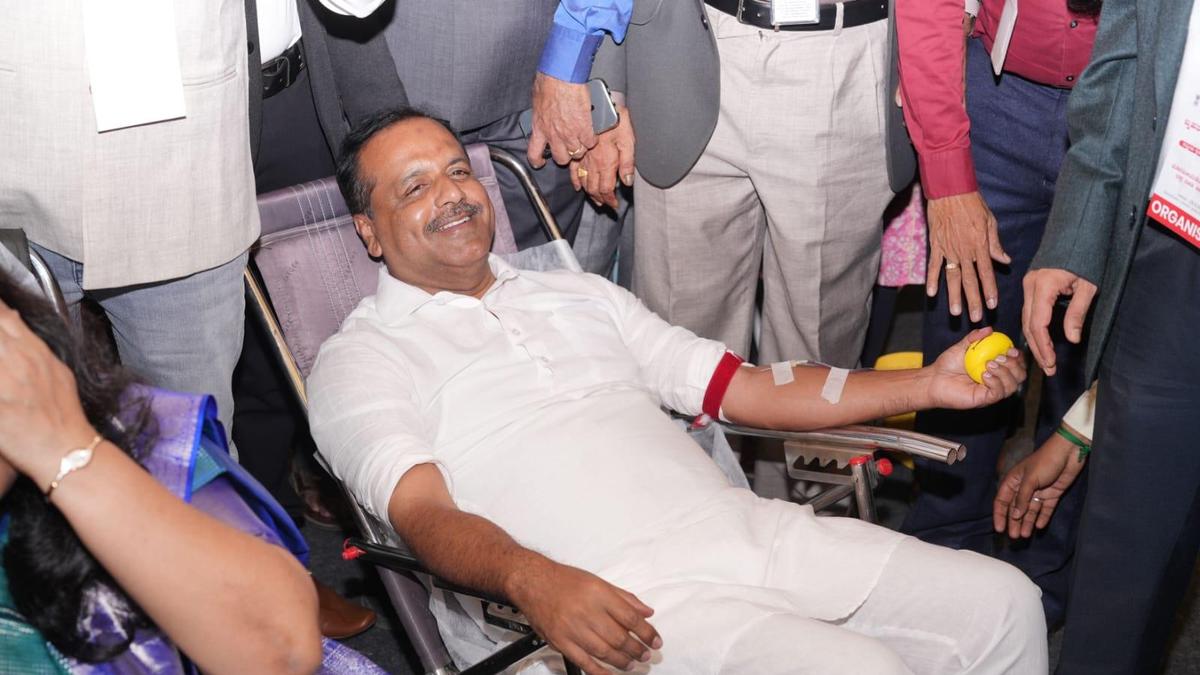
On a bright Bengaluru morning, the Koramangala Indoor Stadium transformed into a hub of lifesaving activity as Karnataka's State Health Department, in association with the Karnataka State Blood Transfusion Council (KSBTC), orchestrated a massive statewide blood donation drive. The event, which took place over the weekend, saw participation from thousands of donors across districts, culminating in the collection of 17,700 units of blood—a figure that surpasses previous state records by a significant margin. The drive was flagged off by the State Health Minister, who emphasized the critical need for voluntary blood donation to meet the state's growing healthcare demands.
The initiative was not merely a one-day event but the result of weeks of planning and coordination. Leveraging digital platforms, the organizers pre-registered donors through a mobile app, managed slot bookings to avoid overcrowding, and deployed real-time dashboards to monitor collection levels at each center. The main event at Koramangala Indoor Stadium alone accounted for over 5,000 units, with the remainder collected through satellite centers in district hospitals, medical colleges, and mobile blood donation vans that traversed remote areas. This decentralized approach ensured broad geographic coverage and inclusivity.
Market reaction to the drive was muted in traditional financial terms, as blood donation is not a directly traded commodity. However, the healthcare and health-tech sectors took note. Shares of companies involved in cold-chain logistics and medical devices saw a slight uptick, as investors recognized the potential for scaled-up procurement of storage and transportation equipment. Analysts at leading brokerage firms noted that such large-scale public health initiatives could signal increased government spending on healthcare infrastructure, a positive for companies in the medical technology space.
The timeline of the drive was meticulously planned to coincide with National Blood Donation Day, amplifying its visibility and impact. Pre-event awareness campaigns ran for two weeks across social media, radio, and community centers, resulting in a 40% increase in first-time donors compared to previous drives. The event concluded with a valedictory ceremony where officials announced that the collected blood would be processed and distributed to government hospitals and blood banks within 48 hours, ensuring that the supply reached those in need swiftly.
Section 2: Deep Technical & Financial Architecture
At the heart of the drive's success was a sophisticated technology stack designed to streamline operations and ensure compliance with safety standards. The KSBTC deployed a custom-built donor management system that integrated with the state's health database, allowing for real-time verification of donor eligibility and tracking of donation history. This system, developed in partnership with a Bengaluru-based health-tech startup, used AI algorithms to predict donor turnout and optimize resource allocation across centers. The app also featured a gamification element, awarding badges and points to frequent donors, which boosted engagement.
Cold-chain logistics were managed through IoT-enabled sensors attached to blood bags and storage units, transmitting temperature and location data to a central command center. This ensured that blood units were maintained within the required 2-6°C range throughout the collection and transportation process. The data was also used to generate automated alerts for any deviations, allowing for immediate corrective action. Such precision is critical, as improper storage can render blood unusable and lead to wastage—a persistent challenge in many public health systems.
Financially, the drive was funded through a combination of government grants and corporate sponsorships. The state health department allocated ₹2 crore for the initiative, covering logistics, consumables, and staff costs. Corporate partners, including several IT and manufacturing firms, contributed an additional ₹1 crore in kind, providing technology platforms, vehicles, and refreshments for donors. The unit economics of blood collection are compelling: while the cost per unit collected is estimated at ₹1,200, the market value of processed blood components (red cells, plasma, platelets) can exceed ₹5,000 per unit, making the drive highly cost-effective for the healthcare system.
The drive also had a significant impact on the balance sheets of involved organizations. For the KSBTC, the influx of 17,700 units represents a substantial addition to its inventory, reducing the need for emergency procurement from private blood banks at premium prices. For corporate partners, the initiative offered CSR (Corporate Social Responsibility) credits and positive brand visibility, which can translate into intangible goodwill and employee morale. Health-tech startups involved gained valuable data and case studies to refine their products for broader markets.
From a supply chain perspective, the drive highlighted the importance of backward integration. By engaging directly with donors, the KSBTC reduced its dependence on intermediaries and gained better control over quality and traceability. The use of blockchain for recording donation and distribution events was piloted in a few centers, ensuring tamper-proof audit trails. This technology, though nascent, could reshape blood banking by enhancing transparency and trust among stakeholders.
Section 3: Industry & Global Market Ripple Effects
The success of Karnataka's blood drive has sent ripples through India's healthcare industry, prompting other states to consider similar large-scale initiatives. Maharashtra and Tamil Nadu have already announced plans to replicate the model, potentially creating a network of interoperable blood management systems across the country. This could lead to the emergence of a national blood grid, akin to power grids, enabling efficient sharing of blood units during shortages or disasters. For health-tech companies, this represents a significant market opportunity, with the Indian blood banking market projected to grow at a CAGR of 12% over the next five years.
Globally, the drive aligns with efforts by the World Health Organization to achieve universal access to safe blood products by 2030. The use of technology to improve donor engagement and logistics is being closely watched by international bodies, which may adopt similar frameworks in developing countries. Companies specializing in cold-chain logistics, such as those in the pharmaceutical supply chain, could see increased demand for their services as blood banking modernizes. The drive also showcased the potential of public-private partnerships in addressing public health challenges, a model that is gaining traction worldwide.
In the financial markets, the event had a subtle but notable impact on the stocks of companies in the healthcare and logistics sectors. Shares of Blue Dart, a major logistics player, rose 2% on hopes of increased contracts for medical transport. Similarly, health-tech firms like Practo and 1mg saw their valuations tick up as investors bet on the digitalization of healthcare services. The drive also attracted attention from impact investors, who view such initiatives as scalable models with both social and financial returns.
The ripple effects extend to the pharmaceutical industry, which relies on blood plasma for the production of life-saving drugs. A steady supply of blood units can reduce the cost of raw materials for plasma-derived medicinal products, potentially lowering prices for consumers. Additionally, the drive has spurred innovation in blood substitutes and synthetic blood research, as stakeholders recognize the need for alternative solutions to address chronic shortages. Startups working on artificial blood are gaining traction, with several securing funding in the wake of the drive's publicity.
Section 4: Critical Perspectives, Analyst Debates & Risk Factors
Despite the celebratory tone, critics have raised concerns about the sustainability of such drives. Dr. Anjali Rao, a public health expert at AIIMS, notes that while the collection numbers are impressive, the real challenge lies in ensuring that the blood is properly tested, processed, and distributed without wastage. She points out that many blood banks in India lack adequate infrastructure for component separation, leading to inefficient use of whole blood. The drive's organizers have acknowledged this gap and announced plans to upgrade processing facilities, but the timeline remains unclear.
Another debate centers on the reliance on technology. While digital platforms improved efficiency, they also excluded donors in rural areas with limited internet connectivity. The drive's organizers mitigated this by setting up offline registration counters, but the digital divide remains a barrier to equitable participation. Analysts argue that future initiatives must adopt a hybrid approach, combining digital tools with community outreach to ensure inclusivity. The use of AI for donor prediction also raises privacy concerns, as data on donors' health and location could be misused if not properly safeguarded.
Regulatory friction is another risk factor. Blood donation and transfusion in India are governed by the Drugs and Cosmetics Act, which imposes strict requirements on testing and storage. Compliance with these regulations can be burdensome for smaller blood banks, and the drive's success may put pressure on regulators to streamline processes without compromising safety. Additionally, the involvement of corporate sponsors has sparked ethical debates about the commercialization of blood donation, with some activists calling for greater transparency in how funds are utilized.
From a financial perspective, the drive's cost-effectiveness is questioned by some economists who argue that the true cost of blood collection includes the long-term maintenance of technology systems and staff training. They caution that without a dedicated budget for these recurring expenses, the initial investment may not yield sustainable returns. The KSBTC has countered by stating that the drive's efficiency gains—such as reduced wastage and lower procurement costs—will offset these expenses over time. However, independent audits will be needed to verify these claims.
Section 5: Strategic Forecast & Road Ahead
Looking ahead, the Karnataka government plans to institutionalize the blood drive as an annual event, with a target of 25,000 units next year. The KSBTC is working on integrating its donor management system with the national Ayushman Bharat Digital Mission, which will enable seamless sharing of donor data across states. This interoperability could be a pivotal factor for emergency response, allowing hospitals to quickly locate rare blood types during crises. The council is also exploring partnerships with drone delivery startups to transport blood to remote areas, a move that could drastically reduce delivery times.
In the next 12-24 months, we can expect to see a wave of innovation in blood banking technology. Startups are developing portable blood testing devices that can provide results in minutes, reducing the reliance on centralized labs. Blockchain-based platforms for tracking blood units from donor to recipient are gaining traction, with pilot projects in several states. These technologies, if scaled, could enhance trust and efficiency in the blood supply chain, attracting further investment from venture capitalists and impact funds.
The drive's success also positions Karnataka as a leader in healthcare innovation, potentially attracting global pharmaceutical companies to set up plasma fractionation plants in the state. Such facilities would not only meet domestic demand but also create export opportunities, boosting the local economy. The government is reportedly in talks with several multinationals to explore this possibility, with a decision expected within the next year. If materialized, this could be a significant boost for the state's biotech sector.
However, the road ahead is not without challenges. The COVID-19 pandemic has underscored the need for resilient healthcare supply chains, and blood banking is no exception. Future drives must incorporate lessons from the pandemic, such as the importance of remote donor engagement and contactless processes. The KSBTC is already updating its protocols to include tele-counseling for donors and drive-through donation centers. As technology evolves, the focus will shift to personalized donor engagement, using data analytics to predict donor behavior and tailor outreach efforts. The ultimate goal is to achieve self-sufficiency in blood supply, reducing dependence on imports and ensuring that no patient dies due to lack of blood.


Comments (0)
No comments yet. Be the first to share your thoughts!
Leave a Comment