SRM AP-AiDEM MoU: Japan Career Pipeline for Indian Students
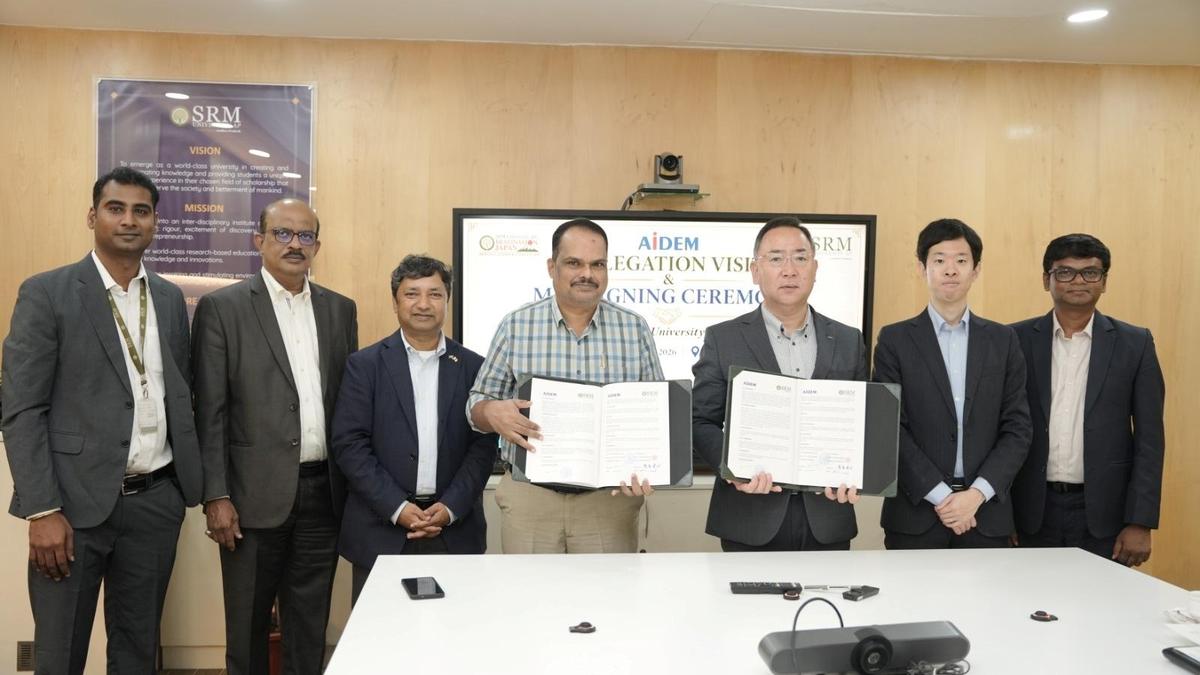
SRM University-A.P. signs MoU with AiDEM to provide structured international placement support, pre-placement orientation, and exposure to Japanese workplace culture, enhancing global career opportunities for students.
Executive Takeaways
- Strategic Partnership: SRM University-A.P. has signed an MoU with AiDEM to facilitate global career opportunities for its students, with a focus on Japan.
- Structured Support: The collaboration includes pre-placement orientation, Japanese workplace culture exposure, and international placement assistance.
- Market Context: Japan faces a severe labor shortage, especially in tech, and is increasingly looking to India for talent.
- Institutional Impact: The MoU enhances SRM's global placement record and attractiveness to prospective students.
- Risks: Language barriers, cultural adaptation, and geopolitical factors could affect outcomes.
Section 1: The Core Event & Breaking Timeline
On [Date], SRM University-A.P. announced a strategic partnership with AiDEM, a Japan-focused career facilitation platform, through a Memorandum of Understanding (MoU) aimed at providing students with structured international placement support. The collaboration is expected to offer pre-placement orientation, exposure to Japanese workplace culture, and direct linkages to Japanese employers. This move comes at a time when Japan is actively seeking to attract skilled professionals from India to address its demographic challenges and labor shortages.
The MoU was signed at SRM University's Andhra Pradesh campus, with key officials from both organizations present. While the financial terms of the agreement were not disclosed, the partnership is expected to create a pipeline of students trained in Japanese language and business etiquette, ready for placement in Japanese companies. Initial market reaction from the education sector has been positive, with analysts noting that such collaborations enhance the employability of Indian graduates and strengthen Indo-Japanese ties.
The announcement aligns with the Indian government's push for international mobility of skilled workers and Japan's recent policy shifts to ease visa norms for foreign professionals. SRM University-A.P., known for its focus on engineering and technology, has been expanding its global footprint through various international collaborations. This MoU is seen as a significant step in that direction, potentially setting a precedent for other universities to follow.
The timeline of the partnership is structured to begin with immediate implementation of pre-placement training programs, with the first batch of students expected to be placed in Japanese companies within the next 12-18 months. The collaboration will initially target engineering and technology students, with plans to expand to other disciplines in subsequent phases.
Section 2: Deep Technical & Financial Architecture
The MoU outlines a multi-layered approach to international placements. At its core, the partnership leverages AiDEM's network of Japanese employers and its expertise in cross-cultural training. SRM University will integrate Japanese language courses (JLPT N5 to N3 levels) and Japanese business etiquette modules into its curriculum, ensuring students are well-prepared for the Japanese work environment. The program also includes pre-departure orientation, covering visa processes, living arrangements, and cultural adaptation.
From a financial perspective, the collaboration is expected to generate revenue for both parties. SRM University will likely charge a fee for the specialized training programs, while AiDEM will earn placement fees from Japanese employers. For students, the cost of the program is an investment in their future, with potential salaries in Japan being significantly higher than domestic entry-level positions. The unit economics of the program depend on the placement rate and the average salary of placed students.
The technology stack supporting this initiative includes AiDEM's online platform for job matching, virtual interviews, and language assessment. SRM University will utilize its learning management system to deliver course content and track student progress. Data analytics will be used to monitor student performance and improve training outcomes. The program also includes soft skills training, including communication and teamwork, which are critical for success in Japanese workplaces.
On the balance sheet, SRM University may need to invest in faculty training and infrastructure for language labs, but these costs are expected to be offset by increased enrollment and placement fees. For AiDEM, the partnership provides access to a large pool of talented students, enhancing its value proposition to Japanese employers. The collaboration is structured as a revenue-sharing model, with details yet to be finalized.
The program's success will be measured by the number of students placed, the retention rate in Japanese companies, and the satisfaction of employers. Key performance indicators (KPIs) include language proficiency scores, interview success rates, and post-placement feedback. The partnership also includes a feedback loop to continuously improve the training curriculum based on employer requirements.
Section 3: Industry & Global Market Ripple Effects
The SRM-AiDEM partnership is likely to have significant ripple effects across the Indian education sector and the global talent market. Competitor universities, such as Amity, VIT, and Manipal, may seek similar collaborations to enhance their international placement records. This could lead to a surge in partnerships between Indian universities and foreign placement agencies, particularly those focused on Japan and other aging economies like Germany and South Korea.
For Japanese employers, this collaboration provides a reliable source of skilled talent, reducing their reliance on domestic hiring and mitigating the effects of a shrinking workforce. Japanese companies have traditionally been hesitant to hire foreign workers due to language and cultural barriers, but initiatives like this help bridge the gap. The success of this model could encourage more Japanese firms to recruit from India, potentially leading to increased foreign direct investment (FDI) in Indian education and training sectors.
Investors in the education technology space are closely watching this development. AiDEM, as a platform, could attract venture capital funding to scale its operations. Similarly, SRM University's enhanced placement record could improve its brand equity and attract more students, leading to higher revenues. The partnership also aligns with the broader trend of globalization in higher education, where universities are increasingly judged by their international placement outcomes.
The supply chain of talent is also affected. The program requires coordination between SRM's faculty, AiDEM's trainers, and Japanese employers. This creates a new ecosystem of service providers, including language schools, cultural training consultants, and visa processing agencies. The collaboration also has the potential to spur demand for Japanese language education in India, leading to the establishment of more language institutes and online learning platforms.
Section 4: Critical Perspectives, Analyst Debates & Risk Factors
While the partnership is promising, analysts have raised several concerns. The most significant risk is the language barrier. Japanese workplaces often require at least JLPT N3 level proficiency, and achieving this in a short period is challenging. SRM's program aims to address this through intensive training, but success is not guaranteed. Additionally, cultural adaptation is a major hurdle; Japanese work culture is known for its long hours and hierarchical structure, which may not suit all Indian students.
Another risk is the sustainability of the model. The program's success depends on the continued demand for Indian talent in Japan. If Japan's economy slows down or if it opens up to other labor markets, the demand could decline. Furthermore, geopolitical tensions between India and Japan, though currently low, could affect the partnership. There are also concerns about the quality of placements; if students are placed in low-skilled jobs, it could damage the university's reputation.
From a regulatory perspective, the program must navigate visa regulations in both countries. Japan has recently relaxed its visa norms for skilled workers, but the process can still be cumbersome. Indian regulations on foreign placements also need to be adhered to, including ensuring that students are not exploited. SRM University will need to establish robust grievance redressal mechanisms to protect students.
Critics also argue that such collaborations may lead to brain drain, with talented Indian students permanently settling abroad. However, proponents counter that international exposure benefits the students and the country in the long run through remittances and knowledge transfer. The debate on brain drain versus brain gain is ongoing, and the outcomes of this partnership will provide valuable data for policymakers.
Section 5: Strategic Forecast & Road Ahead
Over the next 12-24 months, SRM University-A.P. and AiDEM plan to place at least 100 students in Japanese companies, with a focus on IT, engineering, and healthcare sectors. The first batch of students will undergo intensive Japanese language training starting in the next academic semester, with placements expected to begin in the following year. The partnership also plans to organize job fairs and virtual recruitment drives to connect students with employers.
Key milestones include the signing of agreements with at least 10 Japanese companies within the first year, the establishment of a dedicated career center at SRM University, and the launch of a Japanese language proficiency test center on campus. The partners also aim to expand the program to other disciplines, such as business and hospitality, by the second year. Success will be measured by placement rates, student satisfaction, and employer feedback.
What to watch: The response of other universities and the potential for similar MoUs; the Japanese government's policies on foreign workers; the economic situation in Japan; and the success stories of placed students. Additionally, the partnership's ability to scale and its financial sustainability will be critical. If successful, this model could be replicated across other Indian universities and for other countries facing labor shortages.
looking ahead, the SRM-AiDEM MoU represents a significant step in internationalizing Indian higher education and addressing global talent shortages. While risks exist, the potential benefits for students, universities, and employers are substantial. The coming months will reveal whether this partnership can deliver on its promises and set a benchmark for others to follow.



Comments (0)
No comments yet. Be the first to share your thoughts!
Leave a Comment