Jensen Huang Apologizes, Thanks White House, Reveals Therapy
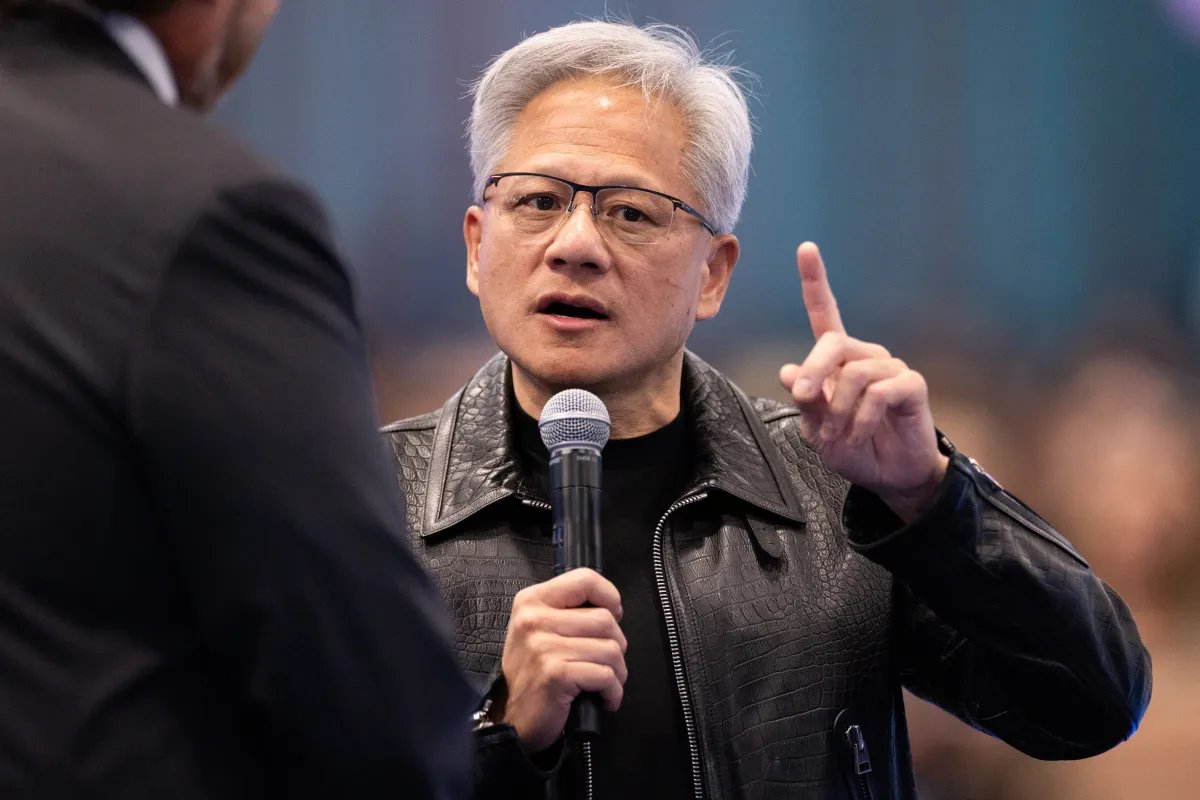
Nvidia CEO Jensen Huang apologized to staff and revealed he is in therapy during an all-hands meeting, while thanking the White House for a second chance to lead the AI chip giant.
Executive Takeaways
- Jensen Huang's emotional all-hands: Nvidia's CEO apologized to employees and disclosed he is in therapy, signaling a rare moment of vulnerability from the leader of the world's most valuable chip company.
- White House gratitude: Huang thanked the White House, likely for support on semiconductor policy and export controls that have shaped Nvidia's business landscape.
- Second chance: Huang expressed gratitude for a second chance to lead, hinting at past challenges or near-misses in Nvidia's recent history.
- Market impact: Nvidia's stock, a bellwether for AI, may see volatility as investors digest leadership stability and strategic direction.
- Cultural shift: The disclosure underscores growing openness about mental health in high-pressure tech leadership.
The Core Event & Breaking Timeline
On Tuesday, Nvidia founder and CEO Jensen Huang addressed employees in an all-hands meeting, offering an apology and expressing gratitude for a second chance to lead the company. According to a TechCrunch report, Huang also revealed that he is in therapy, a personal disclosure that adds a human dimension to the typically stoic leader of the AI revolution. The meeting, described as emotional by sources, comes at a pivotal time for Nvidia, which has seen its valuation soar past $1 trillion on the back of insatiable demand for its AI chips.
Huang's apology was not tied to a specific incident in the initial report, but it follows a period of intense scrutiny for Nvidia. The company has faced supply chain constraints, regulatory hurdles, and the immense pressure of meeting exponential demand for its GPUs. Huang's acknowledgment of personal therapy suggests that the toll of leadership during this hyper-growth phase has been significant. The all-hands meeting was likely called to address internal concerns and rally the troops amid external challenges.
The mention of the White House is particularly noteworthy. Huang thanked the White House, though the exact reason was not specified. This could relate to recent U.S. government efforts to bolster domestic semiconductor manufacturing through the CHIPS Act, or to ongoing dialogues around export controls to China that directly impact Nvidia's product lineup. The gratitude may also signal a collaborative relationship with the administration on AI safety and innovation policies.
Market reaction to the news was muted in initial after-hours trading, with Nvidia's stock (NVDA) showing minimal movement. However, analysts are closely watching for any signs of leadership instability or strategic shifts. The disclosure of therapy, while personal, could be interpreted as a sign of self-awareness and resilience—qualities that investors may view positively in a leader navigating a complex geopolitical and technological landscape.
Deep Technical & Financial Architecture
Nvidia's financial architecture is built on its dominance in accelerated computing, particularly GPUs for AI and machine learning. The company's data center segment, which includes the flagship H100 and upcoming H200 GPUs, generated over $18 billion in revenue in the most recent quarter, a staggering year-over-year increase of more than 400%. This growth is driven by hyperscalers like Microsoft, Google, and Amazon, as well as a growing list of enterprises building generative AI capabilities.
The unit economics of Nvidia's AI chips are enviable. A single H100 GPU can cost upwards of $30,000, and a full system like the DGX H100 can exceed $200,000. Despite these high prices, demand outstrips supply, leading to allocation challenges and long lead times. Nvidia's gross margins have expanded to over 70%, clear evidence of its pricing power and the lack of viable competition at scale. The company's software ecosystem, CUDA, creates a moat that locks in developers and makes switching costs prohibitively high.
On the balance sheet, Nvidia holds over $25 billion in cash and equivalents, giving it ample flexibility for R&D, acquisitions, and shareholder returns. The company's debt is manageable, with a debt-to-equity ratio of around 0.2. However, the capital-intensive nature of semiconductor manufacturing means Nvidia must continue to invest heavily in R&D—over $7 billion annually—to maintain its edge. The recent announcement of a $25 billion share buyback program underscores confidence in future cash flows.
Technologically, Nvidia is pushing the boundaries with its Blackwell architecture, set to launch in 2024. Blackwell promises significant performance improvements for large language models and generative AI, with features like a second-generation transformer engine and improved energy efficiency. The company is also investing in networking (InfiniBand and Spectrum-X) and software (AI Enterprise, Omniverse) to create a full-stack computing platform. This strategy aims to capture more value per customer and fend off competitors like AMD and custom silicon from cloud providers.
However, the financial architecture is not without risks. Nvidia's revenue is highly concentrated, with a significant portion coming from a handful of customers. Any slowdown in AI spending by these hyperscalers could have an outsized impact. Additionally, the company faces inventory risks as it transitions to new architectures, and geopolitical tensions could disrupt supply chains or limit access to key markets like China.
Industry & Global Market Ripple Effects
Nvidia's position as the leading supplier of AI chips means that any news about its leadership or strategy sends ripples across the tech industry. Competitors like AMD, Intel, and a host of startups are watching closely for signs of weakness. AMD's MI300X accelerator is seen as the most credible challenge to Nvidia's dominance, and any perceived instability at Nvidia could accelerate customer adoption of alternatives. Intel, meanwhile, is betting on its Gaudi chips and foundry services to regain relevance.
In the supply chain, Nvidia's partners—from TSMC, which manufactures its chips, to memory suppliers like SK Hynix and Micron—are attuned to Nvidia's demand forecasts. Huang's comments could signal changes in production ramp plans. The entire semiconductor ecosystem, from equipment makers like ASML and Applied Materials to substrate suppliers like Ibiden, is levered to Nvidia's success. A shift in Nvidia's outlook could have cascading effects on these companies' revenues and capital expenditure plans.
Investors are also parsing the news for clues about Nvidia's relationship with the White House. The Biden administration has implemented export controls on advanced AI chips to China, which Nvidia has navigated by creating compliant variants like the H800 and A800. Huang's gratitude to the White House might indicate a cooperative stance on these regulations, or it could be a strategic move to curry favor as Nvidia seeks clarity on future rules. The outcome of these policy discussions will significantly impact Nvidia's addressable market.
Globally, Nvidia's technology is at the heart of the AI arms race between the U.S. and China. The company's chips power everything from large language models to autonomous vehicles. Any hint of leadership turmoil could embolden Chinese competitors like Huawei, which is developing its own AI chips. Meanwhile, European and Japanese governments are investing heavily in AI infrastructure, creating new opportunities for Nvidia but also fostering local competitors. The ripple effects of Huang's remarks will be felt across boardrooms and government ministries worldwide.
Critical Perspectives, Analyst Debates & Risk Factors
While some analysts view Huang's disclosure as a sign of authentic leadership, others question the timing and implications. "It's unusual for a CEO of a company this size to publicly discuss therapy," said one Wall Street analyst who requested anonymity. "It could be seen as a strength, but it also raises questions about the pressures he's under and whether there are underlying issues at the company." The apology, too, is being dissected—what exactly is Huang apologizing for? Without specifics, speculation runs rampant.
Critics argue that Nvidia's dominance is unsustainable. The AI chip market is attracting massive investment, and customers are increasingly looking to diversify their suppliers. "Nvidia's moat is strong, but it's not impenetrable," said a semiconductor industry veteran. "The hyperscalers are designing their own chips, and AMD is catching up. Huang's personal challenges could be a distraction at a critical juncture." Moreover, the company faces regulatory risks, including antitrust scrutiny in the U.S. and Europe over its market power.
On the financial side, bears point to Nvidia's lofty valuation, which prices in years of hypergrowth. Any slowdown in AI spending or a misstep in product execution could lead to a sharp correction. The company's inventory days have been rising, and some worry about a channel stuffing scenario. Additionally, the export controls to China could tighten further, cutting off a significant revenue stream. Huang's mention of the White House may be an attempt to preemptively address these concerns, but it also highlights Nvidia's dependence on policy decisions.
From a governance perspective, the lack of a clear succession plan is a risk. Huang, 61, is synonymous with Nvidia, and his personal well-being is intertwined with the company's fortunes. The board has not publicly identified a successor, and investors may demand more clarity. The therapy disclosure, while humanizing, also underscores the intense pressure on Huang and the need for robust support systems. Some experts suggest that Nvidia should consider separating the roles of CEO and chairman to improve governance.
Strategic Forecast & Road Ahead
Looking ahead, Nvidia's roadmap is packed with product launches and strategic initiatives. The Blackwell architecture, expected in late 2024, will be a major test of the company's ability to maintain its technological lead. Nvidia is also expanding into new markets such as automotive, healthcare, and telecommunications, where AI is still in its early innings. The company's software and services revenue, though small today, is a key growth vector as it seeks to build recurring revenue streams.
In the next 12 months, investors will watch for several milestones: the ramp of Blackwell, the resolution of export control uncertainties, and the company's ability to manage supply chain constraints. Nvidia has guided for continued strong growth, but the law of large numbers may start to bite. Analysts will also focus on gross margin trends and the competitive landscape. Any signs of demand elasticity or pricing pressure could weigh on the stock.
On the policy front, Nvidia will continue to engage with the White House and Congress on semiconductor policy. The company is likely to advocate for funding for domestic manufacturing and for clear, predictable export rules. Huang's public gratitude may be part of a broader lobbying effort to ensure Nvidia's interests are represented. The upcoming U.S. election could also shift the policy landscape, adding another layer of uncertainty.
Ultimately, Huang's message to employees—apology, gratitude, and vulnerability—may be a turning point in Nvidia's corporate culture. As the company navigates the next phase of growth, the focus will be on execution, innovation, and resilience. For investors, the key question is whether Huang's personal journey will strengthen his leadership or become a distraction. The coming quarters will provide the answer.




Comments (0)
No comments yet. Be the first to share your thoughts!
Leave a Comment