NHAI Mandates Incident Management Before Highway Openings
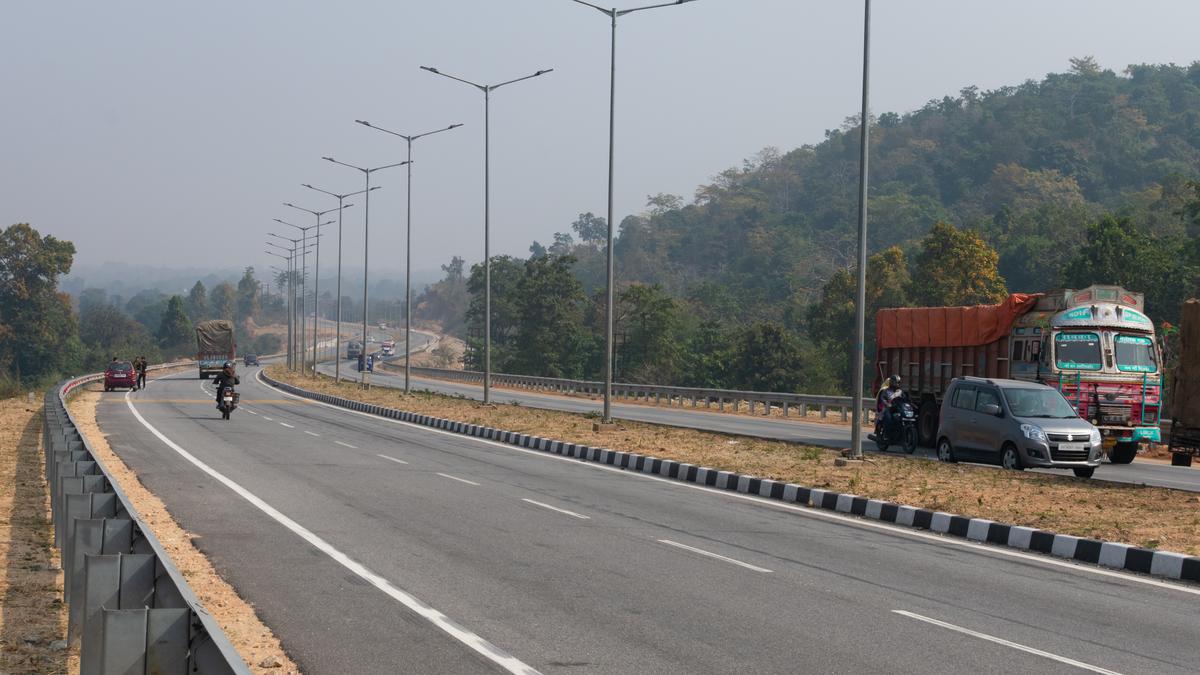
NHAI mandates incident management services before opening new highway stretches, aiming to strengthen road safety and ensure timely assistance during accidents and breakdowns.
Executive Takeaways
- NHAI mandates incident management services before opening new highway stretches, shifting from post-opening to pre-opening safety compliance.
- The move aims to reduce accident fatalities and breakdown-related delays on India's expanding National Highway network.
- Incident management involves a tech-enabled ecosystem of patrol vehicles, ambulances, tow trucks, and control rooms.
- Industry players see opportunities in emergency response contracts, but challenges remain in enforcement and funding.
- Investors and infrastructure firms may need to factor in higher upfront costs for safety compliance.
Section 1: The Core Event & Breaking Timeline
On Tuesday, the National Highways Authority of India (NHAI) issued a statement mandating that incident management services be operational before any new National Highway stretch is opened to traffic. The directive, which takes immediate effect, requires concessionaires and contractors to ensure the availability of patrol vehicles, ambulances, tow trucks, and control room facilities prior to the inauguration of newly constructed or upgraded highway segments. The move is part of NHAI's broader push to strengthen road safety and provide timely assistance to highway users during accidents, vehicle breakdowns, and other emergencies.
The announcement comes amid growing concerns over road safety in India, where National Highways account for a significant share of road accidents despite comprising only about 2% of the total road network. According to data from the Ministry of Road Transport and Highways, National Highways witnessed over 150,000 accidents in 2022, resulting in more than 60,000 fatalities. The new mandate is seen as a proactive step to integrate emergency response mechanisms into the highway development lifecycle, rather than treating them as an afterthought.
NHAI officials indicated that the directive will be enforced through contractual obligations, with penalties for non-compliance. The authority has also asked regional offices to conduct pre-opening inspections to verify the availability of incident management services. Industry experts view this as a shift from the traditional approach where safety audits were often conducted post-construction, and incident management was typically outsourced after the highway became operational.
Initial market reaction has been muted, as the directive primarily affects future highway projects rather than existing ones. However, infrastructure companies with a significant pipeline of highway projects may see a marginal increase in project costs. Shares of major highway construction firms like IRB Infrastructure, Dilip Buildcon, and KNR Constructions remained largely flat on the day of the announcement, suggesting that investors are still assessing the long-term implications.
Section 2: Deep Technical & Financial Architecture
Incident management services on National Highways typically involve a multi-layered architecture. At the core is a network of patrol vehicles equipped with GPS and communication devices, which monitor the highway for incidents. These are complemented by ambulances with basic life support, tow trucks for vehicle recovery, and a centralized control room that coordinates responses. The control room uses software to track incidents, dispatch resources, and monitor response times. In recent years, NHAI has been integrating advanced technologies such as AI-based video analytics for incident detection, automatic number plate recognition (ANPR) for tolling and enforcement, and variable message signs (VMS) for real-time user information.
Financially, the mandate imposes additional upfront costs on concessionaires. Setting up an incident management system for a 100-km stretch can cost anywhere between ₹5 crore and ₹10 crore, depending on the terrain and traffic density. This includes capital expenditure for vehicles, equipment, and control room infrastructure, as well as operational expenditure for staffing and maintenance. For a typical highway project with a total cost of ₹1,000 crore, this represents an increase of 0.5% to 1% in project cost. However, NHAI may allow these costs to be recovered through user fees or as part of the project's O&M (operations and maintenance) budget.
The unit economics of incident management services are challenging. Revenue is typically linked to the availability of services rather than usage, with concessionaires receiving a fixed fee or a share of toll revenue. The cost of maintaining a patrol vehicle with a crew of two is around ₹50,000 per month, while an ambulance with a paramedic costs about ₹80,000 per month. For a 100-km stretch, a minimum of two patrol vehicles, two ambulances, and one tow truck would be required, translating to a monthly operating cost of approximately ₹3-4 lakh. Over a 15-year concession period, this amounts to ₹5-7 crore, which must be factored into the bid price.
From a balance sheet perspective, the mandate could impact the working capital cycle of contractors, as they need to invest in incident management infrastructure before receiving any revenue. This may be particularly burdensome for smaller contractors. However, NHAI has the option to include incident management as a separate scope in the concession agreement, with a dedicated annuity payment. This would make it more bankable and attract specialized service providers. Some industry players have already started offering integrated incident management services, and the new mandate could create a new market segment worth several hundred crores annually.
The technology stack for incident management is evolving. NHAI's Intelligent Transport Systems (ITS) policy, released in 2023, recommends the use of IoT sensors, drones for aerial surveillance, and mobile apps for user reporting. The new mandate is expected to accelerate the adoption of these technologies. For instance, a few pilot projects have used AI-powered cameras to detect incidents automatically and alert the control room within seconds, reducing response times by up to 30%. However, the high cost of such systems remains a barrier for widespread adoption.
Section 3: Industry & Global Market Ripple Effects
The directive is likely to have a cascading effect on the highway construction and maintenance industry. Companies that specialize in incident management, such as those providing emergency response services, stand to benefit. Global players like Australia's Transurban and Spain's Abertis, which have extensive experience in operating toll roads with integrated incident management, might explore partnerships with Indian firms. Domestic players like Ashoka Buildcon and Sadbhav Engineering, which have O&M contracts, could also see increased demand for their services.
In the supply chain, manufacturers of ambulances, tow trucks, and patrol vehicles could see a surge in orders. Companies like Force Motors, which supplies ambulances to the government, and Tata Motors, which manufactures trucks, may benefit. The demand for communication equipment, such as two-way radios and GPS trackers, is also expected to rise, benefiting firms like Motorola Solutions and local players like Astra Microwave. The control room software market, dominated by companies like Siemens and Cisco, could see new opportunities.
Investors in infrastructure funds and yieldcos that invest in highway projects will need to reassess the risk-return profile. While the mandate improves safety and potentially reduces accident-related liabilities, it also adds to the cost base. However, if NHAI allows a pass-through of these costs in toll rates, the impact on returns could be neutral. Some analysts believe that the mandate could lead to consolidation in the industry, as smaller contractors may find it difficult to comply, leading to larger players gaining market share.
Globally, the move aligns with best practices in developed markets. In the United States, the Federal Highway Administration mandates incident management programs for federally funded highways, and many states have dedicated service patrols. In Europe, countries like the UK and Germany have sophisticated traffic control centers that manage incidents in real-time. India's step is seen as a move towards international standards, which could improve its attractiveness for foreign investment in the infrastructure sector. However, the effectiveness will depend on enforcement and the availability of skilled manpower.
Section 4: Critical Perspectives, Analyst Debates & Risk Factors
While the mandate is widely welcomed, critics point out that it may be difficult to enforce. NHAI has a history of issuing directives that are not strictly implemented due to resource constraints. The authority's regional offices are already overburdened, and adding pre-opening inspections for incident management could stretch them further. Some experts suggest that third-party audits should be mandated to ensure compliance. Others argue that the mandate should be extended to existing highways as well, not just new ones, to have a meaningful impact on road safety.
Another debate centers on funding. Who will bear the cost of incident management? If it is passed on to users through higher tolls, it could face public resistance. If absorbed by concessionaires, it could impact their profitability. NHAI's statement did not clarify the funding mechanism, leaving room for ambiguity. Some analysts believe that NHAI might allow incident management costs to be included in the project cost, which would be recovered through tolls. However, this could lead to higher toll rates, which are already a sensitive issue.
There are also concerns about the quality of services. Incident management requires trained personnel, and there is a shortage of paramedics and emergency responders in India. The mandate does not specify minimum training standards or response times, which could lead to variable quality. Without clear service level agreements (SLAs) and penalties, the services might become a checkbox exercise. Industry bodies like the National Highways Builders Federation (NHBF) have requested NHAI to provide detailed guidelines on SLAs and performance metrics.
Regulatory friction is another risk. The mandate overlaps with the responsibilities of the Ministry of Road Transport and Highways (MoRTH) and state police, which also handle accident response. Coordination among these agencies is crucial for effective incident management. In the past, jurisdictional issues have delayed responses. NHAI will need to establish clear protocols for coordination, possibly through integrated command centers. The success of the mandate will hinge on how well these institutional challenges are addressed.
Section 5: Strategic Forecast & Road Ahead
In the next 12 months, NHAI is expected to issue detailed guidelines specifying the minimum requirements for incident management services, including the number of patrol vehicles, response times, and training standards. The authority may also develop a model concession agreement (MCA) clause for incident management, which would provide clarity to bidders. Pilot projects on select highways could be launched to test the framework. NHAI might also collaborate with the National Disaster Management Authority (NDMA) to integrate highway incident response with broader disaster management protocols.
Over the next 24 months, the impact of the mandate will become visible as new highway stretches open with incident management services in place. NHAI may extend the requirement to existing highways through contract amendments, especially for stretches with high accident rates. The authority could also leverage technology to monitor compliance, such as using GPS data from patrol vehicles to track response times. The data generated could be used to identify accident-prone spots and implement targeted safety interventions.
Investors should watch for NHAI's announcements regarding funding mechanisms and any changes to the MCA. Companies with expertise in incident management, such as those providing emergency medical services, could see new contract opportunities. The mandate could also spur innovation in low-cost solutions, such as mobile apps for reporting incidents and crowdsourced response. Startups in the road safety space might attract venture capital funding.
Ultimately, the success of this initiative will depend on political will and administrative efficiency. If implemented effectively, it could significantly reduce road fatalities and improve user experience on National Highways. However, without robust enforcement and adequate funding, it risks becoming another well-intentioned but poorly executed policy. The coming months will reveal whether NHAI can translate this directive into tangible safety improvements on the ground.



Comments (0)
No comments yet. Be the first to share your thoughts!
Leave a Comment