Guinea Gold Crackdown: 1M Jobs at Risk as Hunger Spreads
Guinea's crackdown on informal gold mining has disrupted livelihoods for over a million people, triggering food shortages and economic fallout. The government's push to formalize the sector and capture more revenue is testing the balance between regulation and survival.
Executive Takeaways
- Guinea's military-led government has intensified a crackdown on informal gold mining, disrupting the livelihoods of over 1 million artisanal miners and triggering food shortages in mining communities.
- The move is part of a broader push to formalize the sector, boost tax revenue, and attract foreign investment, but it risks exacerbating poverty and social unrest.
- Gold is Guinea's top export, generating over $2 billion annually, yet artisanal mining supports millions of people who now face hunger as enforcement sweeps through key mining areas.
- International mining companies are watching closely, as the government renegotiates contracts and enforces environmental and labor standards, potentially reshaping West Africa's gold industry.
- The crackdown highlights the tension between resource nationalism and human security, with long-term implications for Guinea's economy and political stability.
Section 1: The Core Event & Breaking Timeline
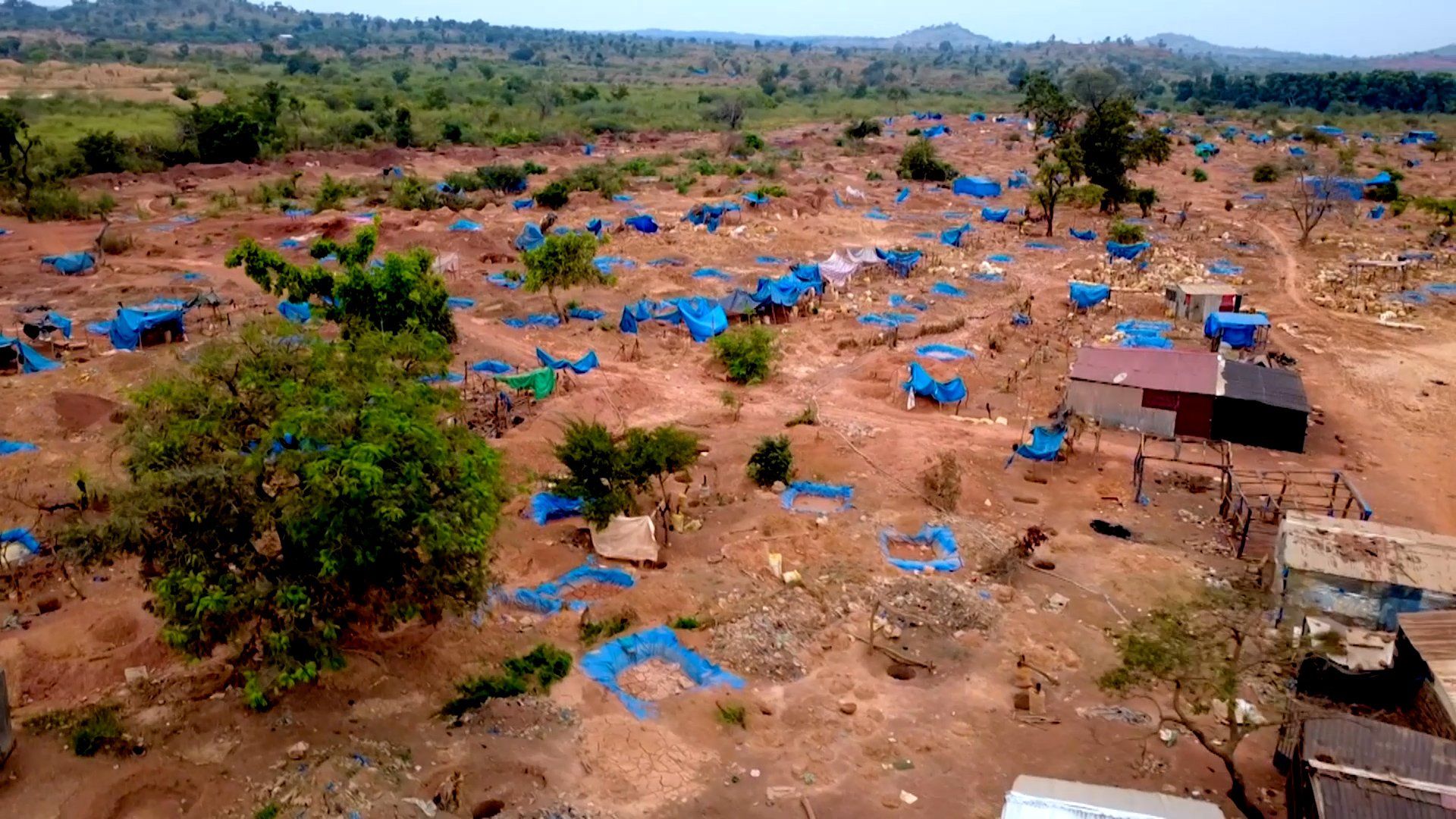
In a sweeping operation that began in early 2025, Guinea's security forces have ramped up efforts to dismantle unauthorized gold mining operations across the country's mineral-rich regions. The crackdown, ordered by the military junta led by President Mamady Doumbouya, targets artisanal and small-scale miners who operate outside the formal regulatory framework. According to local sources and human rights groups, thousands of miners have been arrested, equipment seized, and mining sites shut down, particularly in the Siguiri and Kankan regions, which are known for their abundant gold deposits.
The immediate trigger for the escalation was a series of deadly accidents at informal mines and growing concerns over environmental degradation, including mercury pollution and deforestation. In January 2025, a mine collapse in the Kankan region killed at least 15 people, prompting the government to declare a moratorium on all artisanal mining activities. Since then, enforcement has been aggressive, with military units conducting raids on mining camps and confiscating dredges and excavators. The government argues that the informal sector deprives the state of much-needed revenue and fuels criminal networks.
However, the crackdown has had severe humanitarian consequences. The closure of mining sites has left hundreds of thousands of miners without income, and local markets have seen a sharp decline in food availability. In a statement to Al Jazeera, a local trader in Siguiri said, "People are going hungry. The mines were our only source of income, and now we have nothing." The World Food Programme has warned of a looming food crisis in mining communities, where families rely on daily wages from gold panning to purchase basic staples.
Market reaction has been muted so far, as Guinea's artisanal gold output is largely unrecorded and flows through informal channels. However, international gold prices have shown slight volatility, with traders monitoring the situation for potential supply disruptions. The formal mining sector, dominated by companies like AngloGold Ashanti and Société Minière de Dinguiraye (SMD), has not been directly affected, but industry analysts are closely watching the government's next moves.
Section 2: Deep Technical & Financial Architecture
Guinea's gold sector is a dual economy: a formal, industrial segment that attracts foreign investment and a vast informal segment that supports millions of livelihoods. The formal sector, which includes major mines like Siguiri (operated by AngloGold Ashanti) and Lefa (owned by Nordgold), produced approximately 3.5 million ounces of gold in 2024, generating over $2 billion in export revenue. These operations are subject to royalties and taxes, contributing about 15% of Guinea's GDP. In contrast, the artisanal and small-scale mining (ASM) sector is estimated to produce an additional 1-2 million ounces annually, but it is largely unregulated and untaxed.
The crackdown aims to bring the ASM sector into the formal economy, but the technical and financial challenges are immense. Formalizing artisanal mining requires establishing licensing systems, providing access to finance, and introducing safer and more environmentally friendly technologies. The government has proposed a new framework that would require miners to register, pay fees, and adhere to environmental standards. However, critics argue that the bureaucracy and costs involved are prohibitive for impoverished miners, who often lack legal documentation and capital.
From a financial perspective, the crackdown has significant implications for Guinea's fiscal position. The government estimates that it loses over $500 million annually in uncollected taxes and royalties from informal gold exports. By formalizing the sector, it hopes to capture a portion of these revenues. However, the short-term disruption may reduce overall gold output and exports, potentially widening the budget deficit. The International Monetary Fund (IMF) has projected Guinea's GDP growth to slow to 5.2% in 2025 from 6.1% in 2024, partly due to the mining crackdown.
The technology stack for formal mining operations is advanced, involving heavy machinery, chemical processing, and digital monitoring systems. In contrast, artisanal miners use rudimentary tools like shovels, pans, and mercury amalgamation, which are inefficient and hazardous. The government's formalization plan includes promoting mercury-free technologies and providing training, but funding for such initiatives is limited. Without adequate support, many miners may continue to operate illegally or migrate to neighboring countries.
Unit economics of artisanal mining are stark: a typical miner earns between $5 and $10 per day, depending on gold prices and ore grade. With gold prices hovering around $2,300 per ounce, even small-scale operations can be profitable, but the margins are thin and volatile. The crackdown has eliminated this income for many, pushing families into poverty. The government's challenge is to create a formal system that allows miners to earn a decent living while ensuring environmental and social safeguards.
Section 3: Industry & Global Market Ripple Effects
The Guinea crackdown is sending ripples through the global gold industry, which is already grappling with rising production costs and geopolitical uncertainties. Major mining companies operating in Guinea, such as AngloGold Ashanti and Nordgold, have not been directly targeted, but they are concerned about potential spillover effects, including social unrest and supply chain disruptions. AngloGold Ashanti, which operates the Siguiri mine, has reportedly increased security at its facilities and is engaging with local communities to mitigate tensions.
On the supply side, Guinea is Africa's fourth-largest gold producer, and any disruption to its output could tighten global supply. However, the informal sector's production is often smuggled to neighboring countries like Mali and Senegal, so the impact on official global supply may be limited. Nevertheless, the crackdown has prompted gold traders to reassess country risk, with some buyers seeking alternative sources in Ghana and Tanzania. The London Bullion Market Association (LBMA) has not issued any formal advisory, but market participants are monitoring the situation closely.
Investors in the mining sector are also reacting. Shares of companies with exposure to Guinea, such as AngloGold Ashanti, have seen minor fluctuations, but the overall impact has been contained. Analysts note that the formal mining sector is relatively insulated from the crackdown, as it operates under separate agreements with the government. However, the government's broader resource nationalism agenda, which includes a review of mining contracts and increased state ownership, could pose longer-term risks. In 2024, Guinea forced foreign companies to accept a 15% state stake in mining projects, a move that has deterred some investors.
The crackdown also has implications for the global fight against illegal gold mining and conflict financing. Guinea's informal gold sector is linked to smuggling networks that fund armed groups in the Sahel region. By cracking down, the government aims to curb these illicit flows, but the humanitarian fallout may undermine its efforts. International organizations, including the United Nations, have called for a balanced approach that addresses both security and livelihoods.
Section 4: Critical Perspectives, Analyst Debates & Risk Factors
The Guinea crackdown has sparked a fierce debate among analysts, human rights groups, and industry experts. Supporters argue that the government is right to enforce regulations and protect the environment, pointing to the devastating impact of unregulated mining on water sources and forests. They also emphasize the need to capture revenue for public services. "The informal sector has been a free-for-all for too long," said a Conakry-based economist. "Formalization is necessary for sustainable development."
Critics, however, contend that the crackdown is heavy-handed and lacks a humanitarian component. They argue that the government should have provided alternative livelihoods and a transition period before banning artisanal mining. Human Rights Watch has documented cases of arbitrary arrests and excessive force by security forces, calling for an independent investigation. "The government is treating miners as criminals rather than vulnerable workers," said a spokesperson for the Guinean Human Rights Organization.
Another risk factor is the potential for social unrest. Mining communities, already impoverished, may protest against the crackdown, leading to clashes with security forces. In February 2025, protests erupted in Siguiri, with miners blocking roads and demanding the release of detained colleagues. The government responded by deploying additional troops, raising fears of escalation. Political analysts warn that the crackdown could fuel anti-government sentiment and destabilize the region.
From a regulatory perspective, the crackdown raises questions about Guinea's investment climate. While the government seeks to attract responsible investors, the unpredictable policy environment may deter long-term commitments. The mining code, revised in 2023, increased royalties and required local content, but enforcement has been inconsistent. Companies are calling for clearer rules and a more consultative approach. The risk of contract renegotiations and expropriation remains a concern, as seen in other resource-rich countries.
Section 5: Strategic Forecast & Road Ahead
Over the next 12 to 24 months, Guinea's gold mining crackdown is likely to evolve in phases. In the short term, the government will continue enforcement operations, focusing on hotspots like Siguiri and Kankan. It may also introduce a licensing scheme for artisanal miners, but implementation will be challenging due to limited capacity and resources. The government has announced plans to establish a formal marketing channel for artisanal gold, but details are scarce.
By mid-2025, the humanitarian situation could worsen if food aid is not scaled up. International donors, including the World Food Programme and the European Union, are considering emergency assistance, but funding gaps remain. The government has appealed for $100 million to support affected communities, but it is unclear whether donors will respond given concerns over governance.
In the medium term, the formal mining sector may see increased government pressure to contribute to community development and local content. Companies will need to navigate a complex regulatory landscape while maintaining social license to operate. The government's broader agenda includes developing downstream industries, such as refineries, to capture more value from gold. However, such projects require significant investment and time.
Key milestones to watch include the announcement of a new artisanal mining framework, the outcome of negotiations with the IMF on a new program, and the trajectory of gold prices. If the government can successfully formalize the sector, it could boost revenues and improve livelihoods. If not, Guinea risks entrenching poverty and instability, with consequences for the entire region. For now, the world watches as Guinea attempts to balance resource nationalism with human security.



Comments (0)
No comments yet. Be the first to share your thoughts!
Leave a Comment