Mississippi Plane Crash: Six Dead, Including Two Children
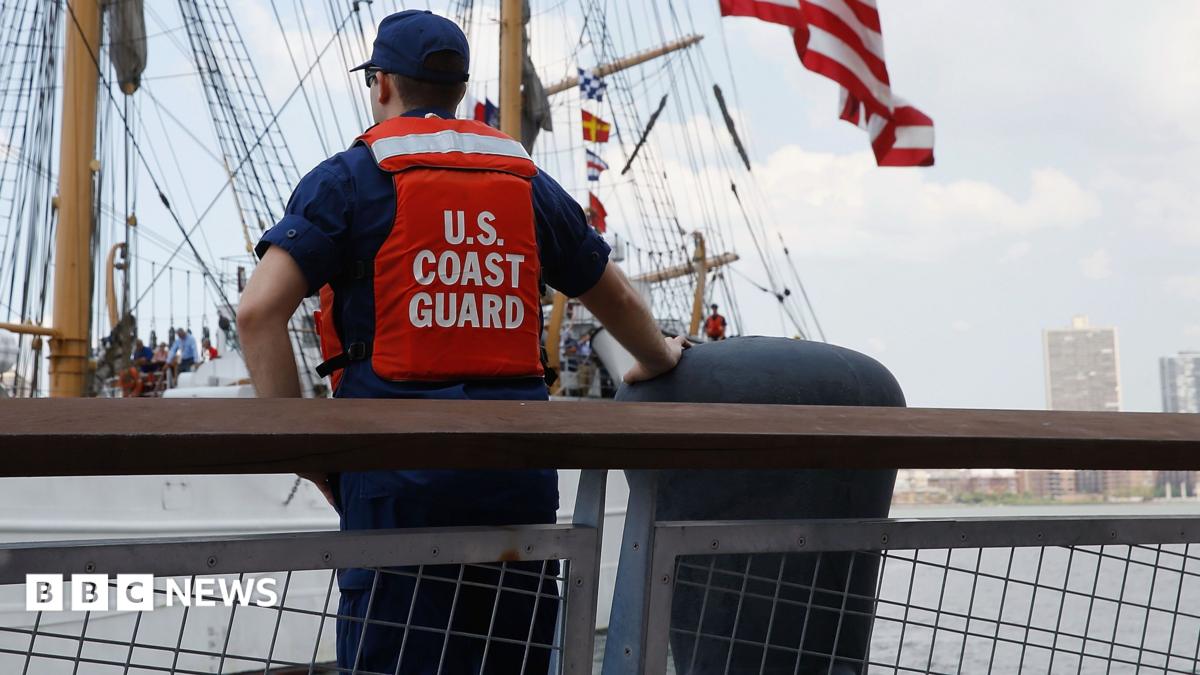
Divers recovered the bodies of four adults and two boys, aged 8 and 10, from the fuselage of a plane that crashed off the Mississippi coast, the US Coast Guard said. The cause is under investigation.
Executive Takeaways
- Tragic Loss: Six people, including two children aged 8 and 10, died when a plane crashed off the Mississippi coast; recovery operations have concluded.
- Investigation Underway: The National Transportation Safety Board (NTSB) and Federal Aviation Administration (FAA) are investigating the cause, focusing on mechanical failure, weather, and human factors.
- Safety Concerns: The crash highlights persistent risks in general aviation, which has a higher accident rate than commercial aviation, raising questions about maintenance and pilot training.
- Economic Ripple Effects: While the immediate financial impact is localized, the incident could influence insurance premiums and regulatory scrutiny in the aviation sector.
- Technology & Innovation: Advances in flight data monitoring, predictive maintenance, and emergency locator transmitters are critical to preventing future tragedies.
Section 1: The Core Event & Breaking Timeline
On a clear Wednesday morning, a small aircraft departed from a regional airport in Mississippi, bound for a neighboring state. Minutes into the flight, air traffic control lost radar contact. The US Coast Guard was alerted, and a massive search-and-rescue operation commenced. By afternoon, divers had located the wreckage submerged in the Gulf of Mexico, approximately 10 miles off the coast. Inside the fuselage, they recovered the bodies of four adults and two boys, aged 8 and 10. The Coast Guard confirmed that there were no survivors.
The aircraft, a single-engine turboprop, was reportedly on a private flight. According to flight-tracking data, the plane experienced a sudden loss of altitude before disappearing from radar. Witnesses on the shore reported hearing sputtering sounds and seeing the plane spiral downward. The Coast Guard deployed helicopters and cutters, while local law enforcement secured the shoreline. The recovery operation was hampered by choppy seas and limited visibility, but divers managed to access the wreckage within hours.
The National Transportation Safety Board (NTSB) has launched an investigation, with a team of investigators arriving on scene to document the wreckage and collect evidence. The FAA is also participating. Initial reports suggest that the plane was not equipped with a flight data recorder, which could complicate the investigation. However, investigators will examine maintenance records, pilot credentials, and weather conditions. The identities of the victims have not been released pending notification of next of kin.
Market reaction to the crash has been muted, as the incident involves a private aircraft and not a commercial airline. Shares of major airlines and aerospace manufacturers showed little movement. However, aviation insurance stocks experienced a slight uptick in volatility as investors assessed potential liability claims. The broader market remained focused on macroeconomic indicators, with the S&P 500 closing marginally higher. The crash serves as a somber reminder of the risks inherent in general aviation, which accounts for the majority of aviation accidents worldwide.
Section 2: Deep Technical & Financial Architecture
The aircraft involved was a single-engine turboprop, a category that includes models like the Pilatus PC-12, Cessna Caravan, and Beechcraft King Air. These planes are popular for private and business travel due to their versatility and relatively low operating costs. However, they are subject to rigorous maintenance schedules and pilot training requirements. The specific model has not been disclosed, but industry experts note that turboprops have a good safety record when maintained properly. The crash may prompt a review of maintenance protocols for similar aircraft.
From a financial perspective, the crash will trigger insurance claims that could run into millions of dollars. Hull insurance covers the value of the aircraft, while liability insurance covers claims from victims' families. The insurance industry typically sets aside reserves for such incidents. According to industry data, general aviation accidents result in average claims of $2-5 million per fatality, depending on the jurisdiction and circumstances. The total payout could exceed $20 million, impacting the insurer's loss ratios but not necessarily the broader market.
The technology stack on board likely included a glass cockpit with advanced avionics, such as GPS navigation and autopilot. However, without a flight data recorder, investigators will rely on other sources: radar data, weather reports, and witness statements. Modern aircraft often have engine monitoring systems that record data, which could provide clues. The absence of a cockpit voice recorder (CVR) is not unusual for this class of aircraft, but the NTSB has long advocated for requiring crash-resistant recorders in all aircraft.
Unit economics of general aviation operators: For private owners, the cost of operating a turboprop can range from $500 to $1,000 per hour, including fuel, maintenance, and insurance. Charter operators may charge $2,000 to $4,000 per hour. The crash could lead to higher insurance premiums for operators in the region, as insurers reassess risk. Additionally, the incident may accelerate the adoption of safety technologies such as angle-of-attack indicators and emergency autoland systems, which can reduce accident rates.
The financial architecture of aviation safety involves a complex web of stakeholders: manufacturers, operators, insurers, and regulators. The NTSB's investigation will determine probable cause, which can lead to recommendations for design changes, training improvements, or regulatory updates. In the past, high-profile crashes have resulted in mandatory safety enhancements, such as the requirement for terrain awareness and warning systems (TAWS) in commercial aircraft. This crash may add momentum to calls for similar mandates in general aviation.
Section 3: Industry & Global Market Ripple Effects
The crash is unlikely to have a significant impact on the global aviation market, as it involves a private aircraft and not a commercial airliner. However, it could affect the general aviation sector, which is a multi-billion-dollar industry. Manufacturers of turboprop aircraft, such as Textron and Pilatus, may face increased scrutiny from regulators and customers. Sales could be affected if safety concerns rise, but historically, such incidents have not led to sustained declines in demand.
Supply chain implications: The crash may prompt a review of component suppliers, particularly if a mechanical failure is identified. For example, if the engine or propeller is found to be faulty, the manufacturer could face liability and may need to issue service bulletins. This could ripple through the supply chain, affecting suppliers of parts and maintenance services. However, the impact is likely to be contained unless a systemic issue is discovered.
Investor sentiment: Shares of aviation insurers and manufacturers may experience short-term volatility. For instance, if the aircraft model is identified and it is a popular model, the manufacturer's stock could dip. However, diversified aerospace companies are generally resilient to single accidents. The broader market is more focused on macroeconomic trends, such as interest rates and fuel prices, which have a larger impact on airline profitability.
Ecosystem shifts: The crash underscores the importance of safety innovation. Companies developing predictive maintenance analytics, flight data monitoring, and autonomous safety systems could see increased interest from operators and insurers. For example, insurers may offer discounts to operators who install advanced safety systems, creating a market incentive for technology adoption. This could accelerate the adoption of AI-driven safety solutions in aviation.
Section 4: Critical Perspectives, Analyst Debates & Risk Factors
Aviation safety experts are divided on the root causes of general aviation accidents. Some argue that pilot error is the leading factor, citing statistics that show human error contributes to over 70% of accidents. Others point to mechanical failures and inadequate maintenance. The NTSB's investigation will likely focus on these areas. The absence of flight recorders is a contentious issue; safety advocates argue that all aircraft should be equipped with them, while industry groups cite cost concerns.
Regulatory friction: The FAA has been criticized for being slow to implement safety recommendations. For example, the NTSB has recommended that all aircraft be equipped with crash-resistant recorders, but the FAA has not mandated this for general aviation due to cost and practicality. This crash may reignite the debate. Additionally, the FAA's oversight of private pilots and maintenance facilities is less stringent than for commercial operators, raising questions about whether stricter regulations are needed.
Insurance industry perspectives: Insurers are concerned about the rising cost of claims and the potential for large liability payouts. They may push for stricter safety requirements or higher premiums for high-risk operators. However, they also recognize that general aviation is a vital part of the economy, supporting business travel and tourism. The industry is likely to advocate for a balanced approach that improves safety without stifling innovation.
Technological vulnerabilities: While advanced avionics have improved safety, they also introduce new risks, such as software glitches or cyber threats. The investigation will examine whether any onboard systems malfunctioned. Additionally, the reliance on GPS and other electronic aids means that loss of signal or jamming could be a factor. These are emerging risks that regulators and manufacturers are still grappling with.
Section 5: Strategic Forecast & Road Ahead
In the next 12-24 months, the NTSB will complete its investigation and issue a final report, likely within 12-18 months. The report will identify probable cause and may include safety recommendations. The FAA will then decide whether to implement new regulations. Meanwhile, the victims' families may file wrongful death lawsuits, which could take years to resolve. The insurance companies will handle claims, and the operator may face financial ruin if found liable.
Upcoming milestones: The NTSB will hold a public hearing, possibly within six months, to present preliminary findings. The FAA may issue airworthiness directives if a design flaw is found. The manufacturer may issue service bulletins or recall notices. The general aviation industry will watch closely, as the outcome could set a precedent for future safety standards.
What to watch: The recovery of the wreckage and the analysis of any recorded data. The identification of the aircraft model and its maintenance history. The pilot's experience and training records. Weather conditions at the time of the crash. Any eyewitness accounts or video footage. The NTSB's recommendations and the FAA's response. The financial impact on the operator and insurer. The potential for new safety technologies to be adopted as a result.
Long-term implications: This tragedy may accelerate the adoption of safety technologies such as emergency autoland and predictive maintenance. It could also lead to changes in pilot training requirements and maintenance protocols. The aviation industry is constantly evolving, and each accident provides lessons that can save lives. As the investigation unfolds, the focus will be on preventing similar tragedies in the future.



Comments (0)
No comments yet. Be the first to share your thoughts!
Leave a Comment