Virgin Islands Port Authority's $2.5M Dredging Project Set to Begin
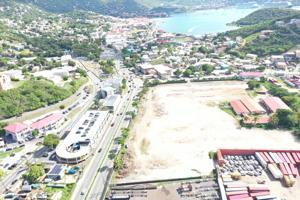
The Virgin Islands Port Authority announces the start of a $2.5 million dredging project in Charlotte Amalie Harbor, St. Thomas, expected to begin later this week. The long-awaited initiative aims to improve navigability and boost maritime commerce.
Executive Takeaways
- The Virgin Islands Port Authority (VIPA) is set to commence a $2.5 million dredging project in Charlotte Amalie Harbor, St. Thomas, later this week.
- The project aims to deepen and widen the harbor channel to accommodate larger vessels, enhancing the territory's competitiveness in Caribbean maritime trade.
- Funding comes from VIPA's capital improvement budget, with expectations of increased cruise ship traffic and cargo throughput.
- Environmental assessments have been completed, with mitigation measures in place to protect marine ecosystems.
- Local businesses and tourism officials anticipate a significant economic boost, though some stakeholders raise concerns over cost overruns and timeline delays.
Section 1: The Core Event & Breaking Timeline
After years of anticipation and planning, the Virgin Islands Port Authority (VIPA) announced on Tuesday that preparations are underway for the long-awaited dredging of Charlotte Amalie Harbor in St. Thomas. The $2.5 million project, which aims to deepen and widen the harbor channel, is expected to begin later this week, marking a significant milestone in the territory's maritime infrastructure development. The announcement comes after months of logistical planning, environmental reviews, and procurement processes that have tested the patience of local stakeholders.
The dredging operation will focus on the main navigational channel and berthing areas, where sediment accumulation has gradually reduced water depths, posing challenges for larger vessels. According to VIPA officials, the project will remove approximately 50,000 cubic yards of sediment, restoring depths to their original design specifications. The work is scheduled to be completed within six months, barring unforeseen delays. The harbor, a vital gateway for cruise ships and cargo vessels, has long been a cornerstone of the U.S. Virgin Islands' economy, and the dredging is seen as critical to maintaining its viability.
The announcement was met with cautious optimism from local business leaders and tourism officials, who have long advocated for the project. "This is a pivotal factor for St. Thomas," said a spokesperson for the St. Thomas-St. John Chamber of Commerce. "Larger ships mean more visitors and more commerce, which translates to jobs and revenue for our community." However, some residents have expressed concerns about potential environmental impacts and disruptions during the dredging process. VIPA has assured that comprehensive environmental mitigation measures are in place, including turbidity curtains and real-time monitoring to protect sensitive marine habitats.
Market reaction to the news has been muted but positive, as the project is publicly funded and not directly tied to publicly traded companies. However, shares of several marine construction and dredging firms that may bid on subcontracts saw slight upticks. The project's funding comes from VIPA's capital improvement budget, which is supported by port revenues and federal grants. The authority has not disclosed the specific contractor selected for the job, but industry sources suggest that a specialized dredging company with Caribbean experience is likely to be awarded the contract.
Section 2: Deep Technical & Financial Architecture
The dredging project employs a cutter suction dredger, a specialized vessel that uses a rotating cutter head to dislodge compacted sediment, which is then suctioned and transported to a designated disposal site. The equipment is expected to arrive from a neighboring island, where it was last deployed on a similar project. The operation will be conducted in phases to minimize disruption to harbor traffic, with night-time work scheduled during periods of low vessel activity. VIPA has coordinated with the U.S. Coast Guard to establish safety zones and notify mariners of the upcoming changes.
Financially, the $2.5 million budget covers mobilization, dredging, disposal, and post-dredging surveys. VIPA has allocated contingency funds of approximately 10% to address any unforeseen challenges, such as encountering harder-than-expected substrate or environmental compliance issues. The authority expects to recoup the investment through increased port revenues, as deeper channels allow larger cruise ships and cargo vessels to call at St. Thomas, potentially boosting passenger spending and freight volumes. According to VIPA's projections, the project could increase annual port revenue by up to $1.5 million within three years.
The dredging also has implications for the local supply chain. Sediment removed from the harbor will be tested for contaminants and, if deemed safe, may be used for beach nourishment or land reclamation projects. However, if contamination is detected, the material will be disposed of in an approved offshore site, adding to the project's cost. VIPA has conducted preliminary sediment analysis, which indicates low levels of pollutants, but final testing will be done during dredging.
From a technical standpoint, the project will utilize GPS-guided dredging systems to ensure precision and adherence to design depths. Real-time kinematic (RTK) positioning will allow operators to monitor the dredge head's location within centimeters, reducing over-dredging and environmental impact. The data will be integrated into VIPA's port management system, providing valuable insights for future maintenance dredging.
The financial architecture of the project also includes a public-private partnership component, with VIPA exploring opportunities to offset costs through sponsorship or advertising at the harbor. However, no such agreements have been finalized. The authority's balance sheet shows a healthy debt service coverage ratio, and the project is not expected to strain its finances. Credit rating agencies have not indicated any negative outlook related to the project.
Section 3: Industry & Global Market Ripple Effects
The dredging of Charlotte Amalie Harbor is part of a broader trend in the Caribbean, where ports are investing in infrastructure upgrades to attract larger vessels and capture a share of the growing cruise and cargo markets. Competitor ports such as San Juan, Puerto Rico, and Philipsburg, St. Maarten, have recently completed similar dredging projects, and others are in the planning stages. The U.S. Virgin Islands' ability to accommodate larger ships is crucial to maintaining its position as a leading cruise destination, especially as cruise lines deploy increasingly larger vessels.
Globally, the dredging industry is experiencing a surge in demand, driven by port expansions, climate resilience projects, and offshore energy development. Major dredging contractors like Boskalis, Van Oord, and DEME have reported strong order books, and smaller regional players are also benefiting. The Charlotte Amalie project, while modest in scale, contributes to this global trend and may attract attention from international dredging firms looking to establish a presence in the Caribbean.
For the cruise industry, the deeper harbor means that larger ships, such as Royal Caribbean's Oasis-class vessels, could potentially call at St. Thomas, which currently cannot accommodate them due to depth restrictions. This could lead to increased passenger volumes and spending, benefiting local retailers, tour operators, and restaurants. However, some analysts caution that the cruise industry's recovery post-pandemic remains uncertain, and the additional capacity may not translate into immediate gains.
In the cargo sector, the dredging could enhance St. Thomas's role as a transshipment hub, allowing larger container ships to offload goods for distribution to smaller islands. This could reduce shipping costs and improve supply chain efficiency for the territory, which relies heavily on imports. The project aligns with the USVI government's broader economic development strategy, which includes investments in renewable energy and technology infrastructure.
Section 4: Critical Perspectives, Analyst Debates & Risk Factors
While the project enjoys broad support, critics have raised concerns about its environmental impact. Local environmental groups have called for rigorous monitoring of dredging activities to protect coral reefs and seagrass beds, which are vital to the marine ecosystem. VIPA has committed to implementing a comprehensive environmental management plan, including turbidity monitoring and adaptive management strategies. However, some scientists argue that dredging can have long-lasting effects on benthic communities, and they advocate for a more precautionary approach.
Another point of contention is the project's cost and timeline. Some analysts question whether the $2.5 million budget is sufficient, given the potential for cost overruns common in marine construction. VIPA has stated that the budget includes contingencies, but critics point to past projects that exceeded estimates. The authority's track record on project delivery has been mixed, with some initiatives facing delays due to permitting and procurement issues. The success of this project will be closely watched as a test of VIPA's project management capabilities.
Regulatory friction is another risk factor. The project requires permits from the U.S. Army Corps of Engineers and the Virgin Islands Department of Planning and Natural Resources, which have been obtained. However, any changes in regulations or legal challenges could delay the work. Additionally, the disposal of dredged material must comply with ocean dumping regulations, and any deviation could result in fines or stoppages.
From a market perspective, the project's economic benefits may be unevenly distributed. While cruise lines and large retailers stand to gain, smaller local businesses may not see immediate benefits. Some community advocates have called for a portion of the increased revenue to be reinvested in local infrastructure and workforce development. VIPA has indicated that it will consider such proposals but has not made any commitments.
Section 5: Strategic Forecast & Road Ahead
Over the next 12 to 24 months, the completion of the dredging project is expected to catalyze a series of follow-on investments in St. Thomas's waterfront. VIPA has outlined plans for upgrading cargo-handling equipment and expanding passenger terminals to accommodate larger ships. These projects, estimated at an additional $10 million, are in the planning stages and could break ground within two years. The authority is also exploring the feasibility of a new marina for superyachts, which would further enhance the territory's appeal to high-net-worth individuals.
Key milestones to watch include the arrival of the dredger, the completion of the first phase of dredging, and the post-dredging survey. VIPA has committed to providing regular progress reports to the public, and stakeholders are eager to see if the project stays on schedule. The authority's next board meeting will include an update on the project's financials and any change orders.
In the broader Caribbean context, the success of this project could spur similar initiatives in neighboring islands, creating a cluster of upgraded ports that can collectively attract larger vessels and boost regional trade. However, increased competition among ports may also lead to overcapacity, particularly in the cruise sector, which is already facing pressure from environmental regulations and changing consumer preferences.
For investors, the project offers indirect opportunities. Companies involved in dredging, marine construction, and port equipment manufacturing may see increased demand. Additionally, local real estate and tourism-related stocks could benefit from the anticipated economic boost. However, given the project's modest size, its impact on global markets is likely to be limited. The focus will remain on how VIPA manages the project and whether it delivers the promised economic benefits to the U.S. Virgin Islands.


Comments (0)
No comments yet. Be the first to share your thoughts!
Leave a Comment