China's Tech Crackdown 2.0: Politburo Probe Hits Chip Sector
The investigation into Politburo member Chen Jining signals a deepening anti-corruption campaign that could disrupt China's tech policy and financial markets, with significant implications for global supply chains and investors.
Executive Takeaways
- Chen Jining's investigation marks the fourth high-ranking Politburo member removed in two years, signaling an intensifying anti-corruption drive that now targets tech policy architects.
- Markets react cautiously: Chinese tech stocks dipped 2-3% as investors assess potential policy paralysis and heightened regulatory risk.
- Tech sector impact: Chen's oversight of semiconductor and AI initiatives raises concerns about delays in China's self-sufficiency push, affecting global supply chains.
- Financial architecture: The probe may lead to stricter capital controls and compliance burdens for tech firms, altering investment flows.
- Global ripple effects: Multinationals and investors are recalibrating exposure to China's tech ecosystem amid uncertainty.
Section 1: The Core Event & Breaking Timeline
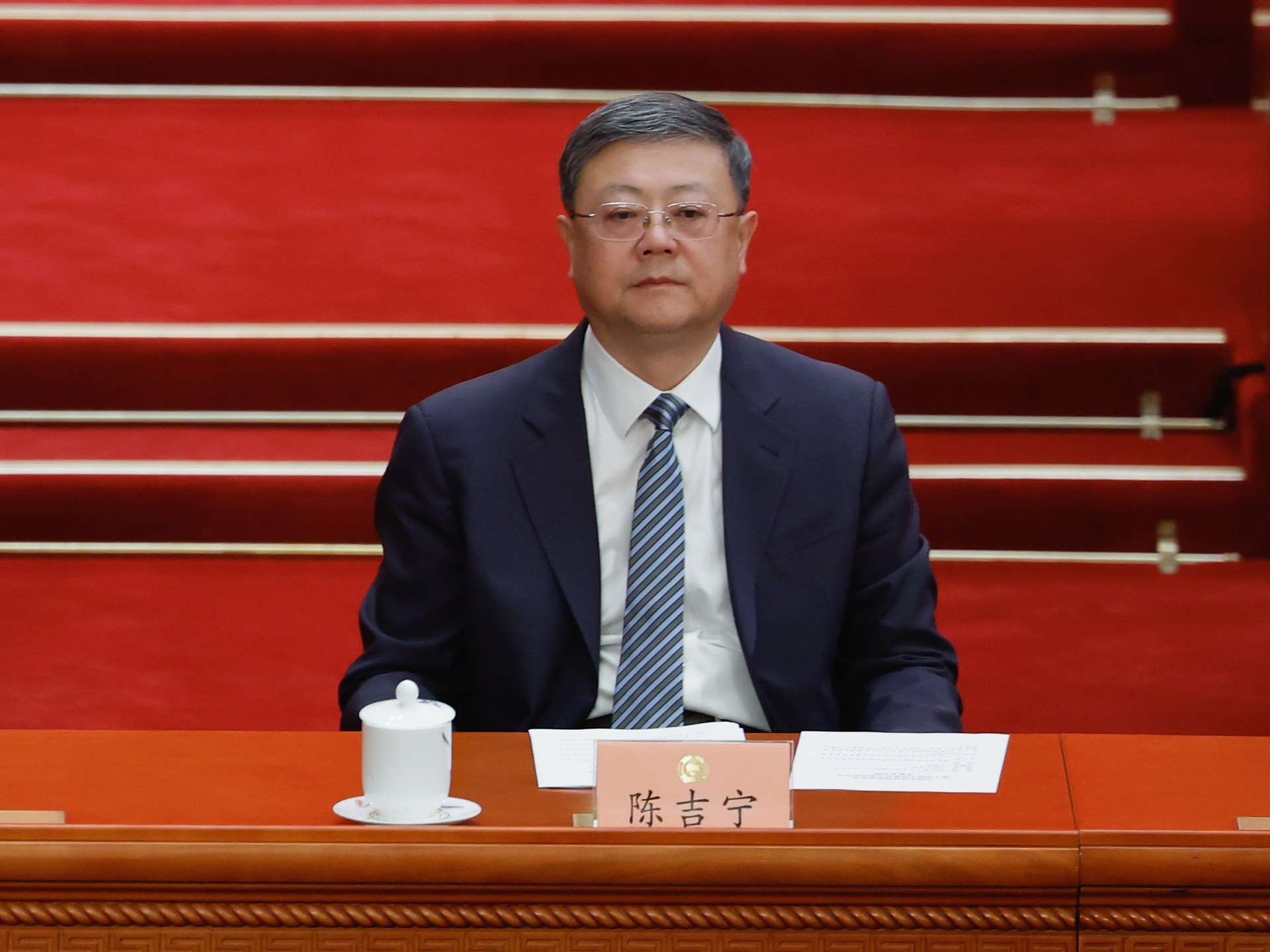
On October 24, 2023, China's Central Commission for Discipline Inspection (CCDI) announced an investigation into Chen Jining, a member of the Politburo and former party secretary of Shanghai, for alleged "serious violations of discipline." Chen, a technocrat with a PhD in environmental engineering from Imperial College London, had been viewed as a rising star in China's leadership, overseeing key economic and technological portfolios. His removal marks the fourth Politburo member to be investigated in two years, following Sun Zhengcai, Bo Xilai, and Zhou Yongkang, underscoring President Xi Jinping's relentless anti-corruption campaign.
The news broke during Asian trading hours, triggering immediate market reactions. The Shanghai Composite Index fell 1.8%, while the tech-heavy ChiNext board dropped 2.5%. Hong Kong's Hang Seng Tech Index slid 3.2%, with semiconductor stocks like SMIC and Hua Hong Semiconductor down 4% and 3.5%, respectively. The sell-off reflected investor fears that Chen's probe could disrupt China's tech policy continuity, particularly its $150 billion semiconductor self-sufficiency drive.
Chen's portfolio included oversight of Shanghai's free trade zone and the Yangtze River Delta integration, regions critical to China's tech and finance sectors. His investigation follows a series of high-profile probes into tech officials, including the 2022 detention of a senior official at the Ministry of Industry and Information Technology (MIIT) for corruption related to chip subsidies. The timing is sensitive: China is grappling with a property crisis, slowing exports, and U.S. sanctions on advanced chips, making policy stability paramount.
Initial market reaction was muted compared to previous anti-corruption shocks, as investors have grown accustomed to such campaigns. However, analysts warn that Chen's removal could signal a broader crackdown on technocrats, potentially leading to policy paralysis. "The investigation raises questions about who will steer China's tech strategy amid escalating U.S.-China tensions," said Mark Williams, chief Asia economist at Capital Economics. "Markets are pricing in a higher risk premium for Chinese tech assets."
Section 2: Deep Technical & Financial Architecture
Chen Jining's role as a Politburo member gave him significant influence over China's tech and financial architecture. As party secretary of Shanghai, he oversaw the city's push to become a global tech hub, including the development of the Lingang Special Area, a testing ground for advanced technologies like AI, autonomous vehicles, and blockchain. Shanghai's tech sector accounts for over 10% of China's GDP, and Chen's policies facilitated billions in foreign investment.
Financially, Chen's investigation could impact the balance sheets of state-owned enterprises (SOEs) and tech firms reliant on government subsidies. For instance, SMIC, China's largest chipmaker, received $2.2 billion in government grants in 2022. A policy vacuum could delay disbursements, straining liquidity. Moreover, Chen's oversight of Shanghai's financial markets, including the STAR Market (China's Nasdaq-style board), means his probe might lead to stricter IPO reviews and compliance checks, slowing tech listings.
The technology stack under Chen's purview included key initiatives like the "East Data West Computing" project, which aims to build data centers in western China to support AI and cloud computing. This $60 billion project is part of China's broader digital infrastructure push. Chen's investigation may cause delays in approvals and funding, affecting companies like Alibaba and Tencent that rely on these data centers. Additionally, his role in the Yangtze River Delta integration meant oversight of cross-border data flows and fintech innovations, areas where regulatory uncertainty is already high.
Unit economics for tech firms in Shanghai could be affected by increased compliance costs. For example, companies may need to invest more in legal and audit functions to navigate potential new anti-corruption rules. "The probe could lead to a more risk-averse approach in approving tech projects, raising the cost of capital for startups," noted Alicia García-Herrero, chief economist for Asia-Pacific at Natixis. "We estimate a 10-15% increase in compliance costs for tech firms in the region."
Furthermore, Chen's investigation may accelerate the centralization of tech policy decision-making in Beijing, reducing the influence of local technocrats. This could lead to more uniform, but potentially less flexible, policies, impacting innovation. The financial architecture of China's tech sector, already strained by U.S. sanctions, faces additional headwinds as investors demand higher risk premiums.
Section 3: Industry & Global Market Ripple Effects
The investigation into Chen Jining has sent ripples through global tech and financial markets. Competitors in the semiconductor space, such as Taiwan's TSMC and South Korea's Samsung, may benefit if China's chip ambitions are delayed. TSMC's shares rose 1.5% on the news, as investors bet on reduced competition from Chinese foundries. However, the broader supply chain remains intertwined: China is the world's largest consumer of semiconductors, and any slowdown in its tech sector could dampen global demand.
Supply chains for electronics and automotive chips are particularly vulnerable. China's push for electric vehicles (EVs) and AI relies on advanced chips, and Chen's oversight of Shanghai's EV hub (home to Tesla's Gigafactory) means his probe could affect production schedules. Tesla's Shanghai plant, which produces 750,000 vehicles annually, might face regulatory delays, impacting global EV supply. "The investigation adds a layer of uncertainty to China's tech manufacturing, which could lead to short-term supply disruptions," said James Chao, Asia-Pacific auto analyst at S&P Global.
Investors are recalibrating their exposure to Chinese tech. Foreign direct investment (FDI) into China's tech sector fell 12% year-on-year in the third quarter of 2023, and the probe may accelerate outflows. Venture capital firms are adopting a wait-and-see approach, particularly for deals involving state-linked entities. "We're advising clients to diversify away from China-centric tech portfolios," said a Hong Kong-based fund manager. "The risk of policy surprises is too high."
Ecosystem shifts are also underway. China's tech giants, such as Alibaba and Tencent, may accelerate their expansion into Southeast Asia and Europe to hedge against domestic instability. Meanwhile, the U.S. is tightening export controls on AI chips, and Chen's probe could weaken China's ability to negotiate tech agreements. "The investigation undermines China's tech diplomacy, as it signals internal instability," said Bonnie Glaser, director of the Asia Program at the German Marshall Fund. "It may embolden the U.S. to push harder on tech decoupling."
Section 4: Critical Perspectives, Analyst Debates & Risk Factors
Analysts are divided on the implications of Chen's investigation. Some view it as a necessary step to root out corruption and improve governance, which could ultimately strengthen China's tech sector by ensuring funds are allocated efficiently. "The anti-corruption campaign has exposed systemic issues in tech subsidies, and cleaning up could lead to better outcomes," said Andrew Polk, co-founder of Trivium China. "Investors should not overreact; the fundamentals of China's tech market remain strong."
Others warn of severe risks. The probe could create a chilling effect, deterring officials from taking initiative on tech projects. "We've seen this before: after a high-profile investigation, bureaucrats become risk-averse, slowing down approvals and innovation," said Christopher Beddor, deputy China research director at Gavekal Dragonomics. "The tech sector could face a prolonged period of policy inertia."
Regulatory friction is another concern. Chen's investigation may lead to stricter scrutiny of tech deals, particularly those involving foreign partners. The U.S. has already imposed sanctions on Chinese tech firms, and the probe could prompt Beijing to tighten its own regulations, creating a double whammy for multinationals. "Companies need to prepare for more compliance hurdles and potential delays in licensing," said a Beijing-based lawyer specializing in tech regulation.
Vulnerabilities in China's tech ecosystem are also exposed. The reliance on government subsidies and state-directed funding means that any disruption in leadership can have outsized effects. Moreover, the investigation highlights the fragility of China's technocratic leadership, which has been a key driver of its tech rise. "The risk is that political loyalty becomes more important than technical expertise, which could hamper China's ability to compete in AI and semiconductors," said a former U.S. trade official.
Section 5: Strategic Forecast & Road Ahead
In the next 12-24 months, the investigation into Chen Jining is likely to lead to a reshuffling of tech policy leadership. We expect a new party secretary for Shanghai to be appointed within three months, possibly someone with a security or state-owned enterprise background, signaling a shift towards tighter control. This could mean more centralized decision-making on tech investments and a greater focus on national security, potentially slowing down commercial innovation.
Upcoming milestones include the Central Economic Work Conference in December, where tech policy priorities for 2024 will be set. Investors will watch for signals on semiconductor subsidies and data governance. Additionally, the trial of Chen, if it proceeds, will be closely monitored for insights into the scope of the anti-corruption drive. We anticipate further investigations into tech officials, particularly those overseeing AI and quantum computing, as Beijing seeks to ensure loyalty in strategic sectors.
What to watch: the performance of Chinese tech stocks, particularly in Shanghai and Shenzhen, as a barometer of investor confidence. Also, monitor FDI flows into China's tech sector and any changes in U.S.-China tech negotiations. The appointment of Chen's successor and the subsequent policy direction will be critical. Furthermore, keep an eye on companies like SMIC and Alibaba for signs of operational disruptions or strategic pivots.
looking ahead, while the long-term impact of Chen's investigation on China's tech and finance sectors remains uncertain, the short-term risks are palpable. Investors should brace for volatility and policy uncertainty, while multinationals should diversify supply chains and enhance compliance. The probe underscores the inherent political risk in China's tech ecosystem, a factor that will continue to shape global tech dynamics.




Comments (0)
No comments yet. Be the first to share your thoughts!
Leave a Comment