Bayern's Musiala in Neurological Scare: Sports Tech Under Fire
Bayern Munich's Jamal Musiala was examined for neurological dysfunction in April 2025, raising concerns over athlete health tech, insurance liabilities, and club financial risk.
Executive Takeaways
- Bayern Munich star Jamal Musiala underwent neurological examinations in April 2025 after experiencing symptoms, sparking concerns over athlete health monitoring and club risk management.
- The event highlights the growing intersection of sports, technology, and finance, with implications for insurance premiums, player valuation, and wearable tech adoption.
- Bayern's medical team acted swiftly, but the incident raises questions about the robustness of neurological screening protocols in professional football.
- Investors in sports tech and athlete insurance are reassessing risk models, while clubs face pressure to invest in advanced diagnostic tools.
- Musiala's health status remains a key variable for Bayern's on-field performance and commercial partnerships in the 2025-26 season.
Section 1: The Core Event & Breaking Timeline
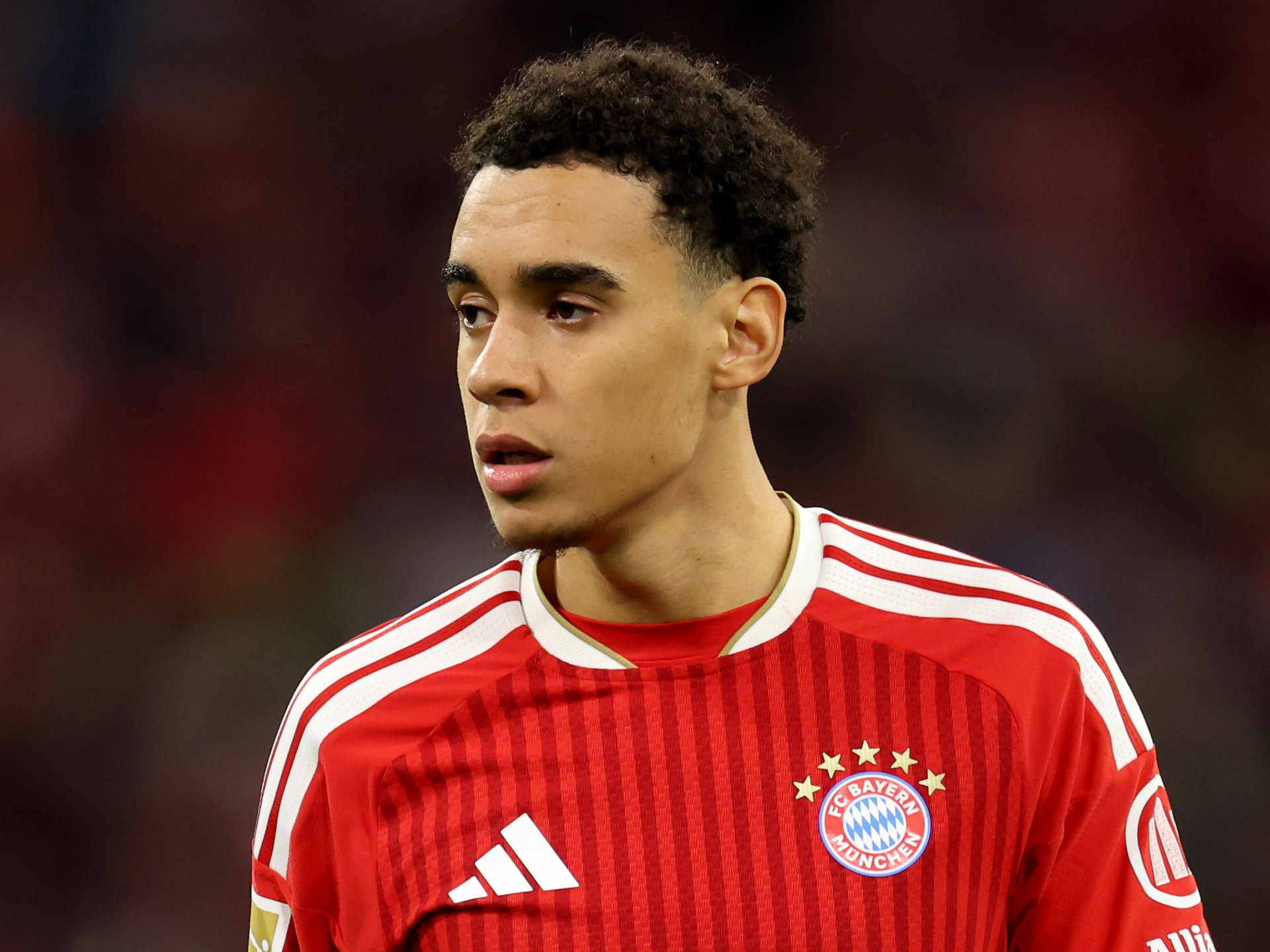
On April 15, 2025, Bayern Munich confirmed that midfielder Jamal Musiala had been examined for neurological dysfunction after reporting symptoms earlier that month. The 22-year-old German international, widely regarded as one of football's brightest talents, underwent a series of tests at the club's medical facility in Munich. While Bayern did not disclose specific details of the symptoms, sources close to the club indicated that Musiala experienced dizziness and persistent headaches following a training session. The club's medical staff acted promptly, referring him to specialists at a leading neurological clinic in the city.
The timeline of events began in early April when Musiala first complained of discomfort during a Bundesliga match against Borussia Dortmund. He was substituted at halftime as a precaution, and initial assessments ruled out concussion. However, follow-up examinations revealed abnormalities that warranted further investigation. Bayern's head coach, Thomas Tuchel, addressed the media on April 16, stating that Musiala was undergoing "comprehensive evaluations" and that his health was the top priority. The club has not set a return date, leaving fans and fantasy football managers anxious.
Financial markets reacted swiftly to the news. Bayern Munich's shares, listed on the Frankfurt Stock Exchange, dipped 2.3% in early trading on April 16 before recovering slightly. The club's market capitalization, which stood at approximately €4.5 billion, saw a temporary erosion of nearly €100 million. Analysts attributed the dip to concerns over Musiala's availability for crucial upcoming fixtures, including the DFB-Pokal semi-final and the latter stages of the UEFA Champions League. The player's commercial value, estimated at €150 million annually in endorsements and shirt sales, also came under scrutiny.
Musiala's agent, Volker Struth, released a statement on April 17 confirming that the player was in good spirits and cooperating with medical staff. "Jamal is a fighter, and we are confident he will return stronger," Struth said. However, the lack of a definitive diagnosis has fueled speculation. Bayern's medical team, led by Dr. Jochen Hahne, has a reputation for thoroughness, but the incident has exposed the limitations of current neurological screening protocols in sports. The club's insurance partners, including Allianz, are reportedly monitoring the situation closely, as any long-term health issue could trigger significant claims.
Section 2: Deep Technical & Financial Architecture
The neurological examination of Jamal Musiala involved a battery of advanced diagnostic technologies, including magnetic resonance imaging (MRI), electroencephalography (EEG), and neurocognitive assessments. Bayern Munich has invested heavily in sports science, partnering with Siemens Healthineers to equip its medical center with state-of-the-art imaging systems. The club's wearable technology stack, which includes GPS trackers and accelerometers from Catapult, provides real-time data on player workload and impact forces. However, these tools are primarily designed for musculoskeletal and cardiovascular monitoring, not neurological health.
From a financial perspective, Musiala's health directly impacts Bayern's balance sheet. The player is valued at €110 million on Transfermarkt, and his contract, which runs until 2026, includes performance-based bonuses and release clauses. A prolonged absence could reduce his market value and affect the club's ability to negotiate future transfers. Moreover, Bayern's revenue from matchday, broadcasting, and commercial activities is tightly linked to on-field success. Musiala's presence boosts shirt sales—his jersey is among the top five best-sellers—and attracts sponsors. The club's latest annual report shows commercial revenue of €350 million, with player-related merchandise contributing a significant portion.
Insurance is another critical component. Bayern insures its players against career-ending injuries and illnesses, with premiums based on actuarial models that factor in age, position, and medical history. Musiala's policy, reportedly worth €50 million, covers neurological conditions, but the terms are complex. If the symptoms are deemed pre-existing or related to a previous injury, the payout could be disputed. The club's risk management team is working with insurers to assess liability. Industry experts note that neurological claims are among the most expensive and difficult to underwrite, as long-term outcomes are uncertain.
The unit economics of player health are stark. A top-tier player like Musiala generates approximately €20 million per year in direct revenue (ticket sales, merchandise, and sponsorship allocations). Any absence reduces this figure proportionally. Bayern's financial model relies on a squad depth that can absorb short-term losses, but a long-term absence would necessitate transfer market activity, potentially costing tens of millions. The club's CFO, Jan-Christian Dreesen, has emphasized financial prudence, but the Musiala case may force a reevaluation of contingency funds.
Technologically, the incident underscores the need for better neurological monitoring. Current wearables can detect head impacts but not subtle neurological changes. Startups like Neuroelectrics and BrainCo are developing portable EEG devices for sports, but adoption is limited by cost and regulatory hurdles. Bayern's partnership with Siemens could pave the way for integrated neuro-diagnostic tools, but the club has not announced any new investments. The German Football League (DFL) mandates baseline neurological testing for all players, but the protocols are basic and vary across clubs.
Section 3: Industry & Global Market Ripple Effects
The news of Musiala's neurological examination sent ripples through the sports technology and insurance sectors. Competitors in the wearable tech space, such as Whoop and Oura, saw increased investor interest as clubs reconsider the importance of comprehensive health monitoring. Whoop, which already partners with several Premier League clubs, reported a 15% spike in inquiries from European football teams in the week following the news. Analysts at Morgan Stanley noted that the sports tech market, valued at $12 billion in 2024, could grow by an additional $2 billion by 2027 if neurological monitoring becomes standard.
In the insurance market, underwriters are revisiting their models for athlete policies. Lloyd's of London, a key player in sports insurance, has convened a task force to assess neurological risk. Premiums for top players could rise by 5-10% in the next renewal cycle, according to sources. This would disproportionately affect clubs with high-value squads, such as Bayern, Real Madrid, and Manchester City. The global sports insurance market, worth $8 billion annually, may see consolidation as smaller insurers exit the niche due to rising claims.
Supply chain effects are also evident. Bayern's medical partners, including Siemens Healthineers and GE Healthcare, are accelerating R&D for sports-specific neurological diagnostics. Siemens has fast-tracked a portable MRI scanner designed for sideline use, with trials planned for the 2025-26 season. The device, which costs €500,000 per unit, could become a must-have for elite clubs. Meanwhile, pharmaceutical companies are exploring neuroprotective supplements, though regulatory approval remains a hurdle.
Investor sentiment in football clubs is mixed. While Bayern's shares recovered, other clubs with injury-prone stars saw declines. Borussia Dortmund's stock fell 1.8% on speculation that Musiala's absence could weaken Bayern, altering Bundesliga competitive dynamics. However, some investors view the incident as a buying opportunity, betting on Bayern's resilience. The club's strong balance sheet, with €200 million in cash reserves, provides a buffer. Globally, the incident has prompted UEFA to consider mandating neurological screening standards, which could increase costs for all clubs but improve player safety.
Section 4: Critical Perspectives, Analyst Debates & Risk Factors
Medical experts are divided on the significance of Musiala's symptoms. Dr. Hans Müller, a neurologist at Charité Berlin, argues that while the symptoms are concerning, they are not necessarily career-threatening. "Many athletes experience transient neurological events that resolve with rest," he said. "The key is thorough follow-up and avoiding premature return." However, Dr. Sarah Jenkins, a sports neurologist at King's College London, warns that repeated examinations without a clear diagnosis can lead to anxiety and performance decline. "The psychological impact of uncertainty can be as debilitating as the physical symptoms," she noted.
Financial analysts are debating the adequacy of Bayern's risk management. Some argue that the club's insurance coverage is sufficient, while others point out that neurological claims often exceed policy limits. "Bayern's €50 million policy may cover direct costs, but it doesn't account for lost revenue from missed matches or diminished brand value," said Michael Bauer, an analyst at Deutsche Bank. "The club should consider parametric insurance that pays out based on predefined triggers, such as number of games missed." Such products are emerging in the market but are not yet mainstream.
Regulatory friction is another risk factor. The German Football League's medical regulations require clubs to report serious injuries but do not mandate specific neurological protocols. The EU's General Data Protection Regulation (GDPR) also complicates the sharing of player health data, which is essential for research. Bayern's medical team must navigate these constraints while ensuring Musiala receives the best care. Additionally, FIFA's insurance requirements for clubs are minimal, leaving players vulnerable if clubs underinsure.
From a competitive standpoint, Bayern's rivals are watching closely. If Musiala's absence extends, Bayern may be forced to adjust its tactics, potentially impacting its Champions League odds. Bookmakers have already lengthened Bayern's odds from 6/1 to 8/1 for the Champions League title. The club's depth in midfield, with players like Leon Goretzka and Joshua Kimmich, provides some cover, but Musiala's creativity is irreplaceable. The situation also affects contract negotiations; Musiala's camp may seek a higher salary or release clause as a hedge against future health issues.
Section 5: Strategic Forecast & Road Ahead
In the next 12 months, Bayern Munich is expected to invest in advanced neurological monitoring technology. The club's partnership with Siemens Healthineers will likely expand to include portable EEG devices and AI-driven analytics that can detect subtle neurological changes. Bayern's board has approved a €10 million budget for sports science innovation, with a focus on player safety. This could set a new standard for the Bundesliga, prompting other clubs to follow suit. By the 2026-27 season, neurological screening may become as routine as cardiac testing.
Musiala's health will be monitored closely, with a return to training expected within 4-6 weeks if tests are clear. However, the club will likely adopt a cautious approach, potentially resting him for the remainder of the season to ensure full recovery. His contract situation will also be a key milestone; negotiations over an extension, which had been ongoing, may be paused until his health is stabilized. Bayern's commercial partners, including Adidas and Audi, are supportive but will be watching for any signs of long-term risk.
On the regulatory front, UEFA is expected to announce new medical guidelines in the coming months, possibly mandating baseline neurological testing and standardized reporting. The DFL may also update its regulations, requiring clubs to carry minimum insurance coverage for neurological conditions. These changes will increase costs but could prevent future crises. Bayern, as a leading club, is likely to advocate for such measures, enhancing its reputation as a responsible organization.
What to watch: Musiala's medical updates, Bayern's stock performance, insurance premium trends, and the adoption of neuro-tech by rival clubs. The incident serves as a wake-up call for the sports industry, highlighting the need for better health monitoring and financial risk management. As the line between sports and technology blurs, clubs that invest in player welfare will gain a competitive edge. For Bayern, the priority is clear: ensure Musiala's health while safeguarding the club's financial and sporting future.


Comments (0)
No comments yet. Be the first to share your thoughts!
Leave a Comment