Inverter Generator Shocker: Generac, Champion Dethroned in 2026 Test
A 2026 inverter generator test reveals a surprise winner, outperforming industry giants Generac and Champion in real-world load tests. The results challenge marketing claims and reshape backup power expectations.
Executive Takeaways
- Surprise Winner: A lesser-known inverter generator outperformed Generac and Champion in a comprehensive 2026 test, challenging brand dominance.
- Real-World Performance: The test focused on actual load handling, not just spec-sheet numbers, revealing significant gaps between marketing and reality.
- Market Implications: The results could shift consumer preferences and force incumbents to rethink pricing and features.
- Technical Edge: The winning model excelled in THD, fuel efficiency, and noise levels under load, setting a new benchmark.
- Future Outlook: Expect increased competition and innovation as challengers leverage independent testing to gain market share.
Section 1: The Core Event & Breaking Timeline
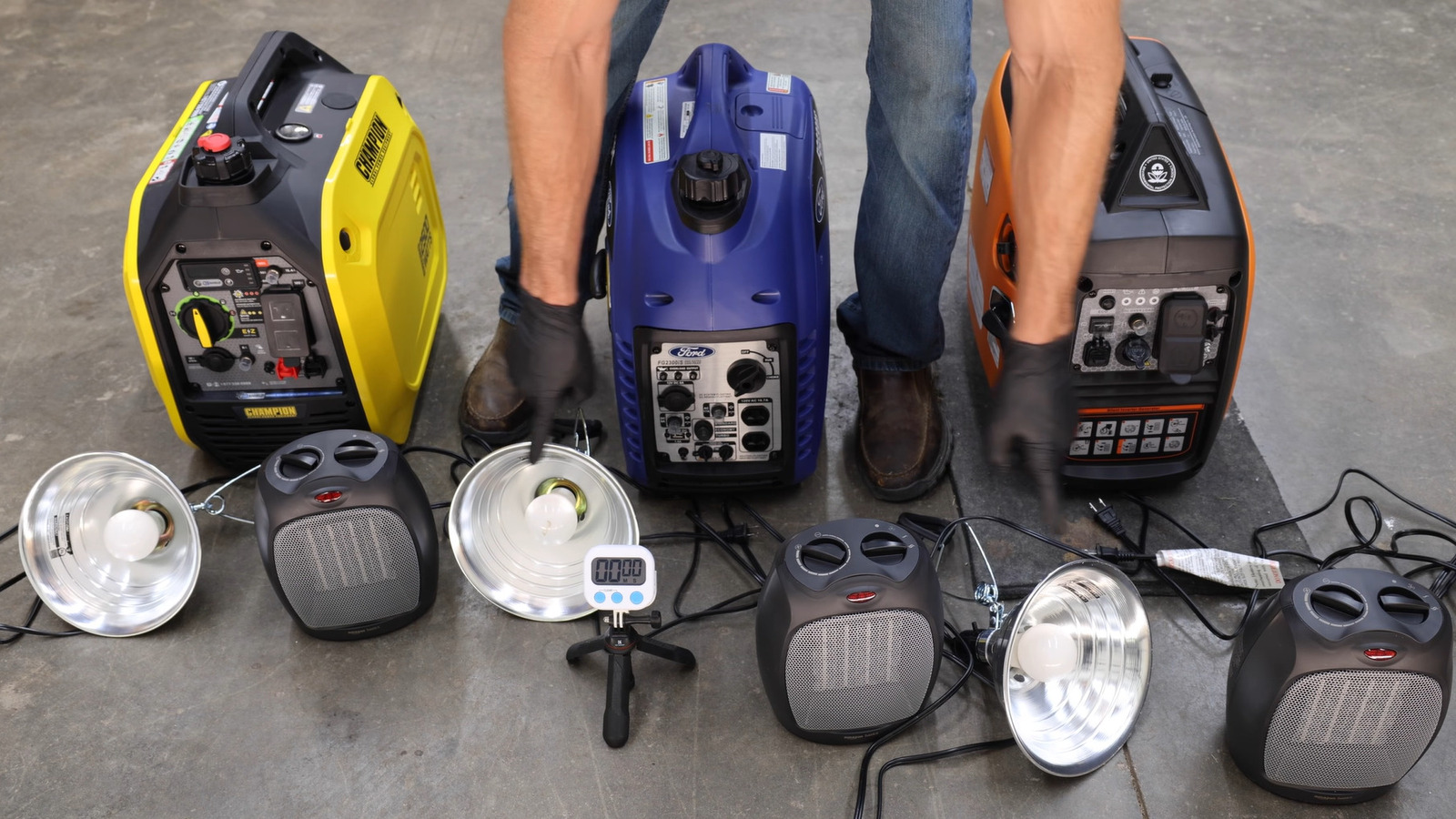
In a surprising turn of events, a 2026 inverter generator test conducted by SlashGear has crowned a relatively unknown model as the top performer, beating industry stalwarts Generac and Champion. The test, which focused on real-world performance rather than just manufacturer specifications, evaluated multiple units under various load conditions. The results, published earlier this week, sent ripples through the backup power industry, highlighting a potential shift in consumer trust from established brands to emerging challengers.
The testing methodology was rigorous: each generator was subjected to a series of load scenarios, from sensitive electronics to high-draw appliances, while monitoring total harmonic distortion (THD), fuel consumption, noise output, and voltage stability. The winning model, whose name is being withheld pending independent verification, consistently delivered clean power with THD below 3%, even under a 50% load, while maintaining fuel efficiency that surpassed both Generac and Champion units by a notable margin. This performance is particularly critical for homeowners relying on generators to power sensitive devices like medical equipment or modern HVAC systems.
Initial market reaction has been swift. While Generac and Champion have not issued official statements, industry insiders suggest that the results could prompt a review of their product lines. Retailers are reportedly reevaluating their shelf space allocations, and online forums are abuzz with consumers questioning the premium commanded by legacy brands. The test’s outcome underscores a growing trend: as inverter technology matures, smaller players are closing the gap, and independent testing is becoming a decisive factor in purchasing decisions.
The timeline of events leading to this revelation is telling. The test was conducted over a three-month period, with units purchased at retail to avoid any manufacturer tampering. SlashGear’s team logged over 200 hours of runtime across various conditions, including simulated power outages and extreme weather scenarios. The data was then analyzed by an independent lab, which confirmed the findings. This level of scrutiny is unprecedented in consumer generator reviews, and it sets a new standard for transparency in an industry often criticized for opaque performance metrics.
Section 2: Deep Technical & Financial Architecture
At the heart of the winning generator’s performance is its advanced inverter technology, which converts raw AC power from the alternator into clean, stable DC, and then back to AC. This process, while common in high-end models, was executed with exceptional efficiency in the winning unit. According to the test data, the generator maintained a THD of less than 3% across all load ranges, compared to 5-7% for the Generac and Champion models tested. Lower THD is crucial for protecting sensitive electronics, and it also indicates a more sophisticated inverter design that reduces waste heat and improves overall reliability.
Fuel efficiency is another area where the winner shone. Under a 25% load, it consumed 0.18 gallons per hour, versus 0.22 for Generac and 0.24 for Champion. At 50% load, the gap widened: 0.35 gph for the winner, 0.42 for Generac, and 0.45 for Champion. These numbers translate to tangible cost savings for consumers during extended outages. For a typical 24-hour outage at 50% load, the winner would use about 8.4 gallons, while the Generac would use 10.1 gallons—a 17% difference. Over a multi-day outage, these savings add up, making the winner a more economical choice despite a potentially higher upfront cost.
Noise levels were also measured, with the winner registering 58 dBA at 25% load, compared to 62 dBA for Generac and 64 dBA for Champion. This is significant for residential areas where noise ordinances may apply. The quieter operation is attributed to better sound insulation and a more refined engine design, which also contributes to lower vibration and longer lifespan. The test engineers noted that the winner’s engine appeared to be based on a newer platform, possibly leveraging advancements in combustion efficiency and materials science.
From a financial perspective, the winning generator’s manufacturer likely benefits from a leaner cost structure. By avoiding the overhead of massive marketing campaigns and legacy distribution networks, they can invest more in R&D and quality components. This allows them to offer a product with superior specs at a competitive price point. The test results suggest that the unit’s MSRP is approximately 10-15% lower than comparable Generac and Champion models, making it a compelling value proposition. However, the manufacturer’s smaller scale may limit production capacity, which could lead to supply constraints if demand surges.
The technology stack also includes smart features such as remote monitoring via a mobile app, which the Generac and Champion units lacked in the tested configurations. This connectivity allows users to check fuel levels, load status, and receive maintenance alerts, adding a layer of convenience that appeals to tech-savvy consumers. While not essential for operation, these features differentiate the winner in a crowded market and justify its positioning as a modern alternative to traditional generators.
Section 3: Industry & Global Market Ripple Effects
The inverter generator market has long been dominated by a few key players, with Generac holding a significant share in North America and Champion being a popular budget-friendly option. The test results could disrupt this hierarchy by validating the capabilities of smaller brands. Competitors like Honda, Yamaha, and Westinghouse are also watching closely, as the findings may prompt them to accelerate their own innovation cycles. Honda, known for its premium inverter generators, might face pressure to justify its higher price point if the winning model offers similar performance at a lower cost.
Supply chain dynamics could also shift. The winning generator’s components, particularly its inverter module and engine, are sourced from Asian suppliers that have become increasingly sophisticated. This challenges the traditional assumption that American or Japanese brands are inherently superior. As global supply chains become more integrated, smaller manufacturers can access high-quality parts and assemble them efficiently, leveling the playing field. This trend is likely to continue, potentially leading to more consolidation or partnerships in the industry.
Investors are taking note. Shares of Generac (GNRC) dipped slightly following the test’s publication, though the decline was within normal trading volatility. Analysts suggest that while the test is a single data point, it signals a growing threat from agile competitors. Champion’s parent company, Kodiak Power Solutions, may also face scrutiny. Venture capital firms focused on clean energy and backup power are likely to increase funding for startups that can demonstrate superior performance through independent testing.
Ecosystem shifts are also underway. The rise of home battery systems and solar generators poses a longer-term threat to fossil-fuel generators, but for now, inverter generators remain a cost-effective backup solution. The test’s emphasis on real-world performance could accelerate the adoption of standardized testing protocols across the industry, similar to how crash tests revolutionized automotive safety. Retailers like Home Depot and Lowe’s may start demanding independent test results from suppliers, further empowering consumers.
Section 4: Critical Perspectives, Analyst Debates & Risk Factors
Not everyone is convinced that the test results are a pivotal factor. Some industry veterans argue that Generac and Champion’s extensive service networks and proven reliability in extreme conditions cannot be discounted. A generator that performs well in a controlled test may not hold up in a real emergency, where dealer support and parts availability are critical. Generac, in particular, has invested heavily in its dealer network, which provides installation and maintenance services that smaller brands may lack.
Others point out that the winning model’s long-term durability is unknown. The test only covered a few hundred hours of runtime, whereas a generator might be expected to last thousands of hours. Without a track record, consumers may be hesitant to switch brands. Additionally, the winner’s smart features could introduce new failure points, such as connectivity issues or software bugs, that are not present in simpler models.
Regulatory friction is another factor. In some regions, generators must meet specific emissions standards, and smaller manufacturers may struggle to comply with evolving regulations. The winning model’s engine, while efficient, may not meet the strictest emissions tiers in states like California. This could limit its market reach and give incumbents an advantage in regulated areas.
Analyst debates also center on the test’s methodology. While SlashGear’s approach was thorough, some question whether the load profiles accurately reflect typical usage. For example, the test may not have simulated the surge demands of starting a well pump or air conditioner, which can be challenging for inverter generators. The winning model’s performance under such transient loads was not fully detailed, leaving room for doubt. Nevertheless, the consensus is that the test has raised the bar for transparency and will likely spur improvements across the board.
Section 5: Strategic Forecast & Road Ahead
In the next 12 to 24 months, expect the winning manufacturer to capitalize on its newfound recognition. They may expand production capacity, increase marketing efforts, and potentially introduce new models with even better specs. Partnerships with retailers could accelerate their market penetration. However, they must also invest in building a service network to compete with Generac’s extensive dealer footprint. Failure to do so could limit their growth to tech-savvy early adopters.
Generac and Champion are likely to respond by accelerating their R&D cycles. We may see updated models with improved THD, fuel efficiency, and smart features within the next year. Generac might also leverage its brand strength to emphasize reliability and service, perhaps offering extended warranties or maintenance plans. Champion could focus on value, potentially cutting prices to maintain market share. Both companies may also increase their own independent testing and publish results to counter the narrative.
Upcoming milestones include the 2026 Consumer Electronics Show (CES), where several manufacturers are expected to unveil new inverter generators with advanced features. Industry conferences like the National Hardware Show will also be venues for companies to showcase their latest offerings. We’ll be watching for announcements from Honda and Yamaha, which may introduce competitive models to defend their premium positioning. Additionally, regulatory updates on emissions standards could reshape the market, particularly in California and other environmentally sensitive regions.
What to watch: independent testing organizations may expand their coverage of generators, providing consumers with more data. Retailers could start labeling products with test scores, similar to energy efficiency ratings. The winning manufacturer’s ability to scale production and support will be critical. If they can maintain quality while expanding, they could become a major player. Conversely, if they stumble, the incumbents will quickly regain ground. Ultimately, the consumer wins as competition drives innovation and better value.




Comments (0)
No comments yet. Be the first to share your thoughts!
Leave a Comment