Kerala's ₹1,088 Crore Pension Push: A Fiscal Tightrope
Kerala government sanctions ₹1,088 crore for welfare pensions, aiming to disburse payments before Onam. The move highlights fiscal challenges and potential for fintech solutions in pension distribution.
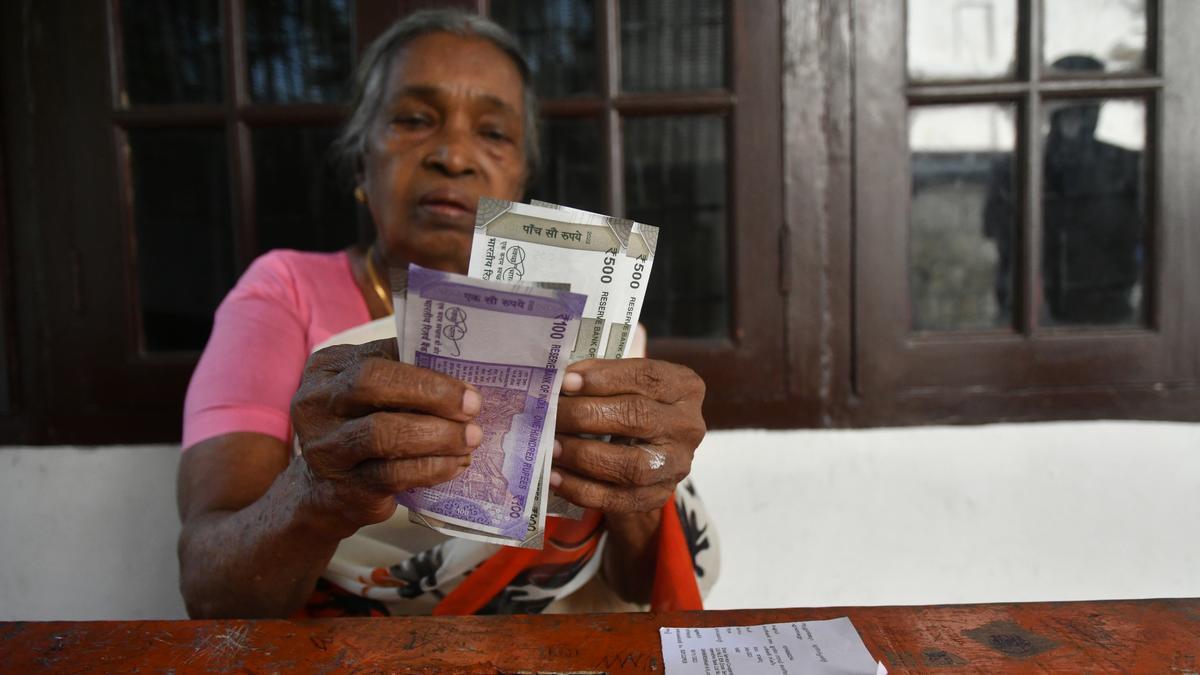
Executive Takeaways
- Kerala government sanctions ₹1,088 crore for welfare pensions, covering approximately 60 lakh beneficiaries.
- The allocation aims to clear arrears and ensure timely disbursement before the Onam festival, providing economic relief to vulnerable sections.
- The move underscores the state's fiscal challenges, with pension liabilities mounting due to an aging population and limited revenue growth.
- Fintech and digital payment solutions could streamline distribution, reducing leakage and improving efficiency.
- Experts debate the sustainability of such welfare spending amid constrained state finances, calling for reforms in pension schemes.
Section 1: The Core Event & Breaking Timeline
On August 20, 2023, the Kerala government announced a sanction of ₹1,088 crore for welfare pensions, marking a significant fiscal intervention aimed at disbursing payments to approximately 60 lakh beneficiaries across the state. The decision, approved by the State Cabinet, comes just ahead of the Onam festival, a critical period for household consumption and economic activity in Kerala. The funds are expected to clear pending arrears and ensure that beneficiaries receive their monthly pensions without further delay, according to official statements from the Finance Department.
The announcement was made by State Finance Minister K. N. Balagopal, who emphasized the government's commitment to social security despite fiscal constraints. The sanction covers pensions under various schemes, including the Indira Gandhi National Old Age Pension Scheme, the Widow Pension Scheme, and the Disability Pension Scheme, among others. The disbursement is set to begin immediately, with the government aiming to credit funds directly into beneficiaries' bank accounts through the Direct Benefit Transfer (DBT) system, minimizing intermediaries and leakage.
This move follows a series of delays in pension payments earlier this year, which had drawn criticism from opposition parties and social activists. The government had faced backlash over mounting arrears, with many beneficiaries reporting months of unpaid pensions. The latest sanction is seen as a damage-control measure to alleviate public discontent and provide relief during the festive season, which typically sees increased spending on food, clothing, and other essentials.
Market reaction to the announcement has been muted, as it is a state-level fiscal decision with limited direct impact on national markets. However, analysts note that the increased spending could provide a modest boost to local consumption, particularly in rural areas where pensioners form a significant portion of the population. The Kerala government's fiscal health remains a concern, with the state's debt-to-GSDP ratio among the highest in India, raising questions about the long-term sustainability of such welfare measures.
Section 2: Deep Technical & Financial Architecture
The ₹1,088 crore allocation is a complex financial operation involving multiple departments and banking channels. The Kerala Finance Department has structured the sanction under the state's welfare pension budget, which is part of the broader social security expenditure. The funds are sourced from the state's own revenues and central government transfers, including allocations under the National Social Assistance Programme (NSAP). The disbursement mechanism relies on the DBT platform, which integrates with the state's treasury systems and bank accounts of beneficiaries to ensure direct transfers.
From a balance sheet perspective, the sanction will increase the state's revenue expenditure, impacting its fiscal deficit. Kerala's fiscal deficit for the current financial year is projected at around 3.5% of GSDP, and this additional spending could push it closer to the limit set by the Fiscal Responsibility and Budget Management (FRBM) Act. The state has been consistently running a revenue deficit, meaning its current expenditure exceeds current revenues, and this pension outlay will further strain its finances. The government, however, argues that welfare spending is essential for social equity and has been exploring ways to enhance revenue through additional resource mobilization.
The technology stack for pension disbursement in Kerala is relatively advanced, leveraging the DBT Bharat platform and the state's own e-payment systems. Beneficiaries are identified through a comprehensive database that includes socio-economic caste census data and Aadhaar linkage. The system aims to reduce duplication and ensure that only eligible individuals receive benefits. However, challenges remain in terms of last-mile connectivity and digital literacy among elderly beneficiaries, many of whom rely on bank correspondents or family members to access funds.
Unit economics of the pension scheme reveal that the average monthly pension per beneficiary is around ₹1,600, which is below the minimum wage but provides critical support for daily living. The administrative cost of disbursement is estimated at 2-3% of the total outlay, which includes banking charges and operational expenses. The government has been exploring fintech partnerships to reduce these costs further and improve the speed of transfers. For instance, collaboration with payment banks and mobile wallets could enable instant credits, but regulatory hurdles and interoperability issues need to be addressed.
Comparatively, Kerala's pension spending is higher than many other Indian states, reflecting its aging population and strong social welfare tradition. The state's population above 60 years is around 16%, compared to the national average of 10%, which puts additional pressure on pension systems. The government has been considering reforms such as increasing the retirement age and promoting private pensions, but these are politically sensitive and require broad consensus.
Section 3: Industry & Global Market Ripple Effects
The sanction of ₹1,088 crore for welfare pensions is likely to have ripple effects on various industries, particularly in the consumer goods and retail sectors. With a significant injection of funds into the hands of pensioners, local markets in Kerala are expected to see a surge in demand for essential commodities, clothing, and festival-related items. This could provide a temporary boost to small businesses and traders, who have been grappling with subdued demand due to inflationary pressures and economic slowdown.
In the fintech space, the move highlights the growing role of digital payment solutions in government welfare distribution. Companies operating in the DBT ecosystem, such as payment aggregators and banking correspondents, may see increased transaction volumes. The Kerala government's push for digital transfers could serve as a model for other states, potentially expanding the market for fintech services in the social security sector. However, this also raises concerns about data privacy and cybersecurity, as large-scale digital disbursements become targets for fraud.
Globally, the trend towards digital welfare distribution is gaining traction, with countries like Brazil and Kenya implementing similar models. India's DBT system is often cited as a success story, having saved the government billions by eliminating ghost beneficiaries. Kerala's experience could offer valuable lessons for other developing nations looking to streamline their social security programs. International organizations such as the World Bank and UNDP have shown interest in studying India's DBT model, and Kerala's implementation could be a case study.
Investors in Indian markets are closely watching state-level fiscal policies, as they impact the overall economic climate. While the pension sanction is a relatively small amount compared to the national budget, it signals the Kerala government's willingness to spend on welfare, which could influence credit ratings and borrowing costs. Rating agencies have previously flagged Kerala's high debt levels, and sustained welfare spending without corresponding revenue growth could lead to downgrades, affecting the state's ability to raise funds.
Section 4: Critical Perspectives, Analyst Debates & Risk Factors
Economists and policy analysts are divided on the merits of the pension sanction. Supporters argue that it is a necessary intervention to protect the vulnerable during a period of economic uncertainty and rising living costs. They point out that pensions are a fundamental right and that delays in payment can push elderly and disabled individuals into poverty. The government's decision to prioritize welfare over fiscal consolidation is seen as a humane approach, especially in a state with a strong social safety net tradition.
Critics, however, contend that the move is a short-term fix that exacerbates Kerala's fiscal problems. They argue that the state's pension liabilities are unsustainable in the long run, given its aging population and slow revenue growth. The government has been borrowing heavily to finance its deficits, and additional welfare spending could lead to a debt trap. Some analysts suggest that the government should instead focus on reforming the pension system by targeting benefits better and encouraging private savings.
Another risk factor is the operational efficiency of disbursement. Despite the DBT system, there have been reports of delays and errors in crediting pensions, particularly in rural areas with poor banking infrastructure. Beneficiaries often face difficulties in updating their bank details or resolving discrepancies, leading to further delays. The government needs to strengthen its grievance redressal mechanisms and ensure that the digital infrastructure is robust enough to handle large volumes.
Regulatory friction is also a concern, as the Reserve Bank of India (RBI) has been tightening norms for digital lending and payments to prevent fraud. The Kerala government's reliance on banking correspondents and fintech partners must comply with these regulations, which could increase costs and complexity. Additionally, the use of Aadhaar for beneficiary identification has raised privacy concerns, with activists calling for stronger data protection laws.
Section 5: Strategic Forecast & Road Ahead
In the next 12-24 months, Kerala is likely to face increasing pressure to reform its welfare pension system. The government may consider revising pension amounts, which have not been increased in recent years, to keep pace with inflation. However, any such move would require additional fiscal space, which is currently constrained. The state may also explore innovative financing mechanisms, such as pension bonds or public-private partnerships, to fund its liabilities.
On the technology front, the government is expected to invest in upgrading its DBT platform to enable real-time tracking and automated reconciliation. This could involve integrating with the Unified Payments Interface (UPI) to facilitate instant transfers and reduce dependency on traditional banking channels. The use of blockchain for pension disbursement is also being explored in some pilot projects, though scalability and regulatory acceptance remain challenges.
Upcoming milestones include the release of the state's fiscal budget for the next financial year, which will reveal the government's priorities and allocation for welfare. The government is also expected to announce a roadmap for pension reforms, possibly including a committee to study the sustainability of the current system. Stakeholders, including pensioner associations and civil society groups, are likely to demand greater transparency and timely payments.
What to watch: The implementation of the ₹1,088 crore sanction and whether it effectively reaches all beneficiaries without leakage. The state's fiscal deficit numbers for the current quarter, which will indicate the impact of this spending. Any announcements regarding pension reforms or new welfare schemes. And the broader economic environment, including inflation and employment trends, which will influence the need for such support. As Kerala navigates its fiscal challenges, the balance between welfare and sustainability will remain a key theme.




Comments (0)
No comments yet. Be the first to share your thoughts!
Leave a Comment