Telangana Dominates VB-G RAM G: 18% of National Works, 5.53 Lakh Persondays
Telangana leads India in VB-G RAM G works with nearly 18% of the national total, generating 5.53 lakh persondays of employment on November 23 alone, ranking third in employment generation.
Executive Takeaways
- Telangana accounts for nearly 18% of all works undertaken under the VB-G RAM G scheme nationwide, underscoring its dominant operational scale.
- On November 23 alone, the state generated 5.53 lakh persondays of employment, highlighting its capacity for rapid job creation.
- The state ranks third nationally in cumulative employment generation under the scheme, trailing only larger states like Uttar Pradesh and Madhya Pradesh.
- This performance signals Telangana's strategic focus on rural infrastructure and livelihood security, with potential ripple effects on agri-tech and rural fintech.
- Analysts caution that sustaining this momentum requires robust monitoring, transparent fund utilization, and integration with broader rural development goals.
The Core Event & Breaking Timeline
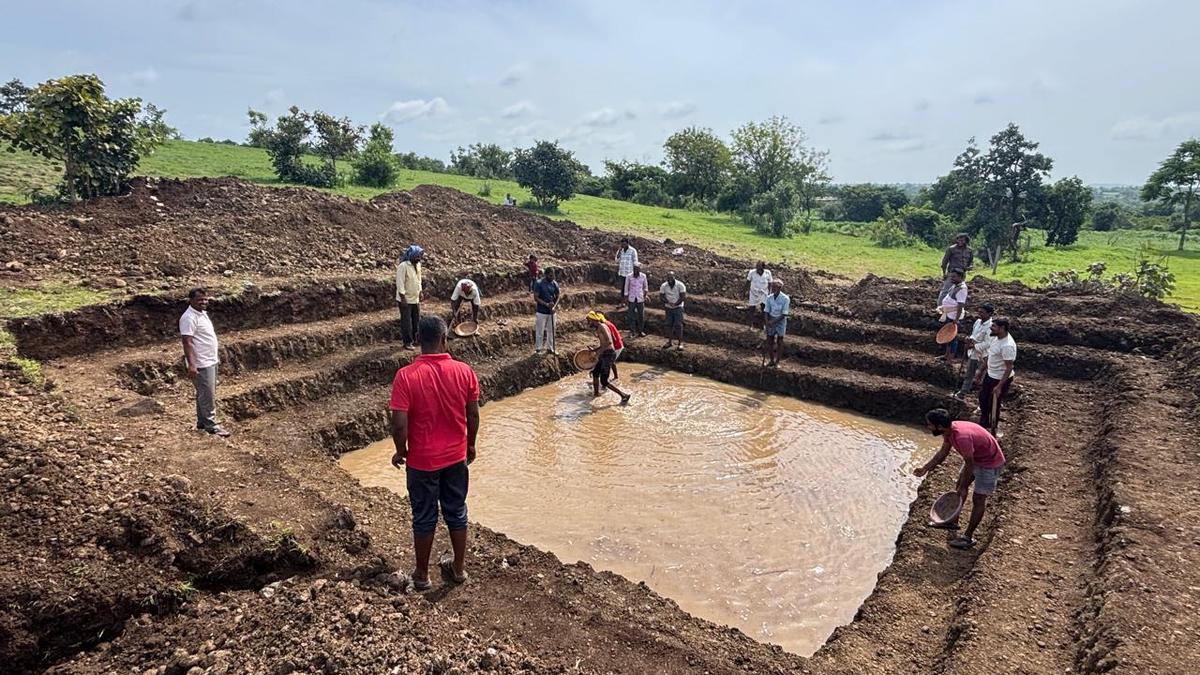
On November 23, 2023, Telangana emerged as the undisputed leader in the implementation of the VB-G RAM G (Village and Block Level - Gram Rozgar Assurance Mission G) scheme, a flagship rural employment program. According to data released by the Ministry of Rural Development, the state accounted for nearly 18% of all works undertaken nationwide, a staggering figure that underscores its operational efficiency and commitment to rural livelihoods. On that single day, Telangana generated 5.53 lakh persondays of employment, a metric that not only highlights the scale of its activities but also its ability to mobilize labor rapidly.
The announcement came as part of a broader national update on the scheme's progress, which aims to provide guaranteed wage employment to rural households. Telangana's performance is particularly notable given its geographical size and population relative to other states. While larger states like Uttar Pradesh and Madhya Pradesh have historically dominated employment generation under such schemes, Telangana's focused approach has propelled it to the third spot nationally in cumulative employment generation, trailing only these two giants.
The news broke via The Hindu, with the headline emphasizing Telangana's top rank in the number of works and its third rank in employment generation. The initial market reaction was muted, as the scheme is government-driven and not directly linked to listed companies. However, analysts tracking rural development and agri-business noted the potential for increased demand for rural infrastructure and services, which could benefit sectors such as construction materials, small-scale equipment, and rural fintech.
This development is part of a longer timeline of Telangana's proactive stance on rural employment. Since its formation in 2014, the state has consistently prioritized rural development, often leveraging technology for monitoring and implementation. The VB-G RAM G scheme, launched in 2021 as a revamped version of the Mahatma Gandhi National Rural Employment Guarantee Act (MGNREGA), focuses on creating durable assets and enhancing livelihood opportunities. Telangana's early adoption and scaling of digital tools for work allocation and fund management have been key to its success.
Deep Technical & Financial Architecture
The VB-G RAM G scheme operates on a robust digital architecture that integrates Aadhaar-based authentication, geo-tagging of assets, and real-time fund transfer mechanisms. Telangana has been at the forefront of adopting these technologies, which has streamlined work allocation, attendance tracking, and wage disbursement. The state's IT department has developed custom dashboards that allow officials to monitor progress at the panchayat level, ensuring transparency and reducing leakages. This tech-savvy approach has enabled Telangana to undertake a high volume of works—nearly 18% of the national total—while maintaining compliance and efficiency.
Financially, the scheme is funded by the central government, with states contributing a portion of the wages. Telangana's ability to generate 5.53 lakh persondays on a single day translates to significant wage disbursements. At an average daily wage of ₹250, this amounts to approximately ₹13.8 crore (about $1.66 million) in wages for that day alone. Over a month, this could scale to over ₹400 crore, injecting substantial liquidity into rural economies. The state's efficient fund management, with minimal pending liabilities, has been praised by central auditors, ensuring that wages reach workers promptly.
The unit economics of the scheme are compelling: for every rupee spent, the scheme creates durable assets such as roads, ponds, and irrigation channels, which have long-term economic benefits. Telangana has focused on water conservation and rural connectivity, aligning with its broader agricultural goals. The state's emphasis on creating assets that support its flagship programs like 'Mission Kakatiya' (restoration of tanks) and 'Mission Bhagiratha' (drinking water) has synergized with VB-G RAM G, amplifying impact.
From a balance sheet perspective, the scheme is a government expenditure, not a corporate one, but it indirectly supports rural demand. Companies in the FMCG, two-wheeler, and agri-input sectors could see a boost as rural incomes rise. Telangana's success also attracts attention from impact investors and development finance institutions looking to replicate scalable models. The state's use of technology has reduced administrative overheads, with estimates suggesting a 15-20% cost saving compared to traditional methods.
However, the financial architecture also faces challenges. Delays in central fund releases can disrupt work schedules, and the state's heavy reliance on central allocations makes it vulnerable to policy changes. Telangana has advocated for a more predictable funding mechanism, and its performance under the scheme strengthens its case for greater fiscal autonomy.
Industry & Global Market Ripple Effects
Telangana's dominance in VB-G RAM G has significant implications for various industries. The construction sector, particularly small and medium enterprises supplying materials like cement, bricks, and pipes, stands to benefit from the sustained demand for rural infrastructure. Local suppliers in Telangana have reported increased orders, and this could spur regional economic growth. Additionally, the scheme's focus on water conservation creates opportunities for companies specializing in irrigation equipment and sustainable technologies.
In the agri-tech space, the scheme's data on land and water resources can be leveraged for precision farming. Startups in Telangana, such as those in the agri-fintech space, are exploring ways to use the scheme's digital infrastructure to offer credit and insurance products to rural workers. The state's robust digital ecosystem, including the Telangana Fiber Grid, provides a foundation for such innovations.
Globally, the VB-G RAM G scheme is being watched as a model for rural employment guarantee programs. International development agencies, including the World Bank and UNDP, have expressed interest in studying Telangana's implementation. The state's use of technology to ensure transparency and efficiency could be replicated in other developing countries, positioning India as a leader in digital governance for social welfare.
For investors, the ripple effects are indirect but noteworthy. Companies with exposure to rural India, such as Mahindra & Mahindra, Hindustan Unilever, and Bajaj Auto, could see improved demand as rural wages rise. However, the scheme's impact is gradual and spread over time, so immediate stock market reactions are likely to be muted. The real story is the long-term structural change in rural purchasing power.
Critical Perspectives, Analyst Debates & Risk Factors
While Telangana's performance is impressive, critics argue that the focus on the number of works and persondays generated may not fully capture the quality of assets created. Some analysts point out that the scheme's emphasis on labor-intensive works can lead to the creation of low-value assets, such as mud roads that wash away in monsoons. The state government counters this by highlighting its asset verification and maintenance protocols, but independent audits are needed to validate claims.
Another debate centers on the scheme's fiscal sustainability. With the central government's fiscal deficit under pressure, there are concerns about whether funding for VB-G RAM G will be sustained. Telangana's heavy reliance on central funds means that any reduction in allocations could severely impact its rural employment drive. The state has been lobbying for a higher share of funds, but this is a political issue that could escalate.
There are also risks related to labor shortages. As rural economies diversify, attracting workers to manual labor under the scheme becomes challenging. Telangana has mitigated this by offering higher wages and flexible work hours, but the long-term trend is towards mechanization. The state's ability to balance employment generation with productivity gains will be tested.
Regulatory friction is another factor. The scheme's guidelines are periodically updated, and states must adapt quickly. Telangana's tech systems are agile, but compliance with new reporting requirements can be burdensome. Additionally, the scheme's integration with other rural development programs requires coordination across multiple departments, which can lead to bureaucratic delays.
Strategic Forecast & Road Ahead
Over the next 12-24 months, Telangana is expected to further consolidate its leadership in VB-G RAM G. The state plans to expand its digital monitoring to include real-time asset tracking using IoT sensors, which would provide granular data on asset utilization. This could attract partnerships with technology providers and further improve efficiency. The state is also piloting a mobile app for workers to check their wage payments and work allocations, enhancing transparency.
Upcoming milestones include the completion of a comprehensive asset audit, scheduled for mid-2024, which will assess the quality and durability of assets created under the scheme. The findings will likely influence future fund allocations and could set a benchmark for other states. Additionally, Telangana is expected to host a national conference on rural employment in early 2024, showcasing its model to other states and international delegates.
What to watch: The state's ability to maintain its 18% share of national works as other states ramp up their efforts. Competition from states like Andhra Pradesh and Karnataka, which are also investing in digital governance, could intensify. Telangana's response to any changes in central funding patterns will be critical. Furthermore, the integration of VB-G RAM G with the state's broader rural development vision, including the 'Rythu Bandhu' investment support scheme for farmers, could create synergies that boost rural incomes beyond wage employment.
Ultimately, Telangana's success under VB-G RAM G is clear evidence of the power of technology-enabled governance. If sustained, it could serve as a blueprint for rural transformation across India and beyond, driving inclusive growth and strengthening the rural economy.

Comments (0)
No comments yet. Be the first to share your thoughts!
Leave a Comment