Ansem Wallet Hack: $2M Memecoins Drained in Bullpen Breach
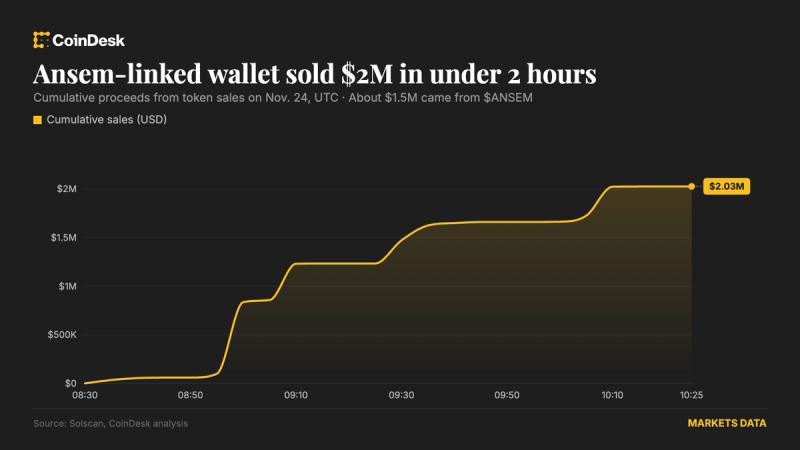
Crypto trader Ansem's wallet was hacked, leading to $2 million in memecoins being sold. He suspects a breach at Bullpen, the trading terminal he co-founded where his private key was imported.
Executive Takeaways
- Ansem, a prominent crypto trader, had his wallet compromised, resulting in the unauthorized sale of approximately $2 million in memecoins.
- He suspects the breach originated from Bullpen, a trading terminal he co-founded, where his private key was imported.
- The incident highlights the risks of centralized trading platforms and private key management in crypto.
- Memecoin volatility and liquidity issues may have exacerbated losses during the hack.
- Industry experts call for enhanced security measures and user education to prevent similar breaches.
The Core Event & Breaking Timeline
On Tuesday, Ansem, a well-known cryptocurrency trader with a substantial following on social media, reported that his wallet had been hacked, leading to the unauthorized sale of approximately $2 million worth of memecoins. The breach was first disclosed by Ansem himself on X (formerly Twitter), where he stated that he suspected the attack vector was Bullpen, a trading terminal he co-founded that allows users to trade memecoins and other digital assets. According to Ansem, his private key had been imported into Bullpen, making the platform a prime suspect in the breach.
The timeline of the attack appears to have unfolded rapidly. Ansem noticed unusual activity in his wallet and quickly alerted his followers, advising them to revoke any permissions associated with Bullpen. Within minutes, blockchain security firms and on-chain sleuths began tracing the movement of the stolen funds. The memecoins were swiftly sold on decentralized exchanges, causing a temporary price impact on the affected tokens. The total value of the stolen assets was estimated at $2 million at the time of the sale, though the exact figure may fluctuate due to market volatility.
Market reaction was immediate but contained. While Ansem's personal loss was significant, the broader crypto market showed little signs of contagion. Bitcoin and Ethereum prices remained relatively stable, and memecoin markets experienced only minor dips. However, the incident reignited concerns about the security of trading terminals and the handling of private keys. Bullpen, which had been gaining traction among memecoin traders, faced immediate scrutiny, with users questioning its security protocols and whether the breach was due to a vulnerability in the platform or a phishing attack on Ansem.
As of Wednesday, Bullpen had not issued a formal statement, but sources close to the company indicated that an internal investigation was underway. Ansem, meanwhile, has been active on social media, providing updates and urging users to be cautious. He has not ruled out the possibility of a targeted attack on his personal devices, but the fact that his private key was stored on Bullpen has focused attention on the platform's security architecture. The incident serves as a stark reminder of the risks inherent in the nascent memecoin ecosystem, where large sums can be moved quickly and anonymity often prevails.
Deep Technical & Financial Architecture
At the heart of the incident is the architecture of Bullpen, a trading terminal designed to streamline the trading of memecoins and other volatile assets. Bullpen, like many similar platforms, allows users to import their private keys or connect hardware wallets to execute trades quickly. This convenience, however, comes with significant security trade-offs. By importing a private key into a web-based terminal, users expose their funds to potential breaches if the platform's security is compromised. In Ansem's case, the private key was stored on Bullpen's servers or client-side environment, making it a juicy target for attackers.
The mechanics of the hack likely involved either a server-side breach, where an attacker gained access to Bullpen's database and extracted private keys, or a client-side attack, such as cross-site scripting (XSS) or a malicious browser extension. Given that Ansem is a co-founder, it is also possible that his account was specifically targeted through social engineering or insider access. Blockchain security experts note that once a private key is compromised, the attacker can sign transactions to transfer assets without further authorization. In this case, the attacker swiftly sold the memecoins on decentralized exchanges like Uniswap or PancakeSwap, converting them to more liquid assets such as ETH or stablecoins.
The financial impact on Ansem is substantial but not catastrophic relative to his reported net worth. Ansem is known to hold a diversified portfolio, and the $2 million loss represents a fraction of his holdings. However, the incident has broader implications for Bullpen's balance sheet and reputation. As a startup, Bullpen relies on user trust, and a security breach of this magnitude could deter new users and lead to a decline in trading volume. The platform may face legal liabilities if it is found negligent in safeguarding user funds. Additionally, the memecoins that were sold may have suffered from slippage and liquidity issues, potentially reducing the actual proceeds for the attacker and causing temporary price distortions.
From a unit economics perspective, Bullpen generates revenue through trading fees, and a loss of user confidence could directly impact its bottom line. The platform had been growing rapidly, capitalizing on the memecoin frenzy, but security incidents are a known risk in the crypto industry. Competitors may seize the opportunity to attract Bullpen users by emphasizing their own security features, such as non-custodial trading or multi-signature wallets. The incident also underscores the importance of insurance and risk management in crypto trading, areas where many platforms are still lacking.
Technically, the stack involved in such attacks often includes front-end vulnerabilities, API security, and key management practices. Bullpen's technology stack is not publicly detailed, but it likely uses JavaScript frameworks for the front end and cloud-based servers for the backend. The private key storage could be encrypted, but if the encryption keys are also stored on the same server, the encryption offers little protection. Best practices dictate that private keys should be stored in hardware security modules (HSMs) or secure enclaves, and never in plain text. It remains to be seen whether Bullpen adhered to these standards.
Industry & Global Market Ripple Effects
The Ansem hack has sent ripples through the memecoin trading community, which has exploded in popularity over the past year. Memecoins, often created as jokes or social experiments, have attracted billions in trading volume, with platforms like Bullpen, Photon, and Trojan competing for market share. The breach may accelerate a shift towards more secure trading solutions, such as decentralized exchanges with built-in wallet security or hardware wallet integrations. Investors, particularly retail traders who flock to memecoins for their high volatility, may become more cautious about where they store their assets.
Competitors to Bullpen are already capitalizing on the incident. Several trading terminals have taken to social media to highlight their security audits and non-custodial architecture. For instance, platforms that never store private keys on their servers are positioning themselves as safer alternatives. This could lead to a redistribution of market share, with Bullpen losing ground unless it can quickly reassure users with a transparent post-mortem and robust security upgrades. The incident also affects the memecoin projects themselves, as the sudden sale of $2 million in tokens can impact prices and liquidity, potentially triggering cascading liquidations in leveraged positions.
Globally, the hack underscores the regulatory gray area in which memecoins and trading terminals operate. In the United States, the SEC has been cracking down on crypto platforms, but memecoins often fall outside traditional securities laws. However, if Bullpen is found to have violated consumer protection laws, it could face regulatory action. In other jurisdictions, such as the EU with its MiCA framework, crypto asset service providers are subject to strict security requirements. The incident may prompt regulators to scrutinize trading terminals more closely, especially those that handle private keys.
The broader crypto market has thus far shrugged off the event, but it adds to a growing list of security breaches that erode trust in the ecosystem. From the Mt. Gox hack to more recent DeFi exploits, security remains a top concern for investors. The Ansem hack is a reminder that even experienced traders are not immune to attacks, and that the convenience of centralized or semi-centralized platforms often comes at a cost. As the memecoin sector matures, expect to see increased demand for insurance products and security audits, as well as a push for industry-wide standards.
Critical Perspectives, Analyst Debates & Risk Factors
Analysts are divided on the root cause of the Ansem hack. Some point to Bullpen's architecture, arguing that any platform that stores private keys, even encrypted, is inherently risky. They advocate for a shift to non-custodial trading, where users sign transactions directly from their wallets. Others suggest that Ansem himself may have been targeted through a phishing attack or malware on his personal device, and that Bullpen's security may not be at fault. Without a detailed forensic report, it is difficult to assign blame definitively.
Contrasting viewpoints exist on the responsibility of trading terminals. Some industry experts argue that platforms like Bullpen have a duty to implement the highest security standards, including multi-factor authentication, withdrawal whitelists, and real-time monitoring for suspicious activity. Others counter that users must take personal responsibility for their private keys, especially in a decentralized ecosystem. This debate mirrors the broader tension between security and usability in crypto, where convenience often trumps caution.
Risk factors abound. For Bullpen, the reputational damage could be severe, leading to a loss of users and revenue. There is also the possibility of legal action from affected users, although Ansem has not indicated any intention to sue. For the memecoin market, the incident highlights the vulnerability of low-liquidity tokens to manipulation and sudden sell-offs. Attackers can exploit these markets to launder funds or cause chaos. Furthermore, the hack may attract the attention of regulators, who could impose stricter rules on trading terminals, potentially stifling innovation.
From a regulatory perspective, the incident raises questions about the classification of trading terminals as money service businesses (MSBs) or virtual asset service providers (VASPs). If Bullpen is deemed to be holding user funds, it may be subject to Know Your Customer (KYC) and Anti-Money Laundering (AML) requirements. Currently, many trading terminals operate in a regulatory gray zone, but incidents like this could force authorities to act. The outcome will depend on the specifics of the case and the jurisdiction in which Bullpen operates.
Strategic Forecast & Road Ahead
In the next 12 to 24 months, the fallout from the Ansem hack will likely accelerate the adoption of more secure trading practices. Bullpen is expected to undergo a comprehensive security audit and may implement changes such as mandatory hardware wallet integration or a shift to a non-custodial model. The company will need to communicate transparently with its users to rebuild trust. If it handles the crisis well, it could emerge stronger, but if it mishandles the situation, it may become a cautionary tale.
For Ansem, the incident may lead him to diversify his storage methods, possibly using multi-signature wallets or cold storage for his remaining assets. He may also become a more vocal advocate for security best practices, using his platform to educate his followers. His reputation as a trader is unlikely to be permanently damaged, as he has been transparent about the breach and has taken swift action to warn others.
The memecoin market will continue to evolve, with security becoming a key differentiator among trading terminals. We can expect to see a wave of innovation in wallet security, including biometric authentication, social recovery, and decentralized identity solutions. Platforms that prioritize security without sacrificing usability will likely gain market share. Additionally, insurance products for crypto assets may become more prevalent, providing a safety net for traders.
What to watch: Bullpen's official response and any security upgrades; regulatory developments around trading terminals; Ansem's next moves and whether he pursues legal action; and the broader impact on memecoin trading volumes. As the crypto industry matures, incidents like this serve as painful but necessary lessons, driving improvements that will ultimately benefit the ecosystem. The coming months will reveal whether Bullpen can recover and whether the memecoin frenzy can continue unabated in the face of mounting security concerns.



Comments (0)
No comments yet. Be the first to share your thoughts!
Leave a Comment