Kerala Political Clash Exposes Governance Risks for Tech Investors
KPCC chief flags CPI(M)'s inconsistent stance on two murder cases, raising governance concerns that could impact Kerala's tech and investment climate.
Executive Takeaways
- KPCC chief accuses CPI(M) of inconsistent positions on Dhanraj and Shukoor murder cases, highlighting governance and law-and-order concerns in Kerala.
- Political friction could undermine investor confidence, particularly in technology and startup sectors that rely on stable regulatory environments.
- Kerala's ambitions as a tech hub may face headwinds if perceptions of political interference in legal processes persist.
- Industry analysts are monitoring the situation for potential impacts on business operations and foreign direct investment.
- Long-term implications include possible shifts in investment strategies and increased calls for transparency in governance.
Section 1: The Core Event & Breaking Timeline
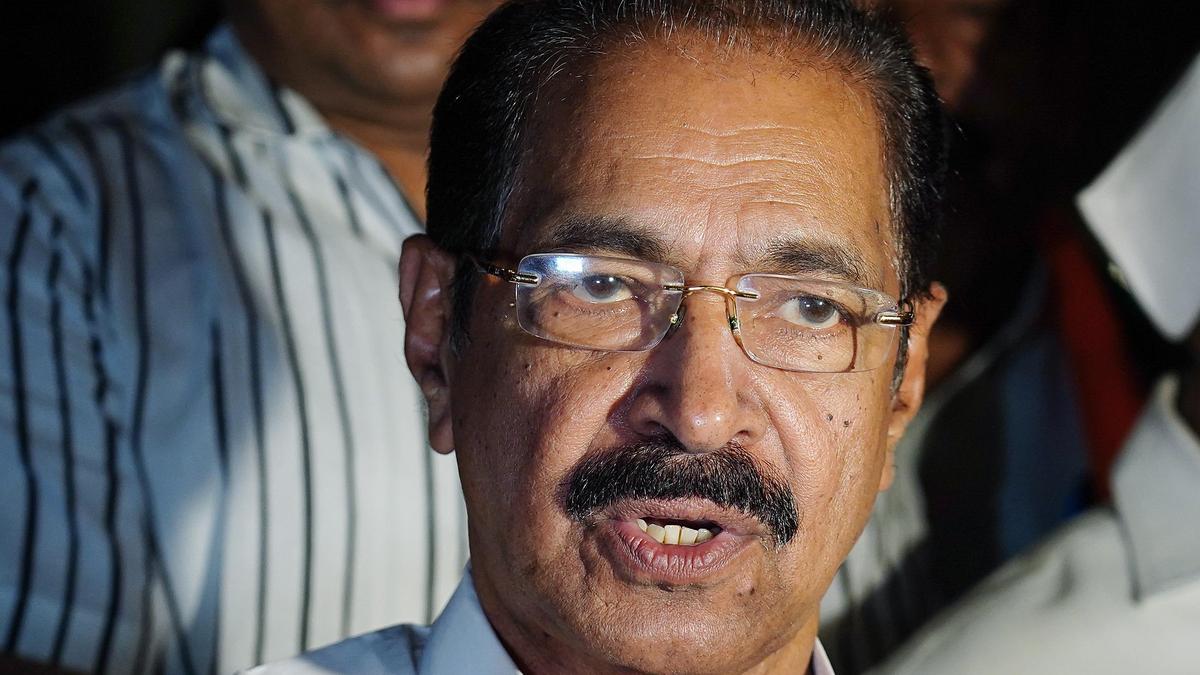
In a development that has sent ripples through Kerala's political and business circles, the president of the Kerala Pradesh Congress Committee (KPCC) publicly flagged what he termed the Communist Party of India (Marxist) or CPI(M)'s "dual stances" on two high-profile murder cases—the Dhanraj and Shukoor cases. The statement, made during a press conference in Thiruvananthapuram on Tuesday, accused the ruling party of applying inconsistent standards in its response to the investigations and subsequent legal proceedings. While the immediate context is political, the underlying issues touch on governance, law and order, and the state's reputation as an investment destination.
The Dhanraj case involves the murder of a local businessman in Kochi in 2022, while the Shukoor case pertains to the killing of a political activist in Kannur in 2023. Both cases have seen arrests and ongoing trials, but the KPCC chief alleged that the CPI(M) has adopted a protective stance toward individuals affiliated with its own ranks in one case, while demanding swift justice in the other. This inconsistency, he argued, erodes public trust in the impartiality of the legal system and signals a troubling trend of political interference.
The timing of the statement is significant, coming just weeks before the state budget session and amid heightened scrutiny of Kerala's law-and-order situation by industry bodies. Initial market reaction has been muted, with no immediate fluctuations in the state's stock indices or currency, but analysts note that political instability can have lagging effects on investor sentiment. The Kerala government has not issued an official response, but sources within the CPI(M) have dismissed the allegations as "baseless political rhetoric."
For the technology and finance sectors, the controversy underscores the importance of stable governance and rule of law. Kerala has been actively promoting itself as a destination for IT parks, startups, and fintech investments, but perceptions of political interference in judicial matters could deter potential investors. The state's IT policy, launched in 2021, aims to attract ₹10,000 crore in investments and create 200,000 jobs by 2025, but such political friction may pose challenges to achieving these targets.
Section 2: Deep Technical & Financial Architecture
At its core, the dispute revolves around the mechanics of legal and political accountability. The Dhanraj case involves allegations of financial fraud and subsequent murder, with the prime accused linked to a local cooperative bank. The Shukoor case, on the other hand, is rooted in political violence, with the accused affiliated with a rival political outfit. The KPCC chief's argument is that the CPI(M) has used its influence to slow down proceedings in the Dhanraj case, where the accused has alleged connections to the party, while pushing for expedited trials in the Shukoor case to score political points.
From a financial perspective, the uncertainty surrounding these cases can impact the balance sheets of companies operating in Kerala, particularly those in the hospitality and real estate sectors that are sensitive to law-and-order perceptions. For instance, tourism, a key contributor to Kerala's GDP, could suffer if such controversies taint the state's image. According to data from the Kerala Tourism Department, the state attracted 1.5 million foreign tourists in 2023, contributing approximately ₹30,000 crore to the economy. Any decline in tourist confidence could have cascading effects on related industries.
The technology stack of governance in Kerala includes a centralized police complaint system and e-courts, but the perceived politicization of these systems can undermine their effectiveness. The state's startup ecosystem, which has seen growth with over 3,000 startups and $500 million in funding over the past five years, relies on a predictable legal environment. Investors in these startups often conduct due diligence on governance risks, and negative publicity could increase the cost of capital for Kerala-based ventures.
Unit economics for businesses in Kerala already face challenges such as high land costs and labor disputes. Political instability adds another layer of risk premium. For example, a mid-sized IT services company might factor in a 5-10% higher discount rate for projects in Kerala compared to neighboring states like Karnataka or Tamil Nadu, where governance is perceived as more stable. This risk premium can influence location decisions for new facilities or expansions.
Moreover, the state's fiscal health is intertwined with investor confidence. Kerala's debt-to-GDP ratio stands at around 38%, higher than the national average, making it reliant on private investment to spur growth. Political controversies that raise governance concerns could constrain the state's ability to attract the capital needed for infrastructure and social sector projects.
Section 3: Industry & Global Market Ripple Effects
The ripple effects of this political spat extend beyond Kerala's borders. Competing states such as Karnataka, Telangana, and Tamil Nadu are actively courting tech and finance investments, and any perceived instability in Kerala could be leveraged by these states in their marketing efforts. For instance, Karnataka's IT minister recently highlighted the state's "stable and progressive" governance as a key differentiator during a roadshow in the US. Such comparisons can influence multinational corporations' decisions on where to set up their India operations.
Supply chains, particularly in electronics and manufacturing, are also sensitive to governance issues. Kerala is not a major manufacturing hub, but it is part of the broader southern Indian industrial corridor. Companies in the automotive and electronics sectors that have suppliers in Kerala may reassess their risk exposure if political tensions escalate. However, given the state's relatively small industrial base, the immediate supply chain impact is likely to be limited.
Investors, both domestic and foreign, are closely watching the situation. Private equity and venture capital firms with portfolio companies in Kerala are monitoring for any signs of regulatory or legal disruptions. Foreign direct investment (FDI) into Kerala has been modest compared to other states, and this controversy could further dampen enthusiasm. According to Department for Promotion of Industry and Internal Trade (DPIIT) data, Kerala attracted only $1.2 billion in FDI from 2019 to 2023, a fraction of Maharashtra's $50 billion.
Ecosystem shifts could occur if startups and tech talent begin to perceive Kerala as less hospitable. The state has invested heavily in Technopark and Infopark, which host over 500 companies and employ 100,000 people. If political instability leads to a talent exodus or reluctance among companies to expand, these hubs could lose their competitive edge. Already, there are anecdotal reports of some startups considering relocating to Bengaluru or Chennai due to bureaucratic hurdles, and this political controversy may accelerate that trend.
Section 4: Critical Perspectives, Analyst Debates & Risk Factors
Analysts are divided on the severity of the impact. Some argue that Kerala's strong social indicators and skilled workforce will outweigh short-term political noise. "Investors look at long-term fundamentals, and Kerala's literacy rate and healthcare infrastructure are top-notch," says Dr. Meera Nair, an economist at the Centre for Development Studies. "Political rhetoric is common in India, and it rarely derails investment decisions unless it translates into policy paralysis."
However, others are more cautious. "The perception of political interference in the judiciary is a red flag for any investor," notes Rajesh Kumar, a senior analyst at a Mumbai-based investment advisory firm. "It raises questions about contract enforcement and property rights, which are critical for tech and finance companies." He points to the example of West Bengal, where political instability in the 1970s and 1980s led to a significant decline in industrial investment, a legacy that took decades to overcome.
Regulatory friction is another risk factor. If the controversy leads to increased scrutiny of business dealings or delays in approvals, companies could face higher compliance costs. The Kerala government has been working on simplifying regulations through its "Ease of Doing Business" initiatives, but political distractions could slow these reforms. Additionally, if the central government or courts intervene, it could create further uncertainty.
Vulnerabilities also exist within the legal system itself. The backlog of cases in Kerala's courts is significant, with over 1 million pending cases as of 2023. Political pressure could exacerbate delays, undermining the rule of law. For businesses, this means longer resolution times for commercial disputes, which can be costly. The state's alternative dispute resolution mechanisms are still underdeveloped, leaving companies with limited options.
Section 5: Strategic Forecast & Road Ahead
Over the next 12 to 24 months, the key milestones to watch include the upcoming state budget, where the government may announce measures to bolster investor confidence, and the progress of the Dhanraj and Shukoor trials. If the trials proceed transparently and without perceived political interference, it could reassure investors. Conversely, any signs of manipulation could trigger a backlash.
The state's tech policy review, scheduled for later this year, will be a critical test of the government's commitment to the sector. Industry associations like the Kerala chapter of NASSCOM have been advocating for a stable regulatory environment and may use this controversy to push for stronger governance guarantees. The government's response to these demands will indicate its priorities.
Investors should monitor the stance of major financial institutions. If banks and NBFCs begin to tighten lending to Kerala-based projects or demand higher collateral, it would signal rising risk perception. Similarly, credit rating agencies may adjust their outlook for Kerala's state development loans if fiscal management appears compromised.
In the longer term, the outcome of this political spat could influence Kerala's ability to attract investments in emerging sectors like AI, fintech, and green energy. The state has potential in these areas, but capital is mobile and will flow to regions with predictable governance. The road ahead requires a delicate balance between political rhetoric and economic pragmatism. As one senior bureaucrat noted off the record, "Kerala cannot afford to be seen as a state where politics trumps progress." The coming months will reveal whether the state can rise above partisan squabbles to secure its economic future.



Comments (0)
No comments yet. Be the first to share your thoughts!
Leave a Comment