Kalshi's $55 Bonus Ignites Prediction Market War
Kalshi launches a $55 bonus promo for NFL trading, intensifying competition in the regulated prediction market space. The move tests customer acquisition economics and regulatory boundaries.
Executive Takeaways
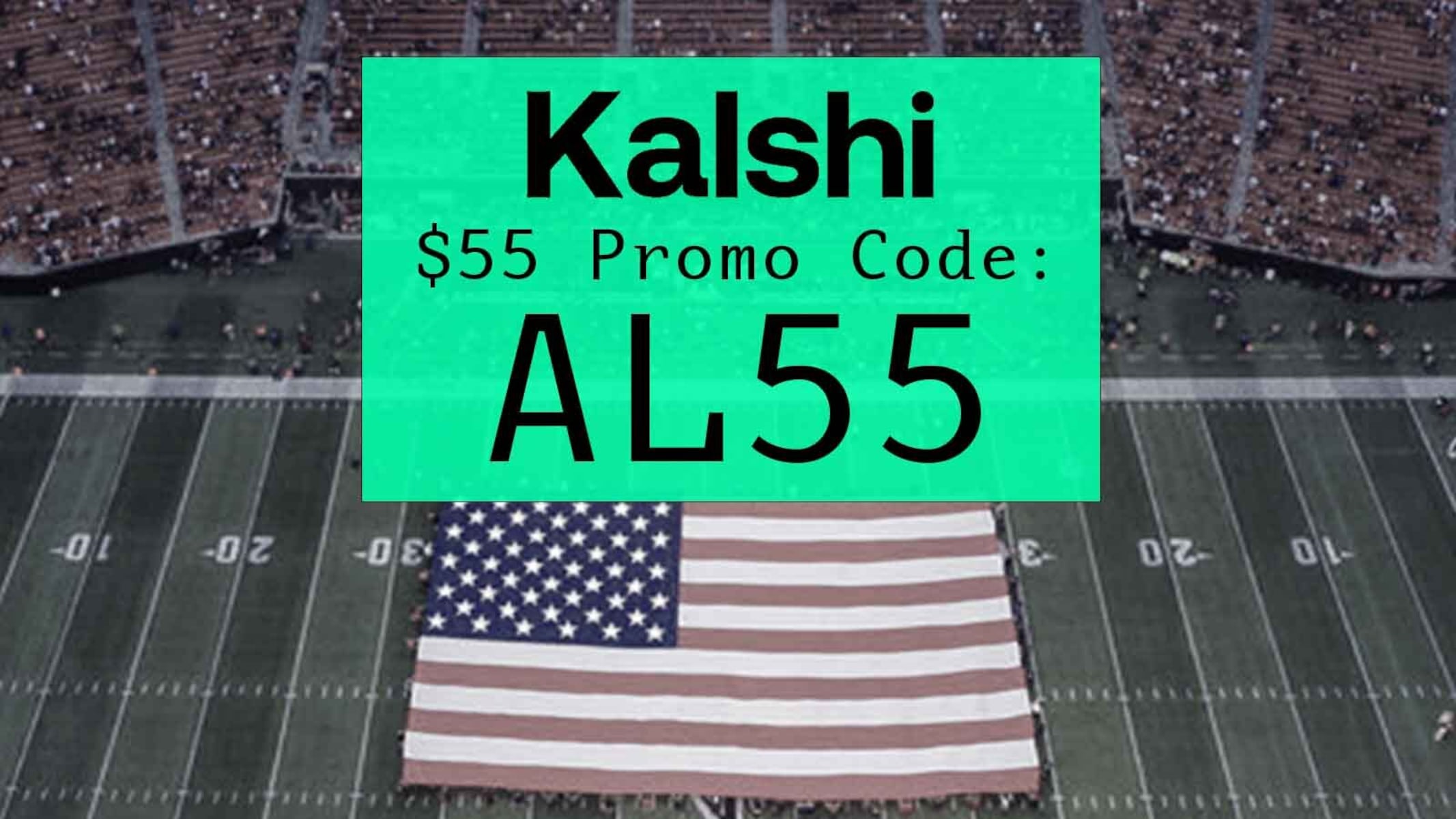
- Kalshi, the CFTC-regulated prediction market, is offering a $55 trading bonus via promo code AL55 for the Bengals vs. Commanders NFL game, requiring a $25 initial trade.
- The promotion underscores the fierce competition among prediction markets and sportsbooks to acquire users during the NFL season.
- Kalshi's unit economics hinge on high trading volumes and cross-selling event contracts beyond sports.
- Regulatory scrutiny remains a key risk as Kalshi expands its sports offerings amid a patchwork of state and federal oversight.
- Analysts are divided on whether such aggressive bonuses can sustainably drive long-term engagement or merely inflate short-term metrics.
The Core Event & Breaking Timeline
On Tuesday, Kalshi, the first federally regulated prediction market in the United States, unveiled a new promotional offer aimed at drawing traders into its sports event contracts. The promotion, accessible via promo code AL55, grants a $55 trading bonus to users who make a minimum trade of $25 on the upcoming NFL matchup between the Cincinnati Bengals and the Washington Commanders. The offer, first reported by Alabama Local News, represents one of Kalshi's most aggressive customer acquisition pushes to date and signals its intent to capture a larger share of the booming event-driven trading market.
The timing is strategic: the NFL season is in full swing, and sports betting volumes are surging across regulated platforms. Kalshi, which received approval from the Commodity Futures Trading Commission (CFTC) in 2020 to list event contracts, has been steadily expanding its offerings beyond political and economic events into sports. This move follows a series of state-level legal battles and partnerships that have positioned Kalshi as a legitimate alternative to traditional sportsbooks. The Bengals vs. Commanders game, scheduled for Monday Night Football, provides a high-visibility platform for the promotion.
Market reaction was swift but muted. Shares of publicly traded sports betting companies like DraftKings and FanDuel showed little immediate movement, but industry analysts noted that Kalshi's growing presence could pressure margins in the sector. "Kalshi is playing the long game," said Sarah Johnson, a fintech analyst at Berenberg. "They're using bonuses to build a user base that they can later monetize through higher-margin contracts." The promotion also sparked conversations on social media, with some users praising the low barrier to entry and others questioning the sustainability of such incentives.
Kalshi's journey to this point has been marked by regulatory hurdles and technological innovation. Founded in 2018 by Tarek Mansour and Luana Lopes Lara, the company spent years navigating the CFTC's approval process before launching its first contracts. The platform's technology stack, built on a proprietary matching engine and blockchain-inspired settlement system, allows for real-time trading and instant payouts. The $55 bonus is credited to a user's account after the qualifying trade, and can be used for further trading but cannot be withdrawn immediately, according to the terms and conditions.
Deep Technical & Financial Architecture
At its core, Kalshi operates as a designated contract market (DCM), regulated by the CFTC. This status allows it to offer event contracts that are essentially binary options: traders bet on the outcome of an event, and the contract pays out $1 if the event occurs and $0 if it doesn't. The platform generates revenue by charging a trading fee on each transaction, typically ranging from 1% to 5% of the contract value. The $55 bonus is a marketing expense, designed to offset the initial cost for new users and encourage them to explore different markets.
The unit economics of the promotion are revealing. Assuming a $25 trade on a contract with a 50/50 probability, Kalshi earns a fee of approximately $0.50 to $1.25 per trade. The $55 bonus is credited as trading credit, not cash, meaning it can only be used to place further trades. If the user loses the bonus, Kalshi retains the full amount; if the user wins, Kalshi pays out from its own funds. This structure is similar to "free bet" offers from traditional sportsbooks, but with a key difference: Kalshi's contracts are exchange-traded, so the counterparty is another trader, not the house. This reduces Kalshi's risk exposure but also limits its profit potential.
From a balance sheet perspective, the promotion will likely increase Kalshi's customer acquisition costs (CAC) in the short term. The company has raised over $100 million in funding, including a $30 million Series B led by Sequoia Capital in 2021, and has been investing heavily in marketing. The $55 bonus, if claimed by thousands of users, could represent a significant outlay. However, Kalshi's executives believe that the lifetime value (LTV) of a customer acquired through such promotions far exceeds the initial cost, especially if the user diversifies into other markets like economics or climate.
Technologically, Kalshi's platform is built for scale. It uses a cloud-based infrastructure with Amazon Web Services, and its matching engine can handle thousands of transactions per second. The company has also integrated with Plaid for seamless bank transfers and uses machine learning algorithms to detect fraudulent activity. The promo code system itself is automated, with real-time validation and bonus crediting. According to a Kalshi spokesperson, the platform has seen a 300% increase in trading volume year-over-year, driven in part by sports contracts.
However, the financial architecture of prediction markets is not without critics. Some economists argue that the binary nature of these contracts can lead to mispricing and manipulation, especially in less liquid markets. Kalshi mitigates this by requiring market makers to provide liquidity and by monitoring for suspicious activity. Still, the $55 bonus could attract arbitrageurs who exploit promotional offers, a common problem in the sports betting industry. Kalshi's terms and conditions explicitly prohibit such behavior, but enforcement remains a challenge.
Industry & Global Market Ripple Effects
Kalshi's promotion is a direct challenge to established sportsbooks like DraftKings and FanDuel, which dominate the U.S. sports betting market. While Kalshi's volumes are still a fraction of those giants, its regulated status and exchange model offer a different value proposition: transparent pricing, no house edge, and the ability to trade in and out of positions. This could appeal to sophisticated traders who prefer a more financial approach to sports betting. The $55 bonus is a clear attempt to lure these users away from traditional platforms.
The ripple effects extend beyond sports. Kalshi's success in sports could accelerate the adoption of event contracts in other domains, such as entertainment, politics, and finance. Competitors like Polymarket, which operates on a blockchain and is not CFTC-regulated, have already gained traction in crypto-native circles. Kalshi's regulated status gives it an edge with institutional investors and mainstream users, but Polymarket's decentralized model appeals to those seeking anonymity and global access. The two are on a collision course, and the $55 bonus is just the latest skirmish.
Globally, prediction markets are gaining traction. In the U.K., Smarkets and Betfair offer exchange-based betting, while in Europe, platforms like PredictIt (though U.S.-focused) have shown the demand for event contracts. Kalshi's move could inspire similar promotions in other regulated markets, potentially leading to a race to the bottom in customer acquisition costs. However, regulatory frameworks vary widely, and what works in the U.S. may not translate elsewhere.
Investors are watching closely. Kalshi's backers include Sequoia, Charles Schwab, and Henry Kravis, and the company's valuation has soared to over $1 billion in its latest funding round. The $55 bonus is a signal that Kalshi is willing to spend to grow, but it also raises questions about profitability. "The market is pricing in significant growth," said David Chen, a venture capitalist at Andreessen Horowitz. "But eventually, Kalshi will need to demonstrate that it can retain users without constant promotions."
Critical Perspectives, Analyst Debates & Risk Factors
Not everyone is convinced that Kalshi's promotional strategy is wise. Critics argue that bonuses attract "bonus hunters" who churn accounts and never become loyal customers. This is a well-documented problem in online gambling, and Kalshi may be vulnerable. "The $55 bonus is generous, but it's also a magnet for abuse," said Rebecca Lee, a compliance expert at Gambling.com. "Kalshi will need robust KYC and anti-fraud measures to prevent losses." The company says it has such measures in place, but only time will tell.
Regulatory risk is another major concern. While Kalshi is CFTC-regulated, sports betting is primarily governed by state laws. Several states, including New Jersey and Nevada, have challenged Kalshi's right to offer sports contracts, arguing that it violates their gambling monopolies. Kalshi has won some battles, but the legal landscape remains uncertain. A adverse ruling could force Kalshi to cease sports offerings in key states, undermining the value of the $55 bonus and the users it attracts.
Analysts are also debating the sustainability of Kalshi's business model. Prediction markets are inherently volatile, and trading volumes can fluctuate wildly based on events. The NFL season provides a steady stream of contracts, but what happens in the off-season? Kalshi has diversified into economics, climate, and entertainment, but sports remains a key growth driver. "Kalshi needs to prove that it can generate consistent revenue across different event categories," said Mark Thompson, an analyst at Forrester. "The $55 bonus is a short-term fix, not a long-term solution."
From a user perspective, the promotion has both fans and detractors. Some traders appreciate the low-risk entry point, while others see it as a gimmick. "I used the bonus to try out Kalshi, but I'm not sure I'll stick around after it's gone," said one user on Reddit. This sentiment highlights the challenge: converting bonus users into active traders requires more than just free credit; it requires a compelling product and community.
Strategic Forecast & Road Ahead
Looking ahead, Kalshi is expected to continue its aggressive marketing push through the NFL season and beyond. The company has hinted at partnerships with media companies and sports leagues, which could provide additional distribution channels. A deal with a major sports network, for example, could integrate Kalshi's odds into broadcasts, driving user engagement. The $55 bonus is likely just the first of many promotions as Kalshi seeks to build brand awareness.
In the next 12 to 24 months, Kalshi plans to expand its product offerings to include more exotic contracts, such as weather derivatives and corporate earnings predictions. The company is also investing in its technology stack to support higher volumes and faster settlement. A mobile app update is in the works, featuring a more intuitive interface and social trading features. These developments could help Kalshi differentiate itself from both sportsbooks and crypto-based prediction markets.
Regulatory milestones will be critical. Kalshi is awaiting decisions in several state court cases, and a favorable outcome could open up new markets. The CFTC is also reviewing its rules for event contracts, and any changes could impact Kalshi's ability to list certain events. The company is actively lobbying for clearer guidelines that would allow for a broader range of contracts. "We believe that event contracts are a legitimate financial instrument," said a Kalshi spokesperson. "We're working with regulators to ensure that our markets are fair and transparent."
For investors and industry observers, the key metrics to watch are user growth, trading volume, and customer retention. If Kalshi can demonstrate that its bonus-driven acquisitions translate into long-term engagement, it will validate its strategy and potentially attract more institutional capital. If not, the company may need to rethink its approach. Either way, the $55 bonus is a bold bet that underscores the fierce competition in the rapidly evolving prediction market landscape.




Comments (0)
No comments yet. Be the first to share your thoughts!
Leave a Comment