Bangladesh MICE Body Charts Global Ambitions at First 2026–28 Committee Meeting
The MICE Association of Bangladesh held its first executive committee meeting for the 2026–28 term, focusing on expanding international engagement and strengthening Bangladesh's position in the global MICE market.
Executive Takeaways
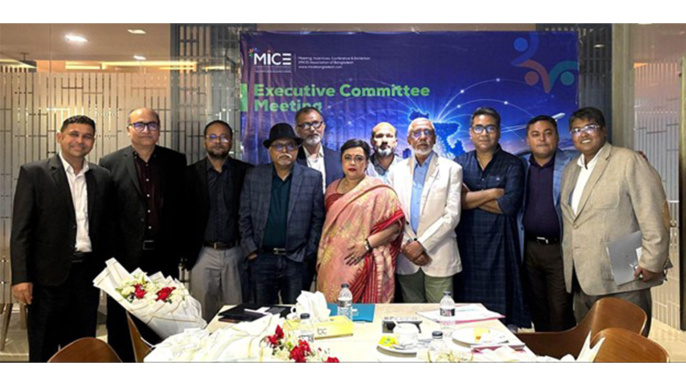
- The MICE Association of Bangladesh (MAB) held its first executive committee meeting for the 2026–28 term on 23 November at Banani Club, Dhaka, chaired by President Meherun N Islam.
- The meeting focused on advancing Bangladesh's meetings, incentives, conferences, and exhibitions (MICE) industry, with an emphasis on expanding international engagement and strengthening the country's global market position.
- Bangladesh's MICE sector is at an inflection point, with infrastructure projects like the Padma Bridge and the upcoming Bangabandhu Sheikh Mujib Industrial City poised to boost connectivity and capacity.
- Industry experts estimate that Bangladesh could capture a larger share of the global MICE market, projected to reach $1.5 trillion by 2028, if it addresses infrastructure, regulatory, and marketing challenges.
- Key risks include political instability, inadequate venue capacity, and fierce regional competition from India, Thailand, and Malaysia.
The Core Event & Breaking Timeline
On 23 November 2025, the MICE Association of Bangladesh (MAB) convened its first executive committee meeting for the 2026–28 term at Banani Club in Dhaka. The meeting was chaired by Meherun N Islam, president and founding chairman of the association, who is also the president and group managing director of CEMS-Global, a prominent event management company. According to a press release, the gathering focused on advancing Bangladesh's meetings, incentives, conferences, and exhibitions (MICE) industry, with a particular emphasis on expanding international engagement and strengthening the country's position in the global marketplace.
The meeting marks a critical milestone for MAB, which was established to advocate for and develop Bangladesh's MICE sector. The new executive committee, elected for the 2026–28 term, comprises industry leaders from hospitality, aviation, event management, and tourism. Their first order of business was to outline a strategic roadmap for the coming years, including plans to attract international conferences, promote Bangladesh as a destination for corporate incentives, and enhance the country's exhibitions infrastructure.
While no specific financial figures or detailed policy announcements were disclosed, the meeting signals a renewed push to professionalize the sector. The association aims to collaborate with government bodies, such as the Bangladesh Tourism Board and the Ministry of Civil Aviation and Tourism, to streamline regulations and improve ease of doing business for MICE operators. The press release noted that the committee discussed forming sub-committees on marketing, infrastructure, and international relations to execute its agenda.
Market reaction to the meeting has been muted, as the event was primarily internal. However, industry stakeholders view it as a positive step toward unifying the fragmented MICE industry. "The formation of a dedicated executive committee with a clear mandate is essential for coordinated growth," said a Dhaka-based event organizer who requested anonymity. "We hope this leads to concrete actions, such as tax incentives and infrastructure upgrades." The association's previous term saw the launch of the Bangladesh MICE Roadmap 2025, which set targets to triple MICE arrivals by 2030.
Deep Technical & Financial Architecture
The MICE industry operates on a complex value chain that spans venue management, event planning, hospitality, transportation, and technology services. In Bangladesh, the sector is estimated to be worth around $500 million annually, according to industry reports, but it remains largely untapped relative to its potential. The global MICE market was valued at approximately $1.2 trillion in 2024 and is projected to grow at a compound annual growth rate (CAGR) of 8–10% through 2030, according to Allied Market Research. Bangladesh currently captures less than 0.1% of this market, indicating significant headroom for expansion.
From a financial perspective, MICE events generate high-margin revenue for host economies. Business travelers typically spend 2–3 times more than leisure tourists, with expenditures on accommodation, dining, and ancillary services. For Bangladesh, increasing MICE arrivals could boost foreign exchange earnings and create jobs in the hospitality sector. The association's strategy likely involves targeting regional corporate events, given Bangladesh's competitive pricing compared to Singapore or Dubai. However, the country's MICE infrastructure is still developing: Dhaka has a few international-standard venues, such as the Bangabandhu International Conference Center (BICC) and the Radisson Blu Water Garden, but capacity is limited for large-scale events.
Technology is a critical enabler for modern MICE operations. The association's roadmap may include promoting digital platforms for event registration, hybrid event capabilities, and data analytics to measure economic impact. Bangladesh's growing IT sector, with a pool of skilled software developers, could support the development of indigenous MICE tech solutions. However, challenges remain in terms of reliable internet connectivity and digital payment infrastructure, which are essential for seamless event experiences.
Unit economics for MICE events vary widely. A mid-sized conference of 500 attendees might generate $200,000–$500,000 in direct spending, while large exhibitions can bring in millions. The association's focus on international engagement suggests a push to attract higher-value events, which require robust infrastructure and marketing. To compete, Bangladesh needs to offer competitive pricing, streamlined visa processes, and improved air connectivity. The recent expansion of Hazrat Shahjalal International Airport's Terminal 3 is a positive development, increasing capacity to handle more international arrivals.
Funding for MAB likely comes from membership fees and corporate sponsorships. The association's ability to influence policy and drive investment will depend on its advocacy efforts and public-private partnerships. The government has shown interest in developing the MICE sector, with the Bangladesh Economic Zones Authority (BEZA) planning a dedicated MICE zone in Cox's Bazar, a prime tourist destination. Such initiatives could attract foreign investment and expertise.
Industry & Global Market Ripple Effects
Bangladesh's MICE ambitions will have ripple effects across the regional and global MICE landscape. Neighboring countries like India, Thailand, and Malaysia have well-established MICE industries and actively compete for international events. India's MICE market is valued at over $10 billion, with cities like Mumbai, Delhi, and Hyderabad hosting major conferences. Thailand's MICE sector contributes significantly to its GDP, with Bangkok consistently ranked among top MICE destinations. Bangladesh's entry into the fray could intensify competition, but it also opens opportunities for collaboration, such as joint marketing campaigns or cross-border events.
For global MICE buyers, Bangladesh offers a new, cost-effective destination with unique cultural experiences. The association's efforts to expand international engagement may involve partnerships with global MICE organizations like ICCA (International Congress and Convention Association) and UFI (The Global Association of the Exhibition Industry). By aligning with these bodies, Bangladesh can gain credibility and access to a network of event planners. Already, CEMS-Global, led by Meherun N Islam, has organized international trade shows in Bangladesh, demonstrating local capability.
Supply chains in the hospitality and events sectors stand to benefit. Hotels, airlines, and transport providers will see increased demand from MICE travelers. The association's plans may spur investment in new hotels, convention centers, and supporting infrastructure. For example, the Radisson Blu Dhaka Water Garden recently expanded its conference facilities, and other hotel chains like Marriott and Hyatt are reportedly exploring opportunities. This could lead to job creation and skill development in hospitality management.
Investors are watching closely. The MICE sector's growth potential could attract private equity and venture capital into event tech, venue development, and hospitality. However, political stability and regulatory predictability are key concerns. Bangladesh's recent economic challenges, including foreign exchange reserves and inflation, may dampen investor enthusiasm in the short term. Nevertheless, the long-term trajectory is positive, with a growing middle class and increasing business activity.
Critical Perspectives, Analyst Debates & Risk Factors
While the MAB's initiative is commendable, skeptics argue that Bangladesh faces significant hurdles before it can become a competitive MICE destination. "The lack of a world-class convention center with a capacity of over 5,000 delegates is a major drawback," said Dr. Md. Mahbubur Rahman, an economist at the University of Dhaka. "Dhaka's traffic congestion and limited international flights also deter event planners." The association's roadmap must address these infrastructural gaps, which require substantial public investment.
Another risk is political instability. Bangladesh has experienced periods of unrest, including recent protests and strikes, which can disrupt events and deter international attendees. The association's ability to lobby for a stable and secure environment is crucial. Additionally, bureaucratic hurdles, such as complex visa procedures and slow customs clearance for exhibition goods, need to be streamlined. The government's commitment to ease of doing business will be tested.
Analysts also debate the association's strategy. Some argue that focusing on regional corporate events is more realistic than chasing large international conferences. "Bangladesh should first target the South Asian market, leveraging its low costs and cultural proximity," said a Singapore-based MICE consultant. "Building credibility through smaller events can pave the way for larger ones." Others emphasize the need for aggressive marketing campaigns to change perceptions about Bangladesh as a destination.
Regulatory friction is another concern. The MICE industry spans multiple ministries, including civil aviation, tourism, home affairs, and commerce. Coordinated policy-making is essential but often lacking. The association's role as a unifying body is critical, but its influence depends on government receptiveness. Moreover, tax policies, such as the current 15% VAT on conference services, may need revision to attract price-sensitive event planners.
Strategic Forecast & Road Ahead
Over the next 12–24 months, the MAB is expected to roll out a series of initiatives to boost Bangladesh's MICE profile. Key milestones include the launch of a dedicated MICE website and marketing campaign, participation in international trade shows like IMEX Frankfurt and ITB Berlin, and the formation of partnerships with global MICE associations. The association may also organize familiarization trips for international event planners to showcase Bangladesh's offerings.
Infrastructure developments will be pivotal. The completion of the Cox's Bazar MICE zone, expected by 2027, could provide a world-class venue with beachside appeal. The expansion of Dhaka's BICC and the construction of new hotels will add capacity. The government's plan to develop a deep-sea port and improve road connectivity will enhance accessibility. The association should advocate for these projects and ensure they align with MICE needs.
What to watch: The association's ability to secure government support for policy reforms, such as tax incentives and visa facilitation. Also, the success of pilot events, such as the proposed Bangladesh International Travel & Tourism Expo, will serve as a litmus test. The association's membership growth and financial sustainability will indicate its effectiveness. Finally, global economic conditions and geopolitical factors, such as oil prices and travel advisories, will influence the sector's trajectory.
looking ahead, the MAB's first executive committee meeting for the 2026–28 term marks a renewed commitment to developing Bangladesh's MICE industry. While challenges remain, the potential for growth is substantial. With strategic focus and collaboration, Bangladesh can emerge as a competitive MICE destination, driving economic diversification and job creation. The coming years will reveal whether the association can translate its vision into tangible results.


Comments (0)
No comments yet. Be the first to share your thoughts!
Leave a Comment