Farmers' Dec 2 Protest Puts India's Crop Pricing Tech in Focus
Farmers' organisations have called a December 2 protest demanding better crop prices, spotlighting India's minimum support price system, mandi data infrastructure and agri-market economics.
Executive Takeaways
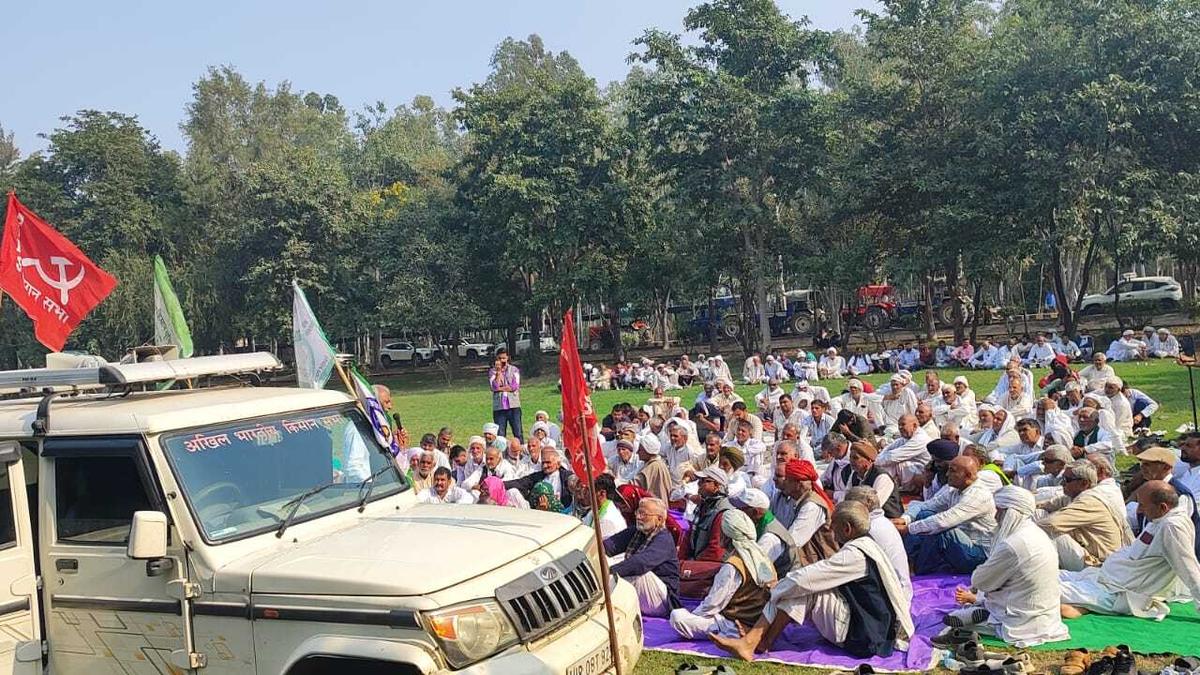
- Farmers' organisations have called a nationwide protest on December 2, demanding better crop prices and a firmer legal guarantee around minimum support price (MSP) mechanics.
- The dispute sits at the intersection of agricultural finance, commodity-market data infrastructure and the digital plumbing of India's mandi system.
- India's agri-tech and commodity-trading ecosystem — from eNAM to private agri-fintech platforms — faces a period of pricing uncertainty and possible supply-chain friction.
- Investors in agri-input, agri-credit and commodity-linked businesses should watch procurement volumes, mandi arrivals and policy signals over the next two quarters.
- The December 2 mobilisation is a test of how transparently crop-price data and procurement economics are communicated to a digitally connected farm base.
Section 1: The Core Event & Breaking Timeline
Farmers' organisations across several Indian states have called for a protest on December 2, seeking better crop prices and a more dependable framework for agricultural procurement. The call, reported by The Hindu, marks the latest flashpoint in a long-running negotiation over how India prices its harvest — a question that directly shapes rural incomes, food inflation and the balance sheets of agri-businesses nationwide. The protest is scheduled as a single-day mobilisation, though farm leaders have historically used such dates as anchors for longer campaigns if demands go unmet.
The immediate trigger is the persistent gap between what farmers say they need to cover rising input costs — fertiliser, diesel, labour and credit — and what they receive at the mandi gate. Farmers' organisations have framed the December 2 action around crop-price realisation, arguing that procurement and market mechanisms are not delivering adequate returns for staples including wheat, paddy, pulses and oilseeds. The demand set is economic rather than electoral: it concerns price floors, procurement coverage and the transparency of the data used to set and administer support prices.
Timing matters. December falls in the middle of the rabi sowing season, when wheat and mustard planting decisions are being locked in. A protest at this juncture can influence both the psychology of sowing and the forward expectations of traders who price rabi commodities. Commodity desks and agri-credit analysts typically watch such mobilisations for signals on procurement volumes, mandi arrival patterns and the risk of logistical disruption to inbound supply chains.
Initial market reaction has been measured but watchful. There is no immediate evidence of a supply shock, and single-day protests rarely move national commodity benchmarks on their own. However, the event reinforces a structural risk premium around Indian agricultural supply — one that shows up in food-inflation forecasting, in the cost of agri-credit and in the planning assumptions of food-processing companies. The key variable is escalation: whether December 2 remains a symbolic show of strength or becomes the opening of a sustained negotiation.
Section 2: Deep Technical & Financial Architecture
At the centre of the dispute is the minimum support price (MSP) system, under which the government announces a floor price for major crops ahead of sowing. MSP is recommended by the Commission for Agricultural Costs and Prices (CACP) and approved by the Union Cabinet. The financial architecture is straightforward in principle: if market prices fall below MSP, government agencies such as the Food Corporation of India and state procurement bodies step in to buy at the support price, absorbing the crop into buffer stocks or welfare schemes.
The friction lies in coverage and computation. MSP is announced for a long list of crops, but actual procurement is concentrated in a handful — principally wheat and paddy — and in a handful of states with strong procurement infrastructure. For pulses, oilseeds and many coarse grains, the effective price floor is far weaker because procurement volumes are small. Farmers' organisations argue that the cost-of-production formula used to set MSP understates real input costs, and that the gap between announced and realised prices is the core economic grievance.
Data infrastructure is the second layer. India's electronic National Agriculture Market (eNAM) connects mandis digitally and generates price-discovery data, while state APMC mandis remain the primary physical trading venues. The quality, timeliness and granularity of mandi price data determine how transparently crop prices are understood — by farmers, traders, lenders and policymakers alike. Where data is thin or lagged, information asymmetry widens and farmers' bargaining position weakens. Improving the fidelity of this data stack is, in practical terms, as important as the headline MSP number.
The balance-sheet impact runs through multiple channels. For farmers, price realisation determines debt-servicing capacity and input purchasing power for the next cycle. For agri-lenders and microfinance institutions, crop-price weakness translates into credit risk. For food-processing companies, procurement costs feed directly into margins. For the exchequer, higher support prices and larger procurement volumes raise the fiscal cost of food subsidy — a trade-off that constrains how generously MSP can be raised without broader budgetary consequences.
Unit economics sharpen the picture. A farmer's net margin is the difference between realisation and the cost of cultivation, and small changes in either side swing profitability dramatically for low-margin staples. When input costs rise faster than support prices, the effective floor erodes even if the nominal MSP increases. That arithmetic — not rhetoric — is what makes crop pricing a recurring structural issue rather than a one-off grievance.
Section 3: Industry & Global Market Ripple Effects
The protest call ripples through India's agri-value chain. Input suppliers — seeds, fertiliser, crop-protection and farm machinery — depend on farmer cash flow, so any sustained squeeze on price realisation can dampen demand for inputs in the following season. Agri-fintech and rural-lending platforms, which have expanded rapidly on the back of digital credit, are sensitive to repayment stress in farm belts. Food-processing and packaged-goods companies watch procurement costs closely, since wheat, pulses and oilseeds are core raw materials.
Commodity traders and warehousing operators are attuned to mandi arrival patterns and any disruption to physical movement. A one-day protest is unlikely to shift national supply, but repeated or escalating action can alter timing of arrivals, influence spot-versus-futures spreads and change the risk calculus for inventory holders. For exchange-traded agri-derivatives, the relevant signal is expectations about procurement and policy, not the protest date itself.
Globally, India is a major producer and consumer of wheat, rice, pulses and sugar, and a significant exporter of some of these commodities. Policy signals around support prices and procurement influence export competitiveness and world market expectations, particularly in rice and sugar. Trading partners and global food-security analysts track Indian procurement policy because it can affect export availability and prices in import-dependent regions.
The broader ecosystem shift is toward digitised, data-driven agriculture. Agritech platforms offering price intelligence, market linkage and yield analytics are positioning themselves as the connective tissue between farmers and buyers. If policy friction around mandi pricing intensifies, demand for independent price-transparency tools and direct market-linkage platforms is likely to rise — a commercial opportunity embedded in a politically sensitive problem.
Section 4: Critical Perspectives, Analyst Debates & Risk Factors
One camp argues that raising MSP and expanding procurement is the most direct way to stabilise farm incomes and secure rural demand, which in turn supports broader economic activity. On this view, the fiscal cost is a worthwhile investment in rural stability, and the data infrastructure needed to administer support prices more fairly is already being built through eNAM and digital public goods.
A contrasting view holds that blanket MSP expansion distorts cropping patterns, encourages water-intensive cultivation, strains the fiscal budget and builds unmanageable buffer stocks. Critics argue that the better route is income support, crop diversification incentives and investment in storage, logistics and market competition, rather than ever-higher price floors. The debate is fundamentally about whether to fix prices or fix markets.
Risk factors are concrete. Escalation of protests can disrupt mandi arrivals and logistics in specific states. Policy uncertainty around procurement can chill private investment in agri-processing and warehousing. Credit stress in farm belts can spill into rural lenders' asset quality. And food inflation, if procurement costs rise, can complicate the broader inflation outlook and monetary policy assumptions.
Regulatory and institutional friction adds another layer. Coordination between Union and state governments on procurement, the capacity of state mandi boards, and the reliability of price data all shape outcomes. Analysts caution against reading a single protest date as a turning point; the more meaningful indicators are procurement volumes, the trajectory of input costs and the credibility of the data used to justify support prices.
Section 5: Strategic Forecast & Road Ahead
Over the next 12 months, the central question is whether the December 2 mobilisation produces a negotiated package or a prolonged standoff. Watch for signals on MSP announcements for the coming seasons, any expansion of procurement coverage to pulses and oilseeds, and the pace of digital mandi integration. Each of these is a leading indicator of how the pricing dispute will evolve.
In the 12–24 month window, expect continued investment in agri-data infrastructure — price intelligence, digital procurement records and market-linkage platforms. The commercial logic is strong: better data reduces information asymmetry, supports credit underwriting and improves supply-chain planning. Companies that can deliver transparent, timely crop-price information to farmers and buyers stand to gain regardless of the political weather.
Key milestones to track include the next round of support-price recommendations, procurement data for the rabi season, mandi arrival trends and any movement on income-support or diversification schemes. For investors, the agri-input, agri-credit and food-processing sectors warrant close monitoring, with attention to rural demand indicators and credit-quality trends in farm-dependent portfolios.
The road ahead is less about a single protest than about the slow modernisation of India's agricultural pricing architecture. The December 2 call is a pressure test — of procurement mechanics, of data transparency and of the trust between farmers and the institutions that set the price of their harvest. How that test is handled will shape rural incomes, food inflation and the investment climate in Indian agriculture for years to come.



Comments (0)
No comments yet. Be the first to share your thoughts!
Leave a Comment