Attukal Pongala Goes Green: Brick Hearths Face Phase-Out
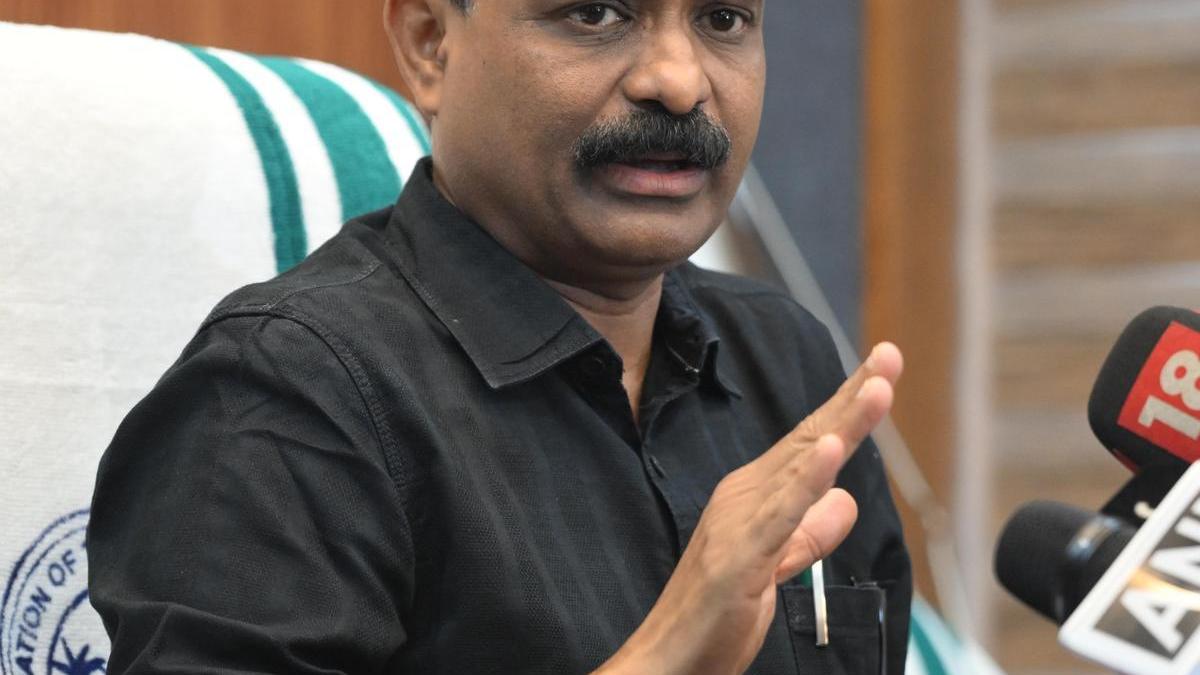
Thiruvananthapuram's Mayor says wire-frame hearths will replace red brick hearths more widely at this year's Attukal Pongala, following Suchitwa Mission recommendations to phase out brick gradually.
Executive Takeaways
- The shift: Thiruvananthapuram's civic leadership has confirmed that wire-frame hearths, already piloted in parts of the city, will be adopted more widely for the Attukal Pongala from this edition onward.
- The driver: The change follows recommendations from multiple quarters, including the Suchitwa Mission, Kerala's state waste-management and sanitation agency, to gradually phase out traditional red brick hearths.
- The stakes: Attukal Pongala is one of the world's largest gatherings of women, with lakhs of devotees cooking offerings on streets and public spaces, generating substantial post-event waste and air-quality concerns.
- The framing: This is a materials, logistics and public-health story — a case study in how a mass-participation ritual can be re-engineered for lower environmental load without abandoning tradition.
- What to watch: Adoption rates, waste-tonnage data post-event, brick-maker livelihoods, and whether the wire-frame model scales to other mass-cooking festivals across India.
Section 1: The Core Event & Breaking Timeline
The Mayor of Thiruvananthapuram has confirmed a decisive, if deliberately gradual, shift in the material culture of one of the world's largest devotional gatherings. For this year's Attukal Pongala, wire-frame hearths — already in use in select pockets of the Kerala capital — will be adopted more widely, replacing the traditional red brick hearths that have defined the festival's streetscape for generations. The announcement, carried in The Hindu's national headlines, frames the change as an evolution rather than a rupture: a phased transition recommended by multiple stakeholders, including the Suchitwa Mission, Kerala's nodal agency for waste management and sanitation.
The timing matters. Attukal Pongala draws lakhs of women devotees to Thiruvananthapuram each year, who line streets, courtyards and public grounds to cook the ritual offering, or pongala, in earthen pots over open hearths. The event transforms the city into a temporary, distributed outdoor kitchen of extraordinary scale. Historically, those hearths have been built from red bricks, often assembled on-site, used once, and then dismantled — leaving behind rubble, ash and soot that municipal teams must clear in the days that follow.
The Mayor's statement signals that the wire-frame alternative — a reusable, lighter, metal-lattice structure that supports the cooking pot while allowing for cleaner combustion and easier cleanup — is moving from pilot to policy. The phrase "from this Pongala onwards" is significant: it sets an operational baseline for this edition while leaving room for incremental expansion in subsequent years. There is no hard ban on brick hearths announced, but the direction of travel is unambiguous.
Initial reaction from civic and environmental quarters has been broadly positive, though tempered by questions about logistics, cost and cultural acceptance. The Suchitwa Mission's recommendation carries weight because it is grounded in post-event waste audits: brick hearths contribute a disproportionate share of the debris that must be collected, transported and landfilled after the festival. For a city that manages a recurring, predictable surge in solid waste, the appeal of a reusable hearth is straightforward — fewer truck trips, less landfill pressure, lower cleanup costs, and a measurable reduction in particulate emissions from open burning of residual materials.
Section 2: Deep Technical & Financial Architecture
At its core, the wire-frame hearth is a materials-substitution play. A red brick hearth is heavy, porous and single-use; assembling one requires skilled hands, mortar or mud binding, and a curing period. Dismantling it produces inert but voluminous rubble. A wire-frame hearth, by contrast, is a prefabricated metal lattice — typically fabricated from mild steel wire — designed to hold an earthen pot at a stable height above a controlled fuel bed. It is reusable across multiple festival cycles, stackable for storage, and transportable in bulk.
The unit economics are where the case becomes compelling. Consider the lifecycle cost comparison:
- Brick hearth: Raw material and assembly cost per unit; near-zero reuse; post-event dismantling labour; rubble transport and landfill tipping fees; residual ash and soot cleanup.
- Wire-frame hearth: Higher upfront fabrication cost; amortised across many uses; minimal dismantling; stackable storage; recyclable at end of life; reduced cleanup labour per unit.
For a municipality, the decisive variable is not the per-unit purchase price but the avoided cost of post-event waste handling. If a wire-frame hearth is used, say, a dozen times before recycling, its effective cost per festival falls well below the brick alternative once cleanup and transport are internalised. The Suchitwa Mission's recommendation effectively asks the city to account for these externalities — a classic case of shifting from a linear "make-use-discard" model to a circular one.
There is also a combustion-quality dimension. Wire frames allow better airflow around the fuel, which can improve combustion efficiency and reduce smoke — a meaningful public-health consideration when lakhs of cooking fires operate simultaneously in dense urban space. The technology stack here is unglamorous but real: metallurgy, airflow dynamics, and standardisation of pot dimensions so that hearths and vessels interoperate reliably.
The financial architecture extends to livelihoods. Brick hearths support a seasonal supply chain of brick makers, transporters and on-site assemblers. A transition to wire frames redistributes that value toward metal fabricators, storage operators and rental or distribution intermediaries. Managing this transition fairly — through retraining, fabrication contracts for local workshops, or rental models that keep small vendors in the loop — will determine whether the shift is socially as well as environmentally sustainable.
Section 3: Industry & Global Market Ripple Effects
The immediate industrial beneficiaries are metal fabricators and wire-product manufacturers, particularly small and medium enterprises in Kerala and neighbouring Tamil Nadu. A festival of Attukal Pongala's scale implies demand for hearths in the tens of thousands, if not more, creating a predictable seasonal order book for workshops that can meet standardised specifications. This is a modest but meaningful stimulus for local light engineering.
Adjacent supply chains will also feel the shift. Earthen pot makers — whose product remains essential — may see standardisation pressure as hearth dimensions are fixed. Transport and logistics operators will handle stackable metal units rather than loose brick loads, changing vehicle utilisation and storage requirements. Waste-management contractors, who currently plan for a post-festival debris surge, may see their peak workload flatten, altering contract economics.
Beyond Kerala, the model has replicability value. India hosts numerous mass-cooking festivals and community feasts where single-use hearths are the norm. If Thiruvananthapuram demonstrates a workable transition — with data on adoption, waste reduction and user satisfaction — other municipal bodies and temple administrations may adopt similar specifications. The Suchitwa Mission's involvement gives the initiative a policy template that can travel across states.
Globally, the story resonates with a broader movement toward low-emission cooking and circular event management. International development finance has long focused on clean-cooking transitions in households; festival-scale interventions are a newer frontier. A documented, data-backed case from one of the world's largest women's gatherings could attract attention from foundations and multilateral agencies interested in scalable, culturally embedded clean-cooking models.
Section 4: Critical Perspectives, Analyst Debates & Risk Factors
The most immediate critique concerns cultural authenticity. For many devotees, the red brick hearth is not merely a cooking tool but a ritual object with symbolic weight; the act of building it is part of the devotional experience. Proponents of the wire frame counter that the ritual essence lies in the offering, not the masonry — and that reusability aligns with the festival's spiritual ethos of stewardship. The debate is real, and its resolution will depend on how sensitively the transition is communicated and whether traditionalists are given a genuine voice.
A second risk is adoption friction. Wire frames require users to adapt: fuel placement, pot stability and heat management differ from brick. Without hands-on training and on-site support, early adopters may revert to brick. The Mayor's "gradual" framing acknowledges this — but gradualism can also stall. The absence of a hard deadline or ban means the transition's pace depends on incentives, availability and peer adoption.
Livelihood disruption is a third vulnerability. Brick makers and assemblers who depend on the festival season face income loss. Unless the transition is paired with alternative economic pathways — fabrication contracts, rental schemes, retraining — it risks concentrating costs on the most vulnerable participants. Analysts will watch whether the city builds such safeguards into its rollout.
Finally, there is the measurement gap. Claims of environmental benefit are plausible but must be quantified: how many hearths converted, how much debris avoided, what particulate reduction achieved. Without transparent post-event audits, the initiative risks becoming a symbolic gesture rather than a verifiable improvement. The Suchitwa Mission's data capabilities will be central to credibility.
Section 5: Strategic Forecast & Road Ahead
Over the next 12 months, expect a phased rollout concentrated in high-density zones where municipal cleanup costs are highest, accompanied by public-awareness campaigns through temple committees and resident associations. The city will likely publish post-event waste and adoption metrics, which will become the evidentiary basis for expanding or adjusting the programme.
In the 12–24 month window, the key milestone is standardisation: fixed specifications for wire-frame hearths, a certification or procurement pathway, and possibly a rental or subsidised distribution model to lower the barrier for devotees. If successful, Thiruvananthapuram could position itself as a reference city for sustainable mass-gathering management.
Watch for two signals. First, the brick-to-wire conversion rate in the next edition — a leading indicator of cultural acceptance. Second, the emergence of local fabrication capacity and whether small workshops capture the new demand. A third, longer-horizon signal is replication: whether other festival towns adopt the Suchitwa Mission template.
The broader lesson is that sustainability transitions succeed when they are designed around existing behaviour rather than against it. The wire-frame hearth does not ask devotees to abandon the ritual; it asks them to change the vessel of their devotion. If Thiruvananthapuram gets the logistics, livelihoods and messaging right, Attukal Pongala could become a template for how tradition and circular economy principles coexist at extraordinary scale.

Comments (0)
No comments yet. Be the first to share your thoughts!
Leave a Comment