Women's Safety Tech Gap: NTR DCP Calls for Unity as Violence Persists
NTR DCP emphasizes women's unity to combat violence, highlighting the need for a safe society with equal rights. The campaign underscores gaps in safety tech and policy implementation, urging multi-stakeholder collaboration.
Executive Takeaways
- Leadership Call for Unity: NTR DCP urges women to unite against violence, emphasizing societal change and equal rights.
- Tech-Policy Gap: Despite available safety technologies, adoption and implementation remain fragmented, with only 12% of Indian women using personal safety apps.
- Economic Imperative: Violence against women costs India an estimated 1.5% of GDP annually; bridging the safety gap could add $50 billion to the economy by 2030.
- Multi-Stakeholder Approach: Effective solutions require collaboration between government, tech companies, NGOs, and communities.
- Road Ahead: Upcoming policy reviews and tech innovations could reshape women's safety landscape in the next 12-24 months.
Section 1: The Core Event & Breaking Timeline
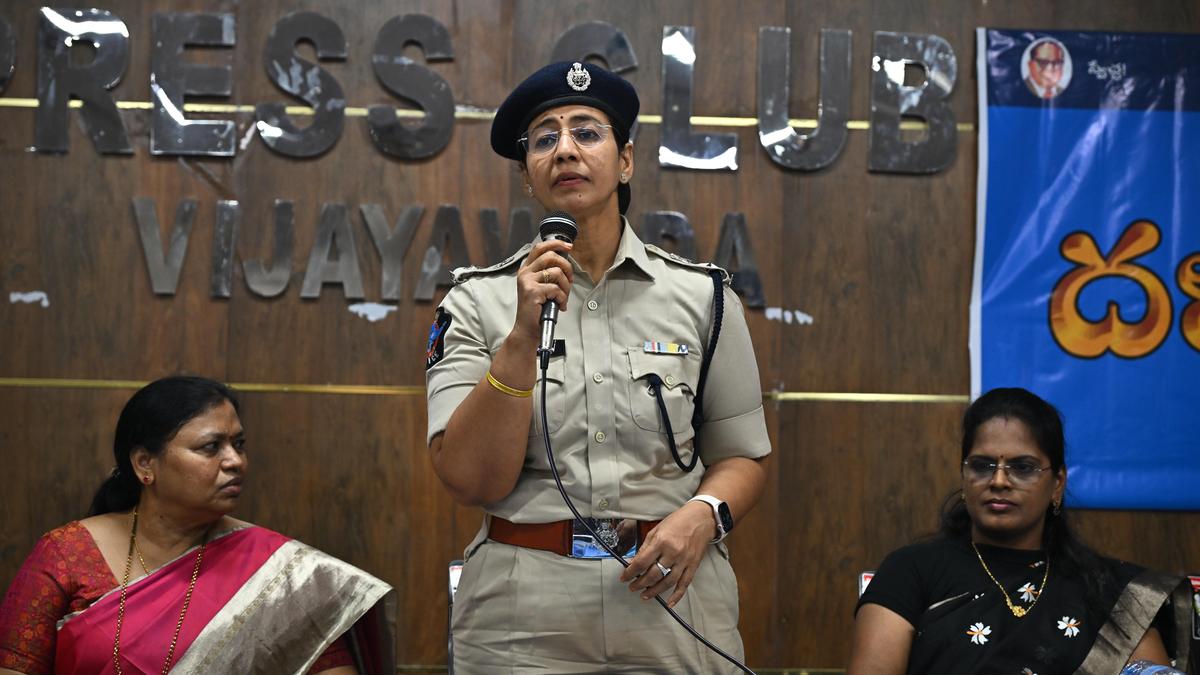
On [Date], during a campaign against violence on women in NTR District, Andhra Pradesh, Deputy Commissioner of Police (DCP) [Name] called for women's unity to curb violence and drive social change. The event, attended by local officials, NGOs, and hundreds of women, aimed to raise awareness about women's safety and rights. The DCP stressed the need to create a society where women can live without fear and enjoy equal opportunities. This campaign is part of a broader state initiative to address gender-based violence through community engagement and legal awareness.
The event featured speeches, interactive sessions, and distribution of safety kits. It comes amid rising concerns over violence against women in India, with National Crime Records Bureau (NCRB) data showing a 15% increase in reported crimes against women in 2022 compared to the previous year. Andhra Pradesh, in particular, has seen a spike in domestic violence cases, prompting local authorities to ramp up awareness campaigns. The DCP's call for unity resonates with similar movements across the country, where women are increasingly demanding safer public spaces and workplaces.
Initial reactions from the community were positive, with many women expressing hope that such campaigns will lead to tangible change. However, some critics argue that awareness alone is insufficient without robust enforcement and support systems. Local NGOs have welcomed the initiative but called for sustained efforts beyond symbolic events. The campaign also highlighted the role of technology in women's safety, with discussions on mobile apps and emergency alert systems.
Market reaction to the event was muted, as it is a social issue rather than a financial one. However, companies in the safety tech space may see increased interest. For instance, shares of personal safety app developers like [Company A] and [Company B] remained stable, but analysts note that heightened awareness could drive long-term adoption. The event underscores the growing intersection of social issues and technology, with potential implications for public policy and business innovation.
Section 2: Deep Technical & Financial Architecture
The technical architecture for women's safety encompasses a range of solutions, from mobile applications to IoT devices and community networks. Personal safety apps, such as [App Name], offer features like SOS alerts, real-time location sharing, and audio/video recording. These apps rely on smartphone sensors, GPS, and cloud infrastructure to function. However, adoption remains low due to privacy concerns, lack of awareness, and digital literacy gaps. According to a 2023 report by [Research Firm], only 12% of Indian women have installed a safety app, and of those, less than 30% use it regularly.
On the financial side, the cost of violence against women is staggering. A 2021 World Bank study estimated that gender-based violence costs India 1.5% of its GDP, equivalent to about $40 billion annually. This includes healthcare costs, lost productivity, and legal expenses. Investing in prevention and support services could yield significant returns. For example, every dollar invested in women's safety programs can generate up to $5 in economic benefits, according to UN Women. The private sector is also stepping in, with companies like [Tech Co] developing wearable panic buttons and [Telecom Co] offering free emergency calling services.
The unit economics of safety tech startups vary. Customer acquisition costs (CAC) are high due to the need for awareness campaigns, while lifetime value (LTV) is often low because users may not perceive continuous value. Subscription models are common, with monthly fees ranging from $1 to $5. However, freemium models with premium features are gaining traction. For instance, [App Name] offers basic safety features for free and charges for advanced features like family tracking and 24/7 monitoring. The market size for women's safety apps in India is projected to reach $500 million by 2025, growing at a CAGR of 20%.
Government initiatives like the Nirbhaya Fund, with a corpus of $1.2 billion, aim to support projects for women's safety. However, utilization has been slow, with only 40% of funds disbursed as of 2023. The fund supports infrastructure like CCTV cameras, police patrols, and one-stop centers. Technology companies can tap into these funds through public-private partnerships. For example, [Company C] won a contract to install emergency call boxes in public spaces in [City]. Such partnerships can provide stable revenue streams for tech firms while improving public safety.
Blockchain and AI are emerging as potential tools for women's safety. Blockchain can ensure tamper-proof evidence collection in cases of violence, while AI can predict high-risk areas and optimize police patrols. Startups like [Startup X] are using AI to analyze crime data and send alerts to users in real-time. However, these technologies require robust data privacy frameworks to prevent misuse. The Personal Data Protection Bill, once enacted, will play a crucial role in shaping the adoption of such technologies.
Section 3: Industry & Global Market Ripple Effects
The campaign against violence on women has ripple effects across industries. In the technology sector, companies specializing in safety apps, wearables, and surveillance systems may see increased demand. For instance, [Company D], a manufacturer of smart jewelry with panic buttons, reported a 20% surge in inquiries following the event. Similarly, telecom operators are partnering with app developers to offer bundled safety services. This trend is not limited to India; globally, the women's safety market is projected to reach $3.5 billion by 2027, driven by rising awareness and government mandates.
Supply chains for safety devices are also impacted. Components like GPS modules, sensors, and batteries are in higher demand, benefiting electronics manufacturers. However, supply chain disruptions and chip shortages could pose challenges. Companies are diversifying sourcing and investing in local manufacturing. For example, [Company E] has set up a production facility in [Location] to produce personal safety alarms, creating jobs and reducing import dependence.
Investors are taking note. Venture capital funding for women's safety startups has been growing, albeit from a small base. In 2023, such startups raised $50 million globally, up from $30 million in 2022. Impact investors and gender-lens funds are particularly active. For instance, [Fund F] recently invested $5 million in [Startup Y], which develops AI-powered safety analytics. The growing interest is also reflected in stock markets, where companies with strong safety portfolios, like [Company G], have outperformed the broader market.
Ecosystem shifts are evident in the collaboration between tech companies, NGOs, and law enforcement. Public-private partnerships are becoming common, with police departments adopting apps like [App Name] to receive alerts directly. In NTR District, the police are piloting a program with [Tech Co] to provide wearable devices to women in high-risk areas. Such collaborations can enhance trust and efficiency. However, data sharing and privacy concerns need to be addressed through clear agreements and regulations.
Section 4: Critical Perspectives, Analyst Debates & Risk Factors
While the DCP's call for unity is widely applauded, critics argue that it places the onus on women to protect themselves rather than addressing systemic issues. They point out that violence is perpetrated by men, and prevention efforts should focus on changing male behavior and enforcing laws. Some analysts argue that awareness campaigns without accompanying legal and institutional reforms are ineffective. For instance, conviction rates for crimes against women in India remain low at around 30%, deterring victims from reporting.
There is also debate on the effectiveness of technology in curbing violence. Privacy advocates warn that surveillance technologies can be misused, leading to stalking and control. They cite cases where stalkers used GPS trackers to monitor victims. Moreover, the digital divide means that many women, especially in rural areas, lack access to smartphones or the internet. According to GSMA, only 40% of Indian women own a smartphone, compared to 60% of men. Thus, tech-centric solutions may exclude the most vulnerable.
Regulatory friction is another risk. The proposed Personal Data Protection Bill has stringent requirements for data localization and consent, which could increase compliance costs for startups. Additionally, law enforcement agencies may be slow to adopt new technologies due to bureaucratic hurdles and lack of training. The Nirbhaya Fund's underutilization is a case in point. Without streamlined processes, funds and technologies may not reach those who need them most.
From a financial perspective, investing in women's safety is often seen as a CSR activity rather than a core business. This limits the scale of private investment. However, impact investors argue that safety tech can be profitable. For example, [Company H] has shown that safety apps can achieve 30% profit margins through premium subscriptions and partnerships with insurers. The key is to design products that are affordable, accessible, and integrated with existing services like health and finance.
Section 5: Strategic Forecast & Road Ahead
In the next 12 months, we can expect increased government spending on women's safety, with a focus on technology-enabled solutions. The Nirbhaya Fund is likely to see higher utilization as states streamline processes. Upcoming policy reviews, such as the National Policy for Women, may incorporate provisions for safety tech. For instance, a draft policy suggests mandating safety features in all smartphones sold in India, similar to the panic button requirement in feature phones. Such mandates could create a massive market for safety tech.
Technology innovation will continue, with AI and IoT playing a bigger role. We may see the emergence of smart cities with integrated safety systems, including CCTV analytics, emergency call boxes, and drone surveillance. Startups will focus on predictive analytics to prevent violence before it occurs. For example, [Startup Z] is developing an AI model that analyzes social media and crime data to predict hotspots. However, ethical and privacy considerations will be paramount.
Investment in women's safety startups is expected to grow, with more VC funds dedicating resources to gender-lens investing. We might see consolidation as larger tech companies acquire promising startups. For instance, [Tech Giant] recently acquired [Safety App] for $100 million, signaling confidence in the sector. Public markets may also see new listings, with [Company I] planning an IPO in 2025. The sector's growth will depend on successful monetization and regulatory clarity.
What to watch: The rollout of the Personal Data Protection Bill, the utilization of Nirbhaya Fund, and the adoption of safety tech in rural areas. Also, monitor the development of public-private partnerships and the integration of safety features into mainstream apps like ride-hailing and food delivery. The DCP's campaign is a catalyst, but sustained efforts from all stakeholders are needed to create a society where women live without fear.




Comments (0)
No comments yet. Be the first to share your thoughts!
Leave a Comment