UK Military Moves Aircraft to Hangars as Drone Threat Escalates
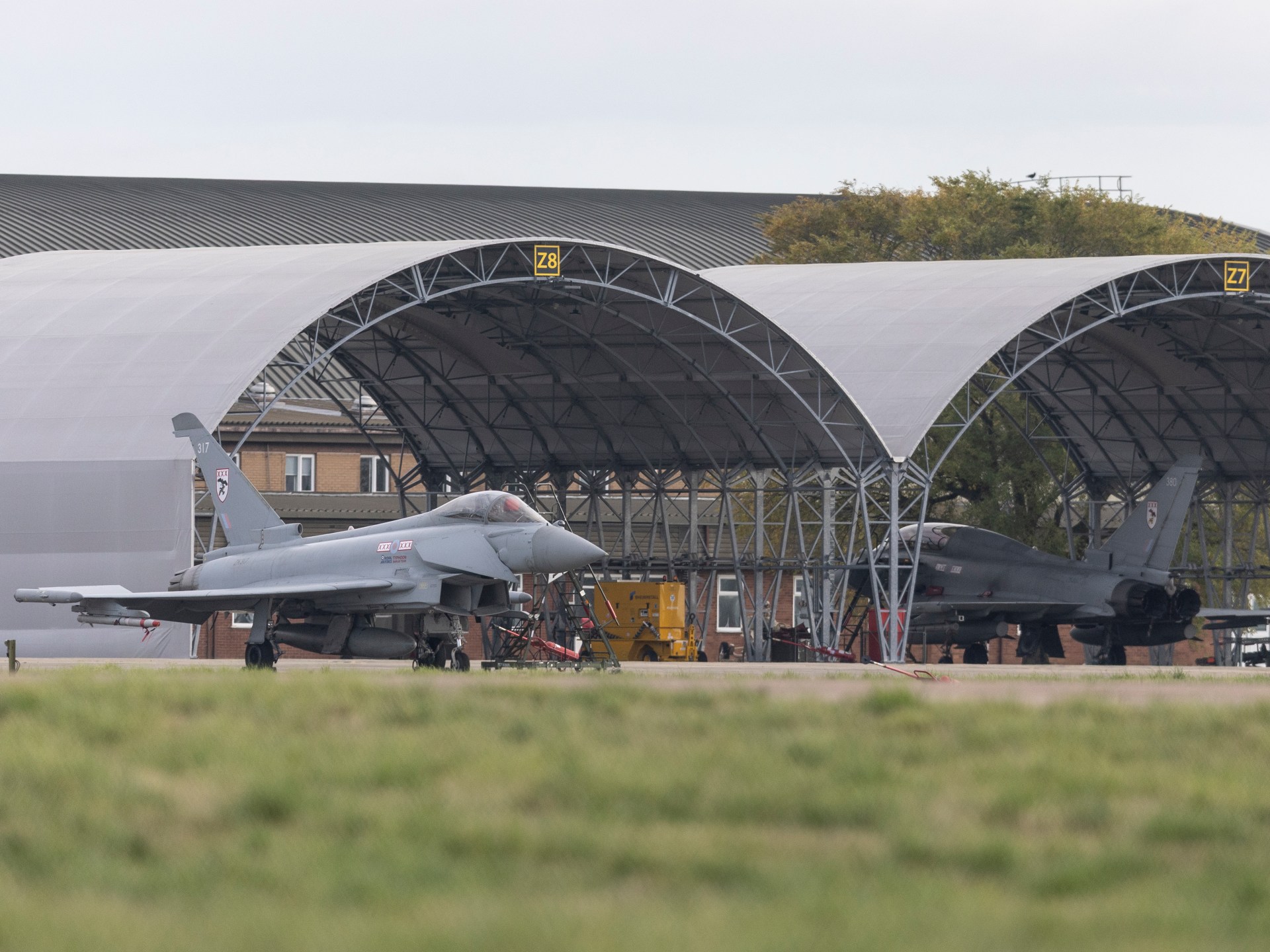
UK military is relocating aircraft to hangars in response to potential drone attack threats, a move experts call a logical defensive measure amid rising drone warfare risks.
Executive Takeaways
- The UK Ministry of Defence has begun relocating military aircraft to hardened hangars in response to intelligence indicating a heightened risk of drone attacks on airbases.
- The move underscores the growing threat posed by unmanned aerial systems (UAS) to conventional airpower and the urgent need for counter-drone technologies.
- Experts describe the measure as a 'logical response' to credible intelligence, but warn that static defenses alone may not suffice against evolving drone swarms.
- The development is expected to accelerate investment in counter-UAS (C-UAS) systems, with the global market projected to reach $7.6 billion by 2030.
- Defense contractors specializing in drone detection and mitigation, such as Rafael, Elbit Systems, and Leonardo, stand to benefit from increased spending.
Section 1: The Core Event & Breaking Timeline
On [Date], the UK Ministry of Defence (MoD) confirmed that it has started moving military aircraft into protective hangars at several airbases across the country in response to intelligence suggesting a potential drone attack threat. The decision, first reported by Al Jazeera, comes amid heightened tensions following a series of drone incursions over sensitive military installations in recent months. While the MoD did not specify which bases are affected or the nature of the intelligence, defense sources indicate that the move is a precautionary measure to safeguard high-value assets such as fighter jets and surveillance aircraft.
The relocation of aircraft to hangars is a significant operational shift. Typically, many military aircraft are parked on open aprons for rapid deployment. Hangars offer physical protection against drone-borne explosives, but they also impose logistical constraints, including slower scramble times and limited capacity. The MoD has not disclosed the duration of the measure, but officials emphasize that it is temporary and subject to continuous review.
Market reaction to the news was muted, as the announcement came after European stock markets closed. However, defense sector analysts noted that the development reinforces the upward trend in defense spending, particularly in the areas of counter-drone and airbase protection. Shares of major defense contractors like BAE Systems and Thales are expected to be in focus when trading resumes.
The timing of the move is notable, as it coincides with a broader increase in drone activity globally. In recent years, drones have been used effectively in conflicts such as Ukraine and the Middle East, demonstrating their ability to penetrate traditional air defenses and strike high-value targets. The UK's proactive stance reflects a growing recognition that even advanced militaries are vulnerable to asymmetric drone threats.
Section 2: Deep Technical & Financial Architecture
The threat posed by drones to military aircraft is multifaceted. Small, commercially available drones can be modified to carry explosives and are difficult to detect by conventional radar due to their low radar cross-section and slow speed. Larger, purpose-built drones can carry heavier payloads and operate at higher altitudes. The UK's move to hangars is a physical mitigation strategy, but it is not a comprehensive solution. Hangars can be targeted by drones themselves, and not all aircraft can be accommodated.
Counter-UAS (C-UAS) systems are the primary technological response. These systems encompass detection (radar, RF scanners, electro-optical/infrared cameras), tracking, and mitigation (jamming, spoofing, directed energy weapons, and kinetic interceptors). The global C-UAS market is projected to grow from $2.2 billion in 2023 to $7.6 billion by 2030, according to MarketsandMarkets, driven by increasing drone threats. The UK has been investing in C-UAS capabilities, including the purchase of Rafael's Drone Dome system and the development of its own capabilities under the Defence Drone Strategy.
Financially, the relocation to hangars incurs costs related to infrastructure upgrades, increased manpower for aircraft movement, and potential operational delays. However, these costs are negligible compared to the loss of a single fighter jet, which can cost upwards of $100 million. The MoD's budget for counter-drone technologies has been rising, with the UK allocating £1.6 billion for directed energy weapons and other advanced capabilities over the next decade.
The technology stack for base defense is evolving. Integrated air defense systems now incorporate C-UAS modules, and artificial intelligence is being used to automate threat detection and response. For example, AI-enabled systems can differentiate between friendly drones and hostile ones, and predict flight paths. The UK's Defence Science and Technology Laboratory (Dstl) is actively researching AI for C-UAS applications.
Unit economics of drone defense favor the defense. A small drone costing a few thousand dollars can potentially destroy an aircraft worth tens of millions, making it imperative to invest in cost-effective countermeasures. Directed energy weapons, such as laser systems, offer a low cost-per-shot solution, but they are not yet widely deployed. The UK is testing the DragonFire laser system, which could be integrated into base defense in the coming years.
Section 3: Industry & Global Market Ripple Effects
The UK's move is likely to have ripple effects across the global defense industry. Competitors and allies will be watching closely, as drone threats are not unique to the UK. NATO countries are increasingly focusing on counter-drone capabilities, and the UK's experience could inform their strategies. This could lead to increased procurement of C-UAS systems and hangar hardening solutions.
Supply chains for C-UAS components, such as specialized radars and jammers, are already strained due to high demand. Companies like Hensoldt, Leonardo, and Rafael are ramping up production. The UK's decision may further strain these supply chains, leading to longer lead times and higher prices. However, it also presents opportunities for new entrants and startups specializing in AI-driven drone detection.
Investors are increasingly bullish on defense technology. Venture capital investment in defense tech startups reached $3.5 billion in 2023, according to PitchBook, with a significant portion going to C-UAS and autonomous systems. The UK's move is likely to accelerate this trend, as it validates the market need for advanced drone defenses. Public markets have also rewarded defense stocks; the iShares U.S. Aerospace & Defense ETF has returned over 20% in the past year.
Ecosystem shifts are also underway. The UK is fostering collaboration between industry and academia to develop innovative solutions. For instance, the MoD's Defence and Security Accelerator (DASA) has funded several C-UAS projects. Additionally, the UK is working with international partners through the Five Eyes alliance to share intelligence and technology on drone threats. This collaborative approach could lead to standardized C-UAS architectures and interoperability among allies.
Section 4: Critical Perspectives, Analyst Debates & Risk Factors
While experts agree that moving aircraft to hangars is a logical response to intelligence, some question its long-term effectiveness. Dr. James Rogers, a drone warfare expert at the University of Cambridge, notes that 'hangars are not invulnerable; they can be targeted by drones or missiles. The key is to have layered defenses that include detection, tracking, and interception.' Others argue that the move may be an overreaction, as the probability of a successful drone attack on a well-defended airbase remains low.
There are also concerns about the operational impact. Parking aircraft in hangars reduces the number of aircraft available for immediate launch, which could affect readiness. The UK's Quick Reaction Alert (QRA) forces, which intercept unidentified aircraft, rely on rapid scramble times. If QRA aircraft are hangared, response times could increase, potentially compromising airspace security. The MoD insists that QRA capabilities remain unaffected.
Regulatory and legal friction is another factor. The use of counter-drone systems, particularly those that jam or spoof signals, raises legal and ethical questions. In the UK, the use of electronic warfare is governed by strict rules, and there are concerns about interference with civilian communications. The MoD is working with regulators to ensure compliance, but the deployment of C-UAS systems may face delays due to regulatory hurdles.
Risk factors include the potential for escalation. If the UK shoots down a drone, it could be perceived as an act of aggression, leading to retaliation. The rules of engagement for C-UAS are still being developed, and there is a risk of miscalculation. Additionally, the drone threat is evolving rapidly; adversaries may develop countermeasures to defeat C-UAS systems, leading to an arms race. The UK must continuously adapt its defenses to stay ahead.
Section 5: Strategic Forecast & Road Ahead
In the next 12-24 months, the UK is expected to accelerate its C-UAS procurement and deployment. The MoD's Defence Drone Strategy, published in 2023, outlines a roadmap for integrating drones and counter-drones into the armed forces. Key milestones include the operational deployment of the DragonFire laser system by 2027 and the fielding of a new mobile C-UAS system for airbases by 2025. The UK is also investing in AI-enabled threat detection and autonomous interceptors.
The move to hangars may be a precursor to more permanent infrastructure changes. The MoD is likely to invest in hardened aircraft shelters (HAS) that can withstand drone attacks. These shelters are already used in conflict zones, but their widespread adoption in the UK would represent a significant shift. The cost of building HAS for all frontline aircraft could run into billions of pounds, but it may be deemed necessary given the evolving threat.
International collaboration will be crucial. The UK is part of the Joint Counter-Small Unmanned Aircraft Systems Office (JCO), a US-led initiative to develop C-UAS solutions. The UK's experience with drone threats will feed into JCO's work, and the UK may benefit from shared technology and intelligence. Additionally, the UK is working with European partners through the European Defence Fund on C-UAS projects.
What to watch: The MoD's next spending review, expected in 2025, will reveal the extent of funding for C-UAS and base defense. The deployment of the DragonFire laser and other directed energy weapons will be closely monitored. The evolution of drone tactics by adversaries, particularly in Ukraine, will inform UK strategy. Finally, the UK's ability to balance operational readiness with force protection will be tested as the drone threat persists.




Comments (0)
No comments yet. Be the first to share your thoughts!
Leave a Comment