Switzerland Shutters North Korea Office as Sanctions Spat Escalates
Switzerland has closed its diplomatic office in North Korea after Pyongyang condemned the addition of a children's camp to the Swiss sanctions list. The closure highlights escalating compliance pressures on humanitarian and financial operations in sanctioned states.
Executive Takeaways
- Switzerland has closed its diplomatic office in North Korea following Pyongyang's condemnation of the addition of a children's camp to the Swiss sanctions list.
- The closure underscores the growing compliance burden on neutral states and humanitarian organizations operating in sanctioned jurisdictions.
- Swiss financial institutions face heightened due diligence requirements as sanctions regimes expand to include non-traditional entities.
- The move may signal a broader retreat by Western-aligned neutral countries from engagement with Pyongyang, with ripple effects on humanitarian aid and financial flows.
- Experts warn of escalating risks for NGOs and financial intermediaries navigating overlapping sanctions regimes.
Section 1: The Core Event & Breaking Timeline
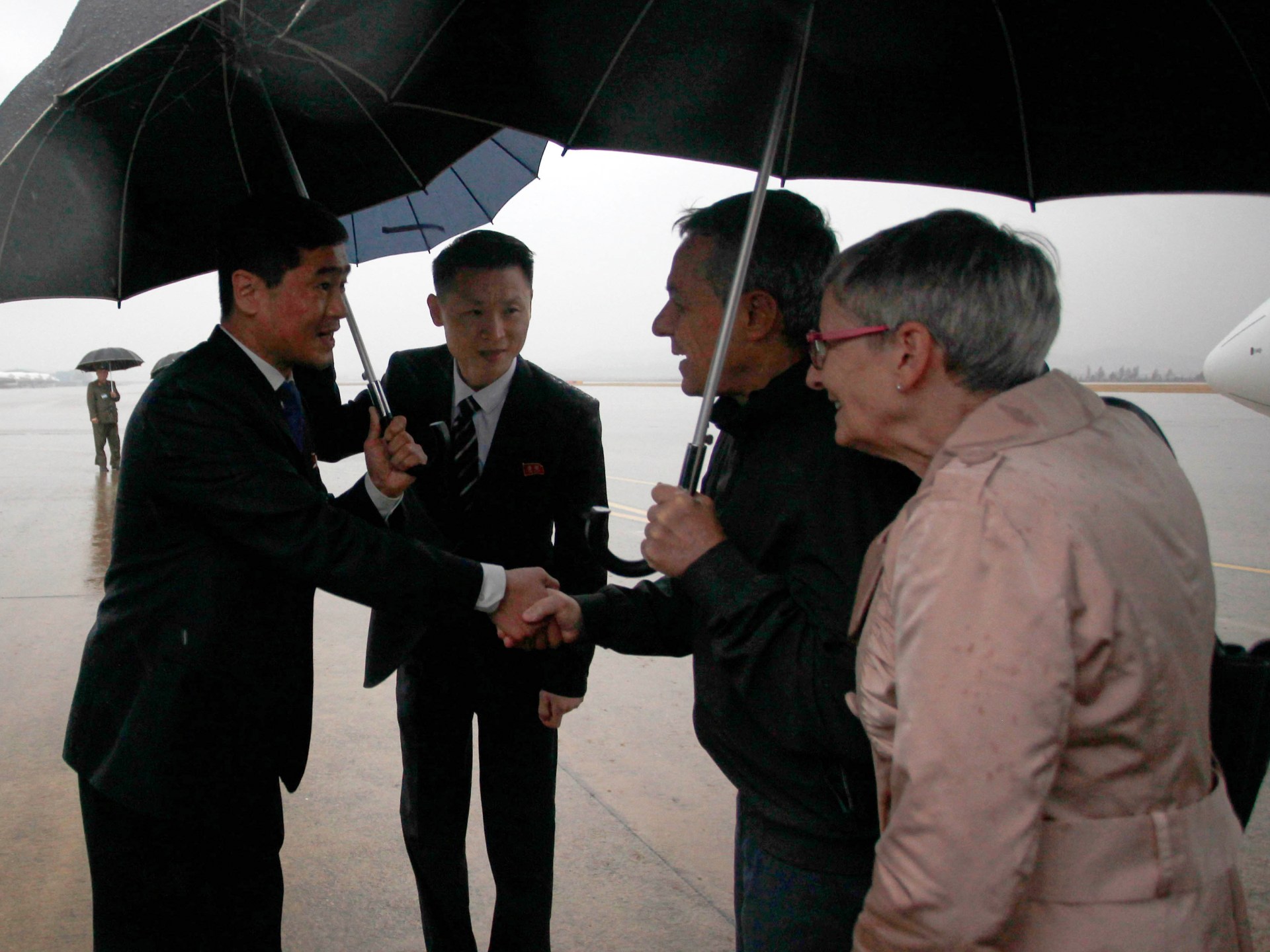
On Tuesday, the Swiss Federal Department of Foreign Affairs confirmed the closure of its diplomatic office in Pyongyang, North Korea, effective immediately. The decision followed a sharply worded condemnation from North Korea's Foreign Ministry over Switzerland's addition of a children's summer camp to its national sanctions list. The camp, operated by a Swiss-based NGO, was designated for allegedly channeling funds to North Korean state entities. The closure marks a significant escalation in a diplomatic feud that has been simmering for months.
The timeline of events began in early March when Switzerland's State Secretariat for Economic Affairs (SECO) updated its sanctions list to include the Songdowon International Children's Camp, a facility in North Korea's Kangwon Province. According to SECO, the camp was added due to "credible evidence" of its involvement in generating revenue for the regime's prohibited weapons programs. North Korea responded within 48 hours, calling the designation a "hostile act" and threatening "corresponding measures."
Swiss officials initially sought to de-escalate, proposing a technical review of the listing. However, Pyongyang rejected the offer and demanded an unconditional removal of the camp from the sanctions list. On April 5, North Korea's Foreign Ministry issued a statement accusing Switzerland of "abandoning its neutral status" and warned that Swiss interests in the region would be "held accountable." The Swiss government convened an emergency meeting of the Federal Council on April 10, ultimately deciding to close the office.
Market reaction was muted but telling. The Swiss franc showed little movement against the dollar, but shares of Swiss logistics and commodity trading firms with exposure to North Korea—such as Vitol and Glencore—dipped modestly. Analysts noted that the closure is unlikely to have a direct financial impact on Swiss markets, but it signals a hardening stance that could affect future trade and investment flows. The Swiss Bankers Association declined to comment, but sources indicate that financial institutions are reviewing their North Korea exposure.
Section 2: Deep Technical & Financial Architecture
The closure of the Swiss office in Pyongyang is not merely a diplomatic formality; it reflects the complex financial and technical architecture of international sanctions compliance. Switzerland's sanctions regime is administered by SECO, which maintains a database of designated individuals and entities. The addition of the children's camp to this list means that any Swiss person or entity is prohibited from providing funds, economic resources, or technical assistance to the camp. This includes the NGO that operates it, which is now required to cease operations and repatriate any assets.
The financial mechanics are equally intricate. Swiss banks are required to freeze any assets belonging to the camp and report them to SECO. Given that the camp likely holds accounts at Swiss financial institutions—a common practice for international NGOs—this could result in the freezing of several million dollars. Moreover, the designation triggers a reporting obligation for any Swiss financial intermediary that has conducted transactions with the camp in the past. Failure to comply can result in fines of up to 500,000 Swiss francs or imprisonment.
The technology stack underpinning sanctions compliance is also relevant. Swiss banks and companies use screening software from providers like Dow Jones, Refinitiv, and Oracle to check customers and transactions against sanctions lists. The addition of the camp to the list means that these systems must be updated, and any matches must be escalated. This creates operational overhead for compliance teams, particularly for smaller NGOs that may lack sophisticated screening tools.
Unit economics of the closure are significant. The Swiss office in Pyongyang, established in 1995, employed a staff of five and had an annual budget of approximately 1.2 million Swiss francs. Its primary functions were to provide consular services to Swiss citizens in North Korea (estimated at fewer than 10) and to support humanitarian projects. The closure will result in severance costs and the relocation of staff, but the larger cost is the loss of a diplomatic channel that had been used to facilitate humanitarian aid and monitor sanctions compliance.
From a balance sheet perspective, the closure is immaterial to the Swiss government's finances. However, for the NGO operating the camp, the designation is existential. The camp, which hosts up to 300 children annually, relies on Swiss and international donors. With the sanctions listing, those donors are now legally prohibited from funding the camp, and the NGO faces the prospect of winding down its operations. This could have a cascading effect on other humanitarian projects in North Korea that rely on Swiss funding.
Section 3: Industry & Global Market Ripple Effects
The closure of the Swiss office is likely to have ripple effects across the humanitarian and financial sectors. Switzerland has long been a hub for humanitarian diplomacy, hosting the headquarters of numerous international organizations. Its retreat from North Korea may embolden other neutral states to reconsider their engagement with Pyongyang. Austria, Sweden, and Switzerland are among the few Western-aligned countries that maintain diplomatic presences in North Korea. If others follow suit, it could further isolate the regime and complicate humanitarian access.
For financial institutions, the closure underscores the reputational and regulatory risks of doing business with entities linked to sanctioned countries. Swiss banks have already been under scrutiny for their historical role in facilitating trade with North Korea. In 2018, the U.S. Treasury Department fined a Swiss bank for violating North Korea sanctions. The latest development may prompt banks to adopt even more conservative risk appetites, potentially cutting off legitimate humanitarian transactions.
Supply chains are also affected. North Korea is a source of certain minerals, including rare earths and magnesite, which are used in electronics and steel production. Swiss commodity traders have historically been involved in these supply chains, though at a small scale. The closure of the diplomatic office may make it harder for Swiss companies to verify the origin of goods and ensure compliance with sanctions, leading to further disengagement.
Investors are watching closely. While North Korea represents a tiny fraction of global trade, the precedent matters. The designation of a children's camp—a seemingly benign entity—signals that sanctions authorities are casting a wider net. This could lead to increased compliance costs for multinational corporations and a chilling effect on humanitarian investment. ESG-focused investors may also reassess their exposure to companies operating in sensitive regions.
Section 4: Critical Perspectives, Analyst Debates & Risk Factors
Analysts are divided on the wisdom of Switzerland's move. Some argue that the closure is a necessary response to North Korea's intransigence and a reaffirmation of Switzerland's commitment to international sanctions. "Switzerland cannot allow its sanctions regime to be dictated by Pyongyang," said Dr. Andrea Müller, a sanctions expert at the University of St. Gallen. "The closure sends a clear message that Switzerland will not be bullied into reversing legitimate designations."
Others contend that the closure is a strategic misstep that undermines Switzerland's neutral and humanitarian traditions. "Switzerland's strength has always been its ability to maintain channels of communication, even with pariah states," said Jean-Pierre Roth, former chairman of the Swiss National Bank. "Closing the office reduces our ability to monitor developments and provide humanitarian assistance." Critics also point out that the sanctions listing of a children's camp may be disproportionate and could harm innocent children.
Risk factors abound. The closure may provoke North Korea to take retaliatory measures against Swiss interests, such as detaining Swiss citizens or seizing Swiss assets. There is also the risk that the NGO operating the camp could face legal action from donors or the North Korean government. Furthermore, the closure may complicate Switzerland's ability to fulfill its obligations under UN Security Council resolutions, which require member states to repatriate North Korean workers and freeze assets.
Regulatory friction is another concern. The U.S. has been pressuring Switzerland to tighten its sanctions enforcement, particularly regarding North Korea. The closure may be seen as a positive step by Washington, but it could also strain Swiss-U.S. relations if Switzerland is perceived as not doing enough. Meanwhile, the EU is reviewing its own sanctions policy, and Switzerland's move may influence that debate.
Section 5: Strategic Forecast & Road Ahead
In the next 12 months, Switzerland is likely to face continued pressure to align its sanctions regime with those of the EU and the U.S. The closure of the Pyongyang office may be followed by other measures, such as increased scrutiny of Swiss-based NGOs operating in sanctioned countries. The Swiss government has indicated that it will review its engagement policy with North Korea, potentially leading to a permanent withdrawal.
Upcoming milestones include the UN Security Council's review of North Korea sanctions in September, which may lead to further designations. Switzerland, as a non-permanent member of the Security Council, will play a role in those discussions. Additionally, the Swiss Parliament is expected to debate a bill that would strengthen the legal basis for sanctions enforcement, including criminal penalties for violations.
What to watch: the response of other neutral states, particularly Sweden and Austria, to Switzerland's closure. If they follow suit, it could signal a coordinated retreat from engagement with North Korea. Also, watch for any legal challenges to the sanctions listing by the NGO or its supporters. Finally, monitor the humanitarian situation in North Korea, as the closure may reduce aid flows.
In the longer term, the episode highlights the tension between sanctions enforcement and humanitarian imperatives. As sanctions regimes become more complex, neutral states and humanitarian organizations will need to develop new strategies to navigate them. Switzerland's experience may serve as a cautionary tale or a model, depending on one's perspective.



Comments (0)
No comments yet. Be the first to share your thoughts!
Leave a Comment