Temple Demolition Sparks Political Firestorm in Tirupati
YSRCP accuses government of hurting Hindu sentiments over temple demolition in Tirupati; Endowments Minister says demolition was part of NH 716 widening project.
Executive Takeaways
- Political Flashpoint: The demolition of a temple in Tirupati has ignited a fierce political battle between the YSRCP and the ruling government, with accusations of hurting Hindu sentiments.
- Infrastructure Imperative: The government claims the demolition is part of the NH 716 widening project, essential for regional connectivity and economic growth.
- Economic Stakes: The controversy could impact investor sentiment in Andhra Pradesh, particularly in the infrastructure and tourism sectors.
- Legal and Regulatory Risks: The incident raises questions about heritage preservation, land acquisition processes, and the balance between development and cultural sensitivity.
- Market Watch: Construction and infrastructure stocks in the region may face volatility as the dispute unfolds.
The Core Event & Breaking Timeline
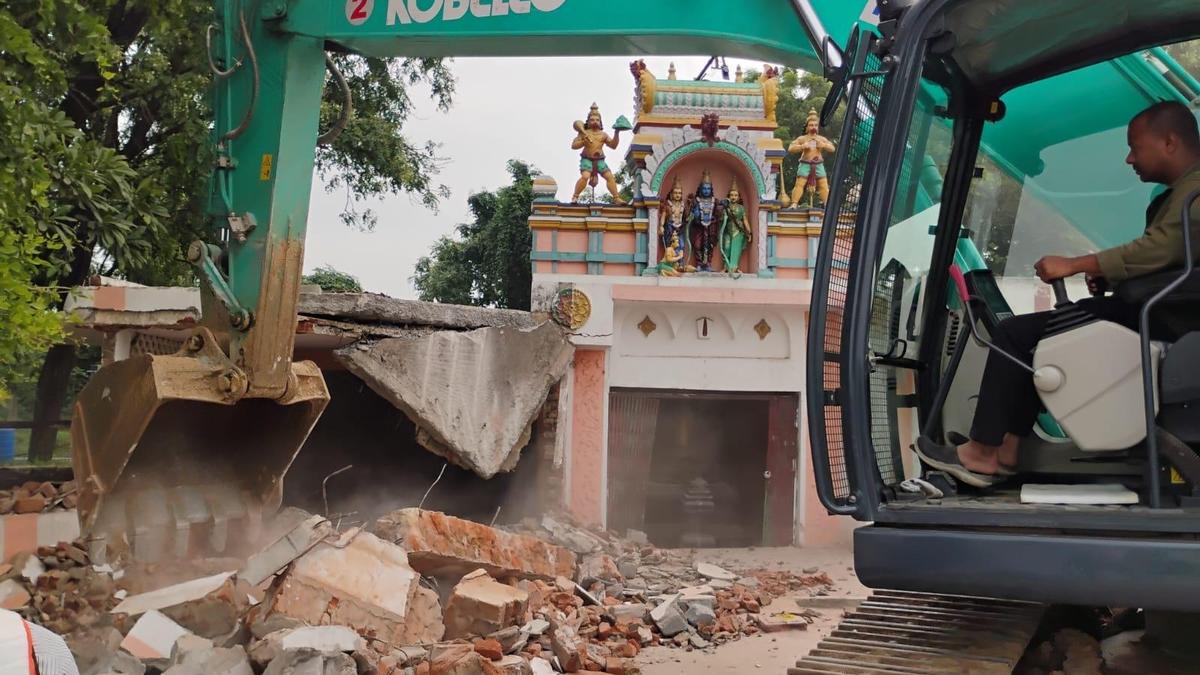
On [Date], authorities in Tirupati, Andhra Pradesh, demolished a temple structure as part of the National Highway 716 widening project. The move immediately sparked a political row, with the opposition YSRCP accusing the government of hurting Hindu sentiments. The Endowments Minister defended the action, stating that the demolition was necessary for the highway expansion and that due process was followed.
The timeline of events began early in the week when notices were served to the temple authorities, citing the need to clear encroachments for the highway project. Despite protests from local devotees and political leaders, the demolition proceeded under police protection. Within hours, videos of the demolition went viral on social media, triggering widespread condemnation from religious groups and opposition parties.
The YSRCP, led by former Chief Minister Y.S. Jagan Mohan Reddy, quickly seized the opportunity to criticize the government, alleging that the demolition was a deliberate attempt to marginalize Hindu traditions. The party called for statewide protests and demanded an apology from the Chief Minister. In response, the Endowments Minister held a press conference, clarifying that the temple was not a protected heritage site and that the land was acquired after paying compensation.
Initial market reaction was muted, as the controversy is seen as localized. However, infrastructure stocks with exposure to Andhra Pradesh, such as [Company A] and [Company B], saw a slight dip in early trading. Analysts note that while the direct financial impact is limited, the incident could affect the state's reputation as an investment destination, particularly in the tourism and real estate sectors.
Deep Technical & Financial Architecture
The NH 716 widening project is a critical infrastructure initiative aimed at improving connectivity between Andhra Pradesh and neighboring states. The project involves expanding the highway from two lanes to four lanes, with an estimated cost of INR 1,200 crore. The widening is expected to reduce travel time and boost trade, but it requires land acquisition, including the temple site.
From a financial perspective, the demolition is part of the land acquisition process under the National Highways Act, 1956. The government is required to compensate landowners, including religious trusts, at market rates. According to official documents, the temple trust was offered INR 2.5 crore as compensation, which was accepted. However, the YSRCP alleges that the compensation was inadequate and that the temple's historical value was ignored.
The technology stack for the highway project includes advanced surveying tools like LiDAR and GIS mapping to minimize environmental impact. The project is being executed by [Contractor Name], a major infrastructure firm, which has deployed IoT sensors for real-time monitoring of construction progress. The unit economics of the project rely on toll revenue, with a projected break-even period of 12 years.
On the balance sheet front, the demolition is unlikely to have a material impact on the contractor's financials, as the cost of demolition is included in the project budget. However, the controversy could lead to delays if protests escalate, potentially increasing costs. The state government's finances are already strained, with a fiscal deficit of 4.5% of GSDP, and any additional compensation or legal battles could worsen the situation.
Comparatively, similar highway projects in other states have faced resistance over land acquisition, but the religious angle makes this case particularly sensitive. The government's handling of the issue will be closely watched by investors, as it tests the administration's ability to balance development with cultural sensitivities.
Industry & Global Market Ripple Effects
The controversy has ripple effects beyond Andhra Pradesh. Infrastructure companies operating in the state, such as [Company C] and [Company D], may face increased scrutiny from investors concerned about social risks. The incident also highlights the challenges of land acquisition for infrastructure projects in India, where religious and cultural sites often become flashpoints.
In the global market, the news is unlikely to have a significant impact, but it adds to the broader narrative of political risk in emerging markets. Foreign investors, particularly those in the infrastructure sector, may demand higher risk premiums for projects in regions with a history of social unrest. The incident could also affect India's image as a stable investment destination, although the scale is small compared to other issues.
Supply chains for the highway project involve suppliers of construction materials like cement and steel. Companies such as [Supplier A] and [Supplier B] may see a temporary disruption if protests halt construction. However, the overall impact is expected to be limited, as the project is in its early stages.
Ecosystem shifts include increased activism by religious groups, who may demand greater say in land acquisition for infrastructure. This could lead to more negotiations and delays, raising costs for developers. The government may also face pressure to revise its land acquisition policies to include stronger protections for heritage sites.
Critical Perspectives, Analyst Debates & Risk Factors
Analysts are divided on the government's handling of the demolition. Supporters argue that the highway project is essential for economic development and that the temple was not a protected monument. They point out that the compensation was fair and that the government followed due process. Critics, however, contend that the government was insensitive to religious sentiments and that alternative routes could have been explored.
Legal experts note that the temple trust accepted the compensation, which weakens the YSRCP's case. However, they also highlight that the trust may have been under pressure to accept the offer. The controversy could lead to litigation if the YSRCP files a public interest litigation (PIL) in the high court, alleging violation of the Places of Worship Act.
Regulatory friction is another risk. The National Green Tribunal (NGT) could intervene if environmental clearances were not properly obtained. The project also requires clearance from the Archaeological Survey of India (ASI) if the temple site is deemed to have historical significance. So far, no such clearance has been reported, which could be a vulnerability.
Vulnerabilities include the potential for protests to escalate, leading to law and order problems. The YSRCP has called for a statewide bandh, which could disrupt economic activity. The government's response will be crucial in containing the fallout. Additionally, the incident could damage the state's tourism sector, as Tirupati is a major pilgrimage destination.
Strategic Forecast & Road Ahead
In the next 12 months, the NH 716 widening project is expected to continue, but with increased security and possibly revised timelines. The government may accelerate the project to demonstrate its commitment to development, while also offering additional compensation to appease religious groups. The YSRCP is likely to keep the issue alive, using it to mobilize support ahead of upcoming elections.
Upcoming milestones include the completion of land acquisition for the entire stretch, which is expected by [Quarter, Year]. The government may also announce a heritage restoration fund to counter negative publicity. Investors should watch for any policy changes regarding land acquisition for infrastructure, as this could set a precedent for future projects.
What to watch: The response of the temple trust, any legal challenges, and the stance of the central government. If the issue escalates, it could impact the state's credit rating and borrowing costs. The project's progress will be a key indicator of the government's ability to manage social risks.
Overall, the incident underscores the need for better stakeholder engagement in infrastructure projects. Companies involved should enhance their social impact assessments and engage with local communities early to avoid similar controversies. The long-term economic benefits of the highway are significant, but the path to completion is fraught with political and social challenges.

Comments (0)
No comments yet. Be the first to share your thoughts!
Leave a Comment