President to Preside Over IUBAT’s 10th Convocation: A Milestone for Higher Education
President Mirza Fakhrul Islam Alamgir agrees to preside over IUBAT’s 10th convocation, emphasizing higher education standards during a courtesy call with university delegates.
Executive Takeaways
- President Mirza Fakhrul Islam Alamgir will preside over IUBAT’s 10th convocation, underscoring the importance of academic excellence.
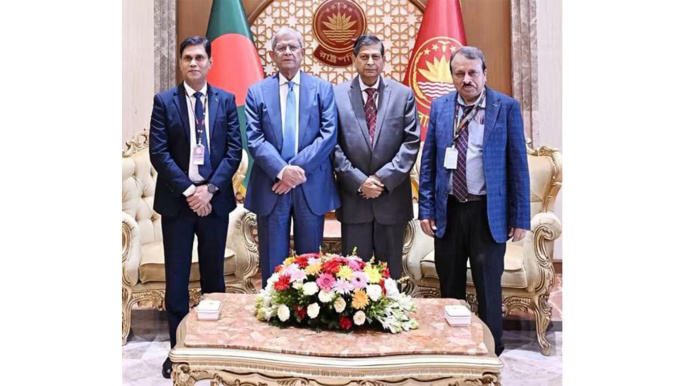
- The invitation was extended during a courtesy call at Bangabhaban on Monday, 23 November, led by IUBAT Vice-Chancellor Prof Dr Abdur Rab.
- The president stressed the need to maintain standards in higher education, aligning with global trends in quality assurance.
- IUBAT’s focus on business, agriculture, and technology positions it as a key player in Bangladesh’s human capital development.
- This event highlights the growing collaboration between academia and government to foster innovation and economic growth.
Section 1: The Core Event & Breaking Timeline
In a significant development for Bangladesh’s higher education landscape, President Mirza Fakhrul Islam Alamgir has agreed to preside over the 10th convocation of the International University of Business Agriculture and Technology (IUBAT). The announcement came after a courtesy call by an IUBAT delegation at Bangabhaban on Monday afternoon, 23 November. The delegation, led by Vice-Chancellor Prof Dr Abdur Rab, briefed the president on the university’s academic activities and recent progress. The president’s acceptance of the invitation underscores the growing recognition of IUBAT’s role in shaping future leaders in business, agriculture, and technology.
The convocation, a milestone event for any university, symbolizes the culmination of years of rigorous academic pursuit for graduating students. For IUBAT, celebrating its 10th convocation marks a decade of commitment to providing quality education that bridges theoretical knowledge with practical application. The president’s presence as chief guest is expected to elevate the event’s profile, drawing attention from stakeholders across the education sector, industry, and government. This aligns with the broader national agenda of fostering a knowledge-based economy.
During the meeting, Prof Dr Abdur Rab provided an overview of IUBAT’s academic programs, research initiatives, and community engagement efforts. The university has consistently emphasized fields critical to Bangladesh’s development, such as agriculture, business administration, and information technology. The president’s emphasis on maintaining standards in higher education resonates with ongoing efforts to enhance quality assurance mechanisms across the country. This dialogue between the head of state and university leadership signals a collaborative approach to addressing challenges in the education sector.
Market reaction to the announcement has been muted, as is typical for academic events, but stakeholders within the education ecosystem view it as a positive signal. The president’s involvement lends credibility to IUBAT’s programs and may attract increased interest from prospective students, faculty, and international partners. While no immediate financial market impact is expected, the long-term benefits of strengthened academia-government ties could yield dividends in terms of policy support and funding opportunities. The event also serves as a platform to showcase IUBAT’s contributions to national development.
Section 2: Deep Technical & Financial Architecture
IUBAT’s academic architecture is built on a foundation of interdisciplinary learning, integrating business, agriculture, and technology. The university offers undergraduate and graduate programs designed to meet the evolving demands of the job market. Its curriculum emphasizes experiential learning, with students engaging in research projects, internships, and industry collaborations. This approach ensures graduates are equipped with practical skills, enhancing their employability. The convocation serves as clear evidence of the university’s commitment to producing well-rounded professionals who can contribute to sectors vital to Bangladesh’s economy.
Financially, IUBAT operates as a private university, relying on tuition fees, grants, and partnerships to sustain its operations. The institution has invested in modern infrastructure, including state-of-the-art laboratories, libraries, and digital learning platforms. These investments are crucial for delivering high-quality education and fostering innovation. The university’s financial health is reflected in its ability to attract qualified faculty and provide scholarships to deserving students. The president’s visit and his acknowledgment of IUBAT’s progress may open doors to increased government support and philanthropic contributions, further strengthening its financial position.
The technology stack at IUBAT includes learning management systems, online resources, and research databases that facilitate a blended learning environment. The university has also embraced digital transformation, especially in the wake of the COVID-19 pandemic, by enhancing its online education capabilities. This technological infrastructure enables students to access course materials, submit assignments, and collaborate with peers and faculty remotely. The convocation will likely highlight these advancements, showcasing how IUBAT leverages technology to enhance educational outcomes and expand access to quality education.
Unit economics for IUBAT revolve around optimizing resource allocation to maximize educational value. The university strives to maintain affordable tuition while ensuring competitive faculty salaries and adequate facilities. By fostering strong industry linkages, IUBAT enhances the return on investment for students through better job placements and career advancement opportunities. The convocation provides an opportunity to celebrate these successes and outline future strategies for sustainable growth. The president’s emphasis on standards aligns with IUBAT’s goal of continuous improvement in its academic and operational frameworks.
Looking ahead, IUBAT plans to expand its research output and international collaborations, which could lead to additional revenue streams through grants and partnerships. The university’s focus on agriculture and technology is particularly relevant as Bangladesh seeks to modernize these sectors. By aligning its programs with national priorities, IUBAT positions itself as a key contributor to economic development. The 10th convocation thus not only celebrates past achievements but also sets the stage for future endeavors.
Section 3: Industry & Global Market Ripple Effects
The ripple effects of IUBAT’s convocation extend beyond the campus, influencing the broader education industry in Bangladesh. As one of the private universities focusing on business, agriculture, and technology, IUBAT’s emphasis on quality standards sets a benchmark for peers. Competitor institutions may be prompted to review their own academic offerings and infrastructure to remain competitive. This healthy competition can drive improvements across the sector, ultimately benefiting students and the economy. The president’s involvement adds a layer of prestige that could attract attention from international universities seeking partnerships.
In the global context, Bangladesh’s higher education sector is increasingly integrated with international trends. IUBAT’s convocation, attended by the head of state, signals stability and commitment to education, which can enhance the country’s attractiveness to foreign students and investors. The university’s focus on agriculture and technology aligns with global demands for sustainable development and digital innovation. As multinational corporations seek skilled talent, institutions like IUBAT play a crucial role in supplying a workforce adept in these areas. The event may catalyze discussions on curriculum internationalization and student exchange programs.
Supply chains in the education sector, including suppliers of educational materials, technology providers, and service vendors, may see indirect benefits from the heightened profile of IUBAT. Increased enrollment and partnerships could lead to higher demand for these goods and services. Investors in education technology and infrastructure might view the president’s endorsement as a positive indicator of government support for private education. This could spur investment in edtech startups and campus development projects, contributing to the sector’s growth.
Ecosystem shifts are likely as academia, industry, and government collaborate more closely. The convocation serves as a networking platform, bringing together policymakers, business leaders, and academics. Such interactions can lead to curriculum enhancements, research collaborations, and internship opportunities for students. The president’s call for maintaining standards may also influence accreditation bodies to tighten quality assurance processes, raising the overall quality of higher education in Bangladesh. Over time, these shifts can enhance the global competitiveness of Bangladeshi graduates.
Section 4: Critical Perspectives, Analyst Debates & Risk Factors
While the president’s participation is largely seen as positive, some analysts argue that such high-level attention may overshadow the need for systemic reforms in higher education. Critics point out that focusing on individual institutions may divert attention from broader issues like funding disparities, faculty shortages, and outdated curricula across the sector. They advocate for comprehensive policy measures to address these challenges rather than relying on symbolic gestures. However, supporters counter that presidential engagement raises awareness and can catalyze change by highlighting successful models like IUBAT.
Another debate centers on the role of private universities in Bangladesh’s education landscape. Proponents argue that private institutions like IUBAT provide necessary competition and innovation, while critics worry about commercialization and unequal access. The president’s emphasis on standards may be interpreted as a call for private universities to prioritize quality over profit. This could lead to increased regulatory scrutiny, which some institutions might find burdensome. Balancing autonomy with accountability remains a key challenge.
Risk factors include the potential for political interference in academic affairs, although the president’s apolitical stance in this context mitigates such concerns. Additionally, economic uncertainties could impact enrollment and funding, affecting the university’s ability to maintain standards. IUBAT’s reliance on tuition fees makes it vulnerable to economic downturns. Diversifying revenue streams through research grants and industry partnerships is essential for resilience. The convocation may serve as a platform to announce new initiatives to address these risks.
From a regulatory perspective, the University Grants Commission (UGC) of Bangladesh plays a crucial role in ensuring quality. The president’s remarks may prompt the UGC to reinforce accreditation criteria, which could be both an opportunity and a challenge for IUBAT. Compliance with stringent standards requires investment, but it also enhances the university’s reputation. Analysts will be watching for any policy announcements following the convocation that could impact the sector. The event thus has implications beyond the immediate celebration.
Section 5: Strategic Forecast & Road Ahead
In the next 12 to 24 months, IUBAT is expected to build on the momentum from the convocation by launching new academic programs and expanding research initiatives. The university may seek to strengthen its ties with government agencies and industry partners to secure funding and internships for students. Upcoming milestones include the implementation of a revised curriculum that incorporates emerging technologies such as AI and data science. These steps will be closely watched by peers and policymakers alike.
The president’s call for maintaining standards will likely influence IUBAT’s strategic planning, leading to investments in faculty development and infrastructure upgrades. The university may also pursue international accreditation to enhance its global standing. Such moves could attract foreign students and collaborations, diversifying the campus community. The convocation serves as a launchpad for these ambitions, providing a platform to announce new ventures and partnerships.
What to watch for includes the president’s convocation speech, which may outline national priorities for higher education. Any policy directives or funding announcements could have significant implications for private universities. Additionally, IUBAT’s ability to translate the president’s visit into tangible benefits, such as increased enrollment or research grants, will be a key indicator of success. Stakeholders will monitor the university’s progress in the coming months.
Longer-term, the event may contribute to a broader shift in Bangladesh’s education sector towards greater collaboration between academia and government. If successful, this model could be replicated by other institutions, cultivating quality and innovation. IUBAT’s 10th convocation thus represents more than a ceremonial occasion; it is a strategic moment that could shape the future of higher education in Bangladesh. The road ahead is filled with opportunities and challenges, but the university is well-positioned to navigate them.


Comments (0)
No comments yet. Be the first to share your thoughts!
Leave a Comment