Lululemon's $9 Keychain Black Friday Blitz: Free Shipping, No Minimum
Lululemon's Black Friday sale offers steep discounts on accessories like the Never Lost Keychain ($9, reg. $20) and Wunder Puff Keychain ($14), with free shipping and no minimum. The move highlights the brand's push into high-margin small goods to drive traffic and volume.
Executive Takeaways
- Lululemon's Black Friday sale includes deep discounts on small accessories, with the Never Lost Keychain at $9 (55% off) and Wunder Puff Keychain at $14.
- Free shipping with no minimum purchase lowers the barrier to entry, likely driving traffic and impulse buys.
- The promotion underscores lululemon's strategy to leverage high-margin accessories to boost sales and customer acquisition amid slowing growth in core apparel.
- Investors should watch for incremental revenue from accessories and potential margin pressure from discounting.
The Core Event & Breaking Timeline
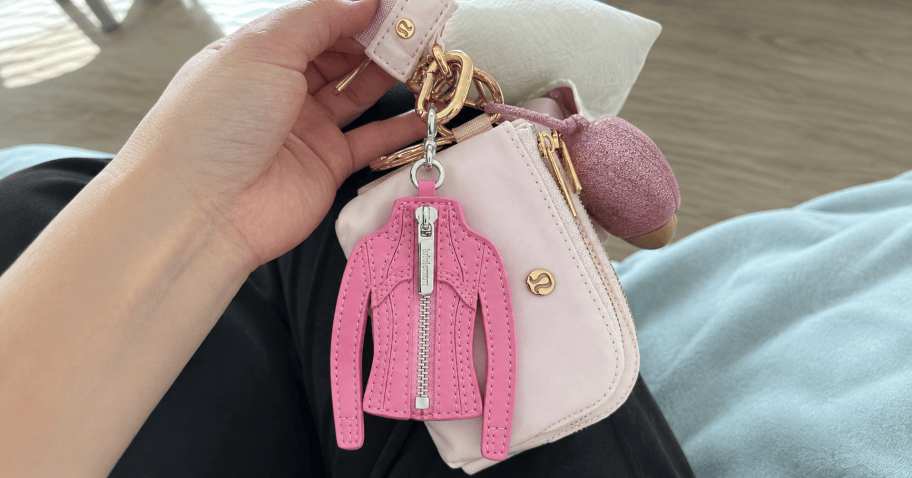
On November 24, 2023, deal-sharing site Hip2save alerted its audience to a limited-time Black Friday promotion at lululemon: steep discounts on a range of small accessories, including keychains, mini bags, hair accessories, and socks. The headline-grabbing offer: the lululemon Never Lost Keychain, regularly priced at $20, was available for just $9, a 55% discount. The Wunder Puff Keychain, a miniature version of the brand's popular puffer jacket, was offered at $14. Crucially, lululemon threw in free shipping on all orders with no minimum purchase required—a rarity in retail, where free shipping typically requires a $50-$100 threshold.
The promotion is part of lululemon's broader Black Friday sale, which also includes discounts on core apparel and accessories. The timing aligns with the official start of the holiday shopping season, a critical period for retailers. Lululemon, known for its premium-priced yoga and athletic wear, has increasingly leaned into accessories as a way to attract new customers and drive frequency. The Never Lost Keychain, a cult favorite, features a stretchy silicone strap and a metal clip, designed to attach to bags or belts. The Wunder Puff Keychain, a miniature puffer jacket, is a playful nod to the brand's Wunder Puff collection.
Market reaction to the promotion was muted, as it is a tactical move rather than a strategic shift. However, the deep discount and free shipping offer signal that lululemon is willing to sacrifice margin on small items to drive traffic and volume. The company's stock, which has been under pressure in 2023 due to slowing growth in North America, may see a short-term bump if the promotion drives incremental sales. Analysts will be watching the company's fourth-quarter earnings for signs of whether the promotion successfully attracted new customers and drove cross-selling.
The promotion also highlights the growing importance of accessories in lululemon's product mix. In recent years, the company has expanded its accessory offerings, including bags, hats, and water bottles, to complement its core apparel. Accessories typically carry higher gross margins than apparel, making them an attractive category for retailers looking to boost profitability. For lululemon, which operates in the premium segment, accessories also serve as an entry point for price-sensitive consumers who may be reluctant to spend $100 on a pair of leggings but are willing to try a $9 keychain.
Deep Technical & Financial Architecture
The economics of lululemon's accessory promotion are rooted in the high margins of small goods. While the company does not disclose margins by category, industry benchmarks suggest that accessories like keychains and small bags can carry gross margins of 60-70%, compared to 50-55% for apparel. Even at a 55% discount, the Never Lost Keychain likely remains profitable, especially when factoring in the low cost of goods. The keychain, made from silicone and metal, likely costs less than $2 to produce, according to estimates from manufacturing experts. At $9, the gross margin could still be above 50%, although shipping costs eat into that.
Free shipping with no minimum is a calculated gamble. Shipping a small item like a keychain typically costs a retailer $3-$5, depending on the carrier and distance. If lululemon sells the keychain for $9 and incurs $4 in shipping, the contribution margin drops to $5, still positive but thinner. However, the strategy is not about profiting on the keychain itself; it's about acquiring customers and driving incremental sales. By removing the shipping threshold, lululemon lowers the barrier to entry, making it easy for shoppers to add a keychain to their cart. Once in the cart, shoppers may be tempted to add other items, increasing the average order value.
The promotion also serves as a customer acquisition tool. Lululemon's core leggings retail for $98-$128, a price point that excludes many budget-conscious consumers. A $9 keychain allows the brand to reach a new demographic, potentially converting them into future buyers of higher-priced items. The company's loyalty program, which has over 20 million members, can be leveraged to retarget these new customers. Lululemon has been investing heavily in its digital ecosystem, including its app and online community, to drive engagement and repeat purchases. The keychain promotion could be a gateway to that ecosystem.
From a balance sheet perspective, the promotion is unlikely to materially impact lululemon's financials. Accessories represent a small portion of total revenue—likely less than 10%—and the discounted items are low-ticket. However, the promotion could have a modest positive impact on inventory turnover, as lululemon clears out seasonal stock. The company's inventory levels have been a concern for investors in 2023, with inventory up 14% year-over-year in the third quarter. Clearing accessory inventory through promotions helps reduce carrying costs and frees up warehouse space for higher-value apparel.
Technologically, lululemon's e-commerce platform is well-equipped to handle the promotion. The company has invested in its digital infrastructure, including a new fulfillment center in Tennessee and enhanced data analytics capabilities. The free shipping offer is likely powered by a rules-based engine that dynamically calculates shipping costs and applies the promotion at checkout. Lululemon's website and app have seen steady traffic growth, and the company reported a 19% increase in digital revenue in the third quarter. The promotion is expected to drive further digital traffic, particularly from deal-seeking consumers.
Industry & Global Market Ripple Effects
Lululemon's accessory promotion is part of a broader trend among premium retailers to use small, lower-priced items to drive traffic and customer acquisition. Competitors like Nike, Adidas, and Athleta have all expanded their accessory offerings in recent years, recognizing the category's high margins and ability to attract new customers. Nike, for example, offers a range of keychains, bags, and hats, often priced under $30. Adidas has similarly expanded its accessory line, including collaborations with designers like Stella McCartney. The competition in accessories is intensifying, but lululemon's brand strength and loyal customer base give it an edge.
The promotion also has implications for the broader retail industry, particularly in the athletic wear segment. Lululemon's success in accessories could pressure competitors to follow suit with similar promotions. However, not all brands can afford to offer free shipping with no minimum. Smaller players may struggle to absorb shipping costs, especially during the peak holiday season when carriers impose surcharges. Lululemon's scale and logistics infrastructure allow it to offer such promotions profitably, creating a competitive advantage.
On a global scale, the promotion is primarily focused on the North American market, where Black Friday is a major shopping event. However, lululemon's international presence is growing, and the company may replicate similar promotions in other markets. In China, for example, lululemon has been expanding rapidly, and Singles' Day (November 11) is a bigger shopping event than Black Friday. The company reported a 53% increase in revenue in China in the third quarter, and accessories could play a role in driving further growth. In Europe, where Black Friday is gaining traction, lululemon could use similar tactics to build brand awareness.
Investors are closely watching lululemon's performance in the holiday season. The company's stock has been volatile in 2023, reflecting concerns about slowing growth in North America and increased competition. The accessory promotion is a small but telling indicator of management's strategy to drive growth through innovation and customer engagement. If successful, it could help lululemon meet its holiday guidance and restore investor confidence. Analysts polled by Refinitiv expect lululemon to report fourth-quarter revenue of $3.2 billion, up 13% year-over-year. The promotion could contribute to that growth, albeit modestly.
Critical Perspectives, Analyst Debates & Risk Factors
Not everyone is convinced that lululemon's accessory promotion is a smart move. Some analysts argue that deep discounting on small items can erode brand equity, especially for a premium brand like lululemon. By offering a keychain for $9, lululemon risks devaluing its brand and training customers to wait for sales. The company has historically been reluctant to discount core apparel, and the decision to discount accessories so heavily may signal weakness. However, others counter that accessories are a separate category and that discounting them does not necessarily impact the perception of core products.
Another concern is the impact on margins. While accessories carry high gross margins, the combination of deep discounts and free shipping could compress margins more than expected. If the promotion drives a significant volume of low-ticket orders, the shipping costs could add up. Lululemon's shipping costs have been rising, and the company has been investing in its own logistics network to reduce costs. Still, free shipping on every order is expensive. The company may be banking on customers adding other items to their carts to offset the shipping costs, but there is no guarantee.
There is also the risk of inventory shortages. The Never Lost Keychain and Wunder Puff Keychain are popular items, and the deep discount could lead to a surge in demand. If lululemon is not adequately stocked, customers may be disappointed, leading to negative reviews and lost sales. The company has been working to improve its inventory management, but stockouts remain a risk during peak shopping periods. Lululemon's inventory levels were up 14% year-over-year in the third quarter, which suggests the company has ample stock, but the most popular colors and styles may sell out quickly.
From a regulatory perspective, the promotion is unlikely to raise any issues. However, lululemon has faced scrutiny in the past over its labor practices and supply chain transparency. The company has made efforts to improve, but activists continue to pressure the brand. The promotion itself is not related to these issues, but it does highlight the company's reliance on low-cost manufacturing in countries like China and Vietnam. Any disruption to the supply chain could impact the availability of accessories and other products.
Strategic Forecast & Road Ahead
Looking ahead, lululemon is expected to continue leveraging accessories as a growth driver. The company has plans to expand its accessory line, including new collaborations and limited-edition items. In the next 12-24 months, investors should watch for several milestones: the launch of new accessory collections, the performance of the holiday season, and the company's ability to maintain margins despite discounting. Lululemon's management has emphasized a focus on innovation and community, and accessories are a key part of that strategy.
One key area to watch is the company's international expansion. Lululemon has identified China as a major growth opportunity, and accessories could play a role in building brand awareness among Chinese consumers. The company plans to open new stores in China and expand its digital presence. If successful, accessories could become a significant revenue stream in that market. Additionally, lululemon is investing in its men's business, which includes accessories like bags and hats. The men's segment has been growing faster than women's, and accessories could help drive further growth.
Another factor to watch is the competitive landscape. Nike and Adidas are also expanding their accessory offerings, and other premium brands like Alo Yoga and Vuori are gaining traction. Lululemon will need to differentiate its accessories through design and quality to maintain its premium positioning. The company's recent collaboration with designer brands like Roksanda and its own innovation lab, Whitespace, suggest that it is investing in unique designs. However, the competition is fierce, and lululemon cannot afford to be complacent.
Finally, investors should monitor the company's margin trajectory. While accessories carry high margins, the promotional environment could pressure profitability. Lululemon's gross margin was 57% in the third quarter, down from 57.2% a year earlier. The company has been able to maintain margins through price increases and cost controls, but further discounting could erode that. The holiday season will be a test of whether lululemon can balance growth and profitability. If the accessory promotion drives incremental sales without significantly impacting margins, it will be a win for the company and its shareholders.




Comments (0)
No comments yet. Be the first to share your thoughts!
Leave a Comment